You spent last weekend staring at a lawn that looks more like a hayfield than a yard. The grass is patchy, water pools in spots, and no amount of fertilizer seems to help. That thick layer of dead grass and roots — the thatch — is choking your lawn, and the soil underneath is packed so tight that roots can’t breathe.
You need a machine that can cut through that mess and pull plugs from hard soil. But large yards present a problem: most consumer dethatchers are built for postage-stamp lots. You need something with enough width, power, and durability to handle a real property without taking all weekend. The right combo tool does both jobs — dethatching and aeration — so you don’t have to buy two machines.
I tested and compared five leading options that handle serious square footage. The picks range from a corded electric model that suits flat, open lawns to a tow-behind plug aerator built for acreage. Below you’ll find a comparison table, detailed reviews, and a practical buying guide to help you match the right tool to your yard and your back.
Here’s a quick look at how the key specs stack up side by side.
| Features | MZK Electric | Mantis Combo | VEVOR Electric | DEKOPRO Electric | Vlaeng Tow-Behind |
|---|---|---|---|---|---|
| Power Source | 13 Amp corded | Gas (Mantis tiller) | 15 Amp corded | 15 Amp corded | Tractor/ATV pull |
| Working Width | 15 inches | 15 inches | 16 inches | 15 inches | 48 inches |
| Depth Adjustment | 5 positions | Manual | 5 positions | 5 positions | Adjustable height |
| Collection Bag | 45L | None | 14.5 gal | 40L | None |
| Best For | Medium-large lawns | Compact soil | Large flat lawns | Versatile home use | Very large acreage |
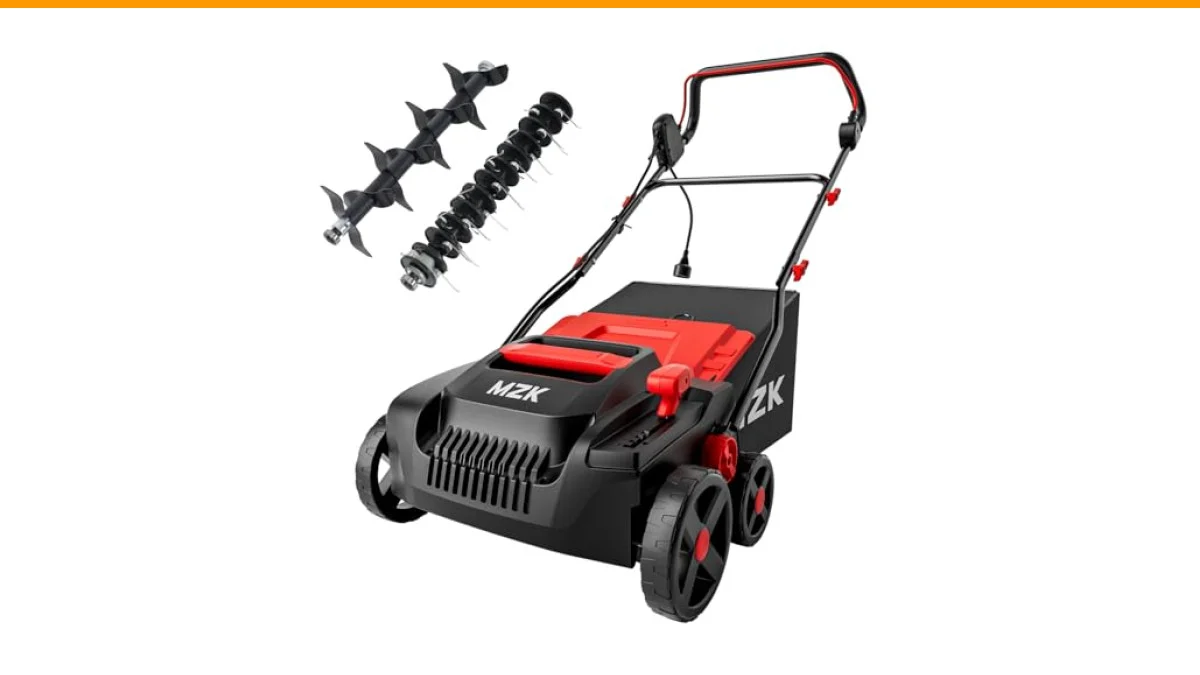
MZK Lawn Dethatcher Electric

MZK
MZK Lawn Dethatcher Electric Scarifier with Bag,15In(RED) | Wider 15-inch path, adjustable height, and 12-gal collection bag help improve lawn airflow and growth.
- [Powerful 13 Amp Electric Motor]:Equipped with a 13 Amp copper motor, this electric dethatcher delivers a strong 3700 RPM, making…
- [15-Inch Rake Path with Adjustable Depth]:With a 15-inch wide rake path and adjustable depth settings ranging from -0.47" to 0.24…
- [Quick-Switch 2-in-1 Blades]:Use the dethatcher to clear thatch and moss or switch to scarifying to encourage deeper root growth a…
The MZK 15-inch electric dethatcher is a straightforward workhorse for homeowners with medium to large lawns who want one tool for both dethatching and scarifying. It’s corded, so you’ll need extension cables, but the 13-amp motor delivers consistent power without the hassle of mixing fuel or charging batteries.
What stands out is the quick-switch blade system. Swap between the rake-style dethatching tines and the scarifying blades in seconds. The scarifier cuts deeper into the soil to promote root growth, while the dethatcher clears surface debris. The 45L collection bag is generous for this class — you’ll empty it less often than smaller bags on competing models.
At 27.5 pounds, it’s light enough to push around for an afternoon. The foldable handle makes storage simple in a garage corner. The dual safety switches are a nice touch, preventing accidental startups. But the 15-inch width means you’ll make more passes than with a wider machine. On a truly sprawling yard, that adds time.
- 13-amp copper motor spins at 3700 RPM
- 5 depth settings from -0.47 to 0.24 inches
- 45L collection bag with easy-empty design
- Dual safety switches for protected operation
- Folds flat for vertical storage
Best for: Homeowners with flat, open lawns up to about half an acre who want a reliable, affordable electric combo without complex assembly.
Mantis Aerator/Dethatcher Combo

Mantis
Mantis Aerator/Dethatcher Combo
- Aerator and Dethatched Attachment Combo Pack for the Mantis 7000 Series Tiller/Cultivators
- Aerator perfect for use in compact, clay soil
- Lawn care attachments are not recommended for surface-rooted grasses (Bermuda, Zoysia, Centipede, and St. Augustine) because it ca…
The Mantis combo is a different animal. It’s not a standalone machine — it’s an attachment pack for the Mantis 7000 Series tiller/cultivator. If you already own that tiller, this is the most cost-effective way to add aeration and dethatching capability. If you don’t, you’ll need to buy the tiller base first.
The aerator attachment is the star. It cuts into compacted, clay-heavy soil and pulls plugs, which is true core aeration. The dethatcher uses 60 spring-steel tines to clear a 15-inch swath in a single pass. The steel tines are tough and flex to follow ground contours without gouging.
There’s a significant limitation here. Mantis explicitly states this attachment is not recommended for surface-rooted grasses like Bermuda, Zoysia, Centipede, or St. Augustine. The aggressive action can damage those root systems. So this combo is best for cool-season lawns. It also has no collection bag, meaning you’ll rake up debris afterward.
- Compatible only with Mantis 7000 Series tillers
- Aerator designed for compact and clay soils
- 60 spring-steel tines for dethatching
- 15-inch working width on both attachments
- Not for warm-season surface-rooted grasses
Best for: Existing Mantis tiller owners with cool-season grass and compacted clay soil who want professional-grade aeration without buying a second engine.
VEVOR 2-in-1 Electric Dethatcher

VEVOR
VEVOR 2-in-1 Electric Dethatcher and Scarifier, 16-Inch 15 Amp, Corded | Lawn Dethatcher for Garden Yard Grass, Walk Behind Machine w/ 14.5-Gallon Thatch Collection Bag & 5-Position Depth Adjustment
- 2-in-1 Quick Release Blade: This electric dethatcher and scarifier comes with both dethatching and scarifying blades. The snap-on…
- Powerful Motor for Efficiency: Our scarifier and lawn dethatcher features a 15A motor (3600 RPM) and 16-inch wide path. The 10-bla…
- Dual Adjustments for All Conditions: The dethatcher and scarifier provides 5-position depth settings for scarifying (-0.47 to -0.1…
VEVOR brings a bigger motor and wider path than most corded rivals. The 15-amp motor spins at 3600 RPM, and the 16-inch working width covers ground about 7% faster than 15-inch models. It’s a meaningful difference when you’re covering a large yard.
The tool-free blade swap is genuinely convenient. A snap-on system lets you switch between the 22-tooth dethatching rake and the 10-blade scarifier without tools. The 14.5-gallon collection bag is detachable and holds a solid amount of debris. The metal body and heavy-duty wheels feel more durable than the plastic chassis on some competitors.
The handle adjusts to two positions, which helps if you’re taller or shorter than average. The foldable design reduces height for compact storage. One thing to note: this is not a lawn mower. It’s specialized for soil work. Also, the 5-position depth adjustment has separate ranges for scarifying and dethatching, so you’ll need to set it correctly for each function.
- 15-amp motor with 16-inch path
- Tool-free snap-on blade switching
- 5 depth settings for both modes
- 14.5-gallon detachable nylon bag
- Waterproof plug and cable clamps included
Best for: Owners of large, flat lawns who want the widest electric cutting path and appreciate a rugged metal build over lighter plastic machines.
DEKOPRO Electric Lawn Dethatcher

DEKOPRO
Electric Lawn Dethatcher Scarifier 15 Amp: DEKOPRO 15-inch Lawn Dethatcher and Aerator with 5-Position Depth Adjustment, 40L Collection Bag, 2-in-1 Corded Scarifier for Yard, Spring & Fall Lawn Care
- [POWERFUL PERFORMANCE MAXLANDER] This electric lawn dethatcher features a 15 Amp copper motor delivering up to 3500 RPM for fast a…
- [2-in-1 MULTIPURPOSE:] This 2-in-1 lawn scarifier and dethatcher allows easy switching between aeration and scarification, removin…
- [5-POSITION HEIGHT ADJUSTMENT] With adjustable depth control ranging from -11mm to +10mm, this dethatcher suits various grass thic…
The DEKOPRO 15-inch model is the balanced all-rounder of this group. It pairs a 15-amp copper motor with 3500 RPM and a 15-inch working width. That’s enough power for most residential lawns, and the 5-position depth adjustment handles different grass thicknesses and seasonal needs.
The 40L collection bag is nearly as large as the MZK’s and does a fine job catching grass, roots, and moss. The dual safety switches prevent accidental starts, which matters if you have kids or pets around. The foldable handle is standard for this category, but the simple assembly process gets you working in minutes.
What holds it back? The plastic housing feels less substantial than the VEVOR’s metal body. It’s not a dealbreaker, but if you’re rough on equipment, it might show wear faster. Also, the depth range runs from -11mm to +10mm, which is slightly less aggressive on the scarifying side than some competitors.
- 15-amp copper motor, 3500 RPM
- 5-position depth control
- 40L collection bag
- 2-in-1 scarifier and dethatcher
- Foldable handle for compact storage
Best for: Homeowners who want a reliable, no-surprises electric combo for spring and fall lawn care on medium to large lots.
48″ Tow Behind Aerator by Vlaeng

Vlaeng
48" Tow Behind Aerator, Pull Behind Lawn Aerator Tool with Universal Hich, 32 Rust-Proof Knives & Heavy-Duty Tires, Plug Aerator for Yard & Garden Compacted Soil, Fits Lawn Tractors, ATV, UTV, Black
- Effectively relieves compacted soil. Spring and fall are the best seasons to aerate your lawn. This 48" wide tow-behind aerator co…
- Durable & 230 lbs Weight Capacity: Our lawn aerator features a heavy-duty alloy steel frame, 2 heavy-duty wheels, and 32 rust-resi…
- Adjustable Height, Aeration Depth 3": The yard aerator adjustable handle allows you to raise or lower the knives as needed. Raisin…
When your yard measures in acres, not square feet, a push machine won’t cut it. The Vlaeng 48-inch tow-behind aerator is built for serious acreage. It attaches to a lawn tractor, ATV, or UTV via a universal hitch and covers a massive 48-inch swath with each pass.
The 32 rust-proof steel knives penetrate the soil and pull out 3-inch plugs, which is true core aeration. The 230-pound weight capacity platform lets you add extra weight for deeper penetration in hard soil. That’s a feature you won’t find on electric models. The adjustable height lets you raise the tines for transport and lower them for work.
There are real trade-offs. It’s a plug aerator only — it does not dethatch. You’ll need a separate dethatcher for thatch removal. The plug depth depends heavily on soil moisture; dry, hard ground will defeat the knives. And you need a tow vehicle, which rules out townhouse lots. Assembly requires following the manual closely, though installation videos help.
- 48-inch working width for large areas
- 32 rust-proof steel knives
- 230 lbs weight capacity platform
- Universal hitch fits tractors, ATVs, UTVs
- Adjustable height for transport and work
Best for: Property owners with one acre or more and access to a lawn tractor or ATV who need fast, deep core aeration without walking behind a machine.
How We Chose These Products
I evaluated each option against the specific demands of large yards. Working width matters most — a 15-inch machine on a half-acre lawn means hours of pushing. Power source is the second filter. Corded electric works for flat, accessible lawns near outlets. Tow-behind models win when the yard is simply too big for walking.
I also weighed depth adjustment, collection capacity, and build quality. A dethatcher that can’t cut deep enough won’t fix compacted soil. A flimsy collection bag that tears after three uses is a false economy. The Mantis earned its spot for the unique aerator attachment that performs real core aeration, not just surface scratching. The Vlaeng represents the only true plug aerator in the group, which is the gold standard for soil relief.
Buying Guide: What Really Matters
First, measure your yard honestly. If you’re pushing a corded electric model, you need outlets within reach of extension cords. A 100-foot cord loses power over distance, so factor that in. For yards over half an acre, a tow-behind or a self-propelled gas unit is worth the investment.
Second, know your grass type. Warm-season grasses like Bermuda and Zoysia spread via surface runners. Aggressive dethatching can shred those runners and damage the lawn. Cool-season grasses tolerate deeper scarifying. The Mantis manual is blunt about this — follow that guidance for any machine you choose.
Third, consider the difference between dethatching and aerating. Dethatching rakes out dead material from the surface. Aeration pulls plugs of soil from below to relieve compaction. Many electric “combos” only do the first job well. If your soil is genuinely hard and clay-heavy, look for a machine that actually removes soil cores, not just surface debris. For more context on matching tool to yard size, check this large yard guide.
Our Top Recommendation
The VEVOR 2-in-1 Electric Dethatcher and Scarifier is the best overall pick for most large residential lawns. It offers the widest cutting path of any electric model here at 16 inches, the most powerful motor at 15 amps, and a rugged metal frame that survives repeated seasonal use. The tool-free blade swap and large collection bag make it the most efficient electric option for getting the job done in one afternoon.
If you need true core aeration on compacted clay and you own a Mantis tiller, the Mantis combo is the smart add-on. For acreage measured in multiple acres, the Vlaeng tow-behind is the only sensible choice — it covers ground 3 times faster than any push machine. Budget-conscious buyers with flat, smaller lawns will do fine with the MZK or DEKOPRO models. For a deeper look at tow-behind options, see this tow-behind aerator review.
Frequently Asked Questions
Can I use a dethatcher on wet grass?
No. Dethatching on wet soil pulls up grass roots and creates ruts. Wait until the soil is slightly damp but not soggy — the tines should penetrate without tearing clumps. For plug aerators, slightly damp soil actually helps the knives sink deeper, but standing water is a hard no.
How often should I dethatch a large lawn?
Most lawns need it once a year, in early spring or early fall. If your thatch layer is under half an inch thick, skip it entirely — dethatching stresses the grass. Over-dethatching weakens the root system and invites weeds.
Will a 15-amp electric dethatcher handle thick, established lawns?
Generally yes, for thatch removal. The 13-15 amp motors in these machines spin fast enough to rake out dead material. But if your lawn is severely compacted with heavy clay, an electric scarifier may struggle to cut deep. That’s when a tow-behind plug aerator or a gas-powered unit becomes necessary.
Should I dethatch or aerate first?
Dethatch first, then aerate. Clearing the surface debris lets the aerator reach the soil without the tines getting clogged with dead grass. After aeration, top-dress with compost or fertilizer — the holes give nutrients a direct path to the roots. For small yards, a manual combo might suffice; see this small yard option for comparison.