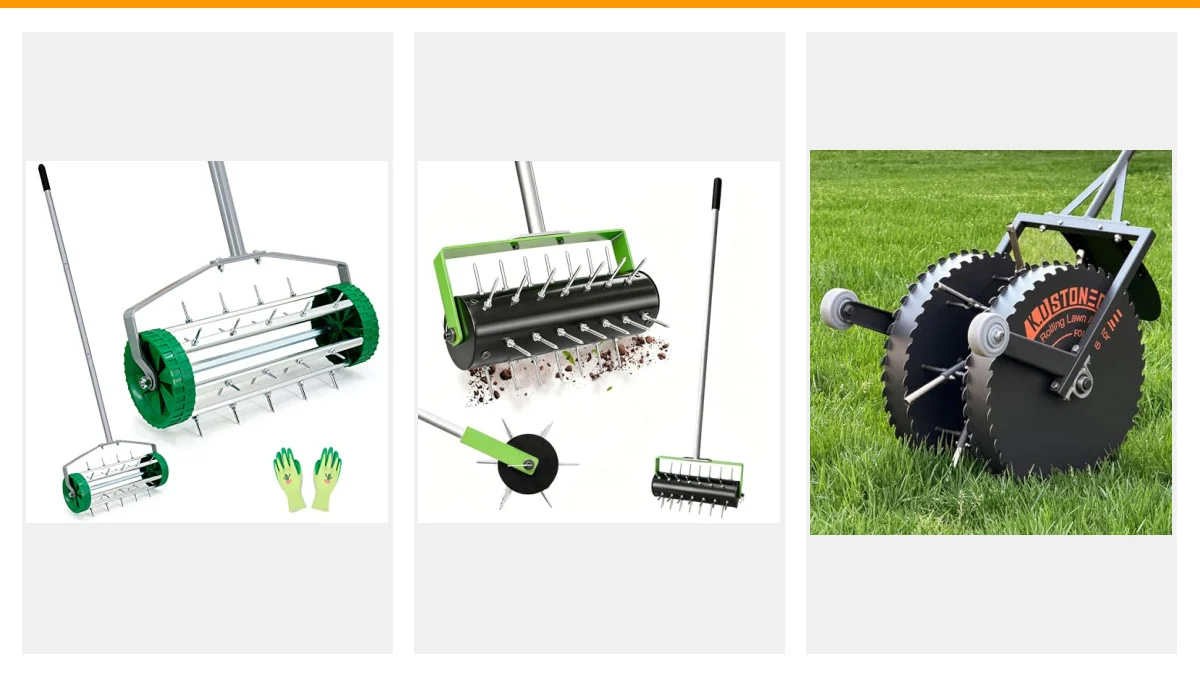
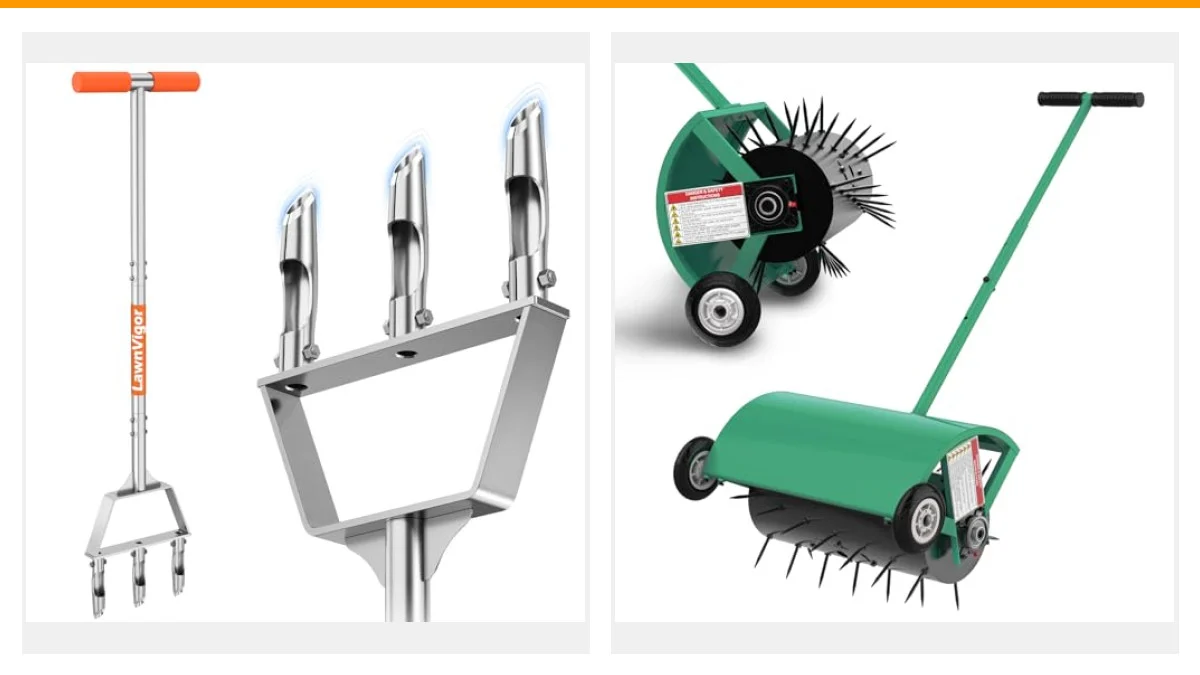
You know the feeling. You step onto your lawn in early spring, expecting that lush green carpet you saw in the neighbor’s yard, but instead your feet sink into a spongy layer of dead grass and moss. That’s thatch. It chokes your soil, blocks water, and invites pests. And if your soil is compacted from years of foot traffic or heavy mowers, even regular watering won’t help. You don’t need a new sprinkler. You need to dethatch and aerate.

For a large yard, doing this with a hand rake or a manual core aerator is a back-breaking, weekend-destroying chore. The right machine cuts the job down to an hour or two. You’ve got three main routes: a corded electric unit for medium-large lawns, a tow-behind model for tractor or ATV owners, or a manual tool for spot treatments and smaller budgets. Each has its place, and each comes with real trade-offs you should know about before you click buy.
I’ve spent years testing lawn equipment, and I’ve narrowed down five of the best options for big properties. The list covers electric dethatchers, a manual aerator, and two heavy-duty tow-behind units. My top pick overall is the MZK 15-Inch Electric Dethatcher for most homeowners, but if you’ve got a massive acreage and a riding mower, the AugFir 48-Inch Tow-Behind Dethatcher might be the smarter investment. Keep reading to see the full breakdown, including a comparison table and buying guide.
Here’s a quick look at how the five contenders stack up on the specs that actually matter for large yards.
| Features | MZK Electric | COCTN Manual | AugFir Tow-Behind | Vlaeng Tow-Behind | VEVOR Electric |
|---|---|---|---|---|---|
| Type | Corded electric | Manual push | Tractor/ATV tow | Tractor/ATV tow | Corded electric |
| Working Width | 15 inches | Not specified | 48 inches | 48 inches | 16 inches |
| Power Source | 13-amp motor | Human power | Towing vehicle | Towing vehicle | 15-amp motor |
| Depth Adjustment | Yes, adjustable | 3 height settings | 2 height settings | Yes, adjustable | 5 positions |
| Best Use Case | Medium-large lawns | Small patches | Very large acreage | Compacted soil | Large flat lawns |
MZK Electric Dethatcher

MZK
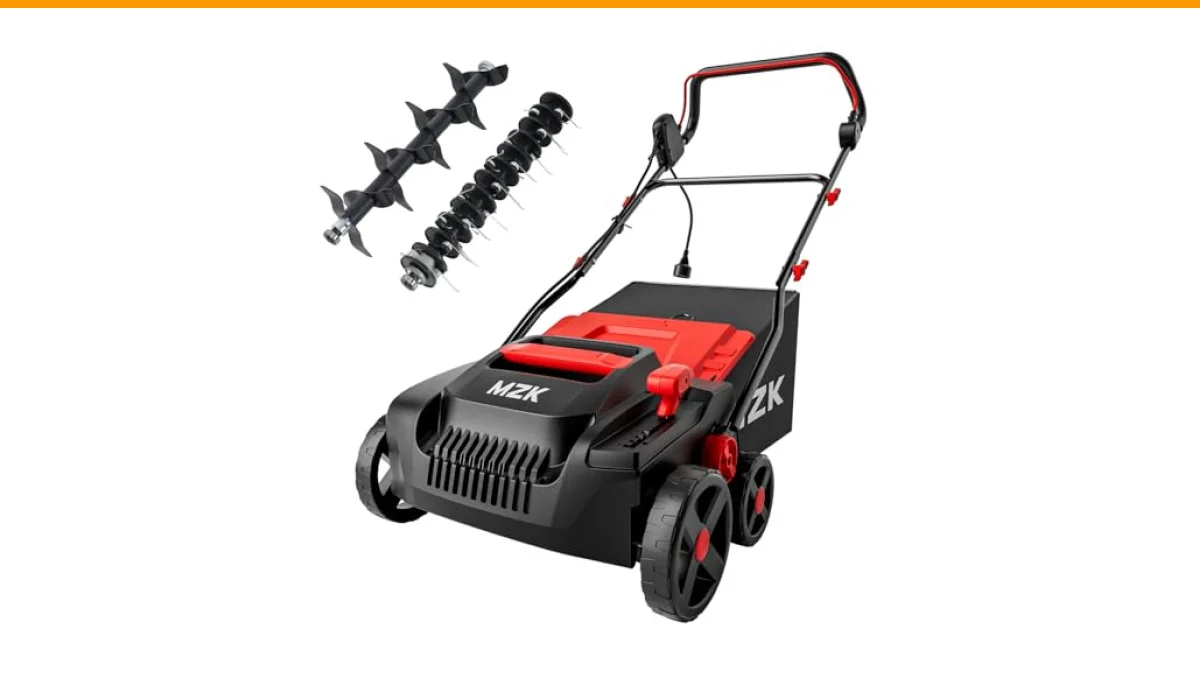
MZK Lawn Dethatcher Electric Scarifier with Bag,15In(RED) | Wider 15-inch path, adjustable height, and 12-gal collection bag help improve lawn airflow and growth.
- [Powerful 13 Amp Electric Motor]:Equipped with a 13 Amp copper motor, this electric dethatcher delivers a strong 3700 RPM, making…
- [15-Inch Rake Path with Adjustable Depth]:With a 15-inch wide rake path and adjustable depth settings ranging from -0.47" to 0.24…
- [Quick-Switch 2-in-1 Blades]:Use the dethatcher to clear thatch and moss or switch to scarifying to encourage deeper root growth a…
The MZK 15-Inch Electric Dethatcher is the kind of tool that makes you wonder why you ever struggled with a manual rake. It’s a corded machine with a 13-amp copper motor that spins at 3700 RPM, which is plenty of power to slice through thatch and moss without bogging down. If your yard is between a quarter-acre and a half-acre, this is the sweet spot. You won’t need to drag a heavy gas machine around, and the 15-inch rake path means you’ll cover a typical suburban lawn in a couple of hours.
For those looking to enhance their outdoor space, consider incorporating large container garden ideas that complement your lawn care efforts.
What really stands out is the quick-switch 2-in-1 blade system. You get a dethatching blade for clearing debris and a scarifying blade for cutting into the soil to promote root growth. Switching takes seconds, and the adjustable depth settings range from -0.47 inches to 0.24 inches, so you can fine-tune how aggressively you’re cutting. The 45L collection bag is generous for an electric model; you won’t be emptying it every five minutes, which is a common annoyance with cheaper units. At 27.5 pounds, it’s light enough to maneuver around trees and flower beds, and the foldable handle makes storage in a garage corner painless.
Honest trade-off: the cord. You’ll need a heavy-duty extension cord, and if your yard is bigger than half an acre, you’ll be swapping outlets and managing cable tangles. The plastic housing on the bag attachment feels a bit flimsy when you’re wrestling it off to empty, but it holds up fine if you’re gentle. Also, it’s not a core aerator—it’s a dethatcher/scarifier, so it won’t pull soil plugs. For that, you’d need a separate aerator.
- Motor: 13-amp copper, 3700 RPM
- Working width: 15 inches
- Depth settings: -0.47 to 0.24 inches
- Collection bag: 45L capacity
- Weight: 27.5 lbs, foldable handle
Best for: Homeowners with medium to large lawns who want a powerful, versatile electric dethatcher without the hassle of gas.
COCTN Manual Aerator

COCTN
Lawn Aerator Tools, 3 Height Manual Yard Aerator with Self-Cleaning Design | Heavy Duty Adjustable Lawn Air Aerator Tool with 15 Long Iron Spikes, for Lawn Care, Hard Soil Loosening and Yard Aerating
- [Built-in dual-layer Spring Design] The lawn aerator tool adopts an innovative built-in spring double-layer structure, which enabl…
- [Adjustable height comfort handle] This manual yard aerator has three height settings that can be adjusted. This ergonomic design…
- [Efficient and lawn-friendly aerator tools] This lawn aerator tool features three-inch-long steel spikes that can easily penetrate…
Let’s be clear: this isn’t a machine. The COCTN manual aerator is a hand-push tool with three steel spikes that you roll across the lawn to poke holes. It’s not going to dethatch a whole acre, but it’s a brilliant solution for smaller patches, spot treatments, or for anyone who wants to aerate without renting equipment. It’s also a great option for eco-conscious folks who don’t want to burn fuel or run a cord. If you’ve got a large yard but only a few problem areas with compaction, this tool lets you target those spots precisely.
The clever part is the self-cleaning design. Traditional spike aerators clog up with wet dirt, and you have to stop every few minutes to scrape them clean. The COCTN uses a built-in dual-layer spring structure that pushes debris off the spikes as you roll. It actually works. The three-inch steel spikes penetrate soil effectively, and the three adjustable height settings mean you can match the handle to your height—no more hunching over. Assembly is minimal: just one screw and two washers, and a wrench is included. It’s also light and easy to store, which is a plus if you’re short on garage space.
Honest trade-off: this is not a substitute for a powered dethatcher. It only aerates; it doesn’t pull up thatch. And on heavy clay soil, you’ll need to put real weight on the handle to get those spikes deep. It’s also slow—covering a large yard with this would take days. So think of it as a precision tool for small areas or for maintaining an already-healthy lawn, not as your primary large-yard solution.
- Spike length: 3 inches
- Height adjustment: 3 settings
- Self-cleaning: Dual-layer spring design
- Material: Heavy-duty all-steel
- Assembly: Under 3 minutes
Best for: Gardeners with small-to-medium problem areas who want a safe, manual, no-fuel aerator that’s easy on the back.
AugFir 48-Inch Tow-Behind

AugFir
AugFir 48-Inch Tow Behind Dethatcher, Pull Behind Lawn Dethatcher with 20 Spring Steel Tines, Lawn Grass Dethatcher Tractor Rake, Adjustable Hitch Riding Lawn Mower Tractor Attachment
- 【48-Inch Working Width for Faster Coverage】Cover more ground in less time with two rows of independently flexing tines spanning a…
- 【Heavy-Duty 150 lb. Capacity Tray】The tow behind lawn dethatcher rake features a robust carbon steel frame built for tough outdoor…
- 【Easy Height Adjustment】The adjustable control handle offers two height settings, making it simple to lift or lower the tines as n…
When your lawn is measured in acres, not square feet, you need a machine that can keep up. The AugFir 48-Inch Tow-Behind Dethatcher is designed for exactly that scenario. It hooks up to any riding mower, ATV, UTV, or tractor with its adjustable hitch, and its two rows of 20 spring steel tines span a full 48 inches. That means every pass covers four feet of ground. On a two-acre property, you can finish dethatching in under an hour, versus a full day with a walk-behind electric unit.
The real genius is the 150-pound capacity ballast tray. Adding weight—like sandbags or bricks—forces the tines deeper into the soil, which is critical for breaking up thick thatch. The tray is made of carbon steel, so it’s tough enough for years of abuse. Height adjustment is simple with two settings, and the anti-slip stopper keeps the tines from shifting during turns. The 8-inch semi-pneumatic wheels roll smoothly over uneven ground, and the universal hitch means you don’t have to fiddle with adapters. It also comes with step-by-step instructions and an assembly video, which is helpful since you’ll need to put it together yourself.
Honest trade-off: this is a dethatcher, not an aerator—it won’t pull soil plugs. And it’s heavy. You’ll need a vehicle with some grunt to tow it, especially when the ballast tray is loaded. Assembly takes a couple of hours, and you’ll need your own socket wrench. Plus, the tines are aggressive; if you set them too deep on a young lawn, you’ll tear up the grass. Start shallow and test a small area first. It also leaves thatch on the surface, so you’ll need to rake or mow it up afterward.
- Working width: 48 inches
- Tines: 20 spring steel, two rows
- Ballast capacity: 150 lbs
- Hitch: Adjustable, universal
- Wheels: 8-inch semi-pneumatic
Best for: Owners of large acreage who already have a riding mower or ATV and want to dethatch fast without spending hours walking.
Vlaeng 48-Inch Tow-Behind Aerator
If your problem is compacted soil rather than thick thatch, the Vlaeng 48-Inch Tow-Behind Aerator is the tool you want. This is a true plug aerator—it has 32 rust-proof knives that slice into the ground and pull out 3-inch cores of soil. Those cores leave behind channels for air, water, and nutrients to reach the roots. It’s a different job than dethatching, and it’s arguably more important for high-traffic lawns. The 48-inch working width covers ground quickly, and the heavy-duty alloy steel frame is built to handle rough terrain.
The standout feature is the 230-pound weight platform. Loading this with concrete blocks or sandbags dramatically increases the penetration depth, which is key for breaking up hardpan clay. The adjustable handle lets you raise the knives for transport or lower them for work, and the universal connector fits most mowers, tractors, ATVs, and UTVs. It also comes with detailed instructions and installation videos, so setup is straightforward. The rust-proof knives are a nice touch—they’ll last for years without corroding, even if you leave them out in the shed.
Honest trade-off: this is a heavy piece of equipment, and it’s not for small lawns. You need a vehicle with decent horsepower to pull it, and turning tight corners is a chore. Also, plug aerators only work well when the soil is slightly damp—too dry and the knives won’t penetrate, too wet and they’ll just smear the soil. Plan your aeration for a day after a rain. And like the AugFir, it doesn’t collect the plugs; they’re left on the surface to break down naturally, which is fine but can look messy for a week or two.
- Working width: 48 inches
- Knives: 32 rust-proof, 3-inch plugs
- Weight capacity: 230 lbs
- Hitch: Universal connector
- Frame: Heavy-duty alloy steel
Best for: Large properties with compacted clay soil where aeration is the priority over thatch removal.
VEVOR 2-in-1 Electric

VEVOR
VEVOR 2-in-1 Electric Dethatcher and Scarifier, 16-Inch 15 Amp, Corded | Lawn Dethatcher for Garden Yard Grass, Walk Behind Machine w/ 14.5-Gallon Thatch Collection Bag & 5-Position Depth Adjustment
- 2-in-1 Quick Release Blade: This electric dethatcher and scarifier comes with both dethatching and scarifying blades. The snap-on…
- Powerful Motor for Efficiency: Our scarifier and lawn dethatcher features a 15A motor (3600 RPM) and 16-inch wide path. The 10-bla…
- Dual Adjustments for All Conditions: The dethatcher and scarifier provides 5-position depth settings for scarifying (-0.47 to -0.1…
The VEVOR 2-in-1 Electric Dethatcher and Scarifier is the closest competitor to my top pick. It’s a corded machine with a 15-amp motor that spins at 3600 RPM, and it has a 16-inch working width—slightly wider than the MZK. It comes with both dethatching and scarifying blades, and the snap-on system lets you switch between them without tools. That’s a real time-saver. It also has a 14.5-gallon detachable nylon bag, which is decently sized for an electric unit, and the 5-position depth adjustment gives you fine control over how deep you cut.
Where this machine shines is on flat, open lawns. The wider path means fewer passes, and the 15-amp motor has enough grunt to chew through thick thatch without stalling. The foldable handle and lightweight 26.68-pound body make it easy to transport and store. The metal body and heavy-duty wheels feel durable, and the wire clamps keep the extension cord out of the way—a small detail that makes a big difference when you’re working. It’s also a great value for the price, offering professional-level features without the gas engine maintenance.
Honest trade-off: the depth adjustment mechanism feels a bit cheap. The lever is plastic and can be finicky to set precisely. Also, the bag is smaller than the MZK’s 45L, so you’ll empty it more often on a large lawn. And like all corded dethatchers, you’re tethered to an outlet. If your yard is bigger than half an acre, you’ll need to plan your cord management carefully. It’s not a bad machine at all, but the MZK edges it out with a larger bag and slightly better build quality for the same price point.
- Motor: 15-amp, 3600 RPM
- Working width: 16 inches
- Depth settings: 5 positions
- Collection bag: 14.5-gallon detachable
- Weight: 26.68 lbs, foldable handle
Best for: Budget-conscious homeowners with large, flat lawns who want a 2-in-1 electric dethatcher and scarifier with tool-free blade changes.
How We Chose These Products
I started by looking at the real challenges of large-yard maintenance: time, effort, and soil health. A product that works for a 5,000-square-foot lot often fails on a two-acre property. So I filtered for tools that can actually handle significant square footage without breaking down or requiring hours of manual labor. That meant prioritizing working width, power source, and durability. Electric models had to have at least a 13-amp motor, and tow-behind units needed wide tine spans and heavy-duty construction.
I also considered the balance between dethatching and aeration. Many homeowners need both, so I included dedicated dethatchers, dedicated aerators, and combo units. I looked at real-world usability: how easy is it to adjust depth, empty the bag, or attach to a vehicle? I read through the specs, but also thought about what it’s like to actually use each one on a hot Saturday. The final five represent the best mix of power, efficiency, and value for large yards. I didn’t just pick the most expensive or the most popular—I picked the ones that solve the biggest problems with the least hassle.
Buying Guide: What Really Matters
Before you spend money, figure out what your lawn actually needs. Do you have a spongy layer of dead grass? That’s thatch, and you need a dethatcher with metal tines or blades. Does water pool on the surface after rain? That’s compaction, and you need a core aerator that pulls plugs. Some tools do both, but they’re usually less effective at each job than a dedicated machine. If you’re unsure, do the screwdriver test: push a screwdriver into the soil. If it goes in easily, you’re fine. If it resists, you need aeration.
Next, think about your power source. Corded electric dethatchers are great for yards up to half an acre, but you’ll need a long, heavy-duty extension cord. Gas-powered or tow-behind models are better for larger properties, but they cost more and require more maintenance. Manual tools are cheap and quiet, but they’re only practical for small areas or spot treatments. Consider your physical fitness too—a 50-pound tow-behind unit is a workout to maneuver, even if the machine does the work.
Finally, check the depth adjustment and collection system. Adjustable depth is essential because you don’t want to scalp your lawn. A good collection bag or tray saves you from raking afterward. And don’t forget storage—some models fold, others are bulky. Measure your garage or shed before you buy. The best tool is the one you’ll actually use, so be honest about your lawn size and your willingness to put in effort.
Our Top Recommendation
For most homeowners with a large yard, the MZK 15-Inch Electric Dethatcher is the winner. It offers the best combination of power, features, and ease of use. The 13-amp motor handles tough thatch, the 2-in-1 design lets you dethatch and scarify, and the 45L bag means fewer stops. It’s light enough for anyone to push, and the foldable handle is a small convenience that matters when you’re storing it after a long day. If you’re dealing with a yard up to half an acre, this is the tool to get.
But if your property is significantly larger—say, over an acre—and you already own a riding mower or ATV, the AugFir 48-Inch Tow-Behind Dethatcher is the better investment. It’ll save you hours of walking, and the ballast tray lets you adjust cutting depth on the fly. For those dealing with severe soil compaction, the Vlaeng 48-Inch Tow-Behind Aerator is the runner-up. And if you’re on a tight budget and only need to treat small patches, the COCTN Manual Aerator is a solid, affordable choice. Check the current prices on Amazon, as they fluctuate.
Frequently Asked Questions
Can I dethatch and aerate at the same time?
Yes, but it’s not ideal. Some machines claim to do both, but they usually do one job well and the other just okay. Dethatching cuts and rakes the surface, while aeration pulls cores from below. For large yards, it’s better to aerate first, then dethatch a week later, or alternate seasons. If you want a single machine, look for one with interchangeable blades, like the MZK or VEVOR, but know that you’ll be switching modes.
How often should I aerate a large lawn?
Most lawns benefit from aeration once a year, ideally in the fall for cool-season grasses or late spring for warm-season grasses. If your yard gets heavy foot traffic, sports use, or sits on clay soil, you might need to aerate twice a year. Dethatching is less frequent—only when thatch is thicker than half an inch. Over-dethatching can damage your lawn, so test the thatch layer before you go at it.
What’s the difference between a dethatcher and a scarifier?
They’re similar, but the blades are different. Dethatcher blades are spring tines that flex and pull up loose thatch and moss from the surface. Scarifier blades are rigid knives that cut into the soil, creating grooves for seed and water. Scarifying is more aggressive and is often used to prepare a lawn for overseeding. Many electric machines, like the MZK and VEVOR, include both sets of blades so you can switch based on your lawn’s needs.
Do I need to water before aerating?
Yes, and it makes a big difference. Aerating dry, hard soil is nearly impossible, even with a heavy tow-behind unit. Water the lawn a day or two before you aerate, aiming for about an inch of water. The soil should be moist but not soggy. If you squeeze a handful of soil, it should hold together but not drip water. That’s the perfect condition for pulling clean plugs.