
Best Dethatcher and Aerator for Grass Seed: 5 Tools That Actually Work
Contents
You’ve got the seed, the soil, and the willpower. But if you toss grass seed onto a lawn caked with old thatch and hard-packed dirt, most of it will never touch the soil. It will sit on top, get eaten by birds, or wash away in the next rain. The secret to a thick lawn isn’t the seed itself—it’s prepping the ground so the seed has somewhere to root.
That’s where a dethatcher or aerator comes in. Dethatching rakes out the dead organic layer that blocks water and seed from reaching the dirt. Aeration punches holes into compacted soil so air, water, and nutrients can actually get down to the roots. For overseeding projects, you often need both functions—or one tool that can handle the job. The right choice depends on your lawn size, soil condition, and how much physical labor you’re willing to put in.
I’ve sorted through five top contenders that handle this job in very different ways. There’s a powerful electric scarifier for medium lawns, a clever self-cleaning manual aerator for small patches, a classic spike aerator for tight budgets, and two heavy-duty tow-behind units for large properties. Each one has a specific sweet spot. Here’s what I found after digging into the specs and real-world use cases.
Here is a quick comparison of the key specs to help you narrow down your options.
| Features | MZK Electric Dethatcher | COCTN Manual Aerator | Walensee Spike Aerator | Suchtale Tow-Behind | Suchtale Push Aerator |
|---|---|---|---|---|---|
| Power Source | 13 Amp electric motor | Manual, no power | Manual, no power | Tows behind ATV/mower | Manual push |
| Working Width | 15-inch rake path | Single tool, 3 spikes | 15 spikes, 3 rows | 40-inch wide coverage | 18-inch wide frame |
| Depth Control | Adjustable -0.47″ to 0.24″ | 3-inch steel spikes | 2.8-inch iron spikes | 2-inch penetration, weight tray | 2-inch penetration, weight tray |
| Key Feature | 2-in-1 dethatch/scarify | Self-cleaning springs | Cushioned T-handle | 10 star tines, 110 lb tray | 5 star tines, roller design |
| Best Use Case | Medium lawns, overseeding | Small patches, flower beds | Small lawns, edges | Large yards, farms | Medium yards, light soil |

MZK Lawn Dethatcher Elect
1st Pick

MZK
MZK Lawn Dethatcher Electric Scarifier with Bag,15In(RED)
- [Powerful 13 Amp Electric Motor]:Equipped with a 13 Amp copper motor, this electric dethatcher delivers a strong 3700 RPM, making…
- [15-Inch Rake Path with Adjustable Depth]:With a 15-inch wide rake path and adjustable depth settings ranging from -0.47" to 0.24…
- [Quick-Switch 2-in-1 Blades]:Use the dethatcher to clear thatch and moss or switch to scarifying to encourage deeper root growth a…
The MZK is the closest thing to a full lawn renovation in one pass. It’s an electric scarifier that runs on a 13-amp copper motor spinning at 3700 RPM. You push it like a mower, and it rakes out thatch while also cutting small grooves into the soil—exactly what you need before dropping grass seed.
What stands out here is the 2-in-1 blade system. You get two modes: dethatching to pull up dead grass and moss, or scarifying to cut deeper into the soil for seedbed preparation. The depth adjustment goes from a slightly negative setting (perfect for clearing debris) down to 0.24 inches deep. That range gives you real control depending on whether you’re cleaning up before seeding or actively cutting furrows for new grass.
The 45-liter collection bag is a genuine time-saver. You won’t be stopping every two minutes to dump it. It’s also lighter than most machines in this class at 27.5 pounds, and the handle folds down for storage. The trade-off is the cord. You’ll need an extension cable and a yard within reach of an outlet, which makes it less practical for large properties. It’s also not designed for heavy clay soil—the tines will bounce rather than dig in.
- 13 amp motor with 3700 RPM for tough thatch
- 15-inch working width covers ground efficiently
- Quick-switch blades for dethatching or scarifying
- 45L bag collects debris as you work
- Dual safety switches prevent accidental starts
Best for: Homeowners with medium-sized lawns (up to about 5,000 square feet) who want a powered solution for overseeding without renting a machine.
COCTN 3-Height Manual Aerator
2nd Pick

COCTN
Lawn Aerator Tools, 3 Height Manual Yard Aerator with Self-Cleaning Design
- [Built-in dual-layer Spring Design] The lawn aerator tool adopts an innovative built-in spring double-layer structure, which enabl…
- [Adjustable height comfort handle] This manual yard aerator has three height settings that can be adjusted. This ergonomic design…
- [Efficient and lawn-friendly aerator tools] This lawn aerator tool features three-inch-long steel spikes that can easily penetrate…
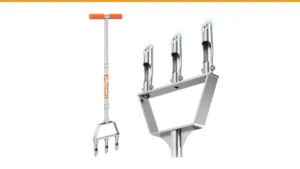
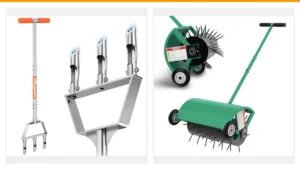
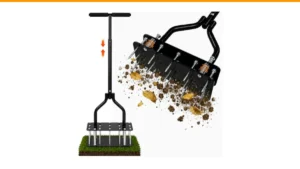
This is the tool you grab when you need to fix a bare patch, not the whole yard. The COCTN is a manual step aerator with three sharp steel spikes that punch holes into compacted soil. It’s built for precision work around flower beds, along fence lines, or in spots where a powered machine won’t fit.
The self-cleaning design is the standout feature here. Traditional spike aerators clog up with wet dirt after every few stomps, forcing you to bend over and scrape them clean. The COCTN uses a built-in double-layer spring system that pushes debris off the spikes automatically as you lift the tool. That might sound like a gimmick, but it genuinely saves your back during a long session.
Height adjustment is another thoughtful touch. The handle has three settings and uses an elastic buckle instead of screws, so you can switch it without hunting for a wrench. It’s made from thickened all-steel construction, so it’ll survive being left outside. The limitation is scale—with only three spikes, you’ll be stepping hundreds of times to cover even a modest area. It’s a spot-treatment tool, not a whole-lawn solution.
- Three 3-inch steel spikes penetrate compacted soil
- Self-cleaning spring design removes dirt automatically
- Three adjustable height settings for user comfort
- Assembles in under three minutes with included wrench
- Heavy-duty iron construction with safe retracted spikes
Best for: Gardeners fixing small bare spots before seeding or working in tight areas where power tools are overkill.
Walensee Manual Lawn Aerator
3rd Pick

Walensee
Walensee Aerator Lawn Tool, 15-Spike Manual Lawn Aerator Tool for Yard
- 【EFFECTIVE MANUAL LAWN AERATOR TOOL】: Walensee spike lawn aerator helps loosen soil and create small channels so air, water, and n…
- 【15 SHARP IRON SPIKES FOR BETTER COVERAGE】: Designed with 15 sturdy iron spikes, each about 2.8 inches long, this manual lawn aera…
- 【NO MORE SPIKED SHOE HASSLES】: Unlike plastic or metal lawn aerator shoes that may require strap adjustments, shoe-size matching,…
The Walensee takes a different approach to manual aeration. Instead of a few deep spikes, it gives you 15 iron spikes arranged in three rows. Each spike is about 2.8 inches long, which means every step covers a wider footprint than single-spike tools. It’s a middle ground between the precision of the COCTN and the speed of a rolling aerator.
This tool shines on small lawns and narrow strips. The three-row layout means you can work along edges and around curves without missing spots. The 34.6-inch handle reduces bending, and the cushioned T-handle plus foot pedal gives you solid leverage. It’s also a safer option than strap-on aerator shoes—no loose straps or balancing acts on uneven ground.
The honest limitation is soil type. Walensee is upfront about this: it’s not built for heavy sticky clay, rocky ground, or large-scale jobs. On hard, dry soil, the spikes will struggle to penetrate. You’ll need to water the lawn a day before use to soften things up. Assembly is straightforward with a detachable design, and the powder-coated finish resists rust well enough for a few seasons of outdoor storage.
- 15 sharp iron spikes in three rows for better coverage
- 2.8-inch spike length reaches grass roots
- Cushioned T-handle and foot pedal reduce fatigue
- Detachable design stores flat and carries easily
- Heavy-duty iron with powder-coated rust resistance
Best for: Homeowners with small to medium lawns who want a reliable, no-power tool for spot aeration before overseeding.
Suchtale 40-Inch Tow Behind
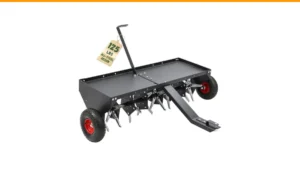
When your lawn is measured in acres, not square feet, this is the tool you want. The Suchtale 40-inch tow-behind aerator hooks to an ATV or riding mower and covers serious ground in a hurry. It features 10 star-shaped tines, each with 10 spike tips that penetrate up to 2 inches into compacted soil.
The star design is the key engineering detail here. Each tine rotates independently, so they keep turning even during tight tractor turns. That means fewer missed patches and less backtracking. The tines are made from galvanized steel to resist rust and bending, which matters when you’re dragging them through rough ground.
What really sets this apart is the weight tray. It’s an all-steel platform that can hold up to 110 pounds of extra weight—cement blocks, sandbags, whatever you have. More weight means deeper penetration on stubborn soil. The tow bar is thicker than most (6mm steel) to prevent bending, and the adjustable hitch accommodates different tractor heights. Assembly takes some time, and you’ll need a vehicle to use it, but for large properties, nothing else on this list comes close to its efficiency.
- 40-inch coverage with 10 rotating star tines
- Each tine features 10 spike tips for deep penetration
- Weight tray holds up to 110 lbs for added force
- Galvanized steel resists rust and bending
- Pin-style hitch fits ATVs and riding mowers
Best for: Property owners with large lawns or fields who already own a riding mower or ATV and need fast, wide coverage before seeding.
Suchtale 18-Inch Push Spike
5th Pick

Suchtale
Suchtale 18-Inch Push Spike Aerator, Heavy Duty Rolling Lawn Aerator, Rotary Spike Lawn Aerator, Manual Aeration Equipment with Steel Handle, Suitable for Lawns, Garden, and Yard Grass Aeration
- 5 Star-Shaped Penetrate Soil: Suchtale Push Spike Aerator with unique 5 steel tines star with 8” diameters, each feature 10 spike…
- Add Roller Design: Solid and flexible plastic rollers, easy to roll on all kinds of turf, also can be quickly put back to the ware…
- Weight tray: Designed with high-quality all -steel, can put 16-inch bricks on the tray to the tray for increased soil penetration,…
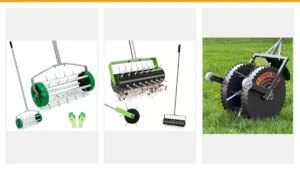
The smaller sibling to the tow-behind model, this push aerator brings the same star-tine technology to a manual format. You get five star-shaped tines on an 18-inch frame that you roll across the lawn like a wheelbarrow. Each tine has 10 spike tips that penetrate up to 2 inches deep.
The rolling design makes it far less labor-intensive than step aerators. You push it forward, the stars rotate, and the spikes punch in and out of the soil continuously. The frame includes solid plastic rollers that help it glide over turf without catching. It also has a weight tray that fits standard 16-inch bricks, so you can add extra pressure on harder ground.
It’s lighter and more maneuverable than the tow-behind, making it practical for medium-sized yards where an electric cord won’t reach. The trade-off is that it does require physical effort, and it won’t work well on dry, hard-packed clay. The manufacturer recommends watering thoroughly before use. Assembly is straightforward with pictorial instructions, and the powder-coated steel holds up well against rust.
- 5 star tines with 10 spikes each for 2-inch depth
- 18-inch frame with plastic rollers for smooth pushing
- Weight tray fits 16-inch bricks for added penetration
- Steel handle eliminates bending during operation
- Powder-coated finish resists rust and wear
Best for: Homeowners with medium yards who want the efficiency of star tines without needing a tow vehicle or extension cord.
How We Chose These Products
I evaluated each tool against three practical criteria: how well it prepares soil for grass seed, how much physical effort it demands, and whether its footprint matches its intended lawn size. An electric dethatcher that covers 15 inches per pass is perfect for a suburban lot but useless on 2 acres. A tow-behind unit is overkill for a postage-stamp yard. Matching the tool to the job is half the battle.
The second factor was versatility. Tools that could both dethatch and aerate scored higher because overseeding often requires both actions. The MZK’s interchangeable blades and the star-tine designs from Suchtale stood out here. I also weighed build quality and maintenance—tools made from thicker steel or with rust-resistant coatings will outlast cheaper alternatives, especially if you store them in a shed through winter.
Buying Guide: What Really Matters
Start by measuring your lawn and honestly assessing your soil. If you have heavy clay that turns rock-hard in summer, a manual spike tool won’t cut it. You need either a powered scarifier like the MZK or a tow-behind with a weight tray to force those tines deep. Sandy or loamy soil is more forgiving and responds well to lighter tools.
Think about the physical toll. Electric and tow-behind tools do the work for you but come with strings attached—literally in the case of the cord, or in the form of a vehicle you need to operate. Manual tools give you a workout and cost less, but they’re only practical for smaller areas. Be honest about how much time and energy you’ll actually invest. A tool that’s too exhausting will sit in the garage.
For grass seed specifically, depth matters. Seed needs soil contact at about 1/4 inch deep. A dethatcher set to scarify mode creates those furrows perfectly. A spike aerator opens channels but doesn’t create a seedbed. If you’re overseeding a thin lawn, a scarifier does double duty. If you’re just trying to relieve compaction before a top-dressing, aeration alone works fine.
Our Top Recommendation
The MZK Electric Dethatcher is the best overall choice for most homeowners preparing a lawn for grass seed. It combines dethatching and scarifying in one pass, which is exactly what an overseeding project requires. The adjustable depth lets you go from clearing debris to cutting seed furrows without switching tools. The bag keeps your lawn clean, and the 15-inch width covers a typical suburban lawn in about an hour.
For smaller budgets or tiny lawns, the Walensee manual aerator is a solid runner-up. It’s affordable, easy to store, and effective on light to moderate soil compaction. If you’re working with a large property, the Suchtale 40-inch tow-behind is the clear winner—nothing else matches its coverage speed. The COCTN fills a niche for precise spot repairs, and the Suchtale 18-inch push model is a good middle option for those who want star-tine performance without a tractor.
Frequently Asked Questions
Should I dethatch or aerate before planting grass seed?
For overseeding an existing lawn, dethatching is usually the priority. Thatch blocks seed from reaching soil. If your soil is also compacted, aerate first, then dethatch to create a clean seedbed. For bare dirt patches, aeration alone is sufficient before seeding.
How deep should I set the tines for grass seed?
Grass seed needs soil contact at about 1/4 inch deep. Set your scarifier or dethatcher to cut shallow furrows—around 0.2 to 0.25 inches. Going deeper disturbs the root systems of existing grass and brings up weed seeds.
Can I use a spike aerator on wet soil?
Lightly moist soil is ideal. Water the lawn a day or two before aerating. Avoid working in soggy conditions—spike aerators can smear and seal the soil surface when it’s too wet, which makes compaction worse.
Will a tow-behind aerator work on a small lawn?
Technically yes, but it’s impractical. The 40-inch width and need for a vehicle make it awkward in tight spaces. You’re better off with a manual push model or an electric dethatcher for lawns under 5,000 square feet. For larger properties, check out our guide to the best dethatcher and aerator for large yards.
If you’re still weighing powered versus manual options, our comparison of the best combo tools for small yards covers more ground. And for those tackling thick, overgrown turf, this roundup of the best dethatchers for thick grass offers additional insight.