You spent the spring pulling weeds and feeding the lawn, yet patches of grass still look tired and thin. Water pools on the surface after a storm and rolls right off the turf. The soil underneath feels hard as concrete. The problem is often hiding in plain sight: a layer of dead stems and roots blocking water, air, and nutrients from reaching the roots.
A dethatcher and aerator combo tackles both issues in one pass. Dethatching pulls up the spongy layer of dead organic matter. Aeration pokes holes into the soil to relieve compaction. For a small yard, you do not need a massive gas-powered machine. The right tool balances power, weight, and storage footprint so the job takes less than an hour without taking over your garage.
This guide covers five distinct options for small properties. One is an attachment for an existing Mantis tiller. Two are electric units with collection bags. One is a manual tool for tiny patches of grass. Another is a wider electric model for slightly larger lots. Each one fits a different homeowner, and we will help you match your lawn size and physical comfort to the right machine.
Here is how the main contenders compare on the features that actually matter.
| Features | Mantis Combo | MZK Electric | DEKOPRO Electric | COCTN Manual | VEVOR Electric |
|---|---|---|---|---|---|
| Power Source | Tiller attachment | 13 Amp corded | 15 Amp corded | Manual push | 15 Amp corded |
| Working Width | 15 inches | 15 inches | 15 inches | Single row spikes | 16 inches |
| Depth Settings | Fixed by tiller | Adjustable, 2 ranges | 5 positions | 3 handle heights | 5 positions |
| Collection Bag | None | 45L bag | 40L bag | None | 14.5-gal bag |
| Best For | Mantis owners | Small to mid lawns | Medium lawns | Very small lawns | Larger small yards |
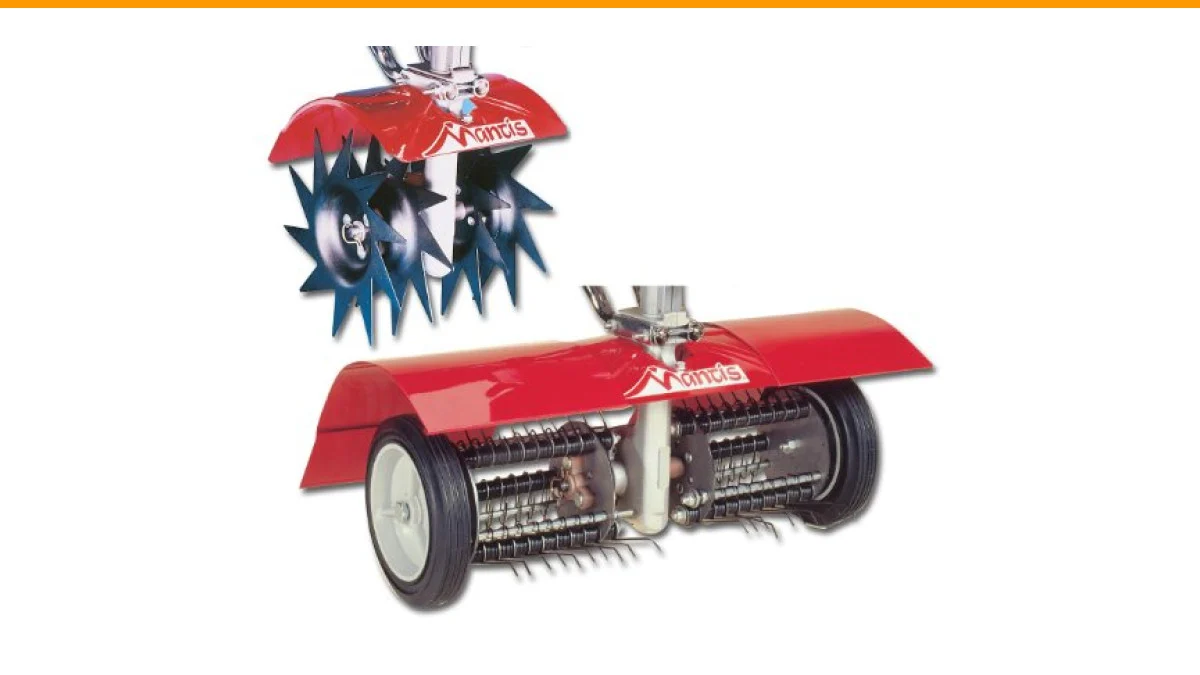
Mantis Aerator/Dethatcher

Mantis
Mantis Aerator/Dethatcher Combo
- Aerator and Dethatched Attachment Combo Pack for the Mantis 7000 Series Tiller/Cultivators
- Aerator perfect for use in compact, clay soil
- Lawn care attachments are not recommended for surface-rooted grasses (Bermuda, Zoysia, Centipede, and St. Augustine) because it ca…
This combo is not a standalone machine. It is a set of two attachments built for the Mantis 7000 Series tiller and cultivator. If you already own that Mantis power head, this kit transforms it into a lawn care station without spending money on a separate motor. That makes it a smart buy for people who keep a Mantis for garden beds and want to double its usefulness.
The aerator head cuts into compacted clay soil, which is exactly the kind of ground that defeats most manual tools. The dethatcher uses 60 spring-steel tines to comb out a 15-inch strip in one pass. Because the tiller engine drives the tines with real torque, it handles thicker thatch than most corded electric units can manage. You are also not tethered to an outlet, so you can reach every corner of the yard without extension cord headaches.
When planning your garden layout, consider the benefits of growing pole beans vs bush beans to maximize your space and yield.
There is a significant catch. Mantis explicitly warns that these attachments are not safe for surface-rooted grasses like Bermuda, Zoysia, Centipede, or St. Augustine. The aggressive action can shred those shallow root systems. The tiller itself is also a premium investment, so this route only makes sense if the power head is already sitting in your shed. If you are starting from scratch, a dedicated electric unit costs less.
- Two-head kit: aerator plus dethatcher for the Mantis 7000 Series
- 60 spring-steel tines clear a 15-inch swath per pass
- Aerator designed for compact and clay-heavy soils
- No cord, no battery, no gas—uses the tiller engine
- Not recommended for Bermuda, Zoysia, Centipede, or St. Augustine lawns
Best for: Existing Mantis tiller owners with cool-season grass who want professional-grade results without storing another motorized tool.
MZK Lawn Dethatcher Electric
The MZK is a corded electric scarifier with a 13-amp motor spinning at 3,700 RPM. It is built for the homeowner who wants a real machine but does not have a huge yard. The 15-inch rake path covers a typical suburban lot quickly, and the 45-liter collection bag means fewer trips to the compost pile. This is a tool you pull out twice a year for spring and fall cleanup.
What stands out here is the quick-switch blade system. You get two sets of tines: one for gentle dethatching that clears surface debris and moss, and another for scarifying that cuts deeper into the soil. Swapping between them takes seconds, so you can dethatch the front lawn and scarify the back lawn in the same session without wrestling with bolts. The adjustable depth range goes from slightly above ground level down to nearly half an inch deep, which gives you fine control over how aggressive the cut is.
The trade-off is the cord. At 27.5 pounds, the machine is light enough to maneuver, but you will be managing an extension cord the whole time. The foldable handle helps with storage, but the unit is still about the size of a small push mower when collapsed. It is not meant for large acreage, and the 13-amp motor will strain if you try to power through extremely thick, neglected thatch in one go. Work in overlapping passes and it handles normal residential lawns fine.
- 13-amp copper motor delivers 3,700 RPM for steady cutting
- 15-inch working width with adjustable depth from -0.47 to 0.24 inches
- 2-in-1 blade set switches between dethatching and scarifying
- 45L collection bag reduces stops during cleanup
- Foldable handle and dual safety switches for safe storage
- Weighs 27.5 pounds for easy handling
Best for: Homeowners with a small to medium lawn who want a lightweight, corded electric tool with a bag and quick blade changes.
Electric Lawn Dethatcher DEKOPRO
The DEKOPRO model steps up the power with a 15-amp copper motor producing 3,500 RPM. It is a 2-in-1 machine that switches between scarifying and dethatching, but the real difference is the five-position depth adjustment. You can set the cutting depth from -11mm to +10mm, which lets you match the tool to the season. Run it shallow in the fall to clear leaves and light debris, then go deeper in the spring to slice through compacted soil.
This unit feels like a step toward professional equipment without the price tag of a gas machine. The 15-inch width is standard for this class, but the extra amperage gives the motor more reserve power when the tines hit a dense patch of roots. The 40L collection bag is slightly smaller than the MZK’s, but it is still large enough to finish most small yards without frequent stops.
You should know that this is a corded tool, so plan your extension cord route before you start. The dual safety switches are a nice touch—you have to squeeze two levers to start it, which prevents accidental engagement when kids or pets are around. The foldable handle makes storage easier, but the machine is not what anyone would call compact. It needs a corner of the shed or garage. For a yard under 5,000 square feet, the power is almost overkill, which means it will never bog down on your grass.
- 15-amp copper motor runs at 3,500 RPM for deep cuts
- 5-position height adjustment from -11mm to +10mm
- 2-in-1 blade system for aeration and scarification
- 40L collection bag catches grass, roots, and moss
- Dual safety switches and foldable handle for safe, compact storage
Best for: Gardeners with medium-sized lawns who want extra motor power and precise depth control for seasonal lawn care.
COCTN Manual Aerator Tools

COCTN
Lawn Aerator Tools, 3 Height Manual Yard Aerator with Self-Cleaning Design | Heavy Duty Adjustable Lawn Air Aerator Tool with 15 Long Iron Spikes, for Lawn Care, Hard Soil Loosening and Yard Aerating
- [Built-in dual-layer Spring Design] The lawn aerator tool adopts an innovative built-in spring double-layer structure, which enabl…
- [Adjustable height comfort handle] This manual yard aerator has three height settings that can be adjusted. This ergonomic design…
- [Efficient and lawn-friendly aerator tools] This lawn aerator tool features three-inch-long steel spikes that can easily penetrate…
The COCTN is a completely different animal. It is a manual, push-style aerator with three-inch steel spikes that you drive into the ground by hand. There is no motor, no cord, and no fuel. This is for the person with a very small lawn—think 1,000 square feet or less—who does not want to store or maintain another machine. It is also a practical choice for spot-treating compacted areas like a path worn down by foot traffic.
The standout feature is the self-cleaning design. Traditional manual aerators clog with dirt after every push, forcing you to bend over and scrape the tines clean. This unit uses a built-in dual-layer spring structure that pushes the soil off the spikes automatically as you lift the handle. That single detail saves your back and keeps the job moving. The all-steel frame is heavy enough to drive the spikes in without excessive force, but light enough to carry to the shed.
You will feel the workout. A manual aerator requires you to push down and step on the crossbar for every plug. On a 2,000-square-foot lawn, that is hundreds of pushes and your legs will complain the next day. The three adjustable handle heights help people of different statures use it comfortably, and the tool arrives mostly assembled with the wrench included. But this is not a tool for anyone with mobility issues or a lawn larger than a postage stamp.
- 3-inch steel spikes penetrate soil to relieve compaction
- Built-in dual-layer spring self-cleaning mechanism
- 3 adjustable handle heights for different user statures
- Heavy-duty all-steel construction with reinforced joints
- Minimal assembly: one screw and two washers with wrench included
Best for: Owners of very small lawns or specific compacted patches who want a durable, no-power tool that stores flat and needs zero maintenance.
VEVOR 2-in-1 Electric

VEVOR
VEVOR 2-in-1 Electric Dethatcher and Scarifier, 16-Inch 15 Amp, Corded | Lawn Dethatcher for Garden Yard Grass, Walk Behind Machine w/ 14.5-Gallon Thatch Collection Bag & 5-Position Depth Adjustment
- 2-in-1 Quick Release Blade: This electric dethatcher and scarifier comes with both dethatching and scarifying blades. The snap-on…
- Powerful Motor for Efficiency: Our scarifier and lawn dethatcher features a 15A motor (3600 RPM) and 16-inch wide path. The 10-bla…
- Dual Adjustments for All Conditions: The dethatcher and scarifier provides 5-position depth settings for scarifying (-0.47 to -0.1…
The VEVOR is the widest and most powerful electric option here. It packs a 15-amp motor pushing 3,600 RPM across a 16-inch path. The extra inch over the other electric models does not sound like much, but it cuts down your total passes noticeably on a rectangular lot. This unit is aimed at the upper end of the small-yard spectrum, stretching toward medium-sized properties.
VEVOR includes two blade sets with a tool-free snap-on system. The scarifier uses 10 blades to slice into the soil while the dethatcher uses 22 teeth to comb out thatch. The depth adjustment works independently for each function, with five positions for scarifying and a separate range for dethatching. The two-position handle adjusts for taller or shorter users, a feature the other electric models lack. The 14.5-gallon collection bag is the largest in this group, so you spend less time emptying it.
The build quality is worth noting. It uses a metal body and heavy-duty wheels, which adds durability but also weight—26.68 pounds, about average here. The wire clamps keep your extension cord out of the tine path, and the waterproof plug adds safety when working over damp grass. The main limitation is that this is still a corded tool. You need a reliable power source nearby. Also, VEVOR is clear that this is not a lawn mower; it is strictly for soil loosening and debris cleanup, so do not expect it to cut grass.
- 15-amp motor at 3,600 RPM with a 16-inch working width
- Tool-free snap-on blades: 10-blade scarifier and 22-tooth dethatcher
- 5-position depth settings separate for scarifying and dethatching
- 14.5-gallon detachable nylon collection bag
- 2-position adjustable handle and foldable design for storage
- Metal body with heavy-duty wheels and cord management clamps
Best for: Homeowners with the larger end of small yards who want the widest cutting path and the biggest collection bag in this class.
How We Chose These Products
We started with the specific constraints of a small yard: limited square footage, limited storage space, and a budget that does not justify commercial equipment. Every product here had to fit through a standard garden gate and store in a corner of a shed. We eliminated gas-powered ride-on units and tow-behind models that require a tractor, since those make no sense for a 4,000-square-foot lot.
We then evaluated each unit on motor power, working width, depth adjustability, and debris collection. We looked for tools that do both jobs—dethatching and aeration—without requiring a separate purchase. Manual tools earned a place because not every small yard needs a motor. Attachment-based tools earned a place because they leverage equipment you may already own. We prioritized products with clear safety features and honest limitations, and we verified that every specification listed here comes directly from the manufacturer’s data.
Buying Guide: What Really Matters
Start with your lawn size. A manual tool like the COCTN works fine under 1,000 square feet. Between 1,000 and 3,000 square feet, an electric unit with a bag saves you hours. Above that, the wider 16-inch VEVOR path is worth the extra cost. Measure your actual grass area, not your property lines, before choosing.
Consider your grass type next. If you have Bermuda or Zoysia, avoid aggressive scarifying tools that cut deep roots. The Mantis attachment specifically warns against these grasses. Cool-season grasses like fescue and bluegrass tolerate deeper dethatching. When in doubt, start with the shallowest depth setting and check the results after one pass.
Think about the cord. Every electric model here requires an extension cord, so map out where your outdoor outlets are. You will need a 12-gauge cord rated for outdoor use if your lawn is more than 100 feet from the outlet. Also look at the collection bag size. A larger bag means fewer interruptions, but it also adds bulk when you empty it. Finally, check the handle adjustment. If you are tall or short, a fixed handle will force you to hunch over for the whole job.
Our Top Recommendation
The MZK Lawn Dethatcher Electric is the best overall pick for most small yards. It hits the sweet spot of power, weight, and price. The 13-amp motor handles typical residential thatch, the 15-inch width covers ground efficiently, and the 45L bag holds plenty of debris. The quick-switch blades let you dethatch in the spring and scarify in the fall with zero hassle. At 27.5 pounds, it is light enough for most adults to manage without strain.
If your lawn is on the larger side of small or you want the widest path, the VEVOR 2-in-1 is a strong alternative with its 16-inch deck and bigger bag. For Mantis owners, the attachment combo is the smartest money you will spend this season. And if your yard is genuinely tiny, the COCTN manual aerator gives you a solid workout and a clean lawn without plugging anything in. Check the current prices on Amazon to see which fits your budget this week.
Frequently Asked Questions
How often should I dethatch a small lawn?
Once a year is enough for most cool-season lawns. Do it in early spring or early fall when the grass is actively growing and can recover quickly. If your thatch layer is less than half an inch thick, skip dethatching entirely and just aerate. Over-dethatching weakens the grass and invites weeds.
Can I dethatch and aerate at the same time?
Yes, and that is the point of a combo tool. Run the dethatcher first to pull up the dead layer, then switch to the aerator or scarifier setting to open the soil. The order matters—dethatching clears the surface so the aerator tines can reach the dirt without fighting through debris.
Will an electric dethatcher work on wet grass?
It will work, but it is not a good idea. Wet thatch clumps and clogs the collection bag, and wet soil makes a mess of the tines. Wait until the grass is dry and the soil is slightly moist, not saturated. A day after a light rain is ideal because the tines penetrate easier without turning the lawn into mud.
Do I need to bag the debris after dethatching?
Yes. Leaving the pulled thatch on the lawn blocks sunlight and traps moisture against the grass. The collection bag on the MZK, DEKOPRO, or VEVOR handles this automatically. If you use the Mantis attachment or the COCTN manual tool, rake up the debris afterward and add it to your compost pile.