
Imagine stepping onto your lawn, expecting a lush green carpet but instead finding a patchy, dry surface that feels more like a sponge than grass. This common scenario often arises from excessive thatch buildup. Understanding how much thatch is too much is essential for maintaining a healthy lawn. In this article, you’ll learn how to assess thatch levels, the impact on your grass, and effective strategies for management.
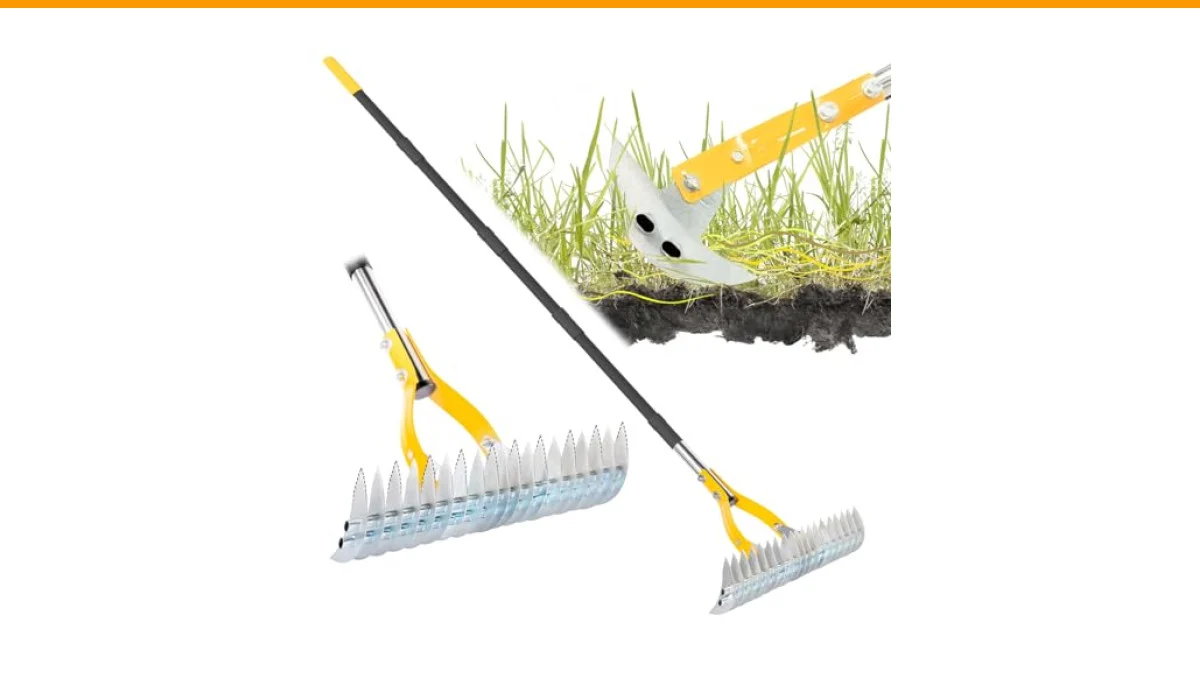
Thatch, the layer of dead grass, roots, and organic matter that accumulates between the soil and grass blades, can impede water, air, and nutrient absorption. If you’re wondering how much thatch is too much, knowing the threshold for your lawn type is crucial. A product like the BlumeTrec Thatch Rake can help you efficiently manage thatch accumulation while promoting lawn health.

BlumeTrec
Thatch Rake for Lawn with 74inch Handle, 15 inch Dethatcher Rake for Grass to Cleaning Dead Grass, Efficient Steel Metal Rake for Dethatching, Heavy Duty Thatching Rakes for Garden, Yard
- Promote Lawn Health and Neatness: This thatch rake is designed to clear away thatch buildup, dead grass, fallen leaves, and small…
- Dual-Sided Tines with Adjustable Angles: The rake head includes dual-sided tines, one side designed for dethatching and removing d…
- Hardened Manganese Steel Rake Head: Crafted from manganese steel and strengthened through quenching treatment, the rake head provi…
What is Thatch and Its Effects on Your Lawn?
Thatch is a natural byproduct of grass growth. However, a thin layer (about 1/2 inch) can benefit your lawn by providing insulation and moisture retention. Problems arise when thatch thickness exceeds 1 inch. At this level, the lawn may experience:
- Reduced water infiltration leading to poor drainage.
- Impeded nutrient absorption, causing nutrient deficiencies.
- Increased susceptibility to pests and diseases.
- Weakened roots due to lack of oxygen.
Regular assessment of thatch levels can prevent these issues from overtaking your lawn.
How to Measure Thatch Depth
Measuring thatch depth is straightforward and requires minimal tools. Here’s how:
- Use a shovel or garden spade to cut a small section of your lawn, about 4-6 inches in diameter.
- Carefully lift the section and examine the layers. You’ll notice a brown, spongy layer between the green grass and the soil.
- Measure the thickness of this layer. If it is more than 1 inch, it’s time to take action.
Pro tip: Perform this measurement in multiple areas of your lawn for an accurate assessment.
When Should You Dethatch?
The best time to dethatch your lawn depends on your grass type:
- Cool-season grasses: Dethatch in early spring or early fall when the grass actively grows.
- Warm-season grasses: Late spring to early summer is ideal when growth peaks.
Using a dethatching rake, like the BlumeTrec model, can make this process efficient. The rake’s dual-sided tines allow for thorough removal of thatch without damaging the grass.
Methods for Managing Thatch
There are several effective methods for managing thatch, each suited to different levels of buildup:
| Method | Description | Best For |
|---|---|---|
| Dethatching Rake | A manual tool with sharp tines that removes thatch. | Light to moderate thatch (up to 1 inch) |
| Power Dethatcher | A motorized machine that removes thick layers of thatch. | Heavy thatch (over 1 inch) |
| Core Aeration | Removes soil plugs to improve air circulation, which helps decompose thatch. | All thatch levels |
| Topdressing | Spreading a thin layer of compost or soil to improve soil health. | Preventative measure for all lawns |
Each method serves a purpose, and sometimes a combination of techniques is most effective.
How do I know if I have too much thatch?
Measure the thatch layer as described earlier. If it exceeds 1 inch, it’s time to address it.
Can I dethatch my lawn myself?
Yes, using a dethatching rake or a power dethatcher is manageable for most homeowners. Just make sure to choose the right tool based on the thatch level.
What time of year is best for dethatching?
Spring or early fall is ideal for cool-season grasses, while late spring is best for warm-season grasses.
Is dethatching harmful to my lawn?
When done correctly and at the right time, dethatching can benefit your lawn. However, excessive dethatching can stress the grass.
How can I prevent thatch buildup?
Maintain proper watering, mow at the right height, and avoid over-fertilizing. Regular aeration also helps.
Effective Lawn Care Tips
- Regularly check for thatch buildup, especially in spring and fall.
- Use a dethatching rake for light thatch and consider professional services for heavy buildup.
- Practice good mowing habits: keep blades sharp and mow at the recommended height for your grass type.
- Water deeply but infrequently to encourage strong root growth.
- Aerate your lawn annually to improve soil health and reduce thatch.
- Choose the right fertilizer based on your lawn’s needs.
- Monitor for pests and diseases to prevent further stress on your grass.
Managing thatch is crucial for a healthy lawn. Knowing how much thatch is too much helps you take proactive steps. Use the right tools, like the BlumeTrec Thatch Rake, for effective maintenance and enjoy a thriving green space.


