

I spent two weekends last spring staring at a wall of dethatcher listings, trying to figure out which machine wouldn’t turn my St Augustine lawn into a dirt patch. The reviews were either suspiciously glowing or written by people who clearly owned a different grass type. The specs blurred together. Motor power, rake width, tine material, depth settings. None of it told me what I actually needed to know: will this thing kill my lawn or help it?
St Augustine is not like other turfgrasses. It spreads through above-ground runners called stolons, and those stolons are the engine of its recovery. A dethatcher that rips too deep or pulls too hard can shred the stolons and leave you with bare spots that take months to fill. The best tool for this grass is one that lifts dead material without tearing into the living layer underneath. That usually means a machine with adjustable depth, a gentle tine action, and enough power to be efficient without being aggressive.
Below are five tools that fit different budgets and lawn sizes. One is a corded electric dethatcher and scarifier for larger yards. Three are manual thatch rakes for smaller spaces or spot treatment. The last is a liquid fertilizer to help your grass bounce back after dethatching. I’ll explain who each one suits, where it falls short, and how to use it without wrecking your lawn.
Here is a quick side-by-side look at the key specs that separate these tools.
| Features | MZK 13-Inch Electric | BlumeTrec Thatch Rake | Cogardenshower Thatch Rake | KLDOLLAR Thatch Rake | TPS Nutrients Fertilizer |
|---|---|---|---|---|---|
| Power Source | 13-Amp corded electric | Manual, stainless steel handle | Manual, stainless steel handle | Manual, stainless steel handle | Liquid concentrate, 1 gallon |
| Working Width | 13 inches | 15 inches | 13 inches | Not specified | N/A |
| Key Feature | 2-in-1 dethatch/scarify blades | Dual-sided adjustable tines | 21 carbon steel tines | 19 alloy steel tines | Liquid lawn food |
| Handle Length | Foldable, not adjustable | Up to 74 inches, sectional | 50 inches, adjustable | 27.8 to 68.5 inches | N/A |
| Best Use Case | Medium to large lawns | Large lawns, tall users | Small to medium lawns | Small yards, tight spaces | Post-dethatch recovery |
In this article
MZK 13-Inch Electric Deth…

MZK
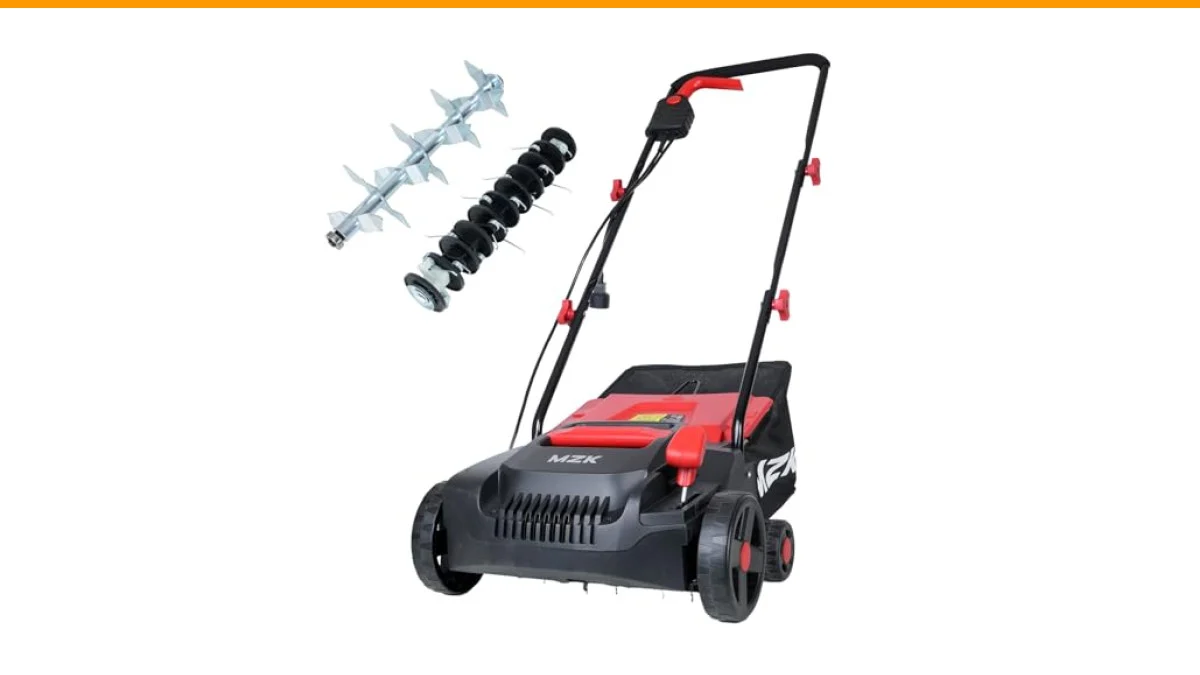
MZK 13-Inch Electric Dethatcher Scarifier, 13-Amp Lawn Tool(RED) | 2-in-1 dethatcher with 4 height settings and 12-gal bag helps remove thatch and refresh small to mid lawns.
- [Powerful 13 Amp Electric Motor]:Equipped with a 13 Amp copper motor, this electric dethatcher delivers a strong 3700 RPM, making…
- [13-Inch Rake Path with Adjustable Depth]:With a 13-inch wide rake path and adjustable depth settings ranging from -0.47" to 0.16…
- [Quick-Switch 2-in-1 Blades]:Use the dethatcher to clear thatch and moss or switch to scarifying to encourage deeper root growth a…
This is the only powered dethatcher in the group, and it’s built for homeowners who have a quarter-acre or more of St Augustine and don’t want to spend a full weekend raking by hand. The 13-amp motor spins at 3,700 RPM, which is enough to pull thatch without the brute force of a gas-powered vertical mower. The 13-inch rake path means fewer passes than a manual rake, and the 30-liter collection bag catches most of what it lifts.
The standout feature is the quick-switch blade system. You get a dethatching blade for lifting dead material and a scarifying blade for cutting into the soil surface. For St Augustine, the dethatching blade is the safer choice most of the time. The scarifying blade is more aggressive and can damage stolons if you set the depth too low. The adjustable depth range from -0.47 to 0.16 inches gives you fine control, which matters when you’re working with a grass that spreads on top of the soil.
The trade-off is weight and cord management. At 19.5 pounds, it’s manageable but not featherlight. You’ll need an outdoor extension cord, and the cord can snag on shrubs or garden beds if you’re not careful. The foldable handle helps with storage, but it doesn’t telescope, so taller users may find the working height a bit low. Also, the 30L bag fills faster than you’d expect in thick thatch. Plan on emptying it every 10 to 15 minutes in heavy conditions.
- 13-amp copper motor delivers 3,700 RPM for efficient thatch removal
- Adjustable depth settings from -0.47 to 0.16 inches for precise control
- Two blade types included: dethatcher and scarifier
- 30L collection bag reduces downtime between empties
- Dual safety switches and foldable handle for storage
Best for: Homeowners with medium to large St Augustine lawns who want powered dethatching without gas-engine maintenance.
Thatch Rake for Lawn with…

BlumeTrec
Thatch Rake for Lawn with 74inch Handle, 15 inch Dethatcher Rake for Grass to Cleaning Dead Grass, Efficient Steel Metal Rake for Dethatching, Heavy Duty Thatching Rakes for Garden, Yard
- Promote Lawn Health and Neatness: This thatch rake is designed to clear away thatch buildup, dead grass, fallen leaves, and small…
- Dual-Sided Tines with Adjustable Angles: The rake head includes dual-sided tines, one side designed for dethatching and removing d…
- Hardened Manganese Steel Rake Head: Crafted from manganese steel and strengthened through quenching treatment, the rake head provi…
If the electric dethatcher felt like overkill for your situation, this manual rake from BlumeTrec is the opposite approach. It’s a 15-inch wide thatch rake with a handle that extends to 74 inches. That extra length is a genuine back-saver. Most manual rakes top out around 50 inches, which forces taller users to stoop. This one lets you stand more upright and use your body weight instead of your lower back.
The head has 19 curved tines made from hardened manganese steel. Those tines are designed to penetrate beneath the grass and lift dead material without pulling up the living stolons. The dual-sided design gives you a dethatching side and a soil-loosening side. For St Augustine, the dethatching side is what you’ll use most. The angle of the tines can be adjusted for shallow surface combing or deeper thatch removal, which is a useful feature when you’re trying to be gentle.
The limitation is obvious: this is manual labor. On a small lawn, it’s fine. On anything over a quarter-acre, you’ll feel it in your shoulders and forearms. The stainless steel handle sections twist together and can be disassembled for storage, but the connection points can loosen over time if you’re pulling hard through dense thatch. Check them periodically and tighten as needed. Also, the 15-inch head is wider than some manual rakes, which covers more ground per stroke but requires more effort per pull.
- 74-inch maximum handle length reduces bending and strain
- 15-inch wide head with 19 curved manganese steel tines
- Dual-sided tines for dethatching and soil loosening
- Adjustable tine angle for shallow or deep work
- Sectional stainless steel handle for compact storage
Best for: Taller homeowners with small to medium lawns who prefer a manual tool and want to avoid bending.
Thatch Rake for Lawn -13″…
cogardenshower
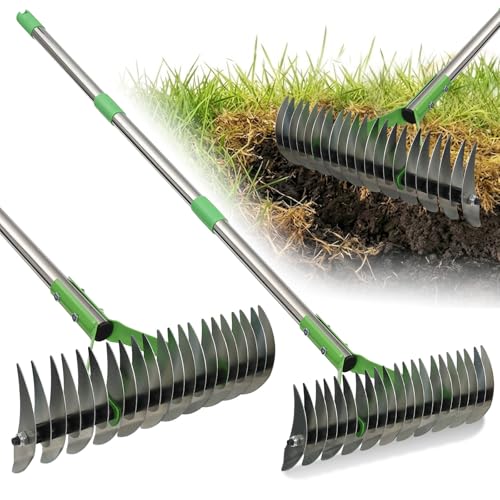
Thatch Rake for Lawn -13" Heavy Duty Dethatching Rake,Sharp Carbon Steel Tines, 2-in-1 Manual Dethatcher & Scarifier Rake for Dead Grass,Moss Removal,Turf Dethatching,50'' Adjustable Handle
- Deep Dethatching to Help Revive Thinning, Matted Lawns - This thatch rake features a 13" wide head with 21 sharp carbon steel tine…
- 2-in-1 Rake for Dethatching and Everyday Yard Cleanup - Designed with two working sides in one tool, this dethatcher and scarifier…
- Reinforced Build for Tough Pulling and Repeated Outdoor Use - Built for demanding yard work, this manual thatching rake features a…
The cogardenshower thatch rake sits in the middle of the manual category. It has a 13-inch head with 21 sharp carbon steel tines spaced 0.6 inches apart. That tighter spacing is designed to pull up thick thatch, dead grass, and moss more effectively than rakes with wider gaps. It’s a good choice for spring cleanup, patch repair, or prepping a lawn for overseeding. The 50-inch adjustable handle is shorter than the BlumeTrec, so it suits average-height users better than tall ones.
What sets this one apart is the two-sided head. One side has all 21 tines for deep dethatching and scarifying. The other side has 11 tines for lighter raking and surface debris. That second side is handy for leaves and loose grass after you’ve done the heavy work. The reinforced head connection and 1.1-inch stainless steel handle give it a solid feel when you’re pulling through dense material. The coated metal construction resists rust, which matters if you store it in a shed or garage.
The honest downside is the handle length. At 50 inches, it’s not ideal for anyone over about 5’10”. You’ll end up bending more than you’d like. The carbon steel tines are sharp and effective, but they can clog if you’re working in wet thatch. Wait for a dry day. Also, the 13-inch width means more passes than the 15-inch BlumeTrec, but the tighter tine spacing makes each pass more thorough.
- 13-inch head with 21 carbon steel tines and 0.6-inch spacing
- Two-sided design: 21 tines for deep work, 11 tines for light raking
- 1.1-inch stainless steel handle with reinforced head connection
- Adjustable handle length up to 50 inches
- Built-in hanging hole for storage
Best for: Average-height homeowners who want a versatile manual rake for dethatching, moss removal, and light scarifying.
KLDOLLAR Thatch Rake, Det…

KLDOLLAR
KLDOLLAR Thatch Rake, Dethatcher Rake for Grass to Cleaning Dead Grass | 15 Inch Wide Thatching Rake for Lawn, Combs Turf & Loosens Soil, Efficient Stainless Steel Handle Metal Rake for Dethatching
- Keep Your Lawn Healthy and Tidy: versatile thatching rake alloy steel tines can pull up the thatch, leaves, dead branches and othe…
- Double Side Alloy Steel 19 Tines with Easily Adjustable Function: dethatcher rake featuring a head with 2 differently powerful tin…
- Sturdy Enough Structure: The Lawn rake handle poles make of high quality sturdy stainless steel for reliability and long term use.…
This KLDOLLAR rake is the most adjustable manual option in the group. The handle can be set to 27.8, 55.5, or 68.5 inches, which makes it useful for everything from close-up patch work to full-lawn raking. The head has 19 alloy steel tines on two sides. One side is for pulling up dead grass, leaves, and debris. The other side loosens soil for planting or reseeding. It’s a simple, functional design that doesn’t try to do too much.
The alloy steel head is fully hardened and resistant to deformation. That’s a real benefit when you’re pulling through tough St Augustine thatch. The stainless steel handle poles are sturdy, and the pre-assembled head attaches with a simple tightening. Setup takes minutes. The three length options are genuinely useful if multiple people in the household handle lawn chores. You can set it short for a teenager and long for an adult without buying two tools.
Where it falls short is the tine spacing and the lack of fine depth control. The 19 tines are effective, but they don’t have the same tight spacing as the cogardenshower rake. In thick thatch, you may need more passes. The adjustable handle sections can also wobble slightly if you don’t tighten them firmly. And like all manual rakes, it’s labor-intensive on larger lawns. This is a spot-treatment tool, not a whole-yard solution for a half-acre property.
- Three adjustable handle lengths: 27.8, 55.5, and 68.5 inches
- Dual-sided 19-tine alloy steel head for dethatching and soil loosening
- Hardened steel head resists deformation and scratching
- Pre-assembled head for quick setup
- Stainless steel handle poles for durability
Best for: Households with multiple users of different heights who need a flexible manual rake for small yards and spot treatment.
St Augustine Grass Fertil…
TPS NUTRIENTS
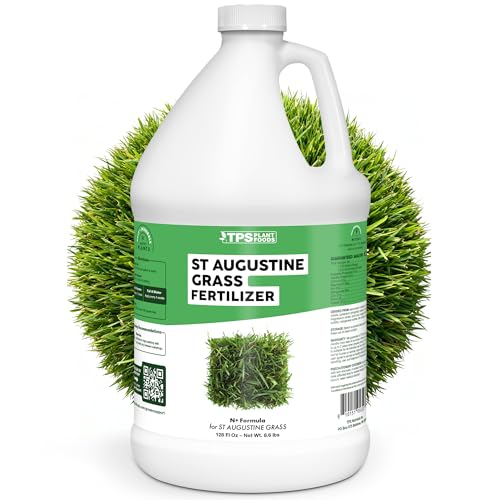
St Augustine Grass Fertilizer, Liquid Lawn Food for Thicker Growth, 1 Gal | Promotes Rich Green Color & New Runners, Supports Root Growth, Easy Mix & Feed, Fast Nutrient Delivery, High Nitrogen Formula
- Enhance Deep Green Color & Lawn Appearance – Boosts rich color for a healthier, more vibrant St Augustine grass lawn.
- Build Strong Roots for Heat & Wear Resistance – Supports deep root systems to improve durability in warm climates and heavy use.
- Fast-Absorbing Liquid Formula for Quick Results – Delivers nutrients efficiently for visible improvements in growth, color, and tu…
This is not a dethatcher. It’s a liquid fertilizer designed to help St Augustine recover after the stress of dethatching. TPS Nutrients makes a 1-gallon concentrate that you mix with water and apply to the lawn. The formula is built to support deep root systems, which is exactly what you want after you’ve disturbed the surface layer. It also promotes the deep green color that St Augustine is known for.
The fast-absorbing liquid formula delivers nutrients quickly, which matters when your grass is in recovery mode. Granular fertilizers take longer to break down and become available to the roots. A liquid feed gives the lawn a faster start on regrowth. The 1-gallon size covers a decent area when diluted according to the label, though you’ll need to check the current price on Amazon to see if it fits your budget for the square footage you’re treating.
The main limitation is that this is a supplement, not a fix-all. If you dethatched too aggressively and damaged the stolons, fertilizer alone won’t bring the lawn back. It supports recovery, but it doesn’t replace proper timing and technique. Also, liquid fertilizer requires a sprayer and careful mixing. If you prefer granular products you can broadcast with a spreader, this isn’t that. And it’s a concentrate, so you’ll need to store the leftover product properly.
- Liquid concentrate formula for fast nutrient absorption
- Supports deep root growth and heat resistance
- Promotes deep green color in St Augustine grass
- 1-gallon size makes multiple applications
- Made in the USA
Best for: Homeowners who want to give their St Augustine a quick nutrient boost after dethatching or during recovery from heat stress.
How We Chose These Products
I started by filtering out anything that couldn’t be adjusted to work gently on stolon-based grass. That eliminated tow-behind dethatchers with fixed, aggressive tines and any machine without depth control. St Augustine doesn’t tolerate the same treatment as Bermuda or Zoysia, so the tool has to give the operator enough control to avoid tearing up the stolons.
From there, I looked at build quality, ease of use, and whether the product data actually supported the claims. I prioritized tools with adjustable handles or depth settings, durable tine materials like carbon steel or manganese steel, and collection systems that reduce cleanup time. I also included one fertilizer because post-dethatch recovery is part of the job, and most guides skip it entirely.
Buying Guide: What Really Matters
Depth adjustment is the single most important feature for St Augustine. You need to be able to set the tines to just skim the surface and lift dead material without digging into the soil. A machine with fixed depth is a gamble. If it’s too aggressive, you’ll damage the stolons. If it’s too shallow, you won’t remove enough thatch. Look for a range that includes negative settings, which lift the tines above the soil surface.
Blade type matters too. Dethatching blades have tines or flails that pull material up. Scarifying blades have blades or hooks that cut into the soil. For St Augustine, dethatching blades are almost always the right choice. Scarifying is for lawns that need serious renovation, and it can set St Augustine back significantly. If you buy a 2-in-1 machine, use the dethatching blade unless you have a specific reason to scarify.
Handle length and ergonomics are worth considering if you’re going manual. A rake that’s too short will wreck your back. A rake that’s too long can be awkward to control. Adjustable handles solve this, but check that the locking mechanism is solid. For powered dethatchers, weight and cord management are the main ergonomic factors. A 20-pound machine is easy to push. A 30-pound machine gets tiring after 20 minutes.
Our Top Recommendation
The MZK 13-Inch Electric Dethatcher is the best overall choice for most St Augustine lawns. It has the depth control, the right blade options, and enough power to handle a quarter-acre without exhausting you. The 30L bag and 13-inch path keep the work moving. It’s not perfect. The cord is a hassle, and the handle doesn’t adjust for taller users. But for the money, it’s the most capable tool here for safe, effective dethatching.
If you have a small lawn or prefer manual tools, the BlumeTrec Thatch Rake is the runner-up. The 74-inch handle is a genuine comfort upgrade, and the manganese steel tines hold up well. For tight budgets or tiny yards, the KLDOLLAR rake offers good adjustability at a lower cost. Pair any of these with the TPS Nutrients fertilizer to speed up recovery.
Frequently Asked Questions
Can I use a scarifier on St Augustine grass?
You can, but you shouldn’t unless the lawn is severely compacted and you’re prepared for a long recovery. Scarifying blades cut into the soil and can slice through stolons. For routine thatch management, use a dethatching blade or a manual thatch rake. If you do scarify, set the depth as shallow as possible and do it in late spring when the grass is growing vigorously.
What is the best time to dethatch St Augustine?
Late spring to early summer, when the grass is actively growing and can recover quickly. Avoid dethatching in winter or during drought stress. The grass needs energy to regrow, and St Augustine is slow to recover compared to other warm-season grasses. If you dethatch when it’s dormant, you’ll just stress it further.
How often should I dethatch my St Augustine lawn?
Most St Augustine lawns need dethatching every two to three years, not every year. This grass produces thatch more slowly than Bermuda or Zoysia. If your thatch layer is under half an inch, you probably don’t need to dethatch. Check by digging a small plug and measuring the brown layer between the green grass and the soil. Over-dethatching is a real risk with this grass.
What should I do after dethatching to help my lawn recover?
Water deeply and infrequently to encourage deep roots. Apply a liquid fertilizer like the TPS Nutrients product to give the grass a quick nutrient boost. Avoid heavy foot traffic for a week or two. If you have bare spots, you can overseed, but St Augustine is usually propagated by plugs or sod rather than seed. Give the stolons time to spread into thin areas before you judge the results.


