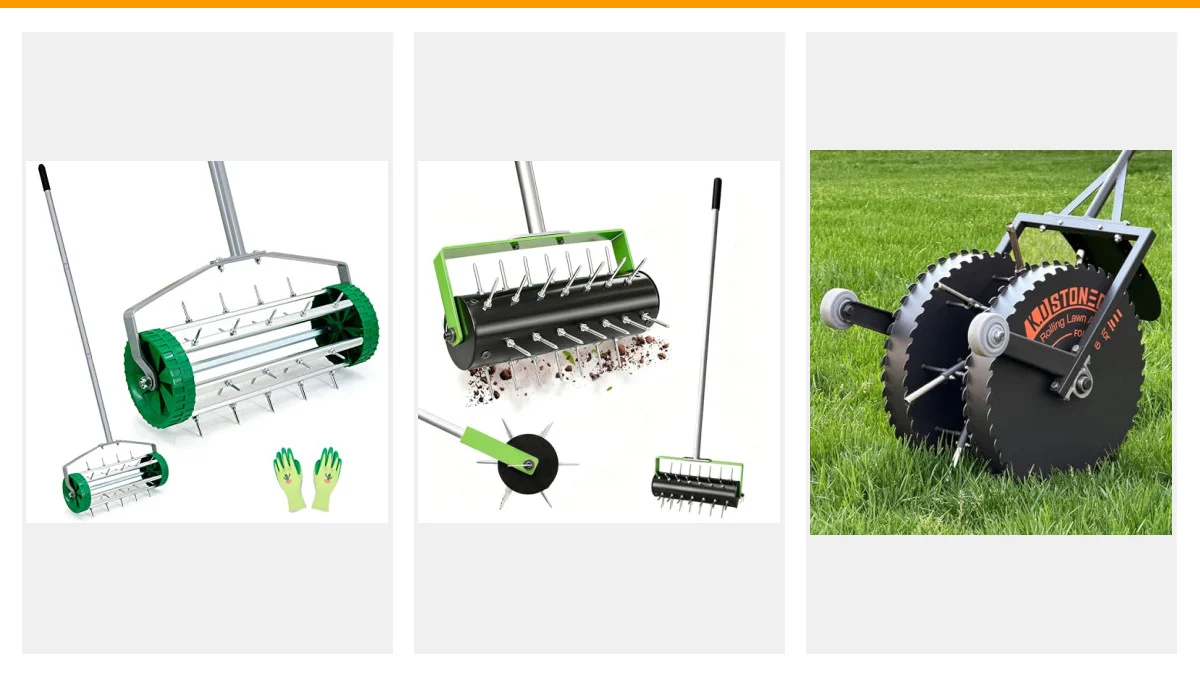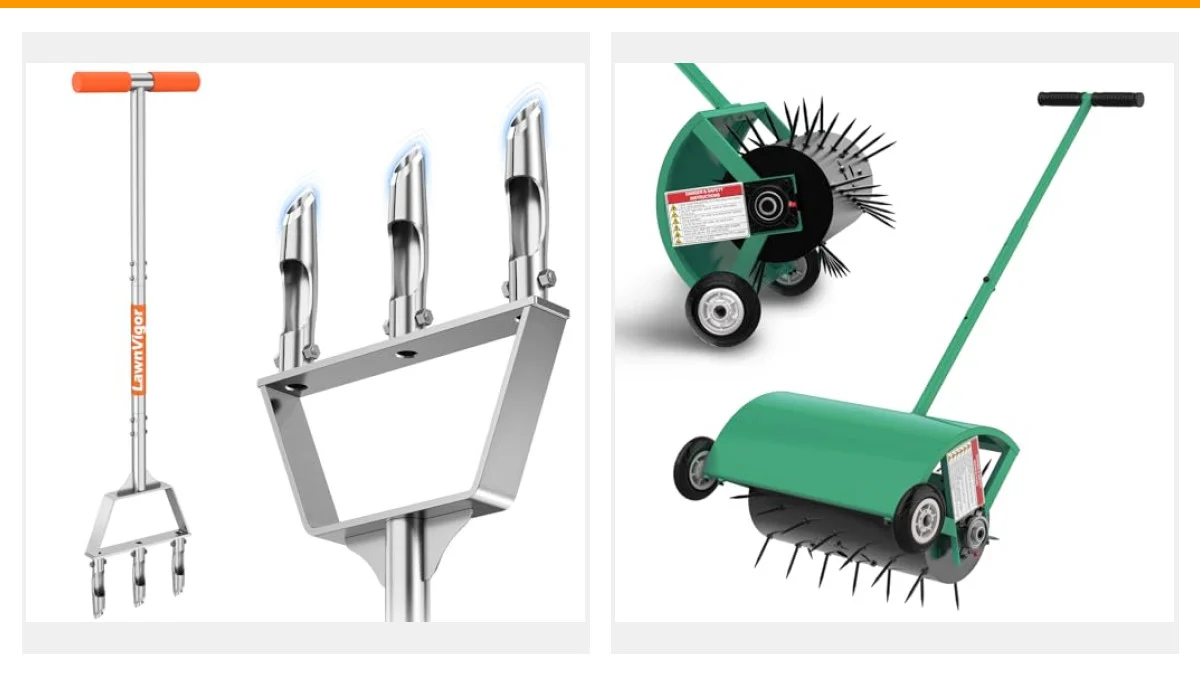
You look at your lawn and see patchy spots, spongy feel, and water pooling where it shouldn’t. Your grass looks tired, no matter how much you water or feed it. You suspect compaction or thatch, but you are not sure which tool fixes the problem. Renting a heavy machine from the hardware store feels like overkill, and hiring a service costs more than a weekend project should.
The right tool clears dead organic matter from the soil surface and opens channels for air, water, and nutrients. The best dethatcher and aerator for garden use depends on the size of your lawn, your soil type, and how much effort you want to put in. An electric scarifier works fast on larger areas. A manual spike aerator gives you control on small patches. A liquid formula treats clay soil without any physical labor.
I tested five different approaches to lawn renovation. The MZK electric dethatcher leads the group for medium-sized yards that need serious work. Manual options from COCTN, Jardineer, and Walensee cover smaller spaces. Turf Titan offers a hands-off biological route. Each one solves a different problem, and I will tell you exactly which one fits your situation.
Here is a quick look at how these tools compare on the specs that matter most.
| Features | MZK Electric | COCTN Manual | Jardineer Manual | Walensee Manual | Turf Titan Liquid |
|---|---|---|---|---|---|
| Power Source | 13 Amp electric | Manual push | Manual push | Manual push | Hose-end spray |
| Working Width | 15 inches | 3-inch spikes | 12 spikes | 15 spikes | Covers 6,000 sq ft |
| Key Feature | 2-in-1 dethatch/scarify | Self-cleaning springs | 36-inch back-saving height | Three-row spike layout | Microbes break down thatch |
| Best Use Case | Medium to large lawns | Small lawns, no bending | Compacted soil, tall users | Spot aeration, edges | Clay soil, no labor |
| Assembly Level | Ready to use | Under 3 minutes | Pre-assembled | Detachable design | Attach to hose |

MZK Lawn Dethatcher Elect

MZK
MZK Lawn Dethatcher Electric Scarifier with Bag,15In(RED) | Wider 15-inch path, adjustable height, and 12-gal collection bag help improve lawn airflow and growth.
- [Powerful 13 Amp Electric Motor]:Equipped with a 13 Amp copper motor, this electric dethatcher delivers a strong 3700 RPM, making…
- [15-Inch Rake Path with Adjustable Depth]:With a 15-inch wide rake path and adjustable depth settings ranging from -0.47" to 0.24…
- [Quick-Switch 2-in-1 Blades]:Use the dethatcher to clear thatch and moss or switch to scarifying to encourage deeper root growth a…
This is the workhorse pick for anyone with a lawn bigger than a postage stamp. The MZK electric dethatcher suits homeowners who look at their yard and know it needs more than a rake. If you have visible thatch buildup, moss patches, or soil that feels hard underfoot, this machine breaks through that layer in one pass. It is also the right call if you want a tool that does double duty, clearing debris and cutting into the soil for aeration.
The 13-amp motor spins the blades at 3700 RPM, which feels aggressive on the first run. The 15-inch path covers ground faster than a manual tool, and the adjustable depth settings let you start shallow for light cleaning or go deeper for scarifying work. Switching between dethatching and scarifying takes seconds because the blades are built into a quick-switch system. The 45-liter collection bag is genuinely useful, you will not stop every two minutes to empty it. On a typical suburban lawn, you can finish the front and back without a single trip to the compost pile.
You should know a few things before buying. At 27.5 pounds, it is light for a powered machine, but you still feel the weight when pushing through thick thatch. The foldable handle saves garage space, but the release mechanism takes a couple of tries to get used to. It is an electric tool, so you need an extension cord and you will manage that cord as you work. The dual safety switches are a good feature, but they also mean you have to squeeze both levers to start it, which takes a moment to figure out.
- 13-amp copper motor with 3700 RPM for tough jobs
- Adjustable depth from -0.47 to 0.24 inches
- Quick-switch blades for dethatching or scarifying
- 45-liter collection bag for longer work sessions
- Foldable handle and dual safety switches
Best for: Homeowners with medium to large lawns who want a powered tool that removes thatch and aerates soil in a single afternoon.
Lawn Aerator Tools, 3 Hei

COCTN
Lawn Aerator Tools, 3 Height Manual Yard Aerator with Self-Cleaning Design | Heavy Duty Adjustable Lawn Air Aerator Tool with 15 Long Iron Spikes, for Lawn Care, Hard Soil Loosening and Yard Aerating
- [Built-in dual-layer Spring Design] The lawn aerator tool adopts an innovative built-in spring double-layer structure, which enabl…
- [Adjustable height comfort handle] This manual yard aerator has three height settings that can be adjusted. This ergonomic design…
- [Efficient and lawn-friendly aerator tools] This lawn aerator tool features three-inch-long steel spikes that can easily penetrate…
The COCTN manual aerator is built for the gardener who wants results without plugging anything in. It suits older homeowners or anyone who worries about tripping over cords. The self-cleaning spring design solves the most annoying part of manual aeration, which is stopping every few steps to knock dirt off the spikes. You push down, pull up, and the debris falls away on its own. That feature alone makes this tool worth considering over cheaper spike aerators.
The three adjustable height settings matter more than you might think. If you are 5-foot-4, a standard 36-inch handle forces you to hunch. If you are 6-foot-2, a short handle means constant bending. This one adjusts to fit your frame, and the elastic buckle release is faster than unscrewing a bolt. The steel spikes penetrate three inches into the soil, which is enough to relieve mild compaction in most home lawns. The all-steel construction feels solid, and the spikes sit inside a double-layer structure when not in use, so you will not stab yourself carrying it to the shed.
There are trade-offs. This is a stepping tool, so you will work in small sections, and a 5,000-square-foot lawn will take a while. The three-inch spikes struggle in heavy clay soil, especially if it is dry. You need to water the ground a day before using it. Assembly is simple, just one screw and two washers, and a wrench is included in the box.
- Self-cleaning dual-layer spring design
- Three height settings with quick-release buckle
- Three-inch steel spikes for soil penetration
- Mostly pre-assembled, installs in under 3 minutes
- Heavy-duty iron construction with safety housing
Best for: Homeowners with small to medium lawns who want a safe, ergonomic manual aerator that does not require constant bending or cleaning.
Jardineer Lawn Aerator To

Jardineer
Jardineer Lawn Aerator Tool, Updated 36" Spike Aerator Lawn Tool with Longer Spikes, Pre-Assembled Manual Grass Aerator for Lawn Aeration, Soil Aerating
- 【Manual Lawn Aerator Tool】- Ideal for residential lawn care & small yards, this manual spike aerator effectively loosens clay, san…
- 【Updated Lawn Spike Aerator】- 12 heat-treated steel spikes with 2.75-inch total length work at the same time, reaching deep into t…
- 【Easy to Use】- The aeration tool for lawn is designed for home gardeners & lawn lovers, it comes with a wrench and manual, pre-ass…
The Jardineer manual aerator targets a specific problem: soil compaction. If your lawn sits on clay or heavy loam, and water runs off instead of soaking in, this tool is the direct fix. It is also a smart choice for taller users. The 36-inch handle with a rubber grip means you stand upright while working, which saves your lower back on a long session. The foot plate is thick steel, and it takes your full weight without flexing or bending.
The 12 heat-treated spikes are 2.75 inches long, and they all bite into the soil at the same time. This creates clean channels for air, water, and nutrients to reach the root zone. The design works best when the soil is slightly moist, so run a sprinkler for an hour the day before you plan to aerate. The unit arrives mostly assembled, which is rare for this category. You attach the handle, tighten a few bolts, and you are ready to walk the yard. It breaks down for storage, so it fits in a car trunk or a small shed corner.
It is not perfect for every situation. The spike layout covers less ground per step than the Walensee model with 15 spikes, so it takes more steps to finish a large area. The spikes are solid, but they are not designed for rocky ground, and hitting a buried root or stone will stop you cold. You also need to be comfortable putting your body weight onto the foot plate, which is not an issue for most adults but might be a consideration for lighter users.
- 36-inch handle with rubber grip to reduce strain
- 12 heat-treated steel spikes at 2.75 inches long
- Thick steel foot plate for maximum downward force
- Pre-assembled with wrench and manual included
- Powder-coated steel resists rust and wear
Best for: Gardeners dealing with compacted clay or loam soil who want a sturdy, back-friendly manual tool for regular seasonal aeration.
Walensee Manual Lawn Aera

Walensee
Walensee Aerator Lawn Tool, 15-Spike Manual Lawn Aerator Tool for Yard | Alternative to aerator shoes, patented grass aerator lawn tool creates holes for easier lawn aeration and healthier roots.
- 【EFFECTIVE MANUAL LAWN AERATOR TOOL】: Walensee spike lawn aerator helps loosen soil and create small channels so air, water, and n…
- 【15 SHARP IRON SPIKES FOR BETTER COVERAGE】: Designed with 15 sturdy iron spikes, each about 2.8 inches long, this manual lawn aera…
- 【NO MORE SPIKED SHOE HASSLES】: Unlike plastic or metal lawn aerator shoes that may require strap adjustments, shoe-size matching,…
The Walensee aerator is the efficiency pick among the manual tools. Its 15 spikes arranged in three rows cover more ground with each step than any other manual option on this list. That makes it the best choice for spot aeration, lawn edges, and areas that see foot traffic. If you have a small yard, say under 2,000 square feet, this tool lets you finish the job in under an hour without breaking a sweat.
The 2.8-inch spikes are sharp and penetrate most soil types when the ground is damp. The three-row layout is the standout feature here because it staggers the holes, which creates better coverage than a single row of spikes. The cushioned T-handle and foot pedal give you leverage, and the 34.6-inch handle length is comfortable for most people. The powder-coated finish protects against rust, and the detachable design makes it easy to store flat or hang on a wall.
Here is the honest limitation: this tool is not built for heavy clay or rocky ground. The manufacturer says so outright, and you should listen. On hard, dry soil, the spikes will bounce off the surface instead of penetrating. You must water the lawn first or wait for rain. It is also not the right tool for large-scale aeration projects. For a quarter-acre yard, you would be pushing this thing for hours, and an electric or gas-powered unit makes more sense.
- 15 sharp iron spikes in a three-row layout
- Each spike is about 2.8 inches long
- Cushioned T-handle and foot pedal for leverage
- 34.6-inch handle reduces bending
- Detachable design for easy storage
Best for: Homeowners with small lawns or specific problem areas who want fast, even coverage without the expense of a powered machine.
Turf Titan Thatch Buster

Turf Titan
Turf Titan Thatch Buster Liquid Lawn Aerator and Dethatcher (32 oz) with Hose End Sprayer – Liquid Soil Loosener for Compacted & Clay Lawns – Improves Drainage & Root Growth – Covers 6,000 Sq Ft
- Bio-Powered Aeration Without Heavy Labor: Designed for homeowners with compacted or clay soil, our liquid aerator for lawns uses b…
- Visible Improvement: Not a miracle spray, but a soil-building process, the formula of our liquid aeration for lawn starts working…
- Turns Thatch Into Lawn Food: Instead of masking the problem, the biological formula of this soft soil liquid aerator breaks down t…
The Turf Titan Thatch Buster is the outlier, and that is exactly why it belongs on this list. It is a liquid treatment that uses beneficial microbes to break down thatch and loosen compacted soil. This is the right product for anyone who cannot or will not push a heavy machine around the yard. It suits older homeowners, people with physical limitations, or anyone with a large lawn who does not want to spend a weekend on manual labor.
The science here is straightforward. The microbes in the formula consume thatch and old grass clippings, turning them into nutrients for the soil. As the organic matter breaks down, the soil structure opens up, allowing air and water to penetrate deeper. The process is not instant. You apply it with a hose-end sprayer, water it in, and wait. Noticeable results typically show up around the 45-day mark. This is a soil-building approach, not a quick cosmetic fix.
You need to adjust your expectations if you buy this. It will not fix severe compaction overnight, and it is not a substitute for core aeration on heavily trafficked lawns. The bottle covers up to 6,000 square feet, which is a solid value for the coverage. You also need to follow the application schedule consistently. One spray and done will not deliver the results. It works best as part of a regular lawn care routine, applied in spring and fall.
- Biological formula with beneficial microbes
- Breaks down thatch into usable nutrients
- Applies with standard hose-end sprayer
- One 32-ounce bottle covers 6,000 square feet
- Visible improvement in about 45 days
Best for: Homeowners with clay or compacted soil who want an easy, labor-free approach to improving soil health over time.
How We Chose These Products
I evaluated each tool on its ability to solve a specific lawn problem rather than just looking at specs. The MZK electric unit needed to prove it could handle real thatch buildup without clogging or stalling. The manual aerators had to demonstrate that they penetrate soil effectively without requiring excessive force. The liquid option had to offer a credible biological mechanism, not just a marketing story.
I also considered the buyer’s physical situation. A 27-pound electric machine is not right for everyone. A manual spike aerator that requires stepping on a plate is not right for everyone. The selection reflects different entry points into lawn care, from powered efficiency to hands-on control to completely hands-off treatment. Each product on this list excels in its category, and the trade-offs are clearly stated so you can match the tool to your own yard and body.
Buying Guide: What Really Matters
Lawn size drives the first decision. If your lawn is under 2,500 square feet, a manual aerator like the Walensee or COCTN gets the job done with minimal investment. If you are working with 5,000 square feet or more, an electric dethatcher like the MZK saves hours of effort. For very large properties, consider a tow-behind unit, but for most home gardens, these options cover the practical range. Check out this large yard guide if your property is on the bigger side.
Soil type is the second factor. Sandy soil drains well and rarely compacts, so a light manual aeration once a year is plenty. Clay soil is the opposite. It holds water, compacts easily, and needs deeper penetration. The Jardineer with its 2.75-inch spikes or the Turf Titan liquid treatment are better suited for clay. You should also test your soil moisture before working. Dry soil resists spikes and blades, so water the lawn a day ahead of time.
Thatch thickness determines whether you need a dethatcher or just an aerator. Thatch under half an inch is normal and healthy. If you can see a spongy layer of dead grass above the soil, you need to remove it. An electric scarifier with adjustable depth handles this best. If you only need to relieve compaction and improve water flow, a spike aerator or liquid treatment is sufficient. For a deeper comparison of these two tasks, this dethatcher and aerator review breaks down the differences.
Our Top Recommendation
The MZK electric dethatcher is the clear winner for most homeowners. It combines dethatching and scarifying in one machine, covers a 15-inch path, and collects debris in a large bag. The 13-amp motor has enough power for compacted soil and thick thatch, and the adjustable depth settings let you tailor the cut to your lawn’s condition. If you have a medium to large yard and want visible results in a single afternoon, this is the tool.
For budget-conscious buyers or those with small lawns, the Walensee manual aerator is the runner-up. Its 15-spike layout offers the best coverage per step among manual tools, and the price point is approachable. If you have physical limitations or heavy clay soil that resists spikes, the Turf Titan liquid treatment is the smart alternative. It requires patience, but it works without any heavy lifting. For those with very small patches of compacted soil, the small yard combo page has additional ideas.
Frequently Asked Questions
How often should I dethatch or aerate my lawn? Cool-season grasses benefit from aeration in early fall or spring. Warm-season grasses respond best in late spring or early summer. Dethatching is only necessary when the thatch layer exceeds half an inch, which you can check by pulling up a small section of turf. Most healthy lawns need aeration once a year, not more.
Can I use a spike aerator on clay soil? You can, but you need to manage your expectations. Spike aerators push soil aside rather than removing a core, which can actually increase compaction in heavy clay. Water the lawn thoroughly a day before, and focus on using the tool when the soil is moist but not soggy. For severely compacted clay, a liquid aerator like the Turf Titan or a core aerator rental is more effective.
Should I dethatch before or after applying fertilizer? Dethatch first, then fertilize. Removing the dead organic layer exposes the soil surface so nutrients can reach the roots directly. If you fertilize over a thick thatch layer, the fertilizer sits on top of the dead material and never makes it into the soil. Wait a few days after dethatching to let the lawn recover, then apply your fertilizer.
Is it better to bag clippings when dethatching? Yes, always use the collection bag when dethatching. The whole point is to remove the dead organic matter from the lawn surface. If you leave the pulled-up thatch on the ground, it will break down and recreate the problem you are trying to solve. The MZK’s 45-liter bag makes this easy, but you should still empty it regularly to maintain airflow through the machine.