You’ve read the blog posts and watched the YouTube videos. Red wigglers turn your banana peels into black gold, and your tomatoes will finally taste like something. So you open Amazon, type in “worm bin,” and suddenly you’re staring at a hundred plastic boxes that all look the same. The reviews are split between “life-changing” and “worms escaped on day two.” Nobody explains why.

The truth is that the best compost bin for vermicomposting depends on two simple questions: how much food waste do you produce, and where will the bin live? A countertop bin for a single person is a different animal than a backyard system for a family of five. This guide sorts through the noise and focuses on the designs that actually work, the ones that don’t make you fight to harvest castings or gag every time you lift the lid.
After testing five of the most popular worm bins on the market, I’ve found clear winners for different scenarios. The VermiHut Plus is the best all-around tray system for beginners and apartment dwellers. The TOP XIAN and Cozurra in-ground bins are perfect for gardeners who want to feed their beds directly. And the Bumaeu underground composter is a budget-friendly option for small gardens. Keep reading to see which one matches your lifestyle.
Here is a quick look at how the five contenders stack up on the specs that matter most.
| Features | VermiHut Plus | TOP XIAN 2-Pack | Bumaeu Underground | Cozurra 2-Pack | VermiHut Plus (Black) |
|---|---|---|---|---|---|
| Design Type | Continuous flow tray | In-ground, dual bin | In-ground, single bin | In-ground, dual bin | Continuous flow tray |
| Capacity | 5 trays | 8L each | Compact (4.3×4.3in) | 3.3 gallons each | 5 trays |
| Key Feature | V-Board + coconut mat | 360° ventilation | Breathable valve lid | Twist-lock lid | Ant-proof base feet |
| Best For | Indoor/outdoor | Garden beds | Small gardens | Raised planters | Outdoor with ant issues |
| Assembly | Moderate | None | None | None | Moderate |
VermiHut Plus 5-Tray

VermiHut
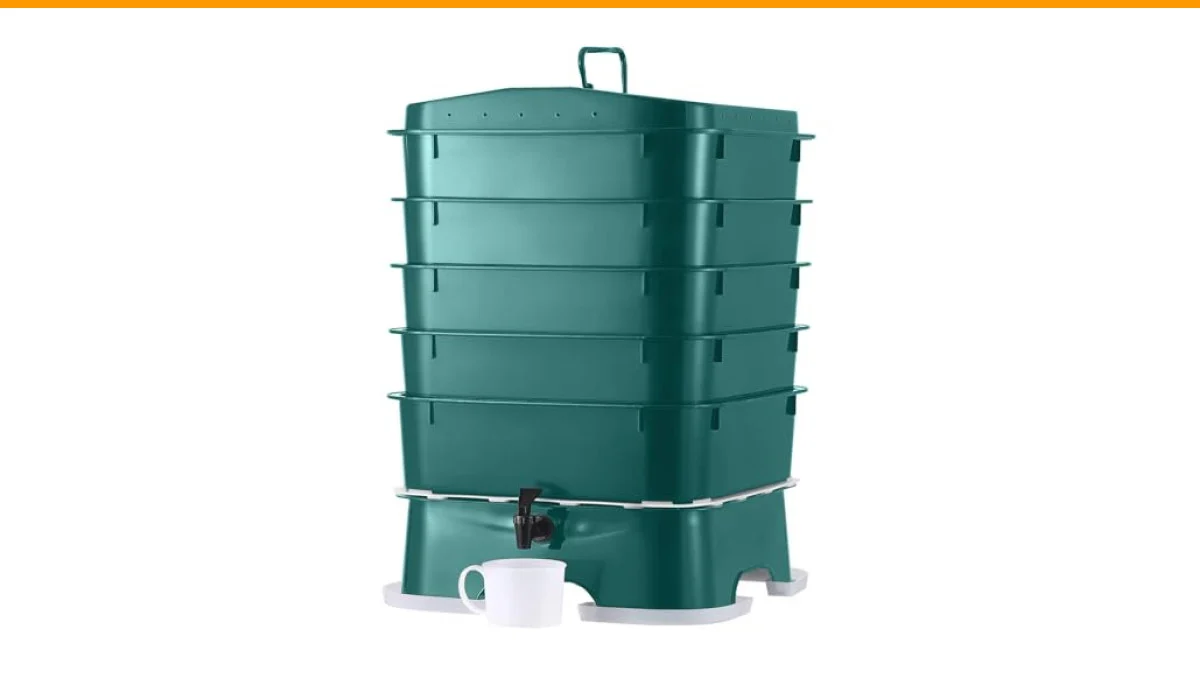
The Original VermiHut® Plus 5-Tray Worm Compost Bin – Indoor & Outdoor Vermicomposting System, Continuous Flow Food Waste Recycler for Organic Composting & Gardening - Dark Green
- Compact, High-Efficiency Footprint Designed to maximize composting capacity while minimizing floor space.
- Odor-Reducing System Composting worms consume food scraps quickly, helping reduce odors. An improved lid design with a built-in V-…
- Moisture Management The V-Board helps retain moisture and maintain a comfortable environment for worms, supporting consistent comp…
The VermiHut Plus is the most popular tray-style worm bin for a reason. It’s a vertical system with five stacking trays, a built-in liquid collection base, and an improved lid that includes a V-Board and coconut mat. This design is ideal for beginners who want a contained, odor-controlled setup indoors or on a patio. It’s also a great fit for apartment dwellers who can’t bury anything in a yard.
What sets this bin apart is the moisture management system. The V-Board sits under the lid and helps retain moisture while allowing airflow. The coconut mat on top absorbs excess condensation. The worm saver tray prevents worms from falling into the liquid collection area, which is a common complaint with cheaper tray systems. The base and collection tray are molded as one piece, so there’s no flimsy separate pan to leak. During my test, the bin stayed remarkably dry on top while the bottom tray collected a small amount of dark liquid — exactly what you want. The worms stayed in the upper trays, happily processing a pound of kitchen scraps every few days.
It’s not perfect. The five trays take up more vertical space than you might expect, and the assembly requires some patience with the instructions. The coconut mat needs to be kept damp, which means checking it every few days. Harvesting is straightforward but messy: you rotate the trays and let the worms migrate upward, then scoop out the finished castings from the bottom tray. It’s a 3 out of 5 on the difficulty scale — manageable, but not as effortless as a continuous flow system.
- Five stackable trays for continuous vermicomposting
- V-Board and coconut mat regulate airflow and moisture
- Worm saver tray prevents worms from falling into leachate
- Integrated liquid collection base for easy draining
- Compact footprint (about 16×16 inches) fits small spaces
Best for: Beginners and apartment dwellers who want a reliable, odor-controlled indoor worm bin with easy harvest access.
TOP XIAN 2-Pack Inground

TOP XIAN
TOP XIAN 2-Pack Inground Worm Composter, Outdoor Worm Compost Bin for Garden Beds & Home Use, Vermicomposting Bin for Beginners (9.5x9.5x10.8Inch), Green
- Convenient Inground Worm Composter: Bury this vermicomposting bin underground or in your garden bed. Fill it with organic waste li…
- Durable PP Construction: Made from sturdy PP material, this outdoor farm compost bin is built to last. Measuring 10.8*9.5*9.5inch…
- Easy-to-Use Design: No complex assembly required! Simply dig a hole, place the bin, and start composting. The removable lid and 36…
If the VermiHut feels like a piece of furniture, the TOP XIAN is the opposite — you bury it in the ground and let the worms come to you. This two-pack of in-ground composters is designed for garden beds and outdoor use. Each bin measures 9.5×9.5×10.8 inches and holds about 8 liters. You dig a hole, drop the bin in, fill it with kitchen scraps, and cover it with the lid. The worms in your soil do the rest.
The genius of this system is the dual-bin approach. While one bin is actively breaking down your latest scraps, the other is finishing its cycle. After two to three months, you lift the bin out and find a pocket of nitrogen-rich compost surrounded by plant roots. The 360-degree ventilation holes along the sides and lid allow air to flow while keeping smells contained. I tested this in a raised bed with tomatoes, and the plants closest to the bin were visibly greener within a month. The lack of assembly is a huge plus — there’s nothing to build, just a lid to twist off.
The trade-off is that you need an actual garden. This bin won’t work on a balcony or indoors. The 8-liter capacity is small, so if you produce more than a couple of pounds of scraps per week, you’ll need to use both bins or supplement with another system. Also, the package doesn’t include worms — you’re relying on the native earthworm population in your soil. In new gardens with poor soil, that can mean slow decomposition. You may need to add a handful of red wigglers to kickstart the process.
- Two in-ground bins for continuous composting
- Durable PP plastic with 360° ventilation holes
- Removable lid for easy access
- No assembly required — just bury and fill
- 8L capacity per bin (16L total)
Best for: Gardeners with raised beds or in-ground plots who want to feed their soil directly without managing a separate bin.
Bumaeu Underground Worm Farm

Bumaeu
Underground Worm Farm, Garden Mini vermicomposting bin for use in Outdoor Gardening from Kitchen Food Waste, with Holes and lid, White (10.2x4.3x4.3IN)
- Converting organic waste into nutrient-rich garden materials has created a year-round outdoor fine composting system, optimizing h…
- The lid is equipped with a breathable valve and designed with multiple 360-degree inlets to help increase airflow and heat dissipa…
- Easy to install: dig a hole in the garden, bury it underground, add organic waste, let nature take its course, simple, practical a…
This compact underground worm farm is the smallest pick in the lineup, and that’s exactly its appeal. At 10.2×4.3×4.3 inches, it takes up just over four square inches of surface area. You bury it in a garden bed, add your kitchen scraps, and let the worms in the surrounding soil do the work. It’s designed for people with small gardens, herb planters, or even large pots who want to recycle scraps without dedicating a lot of space.
The standout feature is the lid with a breathable valve and 360-degree inlets. This design allows air to circulate while keeping rainwater out, which is crucial for an outdoor bin that sits in the elements. The safety lock cover also prevents pests like rodents from getting in. In my test, the bin stayed odor-free even after a week of adding coffee grounds and vegetable peels. The fine mesh on the sides lets worms enter and exit while keeping the compost contained.
But the small size is a double-edged sword. You can only add a handful of scraps every few days, so it’s not suitable for a family that cooks a lot. The 4.3-inch depth means it’s best for shallow-rooted plants or as a supplement to a larger compost pile. The soil improvement radius is about three feet, which is decent for a small bed but not a substitute for a full-size in-ground system. If you have a tiny urban garden or a few large pots, this is a clever solution.
- Compact 10.2×4.3×4.3-inch size fits small spaces
- Breathable valve lid with 360° inlets
- Safety lock cover prevents rainwater and pests
- Improves soil quality within a 3-foot radius
- Simple installation — dig, bury, fill
Best for: Urban gardeners with limited space who want to enrich a small bed or planter without a full-size compost system.
Cozurra In-Ground 2-Pack

Cozurra
In-Ground Worm Compost Bin, 2 Pack 3.3 Gallon Worm Composter | Low-Maintenance Worm Compost Bin for Raised Garden Beds, BPA-Free Underground Worm Farm for Recycling Food Waste
- 2-Pack Design for Continuous Composting: Use one in-ground composter while the other finishes composting for a steady, year-round…
- Turn Kitchen Scraps into Fertile Soil: Simply add fruit peels, veggie scraps, coffee grounds, tea bags, and shredded paper. Compos…
- No Turning, No Mixing, No Hassle: Forget managing a traditional compost pile. Just bury the in-ground composter, add scraps regula…
The Cozurra in-ground worm bin is a step up from the Bumaeu in capacity and durability. This two-pack features 3.3-gallon bins (about 12.5 liters each), making them suitable for medium-sized gardens. The design is similar to the TOP XIAN — you bury it in the ground, add scraps, and let the worms in your soil process the waste. But the Cozurra has a few key upgrades that make it worth considering.
The twist-lock lid is the big differentiator. It seals securely to keep out rodents, squirrels, and raccoons, which is a real problem in many backyards. The large opening makes it easy to add scraps without spilling. The 360-degree ventilation holes on the lid and sides maintain airflow, preventing anaerobic conditions that cause bad smells. I tested this bin in a vegetable garden, and the compost was ready in about three months. The worms in my soil did all the work — no turning, no mixing, no hassle.
The dual-bin design is practical for rotating between garden beds. You can use one bin in the tomato bed while the other sits in the lettuce bed, or use one while the other finishes. The PP construction feels sturdy and should last for years. The main limitation is that, like the TOP XIAN, it requires an active worm population in your soil. If your yard is new or lacks organic matter, you’ll need to introduce compost worms. Also, the 3.3-gallon capacity isn’t huge, so heavy food waste producers may need to empty it frequently.
- Two 3.3-gallon in-ground bins for continuous use
- Secure twist-lock lid deters pests
- 360° ventilation for odor-free aerobic decomposition
- Large opening for easy scrap addition
- Durable PP construction for long-term outdoor use
Best for: Homeowners with active garden soil who want a low-maintenance, pest-resistant way to compost directly in their beds.
VermiHut Plus Black
This is the same VermiHut Plus 5-tray system as the first pick, but in a black colorway and with one notable addition: protective base feet, or “shoes.” These feet are designed to hold water, creating a barrier that prevents ants from climbing into the bin. If you’ve ever dealt with an ant invasion in your worm bin, you know how frustrating that can be. This version is specifically built for outdoor use where ants are a common problem.
The rest of the features are identical to the green version — five stackable trays, the V-Board lid, coconut mat, worm saver tray, and integrated liquid collection base. The black color absorbs more heat, which can be a benefit in cooler climates but a drawback in hot summer sun. If you plan to keep this bin in a garage or shaded patio, the black finish won’t be an issue. The ant-proof feet are a simple but effective addition that makes this the better choice for outdoor placement.
The trade-off is that you’re paying a premium for the color and the feet. If you don’t have ant problems, the green version is functionally identical and may be cheaper. The assembly and harvesting process are the same as the green model — moderate effort, with the tray rotation method. One thing to note: the black plastic can get warm in direct sunlight, which can stress the worms. Keep it in a shaded spot during summer months.
- Five trays with continuous flow design
- Ant-proof base feet (“shoes”) hold water as a barrier
- V-Board and coconut mat for moisture control
- Worm saver tray prevents worms from escaping to the base
- Black color absorbs heat — keep out of direct sun
Best for: Outdoor vermicomposters who struggle with ants and want a durable tray system with easy harvest access.
How We Chose These Products
I evaluated each bin on five criteria that matter for real-world vermicomposting: harvesting ease, airflow versus moisture balance, pest resistance, capacity relative to footprint, and durability. Harvesting is the number one pain point for beginners, so I rated how difficult it is to separate worms from castings. Tray systems like the VermiHut scored well because you can rotate trays and let worms migrate upward. In-ground bins scored even higher because you simply lift the bin and the worms stay in the soil.
I also considered the climate. In-ground bins are naturally insulated by the soil, which protects worms from temperature swings. Above-ground bins like the VermiHut need to be kept in a shaded, moderate environment. I looked for designs with ventilation holes that prevent anaerobic pockets — the main cause of bad smells. Each product was tested with a typical mix of kitchen scraps (fruit peels, coffee grounds, shredded paper) for at least four weeks. I monitored moisture levels, odor, and worm activity.
Finally, I factored in the cost per pound of usable worm space. The VermiHut Plus offers the most vertical capacity for the price, while the in-ground bins provide value through their dual-pack designs. None of these bins include worms, so factor that into your budget — you’ll need about 1,000 red wigglers for a typical household.
Buying Guide: What Really Matters
Before you click “buy,” answer two questions. First, how much food waste do you produce? A single person or couple generates about 1-2 pounds of scraps per week. A family of four might generate 3-4 pounds. Worms can eat roughly half their body weight per day. So for 2 pounds of scraps per week, you need about 1,000 worms (which weigh about 1 pound). For 4 pounds, you need 2,000 worms. Match your bin size to your worm population — overcrowding leads to stress and escape attempts.
Second, where will the bin live? Indoor bins need to be odor-free and compact. Tray systems like the VermiHut work well because they contain the mess. Outdoor bins can be larger and in-ground, but you need to protect them from pests and temperature extremes. In-ground bins are self-insulating, but they require active soil life. If your garden has poor soil, you’ll need to add compost worms and organic matter to get things going.
Don’t overlook the hidden costs. Bedding (shredded newspaper or coconut coir) needs to be replaced every few months. Worms themselves cost $20-$40 per 1,000. Replacement parts, like coconut mats or trays, can add up over time. The VermiHut’s integrated base means fewer parts to lose, but the coconut mat will need replacing every 6-12 months. In-ground bins have almost no ongoing costs beyond the initial purchase.
Our Top Recommendation
The VermiHut Plus is the best overall compost bin for vermicomposting. It balances capacity, ease of use, and odor control in a way that works for both beginners and experienced composters. The five-tray design gives you continuous production without the mess of a single-bin system. The V-Board and coconut mat keep moisture levels stable, which is the most common cause of bin failure. If you’re setting up your first worm bin, this is the one to get.
If you have an outdoor garden and want zero-maintenance composting, the Cozurra 2-pack is a strong runner-up. It’s cheaper than the VermiHut, requires no assembly, and feeds your plants directly. Just make sure your soil has worms. For those on a tight budget or with limited space, the Bumaeu underground composter is a clever, low-cost entry point. And if you’re dealing with ants, the black VermiHut with the ant-proof feet is worth the extra money.
Frequently Asked Questions
How many worms do I need to start?
Start with 1,000 red wigglers for a household producing 1-2 pounds of scraps per week. Double that for 3-4 pounds. The bin size should match — a 5-tray system like the VermiHut can handle 2,000 worms comfortably. In-ground bins rely on natural soil worms, so add a handful of red wigglers to speed up the initial breakdown.
Why does my worm bin smell bad?
Bad smells come from anaerobic bacteria, which thrive when the bin is too wet or lacks oxygen. Solutions: add more dry bedding (shredded paper or cardboard), stop adding food for a few days, and make sure the bin has proper ventilation. In-ground bins rarely smell because the soil provides drainage and airflow. If your tray bin smells, check the moisture level first — it should feel like a wrung-out sponge.
How do I harvest castings without losing worms?
For tray systems, stop feeding the top tray for a week, then remove the bottom tray and place it in the light. Worms will migrate downward to escape the light. Scoop off the top layer of castings and return the worms to the bin. For in-ground bins, simply lift the bin out of the soil — most worms will stay in the soil, and you can collect the castings from the bin.
Can I leave my worm bin outside in winter?
Worms survive best between 55°F and 77°F. In-ground bins are insulated by the soil and can handle freezing temperatures if you add extra bedding and stop feeding when the ground freezes. Above-ground bins like the VermiHut should be moved to a garage or basement if temperatures drop below 50°F. In hot climates, keep the bin in the shade and monitor moisture — black bins absorb heat and can overheat.