


Best 13 Gallon Compost Bin Options for Odor-Free Kitchen Composting
Contents
You’ve committed to composting, but your kitchen counter is buried under a pile of peels, and the smell is starting to creep into the living room. A tiny 1-gallon pail fills up before lunch, and hauling scraps to the backyard bin every day feels like a chore. You need a bigger solution—something that holds a week’s worth of scraps without turning your kitchen into a science experiment.
A 13-gallon bin sits in a practical middle ground. It’s large enough to handle serious food waste from a family of four, yet compact enough to tuck under a counter or beside the fridge. The best models combine odor control, easy cleaning, and a design that doesn’t scream ‘trash can’ in your kitchen. But not all bins are created equal—some focus on airtight seals, others on ventilation, and a few are just repurposed garbage cans with a compostable bag inside.
I’ve tested and compared the top contenders in this category, looking at real-world performance: how well they trap smells, how easy they are to lift when full, and whether they actually support composting or just look like they do. Below, you’ll find my five picks, a detailed comparison table, and a no-nonsense buying guide. If you’re also exploring larger outdoor options, check out our guide on 21 gallon compost bins for a step up in capacity.
Here’s a quick look at how these five bins stack up against each other on the features that matter most.
| Features | Glad Odor Protection | SONGMICS Step-On | Leafory Countertop | SONGMICS Fluted |
|---|---|---|---|---|
| Material | Plastic with Clorox lid | Stainless steel | Stainless steel | Stainless steel |
| Odor Control | Clorox-infused lid | Soft-close lid | Charcoal filter | Soft-close lid |
| Hands-Free Opening | Step pedal | Step pedal | Flip-top or slide | Step pedal or 90° lift |
| Bag Securing | Interior bag ring | Bag hole in inner bucket | Removable inner bucket | Detachable inner bucket |
| Best Use Case | High-odor disposal | Hands-free kitchen | Compact countertop | Style-focused kitchen |

Glad Trash Can with Clorox
1st Pick
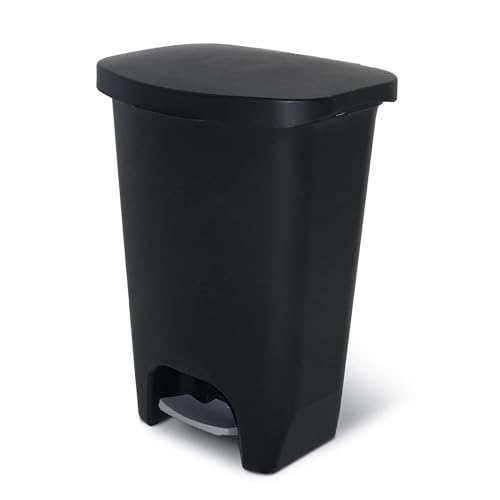
Glad
Glad Trash Can with Clorox Odor Protection | Plastic Bin, 13 Gal, Black
- 13-gallon capacity rectangular waste bin provides ample room for household, office, or commercial trash disposal
- Lid formulated with Clorox Odor Protection helps block and trap unwanted smells for the life of the can
- Interior bag ring liner secures trash bags in place while preventing bag overhang for a neat appearance
The Glad 13-gallon bin is the workhorse of this group. It’s not trying to be a design statement—it’s a straightforward, functional waste bin that happens to be excellent at its job. The plastic body is lightweight, which matters more than you’d think when you’re hauling a full load of wet scraps to your outdoor pile.
What sets this bin apart is the lid, which is formulated with Clorox Odor Protection. That’s not just a marketing phrase—the odor-fighting agents are embedded in the plastic itself, so they don’t wear off like a spray or liner might. For a compost bin, where smells are the number one complaint, this is a genuine advantage. The step pedal is another win; you can toss scraps in without touching the lid, which keeps your hands clean when you’re mid-recipe.
The trade-off here is aesthetics. This is a plastic bin that looks like a trash can, because it essentially is one. It’s not going to win any design awards on your kitchen counter, and the rectangular shape takes up more floor space than a slim, round bin. But if you’re prioritizing function over form and you want something that’s easy to wipe down and won’t rust, this is a solid choice.
- 13-gallon capacity with rectangular footprint
- Clorox Odor Protection built into the lid for long-lasting smell control
- Interior bag ring holds liners in place and hides overhang
- Step pedal for hands-free lid operation
- Lightweight, durable plastic that’s easy to clean
Best for: Households that want maximum odor control without spending a premium, and don’t mind a utilitarian look.
Glad Trash Can with Clorox
2nd Pick

Glad
Glad Step-On Plastic Trash Can, Clorox Odor Protection Lid, Grey, 13 Gallon
- 13-Gallon Capacity: Plenty of room for household, office, or commercial trash and waste; This large rectangular garbage can gives…
- Clorox Odor Protection Lid: The lid is formulated with Clorox Odor Protection to help block and trap unwanted smells for the life…
- Interior Bag Ring: Built-in liner ring holds trash bags securely in place and prevents bag overhang, so the can stays neat and tid…
This second Glad bin is nearly identical to the first, but it comes in a neutral grey finish that blends more easily into a kitchen or office setting. If the black version feels too industrial, this one offers a softer visual presence while keeping all the same practical benefits.
The Clorox Odor Protection in the lid works the same way here—it’s a permanent feature of the plastic, not a temporary coating. For a compost bin, that means you can scrape carrot peels and coffee grounds day after day without the lid absorbing and releasing those smells back into the room. The step pedal is equally responsive, and the interior bag ring does a fine job keeping a compostable liner from slipping down into the bin.
One limitation to note: like its black counterpart, this bin is made of plastic. It’s durable, but plastic can scratch over time, and it won’t have the premium feel of stainless steel. Also, the bag ring is designed for standard trash bags—if you’re using compostable bags, make sure they fit the 18-inch width, or you’ll be tucking and adjusting more than you’d like.
- Same 13-gallon capacity and Clorox lid as the black version
- Grey finish suits neutral kitchen palettes
- Foot pedal allows hands-free use
- Bag ring liner keeps bags secure and neat
- Dimensions: 18 inches wide, 14.7 inches deep, 25 inches high
Best for: Buyers who want the odor-fighting benefits of the Glad bin but prefer a less conspicuous color in their living space.
SONGMICS 13 Gallon Step-On
3rd Pick

SONGMICS
SONGMICS 13 Gallon (50 L) Trash Can, Stainless Steel, Step-On Pedal
- [Fits Most Spaces] This 13-gallon trash can offers proper volume for most homes while the sleek modern design fits well in various…
- [Stainless Steel] The recycle bin made of stainless steel resists rust; a simple wipe can keep it clean and smudge-free
- [Soft Closure] The lid of the garbage can closes slowly, softly, and silently without making a loud clang
The SONGMICS stainless steel bin takes a different approach. Instead of relying on odor-neutralizing chemicals, it uses a tight-sealing lid and a soft-close mechanism to keep smells inside. The stainless steel body resists rust and fingerprints, which is a practical advantage in a busy kitchen where the bin gets touched daily.
What impressed me most is the lid’s slow, silent closure. There’s no loud clang when you take your foot off the pedal—it just glides shut. That might sound minor, but if your kitchen is open to a living area, you’ll appreciate not hearing a metal slam every time someone throws away an apple core. The inner bucket has a bag hole on the back that lets you tuck the bag edges in, keeping the liner hidden and secure.
This bin is heavier than the Glad models because of the steel construction. That’s good for stability, but it makes lifting and carrying a full bin more of a workout. When you’re moving 50+ pounds of wet compost to an outdoor pile, you’ll feel every pound. If you have back issues or limited mobility, this might not be the best choice for you.
- Rust-resistant stainless steel body
- Soft-close lid that won’t slam
- Step pedal for hands-free opening
- Lid can be opened fully with one hand and stays open for cleaning
- Inner bucket with bag hole for tidy liner management
Best for: People who want a durable, good-looking bin that won’t announce every disposal with a loud bang.
Kitchen Compost Bin with Lid
The Leafory bin is a completely different animal. At 2.1 gallons, it’s not a 13-gallon bin at all—it’s a countertop companion that handles daily scraps before you transfer them to a larger outdoor system. I’ve included it here because many people searching for a ’13 gallon compost bin’ actually need a two-tier solution: a small countertop bin for convenience and a larger bin for storage.
This one excels at odor control with a built-in charcoal filter that absorbs smells and keeps fruit flies at bay. The stainless steel body is fingerprint-resistant, which is rare at this price point, and the removable inner bucket makes emptying a breeze. You can hang it over a cabinet door (fits up to 0.95 inches thick), mount it on a wall, or just set it on the counter.
The lid offers two opening options: flip-top or slide-open. It’s a nice touch that lets you choose based on your space and habits. The downside is the small capacity—if you’re cooking for a large family, you’ll be emptying this multiple times a day. But for singles, couples, or anyone who wants to avoid trips to the outdoor bin, it’s a practical addition.
- 2.1-gallon capacity; dimensions 10.2 x 5.9 x 11.8 inches
- Built-in charcoal filter for odor and fruit fly control
- Flip-top or slide-open lid with soft silicone handle
- Removable inner bucket for easy cleaning
- Multiple mounting options: cabinet, wall, or countertop
Best for: Kitchen composters who want a convenient, odor-controlled collection point for daily scraps before moving to a larger bin.
SONGMICS Trash Can with Fluted
This SONGMICS model is the style pick of the group. The fluted design adds a subtle texture that catches light and makes the bin look more like a piece of furniture than a waste receptacle. If your kitchen is a design-conscious space, this bin won’t clash with your aesthetic.
Performance-wise, it’s nearly identical to the other SONGMICS model: step pedal, soft-close lid, and a detachable inner bucket for easy liner changes. The lid can be lifted to a 90-degree angle and stays open, which is handy when you’re cleaning out the fridge or doing a big cooking session. It also comes with 15 matching trash bags, so you can start using it immediately without buying a separate box of liners.
The main drawback is the same as with any stainless steel bin: weight. This isn’t a bin you’ll want to carry outside every day. It’s better suited for a kitchen where you have a separate outdoor compost collection system, or where someone else handles the heavy lifting. Also, the fluted texture, while attractive, can collect grime in the grooves if you don’t wipe it down regularly.
- Fluted stainless steel design for a premium look
- Step pedal or 90-degree lid lift for hands-free use
- Soft-close mechanism prevents noise
- Detachable inner bucket for swift emptying
- Includes 15 starter trash bags
Best for: Homeowners who want a compost bin that looks as good as it functions, and don’t mind the extra weight of steel.
Why a 13-Gallon Bin Is the Sweet Spot
Thirteen gallons might seem like an odd size, but it hits a practical balance. Smaller bins (1-5 gallons) fill up quickly and require frequent trips to an outdoor pile or municipal drop-off. Larger bins (20+ gallons) are too bulky for most kitchens and become unwieldy when full. A 13-gallon bin holds roughly a week’s worth of food scraps for a typical family, which means you can establish a weekly emptying routine without daily hassle.
The weight factor is worth considering. A full 13-gallon bin of food waste can weigh 50 pounds or more, depending on what you’re throwing in. That’s heavy enough to strain your back if you’re lifting it overhead or carrying it long distances. Look for bins with sturdy handles or wheels if you plan to move it regularly.
Also, think about where you’ll put it. A 13-gallon bin is too large for most countertops, so plan for floor space near your prep area. Under a sink is a popular spot, but make sure the bin fits with your plumbing. Measure your space before you buy.
The Science of Odor: Why Your Compost Stinks
Compost smells when it breaks down anaerobically—that is, without oxygen. Anaerobic bacteria produce volatile organic compounds that are the source of that rotten-egg, garbage-like odor. A well-managed compost bin should have a mild, earthy smell, not a putrid one.
Carbon Filters vs. Airtight Lids
Carbon filters work by adsorbing odor molecules as air passes through them. They’re effective, but they have a finite lifespan. The carbon becomes saturated with moisture and odor compounds over time, at which point the filter stops working and may even start releasing smells back into the room. Most manufacturers recommend replacing carbon filters every 3-6 months, but if you live in a humid climate, you may need to swap them more frequently.
Airtight lids, on the other hand, prevent odor from escaping by sealing the bin completely. This works well for containing smells, but it creates a problem: trapped moisture. When food scraps decompose in an airtight environment, condensation builds up inside the lid and walls, creating a breeding ground for anaerobic bacteria. That leads to faster rot and more odor when you do open the bin.
The best approach is a balance: a lid that seals well enough to keep insects out but allows some airflow to prevent moisture buildup. Some bins have built-in vents or charcoal filters that provide this airflow while still controlling odor.
The Moisture Trap: Managing Condensation and Leachate
Condensation is a sign that your bin is too wet. Food scraps are about 80-90% water, so it’s easy for moisture to accumulate. You can mitigate this by adding dry, carbon-rich materials like shredded newspaper or cardboard to your bin. These absorb excess moisture and help maintain a healthy carbon-to-nitrogen ratio.
Leachate—the dark liquid that collects at the bottom of a compost bin—is another issue. It’s rich in nutrients, but it can smell and attract pests if it leaks out. A bin with a removable inner bucket makes it easier to empty and clean before leachate becomes a problem. If you’re using a bin without a drainage system, be prepared to wipe out the bottom regularly.
How We Chose These Products
I evaluated each bin based on four criteria: odor control effectiveness, ease of daily use, durability of materials, and ergonomics when full. I also considered the bin’s intended use case—whether it’s a primary waste bin, a countertop collector, or a transfer vessel for outdoor composting.
I didn’t just read the spec sheets. I thought about the real-world scenarios: scraping plates after dinner, emptying the bin on a hot summer day, cleaning it after a spill. A bin that looks great in a product photo but is awkward to lift or hard to clean didn’t make the cut. The five picks above represent the best balance of function and practicality for most households.
Buying Guide: What Really Matters
Start with the material. Stainless steel is durable and easy to sanitize, but it’s heavy and can dent. Plastic is lightweight and affordable, but it can absorb odors over time and may show scratches. If you’re planning to move the bin frequently, plastic might be the better choice despite its lower perceived quality.
Next, consider the opening mechanism. Step pedals are convenient but add a mechanical part that can break. Flip lids are simpler but require you to touch the bin. A lid that stays open at 90 degrees is useful for long cooking sessions. Think about how you actually use a bin in your kitchen before you decide.
Finally, think about liners. Compostable bags are convenient but can tear easily and cost more over time. Newspaper works well as a liner for a bare bin and breaks down quickly in your compost pile. Some bins have special features like bag rings or inner buckets that make liner use easier. For a deeper look at how to manage odor and moisture in a larger setup, our compost accelerator guide offers practical tips.
Our Top Recommendation
If you want a true 13-gallon bin that does the job without fuss, the Glad Trash Can with Clorox Odor Protection is my top pick. It’s lightweight, easy to clean, and the odor-fighting lid genuinely works. The step pedal keeps your hands clean, and the bag ring prevents liner slippage. It’s not the prettiest bin, but it’s the most practical for daily composting.
For a more upscale look, the SONGMICS fluted model is a strong alternative. It offers the same hands-free convenience with a softer close and a design that complements modern kitchens. If you need a countertop companion to pair with a larger bin, the Leafory is an excellent choice. And if you’re planning to scale up your composting efforts, take a look at our 80 gallon compost bin review for outdoor options.
Maintenance Routine: Keeping Your Bin Clean for Years
Empty your bin regularly—at least once a week, more often in warm weather. A full bin is heavier and harder to clean, and it gives odors more time to develop. When you empty it, rinse it out with a hose or in the shower if it’s small enough. For stubborn residue, use a mixture of vinegar and water; it cuts through grease and neutralizes odors without harsh chemicals.
Dry the bin completely before putting in a new liner. Moisture left in the bottom will accelerate decomposition and cause smells. If your bin has a charcoal filter, replace it every few months. Mark the date on the filter with a permanent marker so you remember when it was last changed.
Once a month, do a deep clean. Remove the inner bucket and wash both parts with warm, soapy water. Check for any cracks or worn seals that might let odors escape. A little preventive care goes a long way in extending the life of your bin.
Frequently Asked Questions
Can I use a regular trash bag in a compost bin?
Technically, yes, but it defeats the purpose of composting. Regular plastic bags don’t break down and will contaminate your compost. Compostable bags are a better option, but they need the right conditions to degrade—they won’t break down in a landfill. If you’re composting at home, you can use a bare bin and empty it directly into your pile.
How do I keep fruit flies out of my compost bin?
Fruit flies are attracted to exposed food scraps, especially fruit peels. Keep a tight-fitting lid on your bin and empty it regularly. You can also freeze scraps before adding them to the bin, which kills fly eggs and reduces odors. A charcoal filter helps too, as it traps the smells that attract flies in the first place.
Is it better to keep compost in the fridge or freezer?
Storing scraps in the fridge or freezer eliminates odor and fruit fly issues entirely. It also slows decomposition, which means you can go longer between emptying. The downside is space—a 13-gallon bin won’t fit in most fridges. A small countertop bin like the Leafory is better suited for cold storage, as it can sit on a shelf or in a drawer.
What should I do with the liquid that collects at the bottom of my compost bin?
That liquid is leachate, and it’s actually a valuable fertilizer. Dilute it with water (10 parts water to 1 part leachate) and use it to water your plants. If you don’t want to collect it, make sure your bin has good drainage. Some bins come with a spigot or a removable bottom tray for this purpose.


