You’ve spent weeks building the perfect pond. The liner is laid, the rocks are placed, and you’ve picked out beautiful marginal plants like marsh marigold and pickerel weed. Then reality hits: those plants need feeding, and standard fertilizer will leach straight into the water and turn it green with algae. Compost is the answer, but not just any compost bin will do the job safely.
Most compost bin reviews ignore the specific needs of pond-side planting. They focus on turning speed, heat generation, and general garden use. But when your bin sits near water, everything changes. You need to think about runoff, material safety, and whether the bin design actually delivers nutrients to the root zone of marginal plants rather than washing them away. An open-bottomed bin placed directly on soil near the pond edge acts as a slow-release feeder. A sealed tumbler, by contrast, creates compost tea that needs careful management.
This guide examines five compost bins that work in pond-side settings, with a focus on open-bottom designs, safe materials, and practical placement. You’ll find a comparison table, honest pros and cons for each product, and a clear recommendation for the bin that best feeds marginal plants without putting your aquatic ecosystem at risk.
Here’s how the five candidates stack up on the features that matter most for pond edge planting:
| Features | VIVOSUN Tumbler | Geobin 246 Gal | VEVOR Tumbler | JupiterForce 80 Gal | MyLifeUNIT 2-Pack |
|---|---|---|---|---|---|
| Design Type | Dual chamber tumbler | Open-bottom, expandable | Dual chamber tumbler | Top-load, bottom-door | Flexible fabric bag |
| Capacity | 43 gallons total | Up to 246 gallons | 43 gallons total | 80 gallons | 34 gallons each |
| Key Strength | Batch composting speed | Direct soil contact | Pest-resistant seal | Tool-free assembly | Portable and cheap |
| Best Use Case | Compost tea brewing | Pond edge feeding | Small yard, hot compost | Medium gardens | Leaf storage, mobile |
| Material Safety | PP plastic, metal frame | Recycled PP plastic | BPA-free PP | BPA-free PP | Water-resistant fabric |
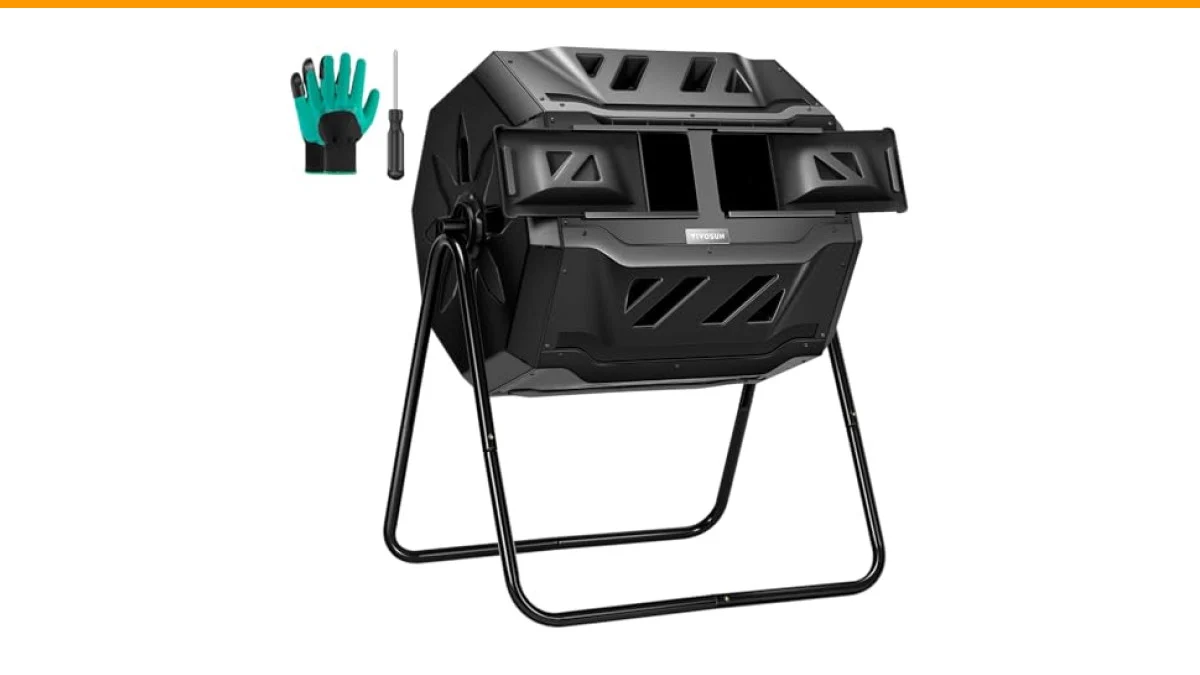
VIVOSUN Outdoor Tumbling

VIVOSUN
VIVOSUN Outdoor Tumbling Composter Dual Rotating Batch Compost Bin, 43 Gallon Black Door
- Twin chambers: Two separate chambers allow one side to finish composting while leaving the other side available to add fresh waste…
- 360⁰ Tumbling Design: The rotating design prevents you from digging or mixing the pile by hand; And the deep fins on eight panels…
- Excellent Aeration: Air vents can make the air fully circulate and will not cause an explosion due to excessive internal pressure;…
The VIVOSUN dual-chamber tumbler suits gardeners who want finished compost fast and don’t mind working in batches. For pond edge planting, this bin works best as a compost tea generator rather than a direct soil feeder. You tumble one chamber, collect the dark liquid that drains out, and dilute it before applying near marginal plants.
Two separate chambers mean you can fill one side while the other finishes. That continuous rotation creates a steady supply of compost, which helps if you’re feeding a long border of pond plants through the growing season. The 360-degree tumbling action and deep internal fins break up clumps effectively, and the included garden gloves with ABS claws are a thoughtful extra for digging and planting work.
The trade-off: a tumbler keeps compost off the soil, so it cannot feed the root zone of marginal plants directly. You’ll need to harvest the compost and work it into the soil yourself. Also, the metal frame and plastic body are durable, but the unit sits above ground, meaning any liquid runoff needs to be captured or directed away from the pond to avoid nutrient spikes.
- Dual 43-gallon chambers for continuous batch production
- Eight internal fins improve aeration and break up material
- Corrosion-resistant metal frame with UV-resistant plastic body
- Includes waterproof garden gloves and ABS digging claws
- Air vents prevent pressure buildup and improve oxygen flow
Best for: Gardeners who want to brew compost tea for spot-feeding pond plants without committing to a large open-bottom system.
Geobin Compost Bin 246
GEOBIN
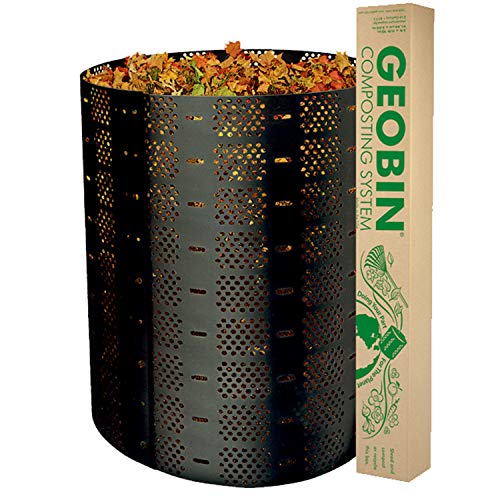
Geobin Compost Bin - 246 Gallon, Expandable, Easy Assembly, Made in the USA, Outdoor & Backyard Composter
- Large capacity—expandable to 3.75 feet (237 gallon)
- Easy to assemble with closure keys. Easy to move. Easy to reassemble.
- The best value composting bin on the market.
This is the bin that makes the most sense for pond edge planting. The Geobin is a flexible, open-bottomed cylinder that sits directly on the soil. You place it right at the edge of your pond’s planting zone, fill it with organic matter, and let worms and soil life do the work. Nutrients migrate downward and outward into the root zone of your marginal plants.
Its expandable design reaches up to 246 gallons, which is enormous. You can start with a smaller circle and expand as your compost needs grow. Assembly takes minutes with the closure keys, and the bin is easy to move if you need to shift your feeding zone. Made in the USA from recycled plastic, it’s also one of the more environmentally responsible options here.
Honest limitations: it’s not a tumbler, so you won’t get hot, fast compost. This is a cold, slow system. You’ll also need to manage the top layer to keep pests out, though the open top makes adding material effortless. And because it’s open-bottomed, you must be careful about what you put in it — avoid meat, dairy, or diseased plants that could attract animals to your pond area.
- Open-bottom design allows direct soil contact for root feeding
- Expandable from a small circle up to 246 gallons
- Easy assembly with closure keys, no tools required
- Recycled plastic construction, made in the USA
- Excellent ventilation through the mesh-like side walls
Best for: Pond owners who want a set-and-forget system that slowly feeds marginal plants through direct soil contact.
VEVOR Compost Bin 43-Gal

VEVOR
VEVOR Compost Bin, 43-Gal Dual Chamber Composting Tumbler, Large Tumbling Rotating Composter with 2 Sliding Doors and Steel Frame, BPA Free Composter Bin Tumbler for Garden, Kitchen, Yard, Outdoor
- Dual Chamber, High Capacity: Our compost bin features a dual chamber with a generous capacity of 43 gallons. Perfect for large fam…
- Convenient Access: The dual-chamber composter tumbler features a detachable sliding door with a large opening, making it effortles…
- Built to Last: Crafted from high-quality PP materials and supported by sturdy metal components, our compost bin outdoor boasts a r…
The VEVOR dual-chamber tumbler competes directly with the VIVOSUN model but adds a few design tweaks. Its detachable sliding doors open wide, making it easier to load kitchen scraps and unload finished compost. The secure seal does a better job keeping out mice and insects, which matters when your bin sits near water where pests gather.
Construction quality feels solid. The PP plastic is BPA-free and UV-resistant, and the steel frame supports up to 110 pounds of material. The internal grooves break up clumps during tumbling, and the vents promote airflow without letting rain in. VEVOR claims compost ready in four to six weeks, which is realistic for a well-balanced hot compost in warm weather.
For pond edge work, the same caveat applies as with the VIVOSUN: a tumbler keeps compost contained, so it won’t feed the soil directly. However, this bin excels if you want to produce compost tea safely. The sealed design prevents uncontrolled leachate from reaching your pond, giving you control over what goes into the water.
- Dual 43-gallon chambers with large sliding doors
- Secure seals block pests while maintaining airflow
- BPA-free, UV-resistant PP plastic with steel frame
- 360-degree tumbling with internal clump-breaking grooves
- Rated for 110 pounds of material per chamber
Best for: Gardeners who want a pest-proof tumbler for making controlled compost tea to feed pond plants without runoff risk.
JupiterForce Garden Compost

JupiterForce
JupiterForce Garden Compost Bin 80 Gallon (300 L) from BPA Free Material, Large Composting Bin Outdoor Composter with Gloves, Easy Assembling, Fast Creation of Fertile Soil, Lightweight, Black
- BPA Free Materials: The garden compost bin is made of BPA free materials for environmental protection and durability.All-weather f…
- Large Capacity: With an 80 gallon (300 L) capacity, our large compost bin outdoor provides ample space for creating nutrient-rich…
- Ventilation design: Each side of this composter is designed with four vents that provide good air circulation for composting, abso…
JupiterForce takes a different approach with an 80-gallon stationary bin that loads from the top and collects finished compost from a sliding bottom door. This design bridges the gap between a tumbler and an open-bottom bin. It sits on the ground, but the solid base means nutrients don’t leach directly into the soil beneath it.
Assembly takes four simple steps with no tools. The BPA-free plastic withstands frost and rain, so you can leave it outside year-round. Each side has four vents for airflow, which speeds up decomposition without requiring turning. For pond edge planting, this bin works well if you want to harvest compost and then apply it deliberately to your marginal plant beds.
The limitation here is the sealed bottom. Unlike the Geobin, it won’t create that slow-release underground feeding network. You’ll need to do the work of spreading compost yourself. Also, at 80 gallons, it’s smaller than it looks — fine for a modest pond planting scheme but not for a large water garden with extensive margins.
- 80-gallon capacity with top-loading lid
- Sliding bottom door for easy compost harvest
- Four vents per side for passive aeration
- Tool-free assembly in four steps
- BPA-free, all-weather resistant plastic
Best for: Pond keepers who prefer to harvest finished compost and apply it precisely to planting baskets and marginal beds.
MyLifeUNIT Compost Bins Outdoor

MyLifeUNIT
MyLifeUNIT Compost Bins Outdoor, Composting Bin for Outside Garden, Reusable Garden Yard Waste Bag, 34 Gallons (2 Pack, Black)
- 34 Gallon compost bag, large capacity design for organizing a large amount of kitchen waste and garden waste
- Fast fermentation, suitable for organizing fruit peels, weeds, leaf and plant waste, garden waste, wilted parts, and other materia…
- Also great for storing toys, clothes, laundry, garage tools, shopping, moving, camping and more
The MyLifeUNIT is not a traditional bin at all. It’s a 34-gallon fabric bag, sold in a two-pack, that works for collecting and storing garden waste near your pond. Think of it as a mobile compost holder rather than a decomposition machine. You can fill it with leaves, spent plants, and grass clippings, then move it to wherever you need to build a new planting bed.
Two openings — one at the top for loading and one at the bottom for removing material — make it easy to check the fermentation process. The fabric is water-resistant and tear-resistant, so it holds up through a season of outdoor use. For pond edge planting, these bags excel at gathering and storing organic matter until you’re ready to use it as mulch or slow compost around your marginal plants.
There are real drawbacks. The bags don’t provide the aeration or soil contact needed for proper composting. Material inside tends to go anaerobic and smell if left too wet. The manufacturer also warns against letting soil touch the self-adhesive strips when emptying. These are storage and transport tools, not true compost bins.
- Two 34-gallon bags for versatile waste collection
- Top and bottom openings for loading and removal
- Lightweight, water-resistant, and tear-resistant fabric
- Useful for storing leaves, weeds, and spent plants
- Also works for yard cleanup, moving, or storage
Best for: Pond gardeners who need portable, low-cost collection bags for gathering organic matter before it goes into a proper compost system.
How We Chose These Products
We evaluated each bin against the specific demands of pond edge planting. That means prioritizing design features that keep nutrients near the root zone of marginal plants without contaminating the water. Open-bottom bins scored highest for direct soil feeding. Tumblers scored well for controlled compost tea production. Sealed stationary bins earned points for convenience but lost some for lack of soil contact.
Material safety also drove our selections. Galvanized steel and treated wood can leach zinc, copper, or preservatives into the water table, harming aquatic life. Every bin on this list uses either BPA-free plastic or recycled plastic. We also considered real-world usability — assembly difficulty, pest resistance, and whether the bin can survive a full season of rain, sun, and frost.
Buying Guide: What Really Matters
Before you buy, think about how your bin will interact with the pond. An open-bottom bin placed at the edge of a planting zone creates a direct nutrient channel to plant roots. This works beautifully for marginal plants like iris and rush that spread their roots horizontally. But you must position the bin so that excess nutrients don’t wash into open water, where they trigger algae blooms.
Consider the compost method you’ll actually maintain. Hot composting in a tumbler requires regular turning and careful carbon-to-nitrogen ratios. Cold composting in an open bin is forgiving — you just add material and wait. For most pond owners, the set-and-forget approach of an open-bottom bin suits the slow-release feeding that aquatic plants prefer. If you want compost tea, choose a sealed tumbler with a spigot or drain valve.
Finally, think about aesthetics. A compost bin near a pond is visible. Open-bottom bins like the Geobin can be disguised with a ring of tall grasses or rushes planted around them. Tumblers are bulkier and harder to hide. If curb appeal matters, factor in how you’ll screen the bin from view before you commit to a large steel-framed unit.
Our Top Recommendation
The Geobin 246 Gallon is the clear winner for pond edge planting. Its open-bottom design directly feeds the soil where marginal plants grow, creating that slow-release nutrient flow that aquatic gardens need. The expandable capacity means you can scale it up as your planting scheme grows. And the recycled plastic construction keeps harmful metals out of your water table.
If you prefer making compost tea to feed planting baskets individually, the VEVOR tumbler is a strong runner-up. Its sealed chambers give you control over leachate, which protects your pond from nutrient spikes. For a budget-friendly option, the MyLifeUNIT bags work well for collecting and moving organic matter around the pond, even if they aren’t true composters.
Frequently Asked Questions
Can I use compost from a regular bin directly on pond plants?
Yes, but let it age first. Fresh compost can contain high levels of ammonia and soluble nutrients that burn plant roots and spike algae growth. Let finished compost cure for a few weeks before applying it to marginal plant soil or planting baskets.
Will compost near my pond cause algae blooms?
It can, if nutrients run off into open water. Position the bin at least a few feet from the water’s edge and avoid placing it on a slope that drains into the pond. An open-bottom bin feeds the soil, not the water, which reduces runoff risk significantly.
Is it safe to compost near a wildlife pond?
Safe, with care. Avoid composting meat, dairy, or diseased plants that attract pests. Stick to plant material, and consider a bin with a secure lid if raccoons or rodents are common in your area. Also, avoid treated wood bins, as preservatives can leach into the water.
What is compost tea and can I use it on pond plants?
Compost tea is the liquid that drains from active compost. It’s rich in soluble nutrients and beneficial microbes. You can use it on marginal plants, but always dilute it — typically one part tea to ten parts water — and apply it to the soil, not directly into the pond.
Bottom Line: Set and Forget
The best compost bin for pond edge planting is one that works quietly in the background. An open-bottom bin like the Geobin placed near your marginal planting zone will slowly release nutrients into the soil, feeding your plants all season without demanding constant attention. If you want faster results or prefer to control nutrient application, a tumbler gives you that option. Whichever you choose, keep the bin away from open water, use safe materials, and let the soil food web do its work. Your pond plants will reward you with vigorous growth, and your water will stay clear.