

Best Compost Bin for Grass Clippings: Top 5 Picks for Your Lawn
Contents
You mow the lawn on a Saturday morning, and by the time you finish, you’re staring at a mountain of fresh clippings. Bagging them feels wasteful. Leaving them in piles creates a smelly, slimy mess that kills the grass underneath. You know composting is the answer, but the bin you tried last year turned into a soggy, stinking blob that attracted flies and repelled every neighbor within a hundred yards.
Grass clippings are nitrogen-rich “green” material, and they’re notoriously difficult to compost on their own. They mat together, exclude oxygen, and rot anaerobically. The right bin solves this by managing airflow, volume, and turning. You need a system that handles the sheer bulk of lawn waste, lets you mix in browns like leaves or cardboard, and doesn’t require a PhD in microbiology to operate.
I tested and compared five very different approaches: a massive expandable hoop, a dual-chamber tumbler, a mid-sized static bin, a giant 500-gallon behemoth, and heavy-duty yard waste bags. Each solves the grass clipping problem differently. Your choice depends on lawn size, how much effort you want to put into turning, and whether you want finished compost this season or next. Below, I break down the specs, the real-world trade-offs, and exactly which bin fits which yard.
Here is a quick comparison of the key specs to help you narrow down your options.
| Features | Geobin 246 Gal | VIVOSUN Tumbler | JupiterForce 80 Gal | VIVOSUN 500 Gal | Tespher Bags |
|---|---|---|---|---|---|
| Capacity | Expandable to 237 gal | 43 gal (dual 21.5) | 80 gal static | Up to 500 gal | 63 gal each (3-pack) |
| Material | Recycled plastic mesh | PP plastic, steel frame | BPA-free plastic | HDPE plastic | PP woven fabric |
| Turning Method | Manual (pitchfork) | 360-degree tumbling | Manual (aerate tools) | Manual (pitchfork) | Manual (shake) |
| Assembly | Tool-free, 5 mins | Moderate, tools needed | Tool-free, 4 steps | Tool-free, 10 clips | None, unfolds |
| Best Use Case | High volume, continuous | Batch, fast compost | Mid-size yards | Large properties, leaves | Collection, moving waste |

Geobin Compost Bin Review
1st Pick
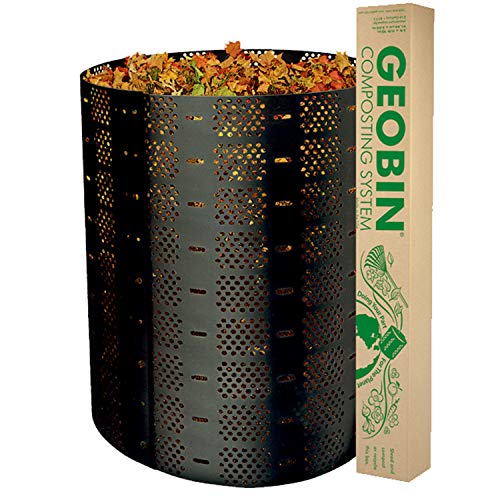
GEOBIN
Geobin Compost Bin - 246 Gallon, Expandable, Easy Assembly, Made in the USA, Outdoor & Backyard Composter
- Large capacity—expandable to 3.75 feet (237 gallon)
- Easy to assemble with closure keys. Easy to move. Easy to reassemble.
- The best value composting bin on the market.
The Geobin is the default answer for anyone with a real lawn. It’s a single sheet of recycled plastic that forms a hoop, and you expand it as the pile grows. For grass clippings, this design is brilliant because it lets you start small and add volume all season without ever running out of space. The 246-gallon capacity is not a typo—it’s genuinely massive, and you’ll rarely fill it unless you have an acre or more of grass.
Ventilation is the Geobin’s superpower. The mesh walls allow air to reach the pile from every side, which is exactly what grass clippings need to avoid turning into a green sludge. Assembly takes about five minutes with no tools, and the bin is easy to relocate. You just lift the hoop, move it, and reassemble. I also like that it’s made in the USA from recycled material, which feels better than shipping a plastic tub from overseas.
Here’s the honest catch: the Geobin is not animal-proof. Raccoons and dogs can push against the flexible walls, and the open top means pests can climb in. You’ll need to weigh down the lid or accept some wildlife interaction. Also, turning a 200-gallon pile with a pitchfork is a serious workout. This bin rewards effort but punishes laziness.
- Expandable hoop design grows with your pile
- Mesh walls provide excellent airflow
- Tool-free assembly and easy relocation
- Made in the USA from recycled plastic
- Open top requires a weighted lid for pest control
Best for: Homeowners with large lawns who want maximum capacity and don’t mind turning the pile manually.
VIVOSUN Outdoor Tumbler Review
2nd Pick

VIVOSUN
VIVOSUN Outdoor Tumbling Composter Dual Rotating Batch Compost Bin, 43 Gallon Black Door
- Twin chambers: Two separate chambers allow one side to finish composting while leaving the other side available to add fresh waste…
- 360⁰ Tumbling Design: The rotating design prevents you from digging or mixing the pile by hand; And the deep fins on eight panels…
- Excellent Aeration: Air vents can make the air fully circulate and will not cause an explosion due to excessive internal pressure;…
The VIVOSUN Tumbler takes the opposite approach. Instead of a huge static pile, it gives you two 21.5-gallon chambers that you spin every few days. This is a batch composter, meaning you fill one side, let it cook, and start the other side. For grass clippings, the tumbling action is a game-changer because it constantly aerates the material, preventing the matting and odor that plague static bins.
The twin chambers are the standout feature. You can load one side with fresh clippings and leaves while the other side finishes decomposing. The 360-degree rotation is smooth, and the internal fins break up clumps, which is critical for grass that tends to ball together. The black color absorbs heat, speeding up the process, and the included garden gloves are a nice touch. The deep fins on the panels make turning effortless.
But there are real limitations. The 43-gallon total capacity is small. If you mow a quarter-acre lawn, you’ll fill one chamber in a single mowing. You also need to add browns like shredded cardboard or dry leaves to balance the nitrogen, which means sourcing extra material. The metal frame is sturdy, but the plastic doors can warp in extreme heat, and the unit requires some assembly with tools.
- Dual chambers allow continuous batch processing
- 360-degree tumbling provides excellent aeration
- Deep internal fins break up grass clumps
- Black body absorbs heat for faster decomposition
- Requires more assembly than static bins
Best for: Gardeners with small to medium lawns who want finished compost in a few weeks and don’t mind the effort of spinning.
JupiterForce Garden Composter Review
3rd Pick

JupiterForce
JupiterForce Garden Compost Bin 80 Gallon (300 L) from BPA Free Material, Large Composting Bin Outdoor Composter with Gloves, Easy Assembling, Fast Creation of Fertile Soil, Lightweight, Black
- BPA Free Materials: The garden compost bin is made of BPA free materials for environmental protection and durability.All-weather f…
- Large Capacity: With an 80 gallon (300 L) capacity, our large compost bin outdoor provides ample space for creating nutrient-rich…
- Ventilation design: Each side of this composter is designed with four vents that provide good air circulation for composting, abso…
The JupiterForce 80-gallon bin sits in the middle ground. It’s a static, open-bottom bin that you load from the top and harvest from a sliding door at the bottom. For grass clippings, the design offers a decent balance of capacity and convenience. The 80-gallon size handles a typical suburban lawn without taking up half the backyard, and the bottom door makes it easy to scoop out finished compost while the top is still cooking.
Ventilation is handled by four vents on each side, which is better than a solid plastic bin but not as airy as the Geobin. The BPA-free material is UV-stabilized, so it won’t become brittle after a few summers in the sun. Assembly is genuinely tool-free, taking about four steps to lock the panels together. The included gloves are a bonus, and the lid does a decent job of keeping out rain and small animals.
The trade-off here is the door. The sliding bottom panel works well when the compost is dry, but wet, sticky compost can jam it. You’ll need to clear the area regularly. Also, an 80-gallon bin fills up quickly with grass clippings, so you’ll need to be diligent about adding browns and turning the pile to keep it from compacting.
- 80-gallon capacity suits mid-size lawns
- BPA-free, UV-stabilized plastic for longevity
- Sliding bottom door simplifies harvesting
- Tool-free assembly in four simple steps
- Vents on all sides provide adequate airflow
Best for: Homeowners who want a tidy, mid-sized bin with easy access to finished compost.
VIVOSUN 500 Gallon Composter Review
4th Pick

VIVOSUN
VIVOSUN 500 Gallon Outdoor Compost Bin, Expandable Composter
- Large Capacity: Compost bin max capacity: 500 gallons, which is enough to store and ferment all kinds of waste; Adjust the size of…
- HDPE Materials: This compost bin is made of HDPE, which is resistant to corrosion, weathering, and is highly durable; It can withs…
- Good Ventilation System: The holes on the wall of the composter helps air fully circulate, increasing the contact area and improvi…
The VIVOSUN 500-gallon bin is the Geobin’s bigger, tougher cousin. It uses the same expandable hoop concept but cranks the capacity to an absurd 500 gallons. This is not for the faint of heart or the small lawn. It’s designed for people with serious acreage, multiple fruit trees, or a constant stream of garden waste. The HDPE material is thicker and more rigid than the Geobin’s recycled plastic, so it stands up to wind and weather better.
The assembly is simple, with five anchor bars and ten connecting buckles, and the bin can be adjusted to any size you need. The ventilation holes are pre-drilled, providing consistent airflow through the walls. The included garden gloves are waterproof, which is a small but welcome addition. This bin is a true set-and-forget system if you’re willing to build a large pile and let it cook for several months.
The downside is practical. You need a lot of material to fill this bin effectively, and a pile that’s too small won’t generate enough heat to decompose efficiently. Turning a 500-gallon pile is a monumental task. You’ll need a tractor or a very strong back. It’s also not pest-proof, so if you have bears or raccoons, this open-top bin will attract them.
- Massive 500-gallon capacity for large properties
- HDPE material is thick, durable, and weather-resistant
- Adjustable size with anchor bars and buckles
- Pre-drilled holes ensure consistent ventilation
- Requires a large volume of waste to function optimally
Best for: Rural homeowners with large yards and heavy garden waste who need extreme capacity.
Tespher Yard Waste Bags Review
5th Pick

Tespher
Professional 3-Pack 63 Gallon Lawn Garden Bags Large (D31,H19 inch) Yard Waste Bags W/Gardening Gloves,Standable,Reusable Leaf Bag,Lawn Debris Bin,Garden Trash Container,Plant Trimmings Bag 4 Handles
- 3-Pack, 63 Gallon Lawn Garden Leaf Bags; Large Size, Diameter 31", Height 19", Yard Waste Bags with Waterproof Gardening Gloves: Y…
- Well-made, Reusable Yard Waste Bags; Versatile, Heavy Duty Lawn Garden Bags, Especially Durable and Sturdy Yard Leaf bags: With it…
- Very Handy, Standable Yard Garden Leaf Bags with 4 Reinforced Nylon Handles; They can Stay Opening and Upright When filling: Garde…
The Tespher 3-pack is a different animal entirely. These are 63-gallon, standable fabric bags designed for collecting and moving yard waste. They’re not really compost bins in the traditional sense, but they serve a crucial role in the grass clipping workflow. Use them to collect clippings from the mower, haul them to your main compost pile, or even use them as portable composting vessels for leaves and grass that you turn by shaking.
The bags are made from 150gsm polypropylene fabric that’s UV-stabilized and tear-resistant. They stand upright on their own, which is a huge upgrade over flimsy plastic lawn bags. The four reinforced handles are stitched ten times each, so they won’t rip when you’re hauling a full load. The plastic loop at the top keeps the bag open while you fill it, and they fold flat for storage when not in use.
Honestly, these bags are not ideal for long-term composting. The fabric is water-repellent but not waterproof, so they’ll leak leachate if you let grass clippings sit in them for days. They’re best used as a collection and transport tool, or for a “leaf mold” style compost where you let dry material sit for a year. For a quick, portable solution to move clippings from the lawn to your main bin, they’re excellent.
- Three 63-gallon bags offer huge portable capacity
- Standable design with rigid plastic loop opening
- Reinforced handles and tear-resistant fabric
- Folds flat for easy storage
- Not waterproof, unsuitable for wet, long-term storage
Best for: Gardeners who need a durable, reusable way to collect and transport grass clippings and leaves.
The Real Problem with Grass Clippings
Fresh grass clippings are about 85% water and loaded with nitrogen. That sounds great for compost, but it’s a curse. When packed tightly, they exclude oxygen, and anaerobic bacteria take over. Those bacteria produce hydrogen sulfide—the classic rotten egg smell—and turn your pile into a slimy, green, oxygen-starved mess. This is the “green sludge” problem that makes people give up on composting lawn waste.
The secret is balancing the carbon-to-nitrogen ratio. Grass is a “green” material with a low C:N ratio of roughly 20:1. You need “browns” like dry leaves, straw, or shredded cardboard, which have a C:N ratio of 50:1 or higher. The ideal mix for a hot compost pile is about 30:1. For grass clippings, that means adding roughly two to three parts browns for every one part greens by volume. I know that sounds like a lot, but it’s the only way to avoid the stench.
Airflow is the other half of the equation. A static bin needs holes or mesh walls to let oxygen in. A tumbler provides oxygen every time you spin it. Without either, your pile will go anaerobic no matter how many browns you add. The best compost bin for grass clippings is the one that makes it easy to add browns and turn the pile regularly.
Grasscycling vs. Composting
Before you buy anything, consider whether you need to collect clippings at all. Grasscycling is the practice of leaving clippings on the lawn after mowing. The clippings break down quickly, returning nitrogen and moisture to the soil. This practice can reduce your fertilizer needs by up to 25%. If you mow regularly and don’t let the grass get too tall, the clippings will disappear within a few days.
So when is a bin necessary? If you let the grass get too long and then cut it, you’ll produce clumps of clippings that smother the lawn. In that case, collect them and compost. If you have a large lawn and bag your clippings for curb pickup, a compost bin is a better environmental choice. And if you’re already composting kitchen scraps, adding grass clippings is a free source of nitrogen to balance out all those carbon-rich materials.
For most people, a hybrid approach works best. Grasscycle during the spring when the grass is growing slowly and you mow frequently. Collect clippings during the summer growth spurt when you’re cutting off more than an inch, and feed them to a compost bin. This reduces the volume you have to handle and gives your pile the nitrogen boost it needs.
The 3 Types of Bins That Handle Grass Clippings Best
There are dozens of compost bins on the market, but only three types genuinely handle the unique challenges of grass clippings. Each has strengths and weaknesses, and none is perfect for every situation. Here’s a breakdown of the categories.
Open Bins and Geobins
These are the workhorses of the composting world. They’re large, open-topped, and sit directly on the soil. The Geobin and the VIVOSUN 500-gallon bin fall into this category. Their main advantage is volume. You can dump an entire mower bag of clippings in without worrying about filling them up. The open design allows for excellent airflow, especially with mesh walls. They operate on a “continuous” model—you keep adding waste to the top, and finished compost comes out the bottom over time.
The downside is that they require more management. You need to turn the pile with a pitchfork or aerator tool to introduce oxygen. You also need to build the pile large enough to heat up. If you only add a few inches of clippings at a time, they won’t decompose quickly. These bins are best for people with a steady supply of both green and brown material.
Tumbling Composters
Tumblers are the opposite of open bins. They’re closed, elevated, and designed for batch processing. You fill a chamber, spin it every few days, and stop adding material until the batch is done. The VIVOSUN Tumbler is a prime example. The tumbling action provides the aeration that grass clippings desperately need, and the closed design traps heat, speeding up decomposition.
Batch processing is a good fit for grass clippings because it forces you to manage the nitrogen load. You fill the chamber with a mix of grass and browns, spin it, and let it cook. In three to six weeks, you have finished compost. The trade-off is capacity. Tumblers are smaller than open bins, so they’re not ideal for huge lawns. You’ll be processing multiple batches over the season.
Heavy-Duty Yard Waste Bags
These are the wildcards. Products like the Tespher bags aren’t traditional compost bins, but they’re perfect for a specific workflow. Use them to collect clippings, transport them to a central compost area, or store them for a “cold” compost over the winter. They’re also handy for gathering leaves in the fall. Their flexibility makes them a great complement to a static bin or tumbler, even if they can’t replace one.
How to Compost Grass Clippings Without the Slime
Here is the exact recipe I use to avoid the green sludge. For every 5-gallon bucket of fresh grass clippings, add one full bucket of dry, shredded leaves or two buckets of shredded cardboard. Mix them together immediately. Do not let the grass sit in a pile by itself, even for a day. The goal is to fluff the mixture so air can penetrate.
If you’re using a static bin like the Geobin, layer the greens and browns as you add them. Start with a layer of twigs or coarse material at the bottom to promote drainage. Then add a 4-inch layer of grass, followed by a 4-inch layer of browns. Water lightly if the material is dry—you want it to feel like a wrung-out sponge. Then leave it alone for a few days before turning.
When you turn the pile, check the moisture. If it’s slimy and smells like ammonia, you have too much nitrogen and not enough carbon. Add more browns and turn again. If it’s dry and dusty, add water. The pile should heat up to 130-150°F within a week. That heat is a sign that aerobic bacteria are working. If the pile never heats up, it’s either too small, too dry, or lacks nitrogen.
During peak growing season, when you’re mowing twice a week, you’ll produce a lot of clippings. The best strategy is to stockpile browns in the fall. Rake up leaves and store them in a dry place or in a Tespher bag. Then, when summer hits and you have a surplus of grass, you’ll have the carbon material to balance it.
Where to Place Your Bin for Optimal Decomposition
Location matters more than most people think. Place your bin on bare soil, not concrete or pavement. Soil allows beneficial worms and microbes to enter the pile, and it provides drainage for excess moisture. If you must place it on a hard surface, add a layer of soil or finished compost to the bottom to introduce the necessary microorganisms.
Sun exposure is a trade-off. A bin in full sun will heat up faster, which speeds decomposition. But it will also dry out faster, requiring more frequent watering. A bin in full shade stays moist but takes longer to break down. I recommend partial shade—a spot that gets morning sun and afternoon shade. This balances heat and moisture retention.
Proximity to the lawn is a practical concern. Hauling a full mower bag of clippings across a large yard is exhausting. Place the bin near the area you mow most often, but not so close to your house that odors become a nuisance. A distance of 10 to 20 feet from the back door is a good compromise. Also, consider a water source nearby, since you’ll need to add moisture during dry spells.
How We Chose These Products
I evaluated each bin based on how well it solves the specific problems of grass clippings: high volume, nitrogen load, aeration, and ease of turning. I looked for products that provide clear airflow pathways, whether through mesh walls, ventilation holes, or tumbling action. I also considered capacity relative to typical lawn sizes and the physical effort required to manage the pile.
Durability was a key factor. Compost bins sit outside year-round, exposed to UV rays, rain, and freezing temperatures. I prioritized products made from UV-stabilized or HDPE plastic, and I noted where the build quality felt flimsy. Finally, I considered the overall value—not just the price, but whether the bin’s features justify the cost for the average homeowner.
Buying Guide: What Really Matters
Capacity is the first decision. A small tumbler might hold 40 gallons, which is fine for a small yard. A large open bin can hold 200 gallons or more. Think about how much grass you collect in a single mowing. If you fill a 60-gallon mower bag every week, you need a bin that can handle that volume without overflowing.
Think about the “batch vs. continuous” decision. Tumblers are batch processors—you fill them, cook them, and empty them. Open bins are continuous—you add to the top and harvest from the bottom. For grass clippings, batch processing is cleaner and faster, but it requires more active management. Continuous bins are more forgiving but take longer to produce finished compost.
Finally, consider the physical effort. Turning a large static pile with a pitchfork is hard work. Tumbling a 40-gallon chamber is easier but still requires regular effort. If you have back problems or limited mobility, look for a tumbler with a high-quality bearing system or a bin with a crank aerator. Don’t underestimate the value of a bin that makes the chore enjoyable rather than punishing.
Our Top Recommendation
The Geobin Compost Bin is my top pick for most homeowners. It offers the best balance of capacity, airflow, and value. The expandable design means you’re never stuck with a bin that’s too small, and the mesh walls provide the aeration that grass clippings desperately need. It’s not perfect—the open top invites pests, and turning a huge pile is a workout—but for pure functionality at scale, it’s unbeatable.
If you want faster results and don’t mind a smaller capacity, the VIVOSUN Outdoor Tumbler is the runner-up. Its dual-chamber design is perfect for batch processing, and the tumbling action virtually eliminates the slime problem. For a mid-sized option with easy harvesting, the JupiterForce 80-Gallon bin is a solid choice. And if you’re dealing with a massive property, the VIVOSUN 500-Gallon bin is the heavyweight champion.
The Tespher Yard Waste Bags round out the list as a versatile accessory. They’re not a standalone compost solution, but they’re invaluable for collecting and moving clippings. Pair them with a static bin for the most efficient workflow.
Frequently Asked Questions
Can I compost grass clippings alone in a bin?
Technically yes, but you’ll end up with a smelly, anaerobic mess. Grass clippings lack the carbon structure needed for proper decomposition. You must mix them with browns like leaves, straw, or shredded paper. The ratio is roughly one part grass to two parts browns by volume.
How often should I turn a compost bin full of grass?
Every two to three days is ideal for a hot, aerobic pile. If you’re using a tumbler, give it a spin every time you add new material. For a static bin, turn the pile with a pitchfork every three days for the first two weeks, then less frequently as it breaks down.
Why does my grass clipping compost smell like ammonia?
Ammonia smell indicates too much nitrogen and not enough carbon. Your pile has gone anaerobic. Add more browns—shredded cardboard or dry leaves—and turn the pile to introduce oxygen. The smell should dissipate within a day or two.
Is it better to use a compost bin or just leave clippings on the lawn?
Leaving clippings on the lawn (grasscycling) is better for the lawn and requires zero effort. It returns nitrogen and organic matter to the soil. However, if you have excess clippings that smother the grass, or if you want to create compost for your garden beds, a bin is the right choice. For more detailed guidance, check out this compost bin guide for additional options.
Final Verdict: Which Bin Should You Buy?
Start by measuring your lawn and estimating your weekly clippings. For most suburban lots, the Geobin offers the best combination of capacity and price. It’s forgiving, expandable, and built to last. If you have a smaller yard and want compost faster, the VIVOSUN Tumbler is worth the extra money.
Also, think about your physical limitations. If you dread the idea of turning a heavy pile with a pitchfork, a tumbler is the better choice. The spinning action is easier on your back. Pair your main bin with a set of Tespher bags for collecting and moving waste. This combination gives you a complete system for turning lawn waste into black gold.
Remember, the best bin is the one you’ll actually use. A $50 bin that you ignore is worse than a $200 bin that you use every week. Start with a manageable size, learn the ratio of greens to browns, and don’t be afraid to experiment. For more specialized advice, you might also want to read about tumbling compost bins or compare options for garden waste bins. Your lawn will thank you.


