You mow the lawn, bag the clippings, and haul the bags to the curb. Then you buy compost in spring because your soil needs feeding. It’s a silly cycle, and it costs you time and money. Grass clippings are some of the best compost material you can get, but they are also the most likely to turn into a stinking, anaerobic mess if you handle them wrong.


The problem is nitrogen. Fresh grass clippings are packed with it, which makes the pile heat up fast. But without enough carbon-rich browns (like dry leaves or cardboard) and proper airflow, those greens turn into a slimy, putrid sludge. Most bins fail here because they cannot handle the sheer volume of a typical lawn or they don’t allow enough oxygen to reach the core. A great bin for this job needs to be either very large for continuous dumping or easy to turn for batch processing.
I have narrowed down the market to five bins that actually handle grass well. I looked at volume, aeration, and how easy they are to unload. The right choice depends on how big your lawn is and whether you want to turn the pile or let it sit. Below is the full breakdown, plus a guide on ratios so you never have to deal with the green sludge again. For a broader look at options, check out this lawn clippings composter guide.
Here is how the main contenders stack up on paper.
| Features | Geobin 246 Gal | VIVOSUN Tumbler | JupiterForce 80 Gal | EJWOX 80 Gal | VEVOR 220 Gal |
|---|---|---|---|---|---|
| Type | Expandable open bin | Dual-chamber tumbler | Static closed bin | Static closed bin | Expandable open bin |
| Capacity | 246 gallons | 43 gallons | 80 gallons | 80 gallons | 220 gallons |
| Key Feature | Expandable & movable | 360-degree rotation | Sliding bottom door | Circular aeration vents | Reusable & disassembles |
| Material | Recycled plastic | PP plastic + metal | BPA-free plastic | UV-stabilized HDPE | Premium HDPE |
| Best Use Case | High-volume yards | Fast batch compost | Mid-size gardens | Neat garden look | Massive leaf loads |
Geobin Compost Bin
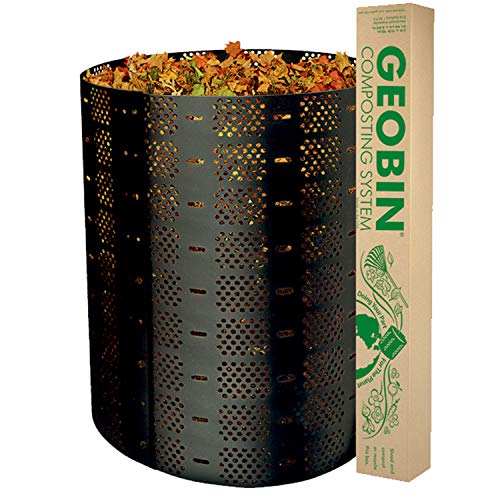
GEOBIN
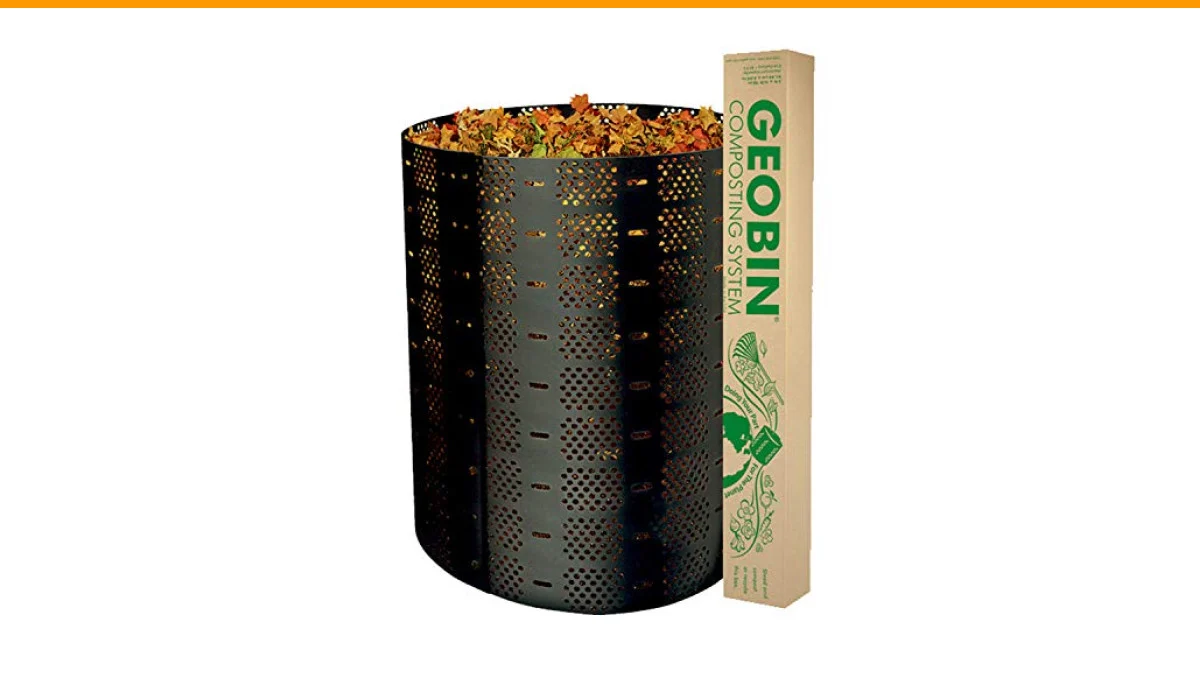
Geobin Compost Bin - 246 Gallon, Expandable, Easy Assembly, Made in the USA, Outdoor & Backyard Composter
- Large capacity—expandable to 3.75 feet (237 gallon)
- Easy to assemble with closure keys. Easy to move. Easy to reassemble.
- The best value composting bin on the market.
This is the one you buy when you mow a half-acre and don’t want to think about compost math. The Geobin is a flexible sheet of recycled plastic that forms a circle. You can set it to 3.75 feet in diameter, which gives you a working volume of 246 gallons. That is enough space to swallow every clipping from a large lawn without needing to turn it constantly.
What makes this bin special is airflow. The sides are covered in small holes, so wind passes through the pile. That passive ventilation is critical for grass clippings because they compact into a mat. The bin is also portable. You can lift the plastic collar off the pile, set it up a few feet away, and fork the material back in. That is the easiest way to turn a pile without a tumbler. Assembly takes less than five minutes using the included plastic keys.
Honest trade-off: it is an open bin, so it looks utilitarian. It is also not animal-proof. If you add kitchen scraps, you might attract rodents. Keep this bin exclusively for yard waste and you will be fine. The lack of a lid means rain can soak the pile, so you might need to cover it with a tarp during wet weeks to keep the moisture balanced.
- Expands up to 246 gallons (3.75 ft diameter)
- Made from recycled plastic in the USA
- Tool-free assembly with closure keys
- Open top allows for easy filling and rain access
- Lightweight and easy to relocate around the yard
Best for: Homeowners with large lawns who want a cheap, high-volume holding pen for continuous composting.
VIVOSUN Tumbling Composter
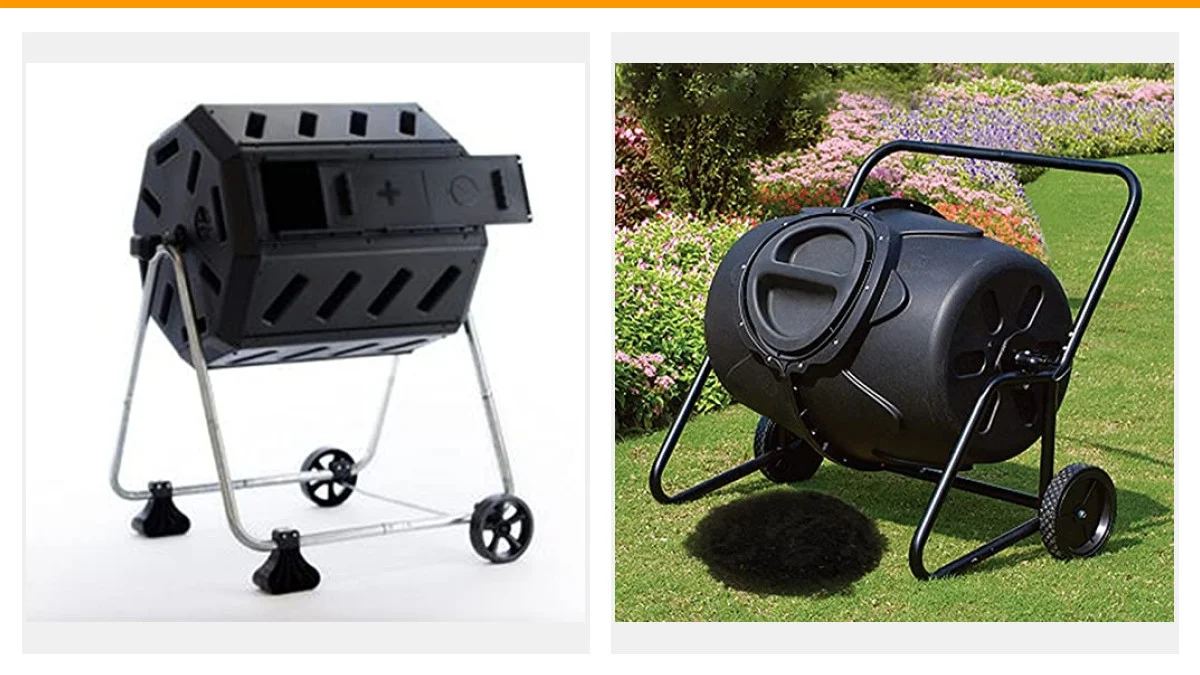
If you hate turning piles with a fork, the VIVOSUN is your answer. This is a dual-chamber tumbler, meaning it has two separate 21.5-gallon drums. You fill one side for a month, let it cook, and start filling the other. By the time the second side is full, the first side is usually finished. That gives you a constant supply of compost without ever touching the pile.
The design is practical. The drum sits on a metal A-frame, and you spin it with a handle. Deep fins on the inside break up clumps of grass as you rotate. It has air vents on the panels to keep oxygen flowing. Because you can spin it every few days, you keep the bacteria aerobic. That prevents the foul odor that comes from letting grass sit in a wet heap. The unit comes with a pair of garden gloves and four plastic claws for digging, which is a nice touch for the price.
There are limitations. Forty-three gallons is small if you have a big yard. You will be filling it every week during peak growing season. Also, tumblers rely on the material sticking together to heat up. Grass clippings alone are too light and fluffy; they need to be mixed with leaves or shredded paper to create mass. You will still need a pitchfork to load it, but you will never need to turn it manually.
- Dual 21.5-gallon chambers for batch processing
- 360-degree rotation with internal mixing fins
- Ventilated panels for aerobic decomposition
- Rust-resistant metal frame and PP plastic body
- Includes waterproof gloves and digging claws
Best for: Gardeners who want finished compost in a few weeks and prefer spinning a drum to swinging a pitchfork.
JupiterForce Garden Compost Bin

JupiterForce
JupiterForce Garden Compost Bin 80 Gallon (300 L) from BPA Free Material, Large Composting Bin Outdoor Composter with Gloves, Easy Assembling, Fast Creation of Fertile Soil, Lightweight, Black
- BPA Free Materials: The garden compost bin is made of BPA free materials for environmental protection and durability.All-weather f…
- Large Capacity: With an 80 gallon (300 L) capacity, our large compost bin outdoor provides ample space for creating nutrient-rich…
- Ventilation design: Each side of this composter is designed with four vents that provide good air circulation for composting, abso…
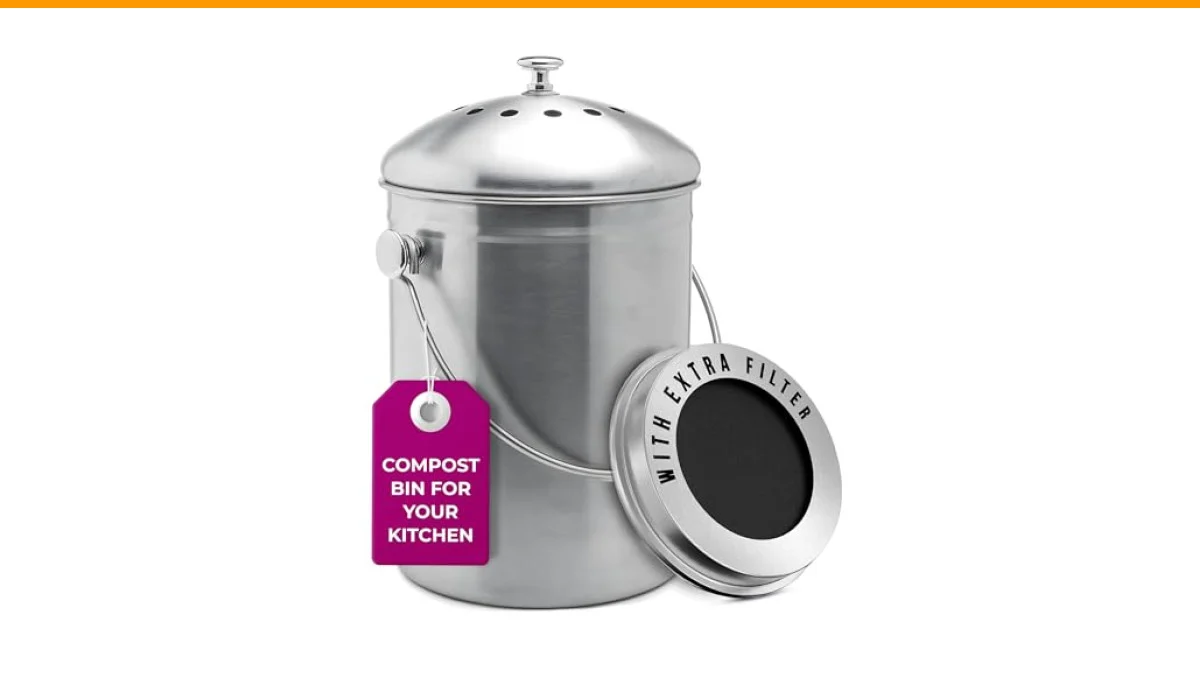
The JupiterForce is a static bin for the gardener who wants a tidy, contained system. It holds 80 gallons, which suits a quarter-acre lot or a family that generates a lot of kitchen waste alongside yard trimmings. The plastic is BPA-free and UV-stabilized, so it won’t become brittle after a summer in the sun.
It solves the two biggest complaints about static bins. First, it has four vents on each side, which creates a cross-breeze through the pile. Second, it has a sliding door at the bottom. When the lower material is finished, you pull the door and rake out the dark, crumbly compost while the top is still breaking down. That is called continuous composting, and it works well here because the bin is tall enough to let the bottom mature undisturbed.
The trade-off is access. The top lid opens, but it is a bit narrow for shoveling in large loads of grass. You will be lifting clippings in a bucket rather than dumping a wheelbarrow directly in. It is also lightweight, so a strong wind can knock it over if it is empty. Stake it down or place it against a fence. It comes with gloves, and assembly takes about four steps with no tools.
- 80-gallon capacity with a sliding bottom door
- BPA-free, weather-resistant plastic construction
- Four aeration vents on each side panel
- Top lid locks to keep out pests and animals
- Tool-free assembly in under five minutes
<
Best for: Homeowners wanting a neat, enclosed bin that is easy to harvest from without disturbing the active pile.
EJWOX 80 Gallon Compost Bin
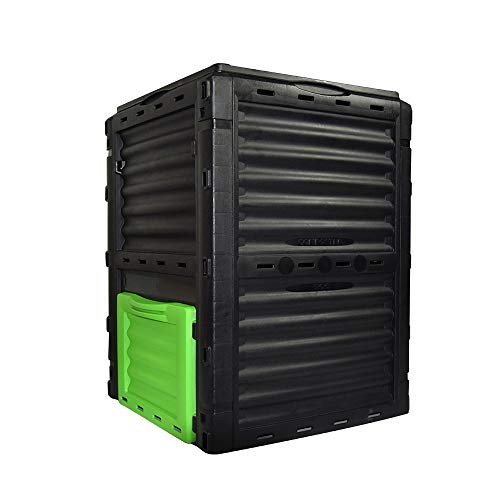
The EJWOX competes directly with the JupiterForce, but it wins on aesthetics and airflow design. It comes in a forest green color that fades into shrubbery. If you care about how your backyard looks, this is the bin you want. It doesn’t scream ‘garbage heap’ like black plastic bins tend to do.
Functionally, it is a solid static bin. The circular aeration system uses vents on every side to pull oxygen through the center of the pile. The 80-gallon capacity is right for a medium lawn. The panels are made from high-density, UV-stabilized material, so they resist cracking in freezing winters. Assembly is a six-piece snap-on system; you do not need a single tool.
Where it falls short is the lid. It fits snugly, but it is not hinged. You have to lift it off completely and set it aside every time you add material. That gets annoying when you are making multiple trips with a wheelbarrow. The bottom door is also smaller than the JupiterForce’s, making it slightly harder to pull out large chunks of finished compost. But for pure decomposition speed, the vent design is excellent for grass clippings.
- 80-gallon capacity with vertical, space-saving design
- High-efficiency air vents on all four sides
- UV-stabilized HDPE resists fading and cracking
- Snap-on assembly with six components
- Natural green color blends into landscaping
Best for: Gardeners who want a high-performing static bin that doesn’t ruin the view of their backyard.
VEVOR Compost Bin
The VEVOR is the Geobin’s bigger, beefier cousin. It expands to a massive 220 gallons, which is over a thousand liters. If you have mature trees dropping leaves in the fall and a large lawn producing clippings in the summer, this bin holds everything at once. It is made from thick HDPE plastic, so it holds its shape better than the flexible Geobin.
It is essentially a modular panel system. You lock the panels together to form a cylinder. The walls have holes for airflow. When your compost is done, you can unclip the panels and move the whole setup to a new spot. That design means you never have to dig out the bottom of a heavy bin. You just relocate the structure.
There is one critical warning: the product is lightweight when empty. The manufacturer explicitly notes that you should secure it after assembly. A strong gust can blow it across the yard. I recommend driving a few stakes through the bottom edge or stacking a brick on the base. Also, like the Geobin, it is open-topped. You are relying on the heat of the pile and ambient air, not a sealed environment, so you must manage moisture levels manually.
- Expands to 220 gallons (1000 liters) capacity
- HDPE material resists corrosion and heat
- Full disassembly for easy relocation and storage
- Ventilation holes on all panels for airflow
- Sets up in roughly five minutes without tools
Best for: Heavy-duty yard waste managers who need a giant, movable vessel for seasonal leaf and grass dumps.
How We Chose These Products
I started with a simple criterion: the bin must survive contact with grass clippings. That rules out cheap, thin-walled bins that collapse under the weight of wet material. I looked for bins with proven aeration systems, either passive holes or active tumbling, because airflow is the only thing that stops grass from going anaerobic.
I also considered the workflow. A bin that is hard to unload will get abandoned by August. I prioritized designs with bottom doors, easy disassembly, or rotating drums. Volume mattered too. Most people underestimate how much grass a lawn produces. A 40-gallon bin is useless for a half-acre lot. I selected a range from 43 gallons for small yards up to 246 gallons for serious acreage. For a deeper dive into the science of hot piles, see this nutrient-rich compost bin review.
Buying Guide: What Really Matters
Capacity is the first decision. Grass clippings are bulky and wet. A standard 80-gallon bin will handle a 5,000-square-foot lawn, but you will need to mix in browns every time you fill it. If your lawn is larger, skip the static bins entirely and go straight for a 200-gallon open bin. You can always let a big pile sit longer, but you cannot make a small bin bigger.
Think about the turning method. Static bins require you to manually mix the pile with a pitchfork or an auger. Tumblers do the mixing for you, but they cost more and hold less. The real question is your physical tolerance for labor. If you have back problems, a tumbler is worth the price. If you are happy to turn a pile every two weeks, a static bin saves you money. Consider a tumbling composter for fast results if speed is your goal.
Finally, look at the bottom of the bin. Static bins with ground contact allow worms and microbes to enter the pile from the soil below. That speeds up decomposition dramatically. Tumblers are sealed off from the ground, so they rely entirely on the bacteria you introduce. Both work, but ground-contact bins are more forgiving for beginners who forget to add compost starter.
Grasscycling vs. Composting
Before you buy anything, ask if you should collect clippings at all. Grasscycling is the practice of leaving clippings on the lawn. It returns nitrogen to the soil, reduces the need for fertilizer, and saves you the labor of hauling bags. Most mowers can mulch clippings fine if you mow regularly and only cut a third of the grass blade at a time.
You should only collect clippings if they are too thick to leave behind, if you have a disease problem in the lawn, or if you want to use them as a soil amendment elsewhere. If you bag, you are taking nutrients off the lawn and putting them in a pile. That is fine, but you are now responsible for managing a high-nitrogen waste stream. The bins above are the tools for that job.
The 3 Types of Bins for Grass
Open bins like the Geobin and VEVOR are best for high volume. You dump everything in, add browns, and let it sit for six months. You do not need to be precise with ratios because the sheer size buffers mistakes. These are continuous systems; you add to the top and harvest from the bottom.
Tumblers like the VIVOSUN are batch processors. You fill them completely, spin them daily, and stop adding material. This gives you finished compost in three to six weeks. The trade-off is volume. You cannot process your whole lawn in one batch if you have a big yard. Static bins like the JupiterForce and EJWOX sit in the middle. They are enclosed, tidy, and require some manual turning but offer decent capacity.
How to Compost Grass Without the Slime
The slime happens when grass clippings are packed too tightly and water cannot drain. The fix is always the carbon-to-nitrogen ratio. Grass is a green material with a ratio of about 20:1. You need to add browns like dry leaves, straw, or shredded cardboard to get the pile to the ideal 30:1.
Here is the practical rule: for every 5-gallon bucket of fresh grass clippings you add, mix in one full bucket of dry, brown material. If you use the Geobin or VEVOR, layer them like a lasagna. If you use a tumbler, throw them in together and spin the drum five times. The browns soak up the excess moisture and provide the carbon the bacteria need to break down the nitrogen without releasing ammonia.
If you already have a slimy pile, stop adding grass. Turn the pile to introduce air, and add shredded cardboard or wood chips. Let it dry out for a week before you resume feeding it. Do not add water to a pile that contains fresh grass; it is usually wet enough already.
Where to Place Your Bin
Location matters more than people think. Place the bin on bare soil, not concrete or pavement. Soil contact allows worms and beneficial bacteria to migrate up into the pile. It also ensures excess liquid (leachate) drains away instead of pooling at the bottom of the bin.
Put the bin in partial shade. Full sun dries out the edges of the pile and kills the microbes. Full shade keeps the pile too cold. A spot that gets morning sun and afternoon shade is ideal. Also, place it within 20 feet of the lawn. Hauling wet grass across the yard in a wheelbarrow gets old fast. If the bin is close to the garden, even better, because you will use the finished compost nearby.
Frequently Asked Questions
Can I compost only grass clippings in these bins? You can, but it will not work well. Grass alone compacts into a dense mat that blocks airflow. You must mix in browns, or you will end up with a smelly, slimy mess. Aim for a 2:1 ratio of grass to browns by volume.
How long does it take for grass clippings to turn into compost? In a tumbler that you spin daily, expect three to five weeks in warm weather. In a static bin or open pile, expect three to six months. The speed depends on temperature, moisture, and how often you turn it. In winter, the pile goes dormant.
Should I let the bin get rained on? No. Rain saturates the pile and pushes out the oxygen. If you have an open bin like the Geobin, keep a tarp over the top during wet spells. The material should feel like a wrung-out sponge. If you squeeze it and water drips out, it is too wet.
Do these bins attract pests? Open bins can attract rodents if you add kitchen scraps. Static bins with lids are safer. To be safe, keep meat, dairy, and cooked food out of the pile. Grass clippings and leaves do not attract pests on their own. If you have a rodent problem, switch to a tumbler which is elevated and sealed.
Final Verdict
For most homeowners, the Geobin is the best overall choice. It is cheap, holds a massive amount of waste, and its portability makes turning easy. You can start with a small footprint and expand it as your pile grows. It handles the high volume of grass clippings without choking on them.
If you want finished compost fast and do not mind a smaller capacity, the VIVOSUN tumbler is the runner-up. It is the best choice for someone who wants to be hands-off. For a tidy backyard with medium output, the EJWOX offers the best balance of looks and function. Match the bin to your lawn size and your willingness to turn the pile, and you will never buy bagged compost again.