
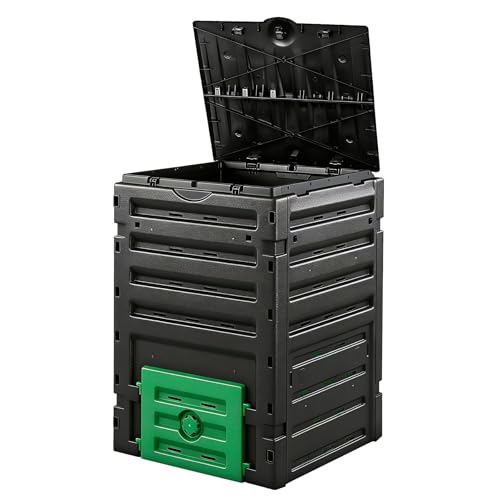

The 5 Best Compost Bins for Garden Waste in 2026
Contents
Your garden produces a mountain of waste every season. Grass clippings pile up after mowing. Dead leaves blanket the borders. Pruned branches and spent plants go everywhere. Bagging it all for the curb wastes money and sends valuable organic matter to a landfill. The better move is turning that debris into dark, crumbly compost that feeds your soil for free.
A good compost bin does more than hold waste. It manages airflow, retains heat, keeps pests out, and makes the turning process manageable. The right choice depends on how much waste you generate, how much space you have, and whether you prefer hands-on tumbling or low-touch stationary composting. The best units balance capacity with ease of use so the pile actually breaks down instead of sitting there like a wet lump.
I have narrowed the market down to five bins that handle real garden conditions. They range from a compact dual-chamber tumbler for small yards to a 246-gallon expandable beast for serious gardeners. Each one solves a specific problem. Here is what you need to know before you buy.
Here is a quick look at how the top contenders compare on the specs that matter most.
| Features | VIVOSUN Tumbler | Geobin 246 Gal | JupiterForce 80 Gal | Redmon 65 Gal | SUPER DEAL 120 Gal |
|---|---|---|---|---|---|
| Type | Dual-chamber tumbler | Expandable hoop | Stationary bin | Stationary bin | Stationary bin |
| Capacity | 43 gallons | 246 gallons | 80 gallons | 65 gallons | 120 gallons |
| Material | PP plastic + metal frame | Recycled plastic | BPA-free plastic | 80% recycled plastic | BPA-free PP plastic |
| Aeration | Vents + deep fins | Open mesh sides | 4 vents per side | Vented panels | 4 vents per side |
| Access | Dual doors | Top open | Top lid + bottom door | Lift-off lid + 4 doors | Flip-top lid + bottom door |
| Assembly | Minimal | Tool-free | Tool-free, 4 steps | Tool-free | Tool-free |
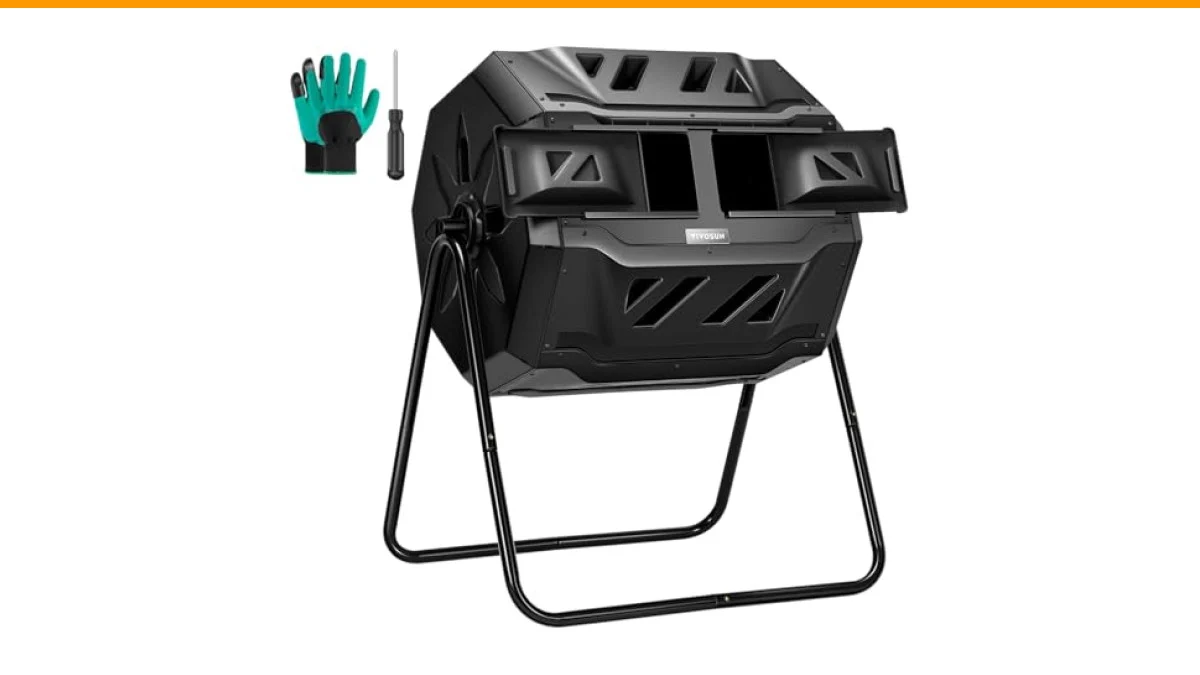
VIVOSUN Outdoor Tumbling
1st Pick

VIVOSUN
VIVOSUN Outdoor Tumbling Composter Dual Rotating Batch Compost Bin, 43 Gallon Black Door
- Twin chambers: Two separate chambers allow one side to finish composting while leaving the other side available to add fresh waste…
- 360⁰ Tumbling Design: The rotating design prevents you from digging or mixing the pile by hand; And the deep fins on eight panels…
- Excellent Aeration: Air vents can make the air fully circulate and will not cause an explosion due to excessive internal pressure;…
The one you buy when you want finished compost fast without bending over a pile. This 43-gallon dual-chamber tumbler sits on a sturdy metal A-frame, so you spin the drum instead of turning the pile with a fork. Each chamber works independently. Fill one side, let it cook, and start adding fresh waste to the other. By the time the second chamber is full, the first batch is usually ready to harvest.
The 360-degree rotation does the heavy lifting. Deep fins inside the drum break up clumps as it spins, which keeps the material aerated and prevents the soggy, anaerobic mess that plagues stationary bins. Air vents run along the panels to support oxygen flow. The unit comes with a pair of garden gloves and ABS claws for digging, which is a practical bonus. Gardeners with back problems or limited mobility will appreciate the waist-high operation.
There are trade-offs. A 43-gallon capacity is modest, so heavy producers with large lawns will outpace it quickly. You also need to commit to spinning the drum every few days. Let it sit for two weeks and the contents turn into a solid, matted ball that is hard to break apart. The plastic body is durable but not insulated, so decomposition slows considerably during winter freezing.
- Dual chambers allow continuous batch composting
- Deep internal fins break up clumps during rotation
- Vented panels promote airflow and prevent pressure buildup
- Metal frame resists corrosion and weathering
- Includes garden gloves and ABS digging claws
Best for: Gardeners with physical limitations who want an efficient, low-bending way to process kitchen scraps and moderate yard waste.
Geobin Compost Bin – 246
2nd Pick
GEOBIN
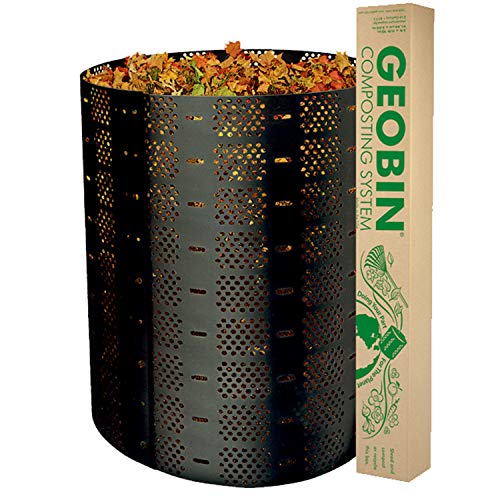
Geobin Compost Bin - 246 Gallon, Expandable, Easy Assembly, Made in the USA, Outdoor & Backyard Composter
- Large capacity—expandable to 3.75 feet (237 gallon)
- Easy to assemble with closure keys. Easy to move. Easy to reassemble.
- The best value composting bin on the market.
The one that grows with your pile. The Geobin is a flexible sheet of recycled plastic that forms a hoop. It expands up to 246 gallons, which makes it the largest and most adaptable bin in this lineup. You simply open the loop, set it on the ground, and fill it with leaves, grass, and garden trimmings. No frame, no lid, no complicated parts.
Setup takes under five minutes. The closure keys snap the ends together, and you can move the whole unit by dragging it to a new spot. That flexibility matters for gardeners who build large piles and want to turn them by lifting the bin off and setting it down next to the pile. The open top and mesh sides provide excellent airflow across the entire surface area, which is critical for aerobic decomposition.
This is not a bin for small urban yards. The open design means it is visible, and without a lid, it can attract pests if you add food scraps. You will want to use it primarily for garden waste or cover kitchen scraps with a thick layer of browns. The plastic is lightweight, so a nearly empty bin can blow over in strong winds until the weight of the contents anchors it down.
- Expandable design reaches 246 gallons
- Tool-free assembly with closure keys
- Easy to relocate and reassemble
- Excellent side ventilation for aerobic activity
- Made in the USA from recycled plastic
Best for: Serious gardeners with large volumes of leaves and yard trimmings who want maximum capacity at the lowest cost.
JupiterForce Garden Compo
3rd Pick

JupiterForce
JupiterForce Garden Compost Bin 80 Gallon (300 L) from BPA Free Material, Large Composting Bin Outdoor Composter with Gloves, Easy Assembling, Fast Creation of Fertile Soil, Lightweight, Black
- BPA Free Materials: The garden compost bin is made of BPA free materials for environmental protection and durability.All-weather f…
- Large Capacity: With an 80 gallon (300 L) capacity, our large compost bin outdoor provides ample space for creating nutrient-rich…
- Ventilation design: Each side of this composter is designed with four vents that provide good air circulation for composting, abso…
The one that hits the sweet spot for the average homeowner. The JupiterForce 80-gallon bin sits in the middle of the range, offering enough room for a typical suburban yard without dominating the landscape. It is made from BPA-free plastic that resists frost and rain, so it stays outside year-round without cracking.
The design focuses on airflow and convenience. Four vents on each side keep oxygen moving through the pile, which accelerates breakdown and reduces smell. A top lid lets you add waste without disturbing the lower layers, and a sliding door at the bottom makes harvesting finished compost simple. You pull out the dark, crumbly material from below while newer waste continues decomposing above. Assembly requires no tools — four interlocking panels snap into place.
It has some quirks. The plastic is light, so an empty bin needs a moment to stabilize in a stiff breeze. The bottom door slides smoothly but can jam if fine compost packs against it. You must also manage moisture levels manually. In heavy rain, the bin can become waterlogged, so consider placing it under partial cover or adding extra browns to absorb excess water.
- BPA-free, weather-resistant construction
- 80-gallon capacity suits most suburban yards
- Four vents per side promote oxygen circulation
- Top loading lid with sliding bottom harvest door
- No-tool assembly in four simple steps
Best for: Homeowners who want a balanced, easy-to-assemble bin that handles mixed kitchen and garden waste without constant attention.
Redmon Outdoor Compost Bi
4th Pick

REDMON Since 1883
Redmon Outdoor Compost Bin with Lift Off Lid, 65 Gallon, Black
- Outdoor Composting Bin: Compost bin container properly vents organic materials to allow rapid and proper composting of waste provi…
- Made with Quality Materials: Constructed using 80 percent recycled materials and designed to withstand weather and outdoor conditi…
- Convenient Extra Features: Has a lift-off lid and 4-door access providing easy access to fully composted material making your comp…
The one built from recycled materials with a classic, no-fuss design. Redmon has been making outdoor products since 1883, and this 65-gallon bin reflects that practical heritage. It is constructed from 80 percent recycled plastic, which gives it a slightly textured finish that blends into a garden setting better than glossy new plastic.
The bin uses a simple vented panel system to promote airflow. A lift-off lid makes loading easy, and four access doors at the base let you reach finished compost from any side. That four-door design is genuinely useful — you can pull compost from the side facing your garden bed without moving the bin. Assembly requires no tools, and the square footprint holds its shape well even when packed full.
The trade-off is capacity. At 65 gallons, this is the smallest stationary bin here, so heavy producers will fill it quickly. The lid is not hinged, meaning you need a place to set it down while loading. It also lacks the insulation of thicker-walled bins, so decomposition slows in winter. For a smaller yard or a household that mostly composts kitchen scraps, it works fine.
- Made from 80% recycled plastic materials
- Lift-off lid and four ground-level access doors
- Vented panels support proper airflow
- Square design holds shape without warping
- Tool-free assembly with no fasteners
Best for: Eco-conscious gardeners who want a durable, recycled-plastic bin for a modest yard or community garden plot.
SUPER DEAL 120 Gallon Com
The one for families that generate serious kitchen and garden waste. The SUPER DEAL 120-gallon bin provides nearly double the capacity of the Redmon at a similar footprint. It is built from BPA-free PP plastic that handles cold winters, and the black color absorbs heat to speed decomposition in cooler months.
Aeration is handled by four vents on each side, which keep the pile from going anaerobic. The flip-top lid makes loading effortless, and a bottom door provides access to the finished compost. The manufacturer claims a processing time of six to eight weeks, which is realistic for a well-balanced pile with regular moisture and turning. The design is straightforward enough for a beginner to grasp on the first try.
There is a caveat. The unit is lightweight when empty, and the product description itself notes it can blow over in strong winds until enough compost accumulates inside. You will want to place it in a sheltered spot or weigh down the base. The plastic walls are thinner than premium bins, so they flex a bit when full. For the price, though, the capacity is hard to beat.
- 120-gallon capacity handles large household volumes
- BPA-free plastic withstands freezing temperatures
- Four vents per side for balanced airflow
- Flip-top lid with sliding bottom harvest door
- Six-to-eight-week processing time with proper care
Best for: Families and avid gardeners who need a large, affordable bin to process heavy kitchen and yard waste streams.
How We Chose These Products
I evaluated bins based on real-world garden conditions, not just spec sheets. Capacity matters, but so does how the bin handles airflow, moisture, and the physical effort of turning. A bin that is hard to access or awkward to empty will get abandoned by August. I looked for designs that make the composting process feel natural rather than like a chore.
Durability and material quality factored heavily. Plastic bins need to survive UV exposure, freezing winters, and the occasional knock from a lawnmower. I also considered the variety of buyers each unit serves. A retired couple with a small yard has different needs than a family with a half-acre lot. The five bins here cover that spectrum, from the compact VIVOSUN tumbler to the massive Geobin hoop.
Buying Guide: What Really Matters
Think about your waste volume first. A typical household generates about two to three gallons of kitchen scraps per week, but garden waste is the real variable. A single autumn leaf drop can fill a 65-gallon bin overnight. If you have trees on your property, err on the side of larger capacity. You can always supplement a small bin with a separate leaf pile, but you cannot shrink a pile that overflows.
Decide between a tumbler and a stationary bin. Tumblers make turning effortless and produce compost faster because you can aerate the whole batch at once. They cost more and hold less. Stationary bins offer more capacity for the money and allow worms and beneficial organisms to enter from the ground, but they require manual turning with a fork. If you have back problems, the tumbler is worth the premium.
Material and placement go hand in hand. Dark plastic absorbs heat, which accelerates decomposition in spring and fall but can dry out the pile in summer. Light-colored bins reflect heat but stay cooler in winter. Place your bin in partial shade to moderate temperature swings. Keep it within reach of a hose, because moisture management is the most common failure point. A pile should feel like a wrung-out sponge — damp but not dripping.
For more specific guidance, check out our small garden compost options if space is tight, or read about dual chamber compost bins for continuous production.
Where to Place Your Compost Bin
Location determines whether your pile thrives or stalls. Aim for a spot with good drainage and partial sun. Morning sun warms the pile early, while afternoon shade prevents it from drying out in July heat. A bare soil base is ideal because it lets earthworms and microbes migrate up into the pile. Avoid placing the bin on concrete or decking unless you are using a tumbler.
Think about convenience too. The closer the bin is to your kitchen door, the more likely you are to use it. The closer it is to your garden beds, the easier it is to haul finished compost. A middle ground between the two works best for most people. Keep a small container in the kitchen for collecting scraps, then empty it into the main bin every couple of days.
Wind exposure matters more than most people realize. Lightweight plastic bins can topple in a strong gust, spilling semi-composted material across the yard. Position the bin against a fence, wall, or hedge to break the wind. If that is not possible, weigh down the base with bricks or pavers until the contents provide enough mass.
Seasonal Composting: Managing Your Bin Year-Round
Each season presents different challenges for a compost bin. In summer, heat accelerates microbial activity, but moisture evaporates quickly. You may need to water the pile weekly. If it dries out, decomposition halts entirely. In winter, freezing temperatures slow the process to a crawl. You can keep the pile active by insulating it with a layer of straw or leaves, or simply accept that the pile will finish in spring.
Heavy rain is another concern. A stationary bin with an open top can become waterlogged, driving out oxygen and producing a sour smell. Keep a tarp or lid on the bin during extended wet spells. Conversely, a covered bin in a dry climate may need supplemental watering. The goal is consistent moisture, not feast and famine.
Grass clippings deserve special attention. They are high in nitrogen and decompose quickly, but in thick layers they mat together and exclude oxygen. Always mix grass clippings with an equal volume of brown material like dry leaves or shredded cardboard. The same applies to woody stems and pruned branches. Chop them into smaller pieces before adding them, or they will take years to break down. For more on handling this kind of material, see our guide to large garden compost systems.
Troubleshooting Common Compost Problems
Every composter hits snags. Here is how to fix the most common issues without abandoning the pile.
Sour smell: This indicates too much water and not enough oxygen. Turn the pile thoroughly and add dry, brown material like straw, shredded paper, or dead leaves. If the pile is in a stationary bin, fork it from the top to the bottom to reintroduce air.
Flies and fruit flies: These pests show up when kitchen scraps sit exposed on top. Bury fresh waste under at least six inches of existing compost or brown material. Keep a layer of finished compost or soil on top as a barrier.
Ants: An ant infestation usually means the pile is too dry. Water it thoroughly and turn it to disrupt their nesting. Ants do not harm the compost, but they indicate an imbalance.
Pile is not heating up: A cold pile lacks nitrogen or mass. Add grass clippings, manure, or a commercial compost activator. The pile also needs to be at least three feet cubed to retain heat. Small piles simply do not get hot enough.
Rodents: Rats and mice are drawn to food scraps. A bin with a solid floor and tight lid prevents access. Tumblers are naturally rodent-proof because they are elevated and enclosed. If you use an open-bottom bin, place a wire mesh barrier under it before adding waste.
Our Top Recommendation
The VIVOSUN Outdoor Tumbling Composter wins the top spot for most gardeners. It solves the two biggest problems people face: the physical effort of turning and the long wait for finished compost. The dual-chamber design means you always have a batch in progress and a batch finishing. The rotating drum aerates the pile every time you spin it, which dramatically speeds up decomposition compared to a static pile.
That said, it is not for everyone. If you have a large yard that produces mountains of leaves, the 43-gallon capacity will frustrate you. In that case, the Geobin is the better choice. Its 246-gallon capacity handles everything a big property throws at it, and the price is remarkably low. For a family with moderate waste, the JupiterForce 80-gallon bin offers the best balance of capacity, ease of use, and cost.
Whichever you choose, remember that a compost bin is a tool, not a magic box. It needs the right mix of greens and browns, consistent moisture, and occasional attention. Give it that, and you will have a steady supply of soil-enhancing compost for years.
Frequently Asked Questions
How long does it take to make compost in these bins? A tumbler with regular rotation can produce finished compost in three to six weeks during warm weather. Stationary bins typically take three to six months. The SUPER DEAL bin claims six to eight weeks under ideal conditions. Cold weather slows everything down.
Can I compost weeds and diseased plants in these bins? Only if your pile reaches high temperatures. A hot pile (130-160°F) will kill most weed seeds and pathogens. A cool pile will not. If you have persistent weeds or diseased plants, dispose of them separately rather than risking contamination of your garden.
Do I need to add worms to a compost bin? No. A standard outdoor bin relies on bacteria, fungi, and insects for decomposition. Worms move in naturally if the bin sits on bare soil. Tumblers do not support worms because the drum gets too hot and dry. Worm composting is a separate method that requires a dedicated bin with bedding.
How do I know when compost is ready to use? Finished compost looks dark and crumbly, smells earthy, and no longer resembles the original materials. It should be cool to the touch, meaning microbial activity has slowed. If you can still identify individual leaves or food scraps, it needs more time.


