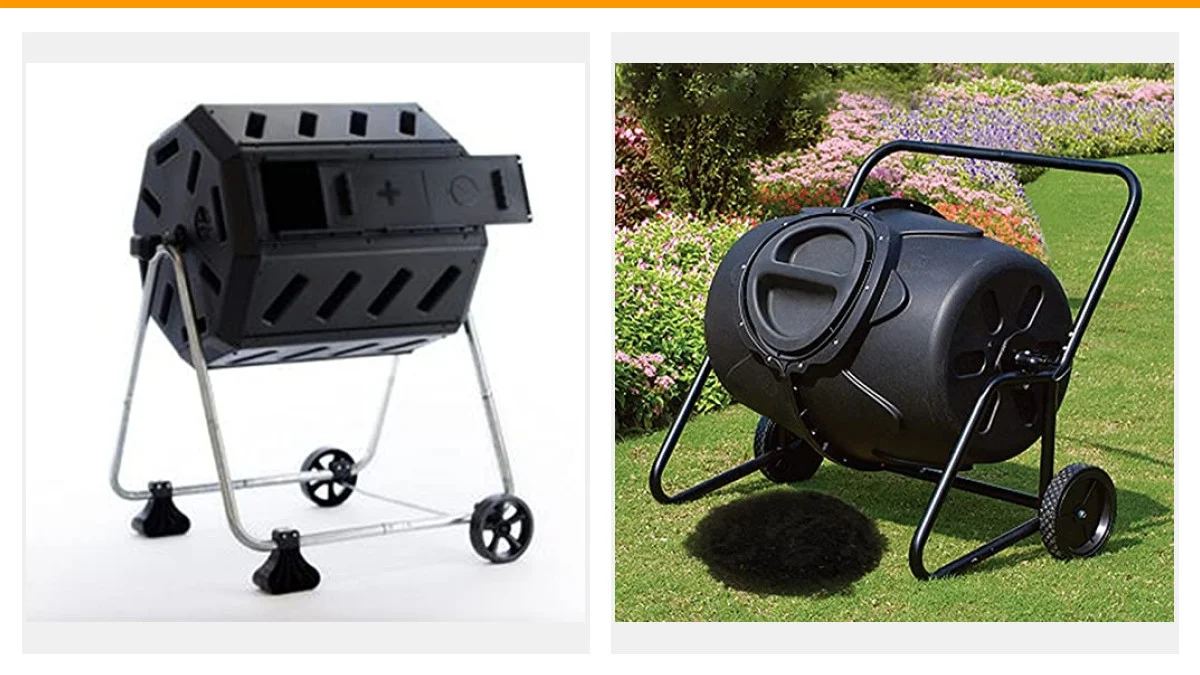
Your child comes home from school buzzing about the worm bin in their classroom. They want to start one at home, but you picture a smelly, fly-infested bucket in the corner of the kitchen. The reality is that composting with kids doesn’t have to be messy or complicated. A good bin turns food scraps into a science lesson that keeps giving for months.
The right compost bin for kids education does more than hold waste. It lets children see decomposition happen, measure temperature changes, and understand the cycle of growth and decay. Some bins offer clear panels for observation, while others are simple countertop containers that collect scraps before they go to an outdoor pile. Each type serves a different purpose, but they all share one goal: making ecology tangible for young minds.
We’ve tested and compared five bins that cover the spectrum, from a see-through classroom favorite to a heavy-duty outdoor composter. The clear winner for most families and schools is the Educational Insights See-Through Compost Container because it turns the decomposition process into a visible experiment. But your choice depends on your space, your child’s age, and whether you want to compost indoors or outdoors. Let’s break down the options.
Here’s a quick comparison of the five bins we reviewed:
| Features | Educational Insights | Epica | IVWOXO | Geobin | KIBAGA |
|---|---|---|---|---|---|
| Material | Clear plastic | Stainless steel | Plastic | Flexible plastic | Powder-coated steel |
| Capacity | 3 compartments, 5.25″D | 1.3 gallons | 0.7 gallons | 246 gallons | 1.1 gallons |
| Best Use | Classroom observation | Kitchen countertop | Small indoor spaces | Outdoor backyard | Kitchen countertop |
| Odor Control | Aerated compartments | Charcoal filter | Airtight lid | Ventilated sides | Charcoal filter |
| Assembly | None | None | None | Easy, tool-free | None |
Educational Insights See-Through Container

Educational Insights
Educational Insights See-Through Compost Container - STEM Kits for Kids, Homeschool or Classroom Earth Science Kit, Practice Observation & Learn about Nature, Science Experiments for Kids Ages 4+
- COME FACE-TO-FACE WITH DECOMPOSITION: Kids can observe the entire decomposition process and even track temperature changes across…
- TEST & OBSERVE: Make side-by-side comparisons between different materials in each of the compartments to understand more about the…
- SPARK A LOVE FOR SCIENCE: Educational Insights has STEM toys and science kits for kids as young as 3 years old; encourage an early…
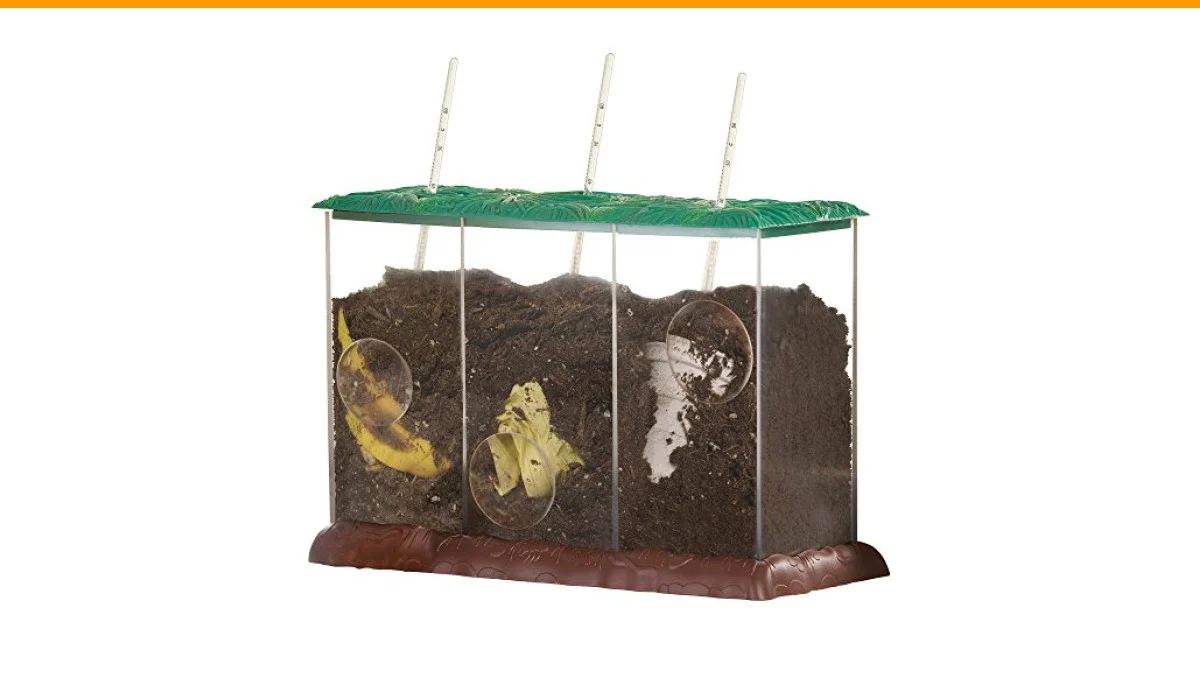
The Educational Insights See-Through Compost Container is the gold standard for teaching decomposition to young children. Designed for ages 4 and up, this STEM kit brings the compost pile indoors and puts it at eye level. The clear plastic box has three separate compartments, each with its own thermometer and magnification spots. Kids can fill one side with leaves, another with food scraps, and the third with paper, then watch how each breaks down at a different rate.
What makes this bin genuinely different is the built-in thermometers. Children can track temperature changes as microbes get to work, which turns a simple observation into a real scientific experiment. The included guide offers project ideas that align with elementary school science standards, covering life cycles, ecosystems, and soil health. The faux grass lid adds a playful touch, but the real value is the side-by-side comparison it enables. Kids can ask questions like “Why does the apple core decompose faster than the newspaper?” and find the answer by looking.
There are some limitations worth noting. The container is small, roughly 13 inches wide and 8 inches tall, so it won’t handle a family’s weekly food waste. It’s also not a complete composting system; it’s an observation tool. You’ll need to transfer the contents to an outdoor bin once the experiment is done. The compartments are aerated, but they can still get smelly if you leave fruit scraps in too long. For classroom use, that’s manageable, but at home, you’ll want to empty it regularly.
- Three clear, aerated compartments for side-by-side comparisons
- Three thermometers track temperature changes during decomposition
- Magnification spots let kids inspect tiny details up close
- Includes guide with facts and science project ideas
- Dimensions: 5.25″D x 13″W x 8″H
Best for: Parents and teachers who want a hands-on science tool that makes decomposition visible and measurable for kids ages 4 to 10.
Epica Kitchen Compost Bin

Epica
Epica Kitchen Compost Bin for Kitchen Countertops, 1.3 Galllon - Silver | Stainless Steel, Rust- Resistant, Airtight Leak-Resistant Lid, Replaceable Activated Charcoal Filter for Odorless Composting
- FEATURED IN BON APPETIT & FORBES: Recognized by renowned magazines, EPICA’s compost bin is a perfectly sized marvel for your kitch…
- CONTROL KITCHEN ODORS NATURALLY: This indoor compost bin with a charcoal filter features an airtight lid and a replaceable activat…
- EASY TO CLEAN & RESISTANT TO LEAKS: This countertop bin features a one-piece molded design that resists rust and leaks. The contai…
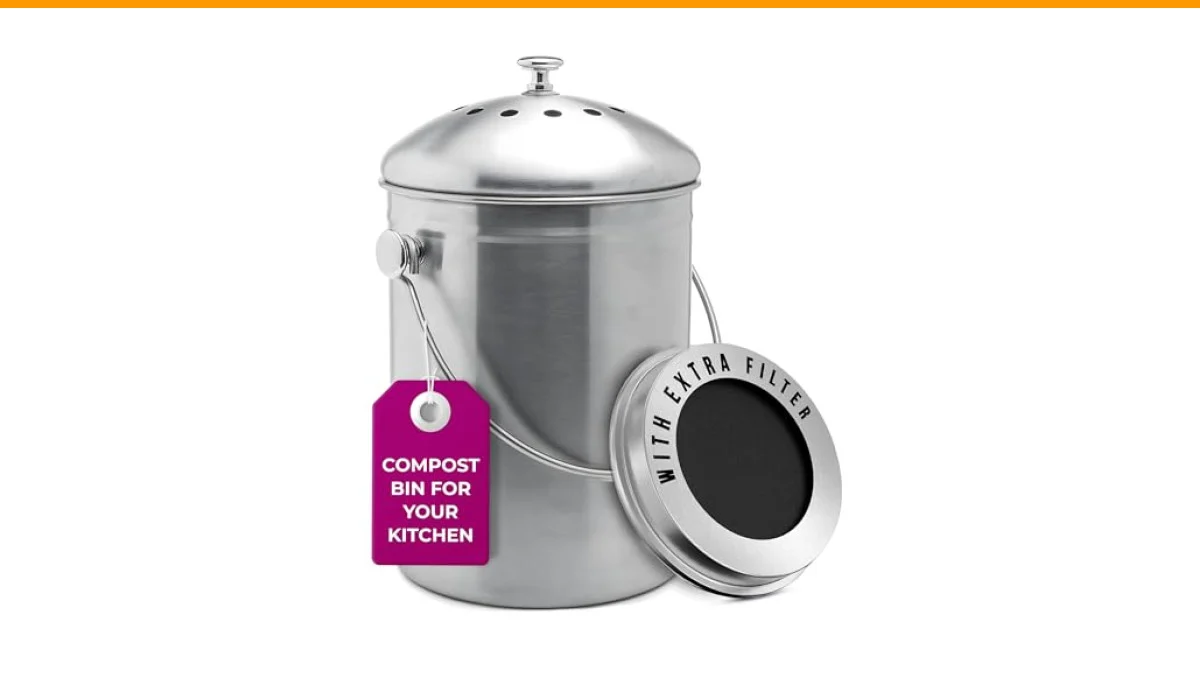
The Epica Kitchen Compost Bin is a countertop workhorse that fits seamlessly into a busy family kitchen. It’s not a learning toy, but it’s an essential first step for families who want to collect scraps with their kids and then take them to an outdoor pile. The 1.3-gallon capacity holds several days’ worth of vegetable peels, eggshells, and coffee grounds without needing constant emptying.
The stainless steel body is built to last, and the airtight lid with a replaceable charcoal filter keeps odors under control. This is a real advantage if you’re keeping it on the counter where kids can reach it. The one-piece molded design resists leaks and rust, so it’s easy to wipe down after a child accidentally misses the opening. It’s also compact enough to sit next to the sink without dominating the counter.
Honestly, the Epica isn’t designed for observation. Kids can’t see inside, so it doesn’t teach decomposition directly. Its role is to make collecting scraps a daily habit. If your child is helping you cook and tossing carrot tops into the bin, they’re learning about waste separation, but they won’t see the rot happen. For that, you’ll need a separate outdoor pile or a see-through bin like the Educational Insights model. Also, the charcoal filter needs replacing every three to six months, which is an ongoing cost.
- 1.3-gallon capacity, ideal for countertop use
- Airtight lid with replaceable activated-charcoal filter
- One-piece molded stainless steel resists rust and leaks
- Compact footprint: 7.16″ diameter x 11″ high
- Easy to hand-wash with warm water
Best for: Families who want a durable, odor-controlled kitchen collector to pair with an outdoor compost pile, especially when kids help with meal prep.
IVWOXO Countertop Compost Bin
IVWOXO
Compost Bin Kitchen, 0.7Gal Sealed Countertop Compost Bin | Indoor Compost Bin, No Filter Required, Compost Bucket with Lid and Handle
- Compact and Convenient: Measuring L6.5“ x W6.5” x H7" with a 0.7-gallon capacity, this kitchen compost bin is perfectly sized to f…
- Modern Convenience Design: Features a one-handed lid, sturdy handle, drainable and removable inner bucket, and a smooth, dishwashe…
- Odor-proof and wet/dry separation: The nearly airtight lid perfectly seals in odors, eliminating the need for expensive activated…
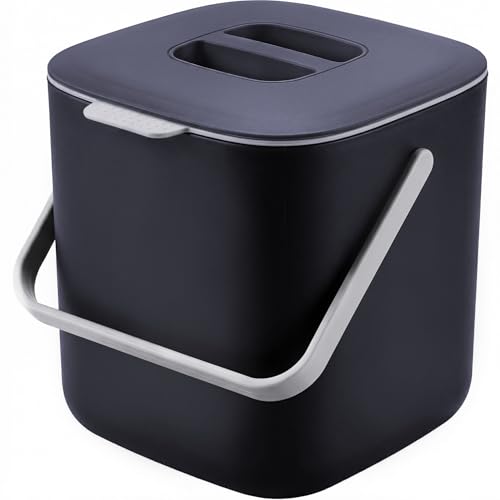
The IVWOXO Compost Bin is a compact, budget-friendly option for small kitchens or first-time composters. At 0.7 gallons, it’s smaller than the Epica, but it makes up for that with a clever design. The one-handed lid opens easily, so a child can toss in scraps without struggling. The removable inner bucket separates liquids from solids, which slows decomposition and cuts down on smells. You don’t need charcoal filters; the nearly airtight lid seals in odors on its own.
This bin works well as a starter for young kids because it’s lightweight and easy to clean. The smooth plastic interior rinses out quickly, and the whole thing is dishwasher-safe. Parents will appreciate that there are no filters to buy or replace. The drainable inner bucket means you can pour off excess liquid before it turns sour, which is a common problem with kid-filled bins.
The trade-off is capacity. At 0.7 gallons, you’ll be emptying it every day or two if you cook a lot. It’s also made of plastic, which won’t have the premium feel of stainless steel. For a classroom with a small group or a home with one or two children, it’s fine. But if you’re collecting scraps for a large family, the frequent emptying gets tedious. The plastic body can also absorb odors over time, so you’ll need to wash it thoroughly with soap and hot water regularly.
- 0.7-gallon capacity with removable inner bucket
- One-handed lid opens easily for small hands
- Drainable bottom separates liquids from solids
- Dishwasher-safe plastic construction
- No charcoal filters needed; airtight lid seals odors
Best for: Budget-conscious families or small classrooms that want a simple, low-maintenance indoor bin without ongoing filter costs.
Geobin Outdoor Composter
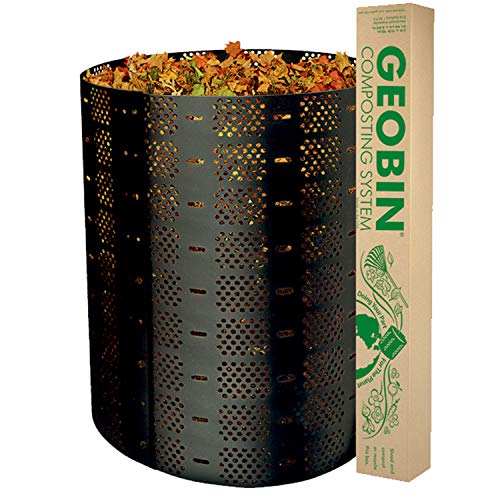
GEOBIN
Geobin Compost Bin - 246 Gallon, Expandable, Easy Assembly, Made in the USA, Outdoor & Backyard Composter
- Large capacity—expandable to 3.75 feet (237 gallon)
- Easy to assemble with closure keys. Easy to move. Easy to reassemble.
- The best value composting bin on the market.
The Geobin Compost Bin is the opposite of the countertop models. It’s a massive, expandable outdoor composter that holds up to 246 gallons of yard and food waste. If you have a backyard and want to compost at a scale that actually produces soil for your garden, this is the bin for you. It’s made of flexible, recycled plastic that forms a cylinder, and you can expand it as the pile grows.
Assembly takes less than five minutes with no tools. You just connect the ends with the included closure keys and set it on the ground. The open bottom lets worms and soil organisms enter from below, which speeds up decomposition. The sides have ventilation holes that keep air flowing, and you can easily lift the entire bin to turn the pile or harvest the finished compost from the bottom. For kids, there’s a certain thrill in watching a huge pile of leaves and kitchen scraps shrink over months.
The Geobin isn’t a good fit for observation. It’s a black cylinder, so kids can’t see inside without lifting it up. It also requires a steady supply of browns (leaves, cardboard) mixed with greens (food scraps) to avoid odors. If you just toss in kitchen waste without layering, it will get smelly and attract pests. The flexible walls can also bulge if you overfill it. But for families committed to outdoor composting, it’s the best value and the most effective system here.
- Expandable capacity up to 246 gallons (3.75 feet tall)
- Easy assembly with closure keys; no tools needed
- Open bottom allows soil organisms to enter
- Ventilated sides provide excellent airflow
- Made in the USA from recycled plastic
Best for: Families with a backyard who want to compost large volumes and teach kids about the full cycle from food waste to garden soil.
KIBAGA Countertop Compost Bin

KIBAGA
Beautiful Kitchen Compost Bin with Smell Proof Lid for Your Countertop | Rust Proof and Odorless 1.1 Gallon Bucket with No Smell Filters - Easy to Clean and Looks Great on Any Kitchen Counter
- Effortless Recycling: Revolutionize your kitchen with KIBAGAs’ countertop compost bin, designed for recycling food & other organic…
- Odorless Composting: The compost bin for the kitchen comes with a built-in charcoal filter compartment ensuring odor-free composti…
- Practical Premium Design: Built to last with rust-free, powder-coated carbon steel, the kitchen compost bin for your countertop el…
The KIBAGA Kitchen Compost Bin brings a touch of style to the countertop with its beige powder-coated steel body and wooden handle. It holds 1.1 gallons, which is a comfortable middle ground between the tiny IVWOXO and the larger Epica. The built-in charcoal filter compartment keeps odors in check, and the lid has small air holes to provide aeration without letting smells escape. Two filters are included, so you’re set for several months.
This bin is a good choice if you want your compost collector to look good in your kitchen. The powder-coated finish resists rust and scratches, and the wooden handle makes it easy for kids to carry to the outdoor pile. The lid opens with one hand, which is convenient when you’re holding a child’s hand full of banana peels. Cleaning is straightforward; you can wipe it out or give it a gentle rinse.
There’s a catch with the design: the air holes in the lid, while helpful for aeration, can let fruit flies escape if the bin gets too full or if you leave it open. The charcoal filter helps, but you’ll need to empty it regularly to keep it truly odor-free. Also, the powder-coated steel can chip if dropped, so it’s not as indestructible as the Epica’s stainless steel. For families who prioritize aesthetics and want a bin that doesn’t look out of place on a modern kitchen island, this is a solid option.
- 1.1-gallon capacity with a compact 10.2″x7″ footprint
- Built-in charcoal filter compartment with two filters included
- Rust-free, powder-coated carbon steel body
- Wooden handle and knob add a natural touch
- Lid air holes provide aeration
Best for: Style-conscious families who want an attractive, odor-controlled countertop bin that kids can easily carry and use.
Why Composting is the Ultimate STEM Lesson for Kids
Composting isn’t just about reducing waste; it’s a living laboratory. When kids watch an apple core turn into dark, crumbly soil, they’re witnessing biology, chemistry, and ecology in action. They learn about decomposers like bacteria and fungi, the carbon-to-nitrogen ratio that keeps a pile healthy, and the importance of soil health for growing food. These are concepts that textbooks struggle to make exciting, but a compost bin makes them real.
The hands-on nature of composting also builds patience and observation skills. Kids check the temperature, notice when the pile smells different, and see which materials break down fastest. They ask questions and test hypotheses, which is exactly what science education should encourage. Plus, it connects to gardening, so children understand where their food comes from and why we need to nourish the soil that feeds us.
For teachers, a compost bin can tie into multiple curriculum standards. In elementary school, it supports lessons on life cycles and ecosystems. In middle school, it can introduce concepts like decomposition rates and nutrient cycling. The nutrient-rich compost that results can be used in a school garden, closing the loop and giving students a tangible reward for their efforts.
Safety First: Age-by-Age Guide to Kid-Friendly Compost Bins
Not all compost bins are safe for all ages. For children aged 3 to 5, you want a bin with no sharp edges, a secure lid, and no small parts that could be a choking hazard. The Educational Insights See-Through Container is excellent for this age because it has a faux grass lid that’s easy to remove but not sharp, and the compartments are large enough that small hands can’t get stuck. Always supervise young children when they’re adding scraps or checking thermometers.
For ages 6 to 10, kids can handle more responsibility. A countertop bin like the Epica or KIBAGA has a lid that opens easily, but you should still check that the charcoal filter compartment is secure and that the bin isn’t too heavy for them to carry. The Geobin is safe for outdoor use, but children should not climb on it or stick their hands deep into the pile, as there could be sharp objects or insects. Teach them to use a trowel or a stick to turn the compost.
For preteens and teenagers, you can introduce more complex concepts like managing the carbon-to-nitrogen ratio and troubleshooting odors. They can take over the responsibility of emptying the countertop bin and maintaining the outdoor pile. Always provide gloves and wash hands after handling compost, and make sure any bin with a lid has a lock or a tight fit to prevent accidental spills.
How to Use a Compost Bin with Kids: A Step-by-Step Activity Plan
Getting kids excited about composting requires more than just placing a bin in the kitchen. Start with a “waste audit” where you collect all the food scraps from one meal and sort them into categories: fruit and vegetable peels, eggshells, coffee grounds, and things that can’t be composted like meat or dairy. This teaches children about what goes in and what stays out.
Next, set up the bin together. If you’re using a see-through container, let each child fill a compartment with a different material: one with grass clippings, one with shredded paper, one with vegetable scraps. Add a handful of soil to introduce microorganisms, and lightly water if needed. Place the bin in a warm, sunny spot and check it daily. Have kids record the temperature, note any smells, and draw pictures of what they see.
After two to four weeks, the materials should start breaking down. Compare the compartments to see which one decomposed fastest and discuss why. This is the perfect time to introduce the concept of the carbon-to-nitrogen ratio: greens (like food scraps) provide nitrogen, while browns (like leaves and paper) provide carbon. A balanced pile needs both. Once the compost is dark and crumbly, use it to plant a small herb garden or add it to your outdoor pile. For more detailed guidance, check out this no-turn composting guide that simplifies the process for busy families.
Troubleshooting: Fixing Smelly or Stuck Compost with Your Child
Kids love a good problem, so when the compost starts smelling, turn it into a detective game. The most common issue is a pile that’s too wet. If it smells like rotten eggs, there’s too much water or not enough air. The fix is simple: add dry, brown materials like shredded newspaper or dead leaves, and turn the pile to aerate it. Have your child help tear up cardboard into small pieces to add.
If you see fruit flies hovering around the bin, the scraps are probably too exposed. Make sure every addition is covered with a layer of browns. You can also freeze fruit scraps before adding them to kill any fly eggs. If the pile isn’t decomposing at all, it might be too dry or lack nitrogen. Add a bit of water and some green materials like grass clippings or vegetable scraps, then mix it well.
Another common problem is a pile that’s too hot or too cold. In winter, outdoor piles slow down; you can insulate them with straw or move them to a sunnier spot. Indoor bins can be placed near a warm appliance to speed up decomposition. The key is to involve kids in the fixing process, so they learn that composting is a living system that needs balance.
Indoor vs. Outdoor: Which Bin Type Teaches Better?
Indoor bins, like the Educational Insights See-Through Container, offer the best visibility for teaching. Kids can see the decomposition process up close, track temperature changes, and make daily observations without going outside. They’re ideal for classrooms and for introducing the concept to young children. The downside is capacity; indoor bins are small and need frequent emptying.
Outdoor bins, like the Geobin, teach a different set of lessons. They can handle large volumes of yard waste and food scraps, and they produce enough compost to actually use in a garden. Kids learn about scale, the importance of layering, and how weather affects decomposition. The trade-off is that they’re less accessible for daily observation, and they require more maintenance to keep odors and pests away.
For the best educational experience, use both. Start with a countertop bin in the kitchen to collect scraps, then transfer them to an outdoor bin where kids can see the finished product months later. This gives them the full picture, from the moment they toss a banana peel to the day they spread dark compost on the garden. If you’re limited on space, a trench composting method can be a simple, low-cost alternative that still teaches kids about decomposition.
Frequently Asked Questions
What is the best compost bin for a classroom with limited space?
The Educational Insights See-Through Container is the top choice because it fits on a desk and provides clear visibility for group observation. Its three compartments allow students to compare different materials side by side. For a more permanent setup, consider a small countertop bin like the IVWOXO, which is easy to clean and doesn’t require filters.
Can I compost indoors with kids without creating odors?
Yes, if you use a bin with a tight-fitting lid and manage the contents properly. The Epica and KIBAGA both have charcoal filters that absorb odors. Avoid adding meat, dairy, or oily foods, and empty the bin every few days. You can also freeze scraps before adding them to prevent smells and fruit flies.
How long does it take for compost to be ready in a see-through bin?
In a small, aerated container like the Educational Insights model, you’ll see visible changes within two to four weeks. Full decomposition to dark, crumbly compost can take two to three months, depending on the materials and temperature. The included thermometers help kids track the activity level.
Is it safe for toddlers to touch compost?
Compost is generally safe, but it can contain bacteria and fungi that are not suitable for very young children. Always supervise toddlers and have them wash their hands thoroughly after handling compost or adding scraps. For toddlers, use bins with secure lids and no sharp edges, and avoid letting them put their hands deep into the pile.
The Verdict: Turning Rot into a Reward
After testing these five bins, the Educational Insights See-Through Compost Container stands out as the clear winner for kids education. It makes the invisible visible, turning decomposition into a daily science experiment that children can measure, compare, and understand. It’s not perfect for large-scale composting, but it excels at what it’s designed for: teaching.
If you need a countertop collector to feed an outdoor pile, the Epica is a durable, odor-controlled choice that will last for years. For a budget-friendly indoor option, the IVWOXO gets the job done without filters. And if you have a backyard and want to produce real compost, the Geobin is the best value, offering massive capacity at a reasonable price. The KIBAGA is a stylish alternative for those who want their bin to look good on the counter.
Whichever you choose, the real reward is watching your child’s curiosity grow as they learn about nature’s recycling system. Composting isn’t just about waste; it’s about nurturing a generation that understands and cares for the soil. Start small, involve your kids in every step, and let the rot begin.