You know the drill. The trash can behind the line is overflowing by 8 PM, and half of it is food scraps that could be composted. Your staff is tossing everything into one bag because sorting feels like a chore. And when you actually try to separate waste, the bin you bought from a big-box store falls apart within a month. It’s a mess, and it costs you money.
Finding the right container for a restaurant isn’t about aesthetics. It’s about workflow, sanitation, and capacity. A good unit needs to survive constant use, contain odors, and make sorting so obvious that a busy line cook doesn’t have to think twice. The wrong choice leads to contaminated loads, pest issues, and staff frustration.
I spent time digging through what’s actually on the market for commercial environments. The five options below represent different scales of operation, from a single countertop caddy for a prep station to a triple-stream station for the front of the house. One of these will fit your kitchen’s rhythm.
Here is how the top contenders stack up on the specs that matter most.
| Features | Zedfire 33 Gal | Epica 1.3 Gal | VIVOSUN 43 Gal | Utopia 1.3 Gal | iTouchless 18 Gal |
|---|---|---|---|---|---|
| Best Use Case | Front-of-house sorting | Prep station caddy | On-site outdoor processing | Office or small cafe | Back-of-house collection |
| Material | Stainless steel & galvanized steel | Stainless steel | PP plastic & metal frame | Stainless steel | Stainless steel |
| Capacity | 3 x 11 gallon sections | 1.3 gallons | 43 gallons (dual 21.5) | 1.3 gallons | 18 gallons |
| Odor Control | Sealed color-coded lids | Charcoal filter | Air vents | Charcoal filter | 2 AbsorbX filters |
| Key Feature | 3-Stream waste sorting | Compact airtight lid | 360-degree tumbling | Rust-resistant build | Push-button lid |
Zedfire 33 Gallon Stainless

Zedfire
Zedfire 33 Gallon Stainless Steel Commercial Trash, Recycling & Compost Bin – 3-Stream Indoor Waste Station with Color-Coded Lids – for Restaurants, Kitchens, Offices, Schools, Airports, Indoor Use
- Designed for Commercial Use: Ideal for restaurants, kitchens, schools, offices, and public buildings—this triple-stream bin keeps…
- Three Compartments, One Solution: Offers (3) 11-gallon sections for trash, recyclables, and compost—clearly labeled and color-code…
- Heavy-Duty Stainless Steel Build: Durable and sleek design withstands daily use in high-traffic areas while maintaining a modern,…
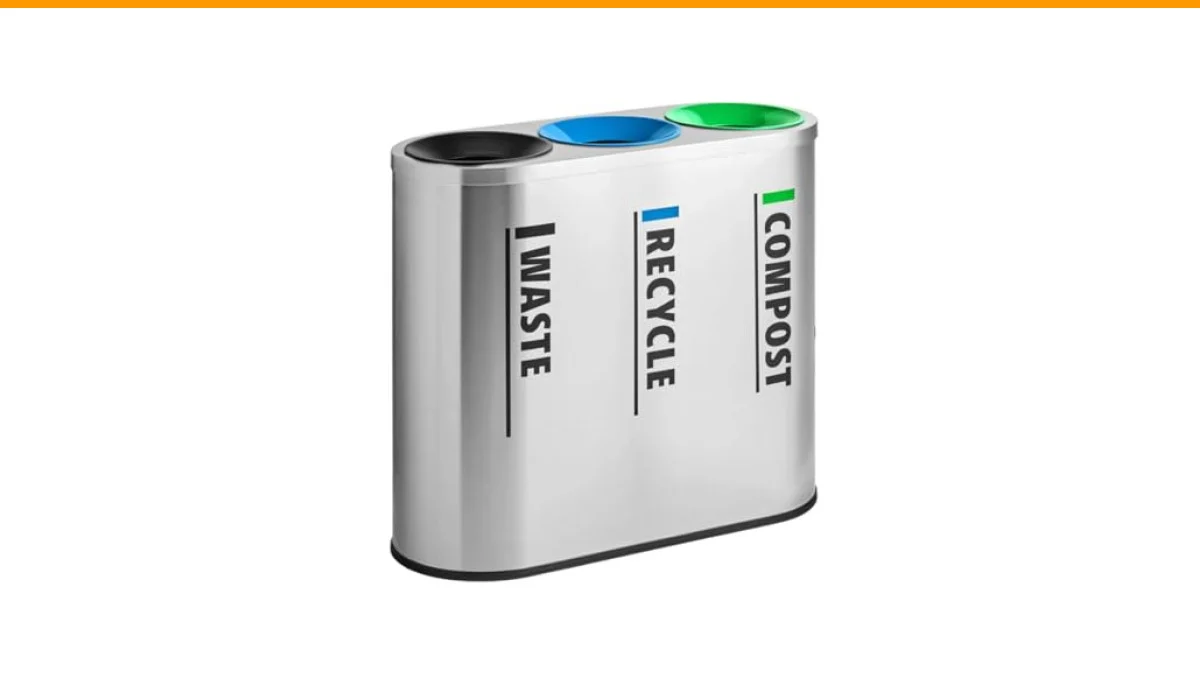
This is the unit for the front of the house or a high-traffic back hallway. The Zedfire is a single frame holding three separate 11-gallon compartments. You get one bin for trash, one for recycling, and one for compost. It forces the sorting conversation to happen at the point of disposal, not later when you are digging through a bag.
The build quality is what stands out here. The stainless steel exterior handles the bumps and scuffs of a busy environment without showing every scrape. The galvanized steel inner liners are a thoughtful touch; they resist the corrosion that happens when acidic food waste sits against metal for hours. The color-coded lids with bold text make it almost impossible for someone to toss a compostable plate into the trash by accident.
It is heavy. Once you put liners in all three compartments and start filling them, moving this unit to a dumpster area requires two people. That is the trade-off for having a stable, permanent sorting station. You need floor space for it, too. If your kitchen is tight, this might feel like a luxury item rather than a necessity.
- Three 11-gallon compartments allow for simultaneous trash, recycling, and compost sorting.
- Galvanized steel inner liners resist rust and make bag changes quick.
- Color-coded lids (green for compost, blue for recycling, black for trash) reduce sorting errors.
- Stainless steel body is easy to wipe down and sanitize to meet health codes.
- Designed for commercial use in restaurants, schools, and offices.
Best for: A restaurant that wants to establish a permanent, visible waste sorting station for customers or staff.
Epica Kitchen Compost Bin

Epica
Epica Kitchen Compost Bin for Kitchen Countertops, 1.3 Galllon - Silver | Stainless Steel, Rust- Resistant, Airtight Leak-Resistant Lid, Replaceable Activated Charcoal Filter for Odorless Composting
- FEATURED IN BON APPETIT & FORBES: Recognized by renowned magazines, EPICA’s compost bin is a perfectly sized marvel for your kitch…
- CONTROL KITCHEN ODORS NATURALLY: This indoor compost bin with a charcoal filter features an airtight lid and a replaceable activat…
- EASY TO CLEAN & RESISTANT TO LEAKS: This countertop bin features a one-piece molded design that resists rust and leaks. The contai…
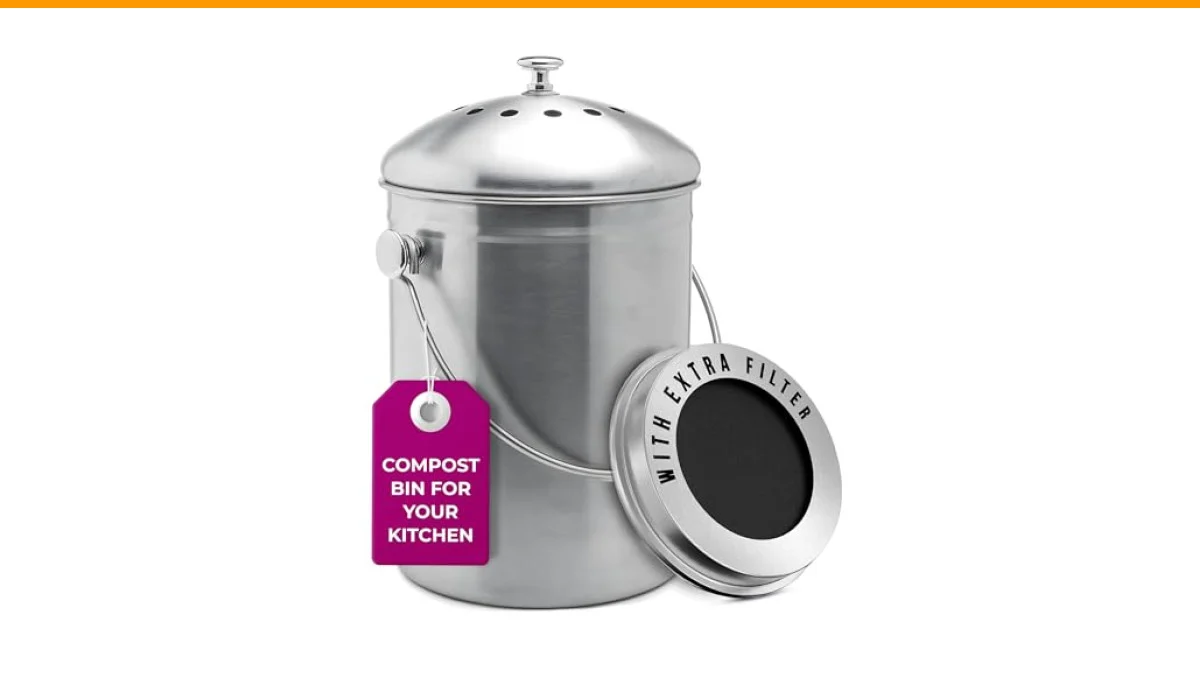
If the Zedfire felt like overkill, this next pick is the opposite. The Epica is a countertop caddy designed for a single prep station. It sits next to the cutting board where you are trimming carrots or peeling onions. The 1.3-gallon size holds a day’s worth of prep scraps without taking up valuable counter space.
What makes this unit different from a cheap bucket is the odor control system. The lid seals tightly, and the replaceable activated-charcoal filter neutralizes smells rather than just covering them up. For a small kitchen that doesn’t generate a massive volume of waste, this means you can empty it once at the end of the shift instead of running to the back every hour.
The one-piece stainless steel body resists leaks. That’s a big deal for a countertop bin. I have seen cheaper models with seams that split and let liquid seep onto the counter. The Epica won’t do that. The trade-off is capacity. This is not a bin for a high-volume kitchen’s main waste stream. It is a tool for the prep station, and it works best when you have a larger collection point elsewhere.
- Compact size (7.16″ diameter x 11″ high) fits under most overhead cabinets.
- Airtight lid with charcoal filter controls odors for 3-6 months before replacement.
- One-piece molded stainless steel construction resists leaks and rust.
- Easy to hand-wash with warm water and mild soap.
- Rinsing the filter gently extends its life; saturation ruins it.
Best for: A prep station or small cafe that needs a leak-proof, odor-free bin for daily vegetable scraps.
VIVOSUN Outdoor Tumbling

VIVOSUN
VIVOSUN Outdoor Tumbling Composter Dual Rotating Batch Compost Bin, 43 Gallon Black Door
- Twin chambers: Two separate chambers allow one side to finish composting while leaving the other side available to add fresh waste…
- 360⁰ Tumbling Design: The rotating design prevents you from digging or mixing the pile by hand; And the deep fins on eight panels…
- Excellent Aeration: Air vents can make the air fully circulate and will not cause an explosion due to excessive internal pressure;…
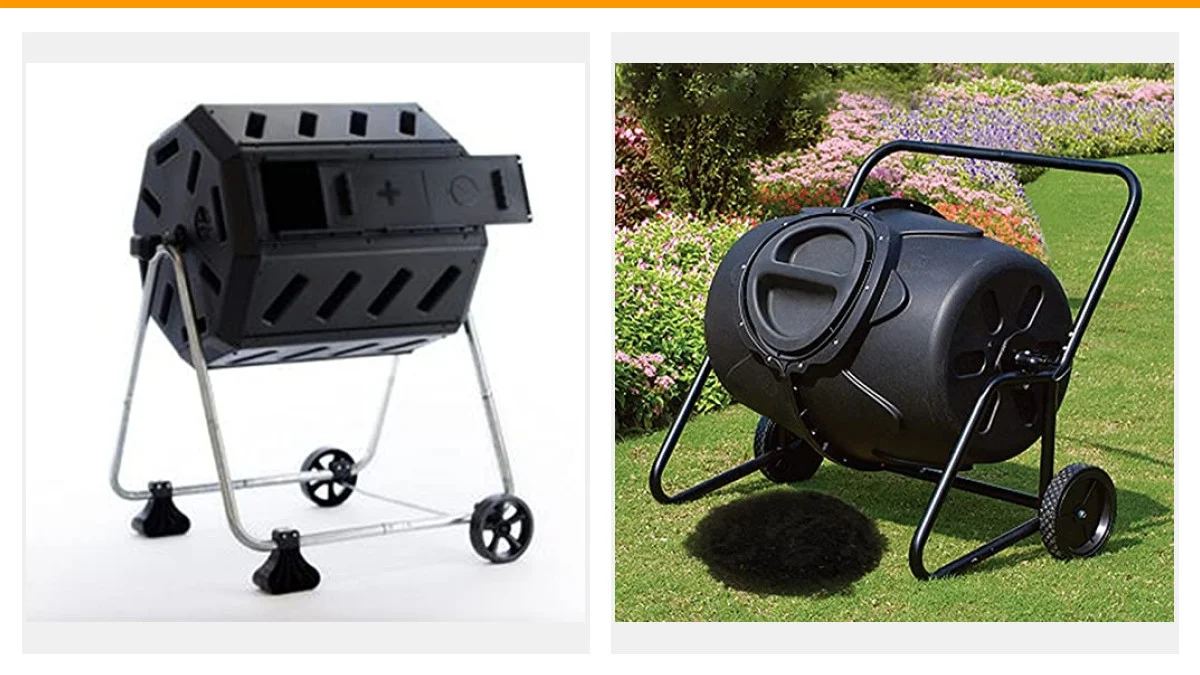
This is a completely different animal. The VIVOSUN is not for collecting waste. It is for processing it on-site. If you have outdoor space and you want to turn your pre-consumer food scraps into compost for a herb garden or landscaping, this dual-chamber tumbler handles the job.
The twin chambers are the standout feature. You fill one side for a few weeks, then stop adding to it and let it break down while you start filling the other side. By the time the second side is full, the first side is usually ready to harvest. This creates a continuous cycle, which is what you want if you are serious about using the compost rather than just getting rid of waste.
The 360-degree tumbling design saves your back. You don’t need to turn the pile with a pitchfork. A few rotations every couple of days aerates the material and breaks up clumps. It is sturdy enough to leave outside, but it is plastic. It won’t look pretty next to a dumpster, and it is not designed for cooked food, meat, or dairy unless you have a very hot pile and a lot of patience. This is strictly for raw vegetable prep scraps.
- Dual 21.5-gallon chambers allow continuous composting while one side finishes.
- 360-degree rotation with deep fins mixes material effectively.
- Air vents promote airflow and prevent pressure buildup.
- Corrosion-resistant frame and weather-resistant plastic body.
- Includes garden gloves and ABS plastic claws for handling compost.
Best for: A restaurant with outdoor space that wants to process raw vegetable prep waste into usable compost on-site.
Utopia Kitchen Countertop Bin

Utopia Kitchen
Utopia Kitchen Countertop Compost Bin 1.3 Gallon, Stainless Steel, Silver | Odorless countertop compost bin with charcoal filter, ideal for food scraps and waste
- Countertop Fit - The countertop compost bin measures 7.2 inches wide and 11.2 inches high, offering a slightly larger capacity whi…
- Durable Build - Made with stainless steel, the composter resists scratching, cracking, and chipping, so it can handle onion skins,…
- Stylish Design - With a sturdy, sleek design that complements most kitchen decor, the compost bucket with lid looks like it belong…
The Utopia bin competes directly with the Epica, and it has a few different strengths. It is a 1.3-gallon stainless steel cylinder meant for countertop use. The dimensions are nearly identical to the Epica, but this unit feels a little more forgiving on space because of its design.
The build quality is solid for the price point. The stainless steel resists scratching from coffee grounds and onion skins. The lid fits snugly, and the charcoal filter does its job for a small volume of scraps. For a restaurant owner testing the waters with a composting program, this is a low-risk entry point. You can put one at a host stand or in a small breakroom without making a big capital investment.
There is a caveat with bins like this. They are only as good as their maintenance. The manufacturer recommends lining the bottom with newspaper to absorb liquid. If you skip that step, you will be scrubbing dried juice off the bottom every week. It is not a heavy-duty commercial tool. It is a better fit for an office kitchen or a very small cafe than a busy restaurant line.
- Measures 7.2 inches wide and 11.2 inches high for a compact countertop footprint.
- Stainless steel resists scratching, cracking, and chipping.
- Charcoal filters trap odors for up to a week of accumulation.
- Lining the bottom with newspaper or cardboard absorbs excess moisture.
- Quick weekly rinse with vinegar or mild soap keeps it fresh.
Best for: A low-volume setting like an office breakroom or a small cafe needing a discreet countertop bin.
18 Gallon Open Top Commercial

iTouchless
iTouchless 18 Gallon Open Top Commercial Compost Bin | Dual Odor Filters | 68L Rectangular Stainless Steel Trash Can for Restaurant, Restroom, Kitchen, Store, Office, Breakroom, Business, Home, Dorm
- DEDICATED U.S.-BASED CUSTOMER SUPPORT – Our dedicated U.S.-based Customer Service Team is committed to ensuring your satisfaction.…
- MAKES SORTING COMPOST EASY – Compost bin with color-coded removable lid and "COMPOST" decal for quick identification. Holds 18 gal…
- SPACE-SAVING DESIGN - LARGE CAPACITY, SMALL FOOTAGE – We’ve eliminated the need for an inner bucket liner so there’s more capacity…
The iTouchless 18-gallon bin sits in the middle ground between a countertop caddy and a triple-stream station. It is a single, open-top can designed for back-of-house collection. You place it near the prep area or the dish pit, and staff toss compostable scraps into it throughout the shift.
The open-top design is the main selling point. There is no lid to hold open or foot pedal to press. A cook with a pan of scraps can just dump and move on. The push-button hinged lid seals when closed, which helps keep odors contained between uses. It is a good balance of speed and smell control.
The 18-gallon capacity is substantial. You can fit a lot of prep waste in this before it needs emptying. The lack of an inner bucket liner means more usable space inside, so you get more compost into each bag. That saves money on liner changes. It is stainless steel, so it cleans up well. The trade-off is that it is a single-stream bin. You still need separate containers for trash and recycling.
- 18-gallon capacity fits a significant volume of food scraps.
- Push-button lid opens easily and seals to contain odors.
- Two AbsorbX odor filters neutralize smells without masking them.
- Space-saving design eliminates the inner bucket for more usable capacity.
- Color-coded lid and “COMPOST” decal make identification obvious.
Best for: A busy back-of-house area that needs a large, quick-access bin for high-volume compostable waste.
How We Chose These Products
I evaluated these bins on four criteria: material durability, odor control, capacity, and workflow integration. A bin that rusts or cracks after six months is useless in a commercial setting. I looked for stainless steel or heavy-duty plastic that can handle daily cleaning with commercial sanitizers.
Odor control was the second priority. A bin that smells up the dining room or the back hallway is a liability. Charcoal filters and sealed lids matter for indoor bins. Outdoor processors need proper aeration to avoid anaerobic decomposition, which is what causes the worst smells.
Finally, I considered the real-world workflow. Does this bin fit under a prep table? Can a line cook use it without breaking stride? How often does it need to be emptied? The right answer depends on your volume, your space, and whether you have a hauler lined up. There is no single best bin for every restaurant, but there is a best bin for your specific setup.
Buying Guide: What Really Matters
Before you buy anything, figure out your waste stream. Are you composting pre-consumer scraps like vegetable peels and eggshells? Or are you trying to handle post-consumer waste from plates? The answer changes everything. Pre-consumer waste is easier to manage and more attractive to haulers. Post-consumer waste involves meat, dairy, and grease, which requires a specialized composting facility.
Material and cleanability should drive your decision. Health departments require that food-contact surfaces be sanitized regularly. A bin with seams, crevices, or absorbent materials will fail an inspection. Look for one-piece stainless steel or smooth plastic that can be wiped down and sprayed with sanitizer. Galvanized steel liners are a plus because they resist corrosion from acidic food waste.
Think about your hauling logistics before you commit to a system. A commercial composter or hauling service needs to accept your waste. Many residential services won’t take meat or dairy. You need a partner that handles commercial food waste. The bin is just the collection point; the hauling contract is the real infrastructure. Check with local facilities about their acceptance criteria and pickup schedules before you invest in a fleet of bins.
Our Top Recommendation
The Zedfire 33 Gallon Stainless Steel 3-Stream Bin is the top pick for most restaurants. It solves the sorting problem at the source, which is where most composting programs fail. The color-coded lids and clear labels eliminate guesswork. The stainless steel build meets commercial sanitation standards. It is a permanent fixture that signals to staff and customers that waste diversion is part of your operation.
If you need a smaller footprint or a lower upfront cost, the iTouchless 18-Gallon Open Top Bin is a strong runner-up for back-of-house collection. For a tiny cafe or a prep station, the Epica Countertop Bin is a reliable, leak-proof caddy that keeps odors at bay. And if you have outdoor space and want to process raw vegetable scraps yourself, the VIVOSUN Tumbler is the way to go.
Integrating Bins into Your Kitchen Workflow
The best bin in the world fails if it sits in the wrong spot. Place collection points where the waste is generated. A small caddy on the prep counter catches vegetable scraps before they ever hit the trash can. A larger bin near the dish pit handles plate scrapings. A front-of-house station with separate streams catches customer waste.
Train your staff on what goes where. A 30-second demonstration at the start of a shift is more effective than a poster on the wall. Assign someone to empty and clean the bins at the end of every shift. A bin that sits full overnight invites pests and creates odors. Make emptying and sanitizing part of the closing checklist.
Consider the pest risk. Indoor bins should be sealed or have tight-fitting lids. Outdoor storage should be away from the building and elevated if possible. If you are using an outdoor composter, keep it away from the back door. Rodents are attracted to food waste, and a plastic tumbler is not rodent-proof. You need to manage the balance of fresh waste and carbon-rich material to keep the pile hot enough to break down quickly.
Managing Costs and Hauling Logistics
Composting in a restaurant is not free. You will pay for compostable liners, staff labor for sorting, and hauling fees. The offset is a reduction in your trash hauling bill. Food waste is heavy, and you are paying to haul that weight to a landfill. If you can divert 50% of your waste stream to a composter, you might be able to downsize your dumpster or reduce your pickup frequency.
Compostable liners are a recurring cost. They are more expensive than standard trash bags. Some haulers require them to keep the waste stream clean. Others accept waste in standard bags and sort it at the facility. Check with your hauler before you buy a case of expensive liners. You might not need them.
Labor is the hidden cost. Sorting takes time, and time is money. The key is to make it easy. A multi-stream bin with clear labels reduces the cognitive load on staff. A bin placed directly at the prep station eliminates extra steps. The goal is to make composting the path of least resistance, not an additional chore.
Frequently Asked Questions
Can I put cooked food and meat scraps in a commercial compost bin?
That depends on your hauler. Many commercial composting facilities accept meat, dairy, and cooked food because they process waste at high temperatures. Residential services or small-scale outdoor composters cannot handle these materials without attracting pests and creating odors. Check with your specific hauler about their acceptance criteria before you start tossing meat scraps into the bin.
How often do I need to empty an indoor compost bin?
For a 1.3-gallon countertop caddy, you should empty it at the end of each shift or daily. For an 18-gallon bin, you might get away with emptying it once or twice a day depending on your volume. The bin should never sit full overnight. Emptying and cleaning should be part of the daily closing routine.
What is the difference between compostable and biodegradable bags?
Compostable bags break down into organic matter under specific conditions and meet standards like ASTM D6400. Biodegradable bags are a looser term and may not break down in a commercial composting facility. Use bags that are certified compostable to avoid contaminating your waste stream. Some haulers will reject a load if they find non-compostable bags.
How do I keep fruit flies and odors out of my compost bin?
Empty the bin frequently and clean it with a vinegar solution. Keep a layer of dry material like newspaper or cardboard at the bottom to absorb moisture. The charcoal filters in countertop bins help, but they must be replaced every few months. For larger bins, a tight-fitting lid is essential. Fruit flies breed in the moist, exposed surface of fresh scraps, so covering new additions with a layer of finished compost or dry leaves helps.
The Bottom Line
Choosing the right compost bin for a restaurant comes down to matching the tool to your workflow. A small cafe needs a different solution than a high-volume kitchen with a full-service dining room. Start with a clear picture of your waste volume and your hauling options. Then pick a bin that fits the physical space and the habits of your staff. The right bin will make waste diversion feel like a normal part of the shift, not a special project.
For more detailed guidance on specific setups, check out our guide on the best compost bin for small restaurant kitchens. If you are considering processing waste outdoors, our review of the best tumbling compost bin covers that territory. And for general advice on turning scraps into soil, our compost bin guide is a solid starting point.