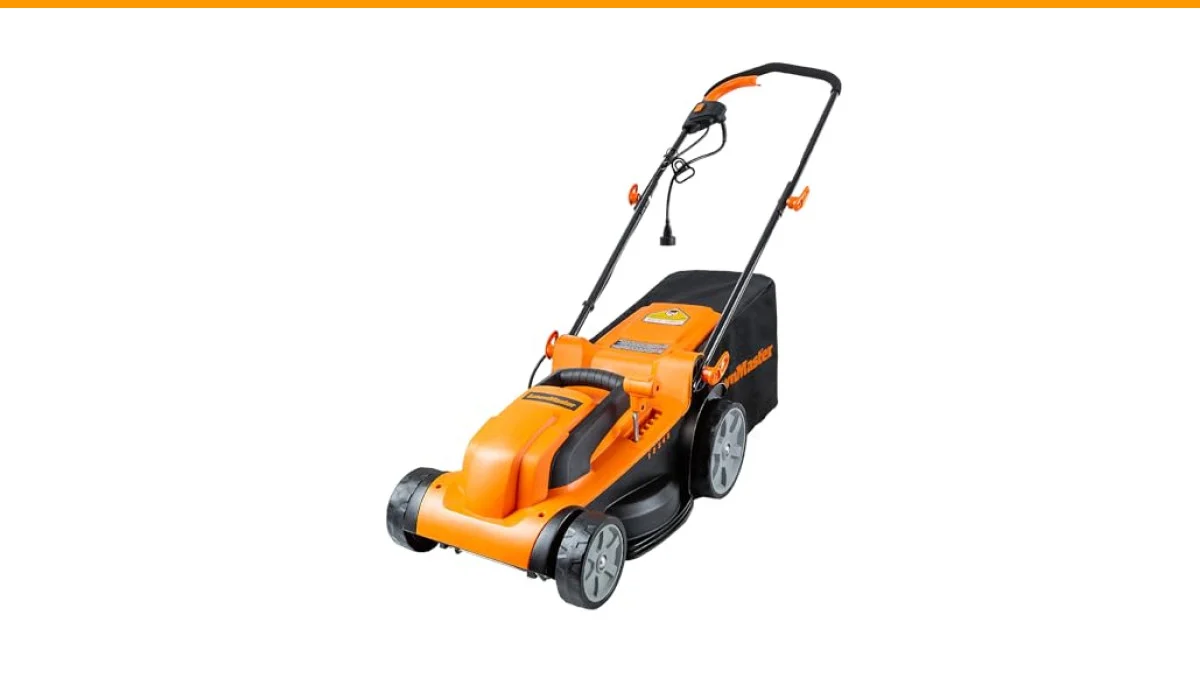
You notice it on the third pass across the yard. The grass looks frayed, almost whitish at the tips, and the mower strains harder than it should. You check the blade and see nicks, a rolled edge, or just a dull shine where a sharp edge should be. That dull blade is tearing grass instead of cutting it, leaving your lawn vulnerable to disease and browning. Replacing blades every month is wasteful, and paying a shop $15 each time adds up fast. A good sharpener solves this in about twenty minutes.
The market offers four main routes: hand files, drill attachments, angle grinder jigs, and full bench grinders. Each fits a different kind of owner. A weekend warrior with one mower might prefer a simple jig. A guy with two acres and a commercial zero-turn needs a machine that can handle multiple blades in one sitting. The right choice depends on your blade type, your comfort with power tools, and how often you mow.
We tested five of the most popular sharpeners on Amazon, from a compact all-in-one hand tool to a hefty 1HP bench grinder. This guide covers who each one suits best, what it does well, and where it falls short. We also walk through the full diagnosis-to-installation workflow, because sharpening is only half the job. Balancing the blade after you grind it matters just as much.
Here is a quick look at how the top five compare on the specs that actually drive your decision.
| Features | SporGain Brushless | SporGain Grinder Jig | Jinlida Bench Grinder | SHARPAL Hand Tool | Holdwell Bench Grinder |
|---|---|---|---|---|---|
| Power Source | Electric brushless motor | Angle grinder required | 750W (1HP) motor | Manual, no power | 750W (1HP) motor |
| Blade Width Range | Not specified | 1.65″ – 3.60″ | Most standard blades | Single & double bevel | High, low, gator, flat |
| Key Feature | Adjustable speed to 3000 RPM | 15°–45° angle frame | 9-inch ceramic wheel | 5 sharpening surfaces | 9-inch ceramic wheel |
| Included Accessories | 70 sanding discs, guides | 4 adapter screws | 5 discs, 2 holders, balancer | None needed | 6 adapters, balancer, discs |
| Best Use Case | Homeowners wanting precision | DIYers with an angle grinder | Heavy-duty frequent use | Quick touch-ups anywhere | Professional landscapers |

SporGain Brushless Sharpener

SporGain
SporGain Lawn Mower Blade Sharpener,Brushless Motor,Lifetime Motor Warranty | 3000RPM Lawnmower Blade Sharpener Tool, Blades Grinder 7" Grinding Wheel 20 Sanding Discs for High/Low Lift, Gator&Flat Blade
- Brushless Motor for Powerful Performance: SporGain mower blade sharpener tool is equipped with a high-performance brushless motor,…
- Lifetime Motor Warranty: This durable lawnmower blade sharpener comes with a lifetime motor warranty, ensuring long-term reliabili…
- Adjustable Speed up to 3000RPM: The lawn blade sharpener features adjustable speed control up to 3000RPM, allowing you to choose t…
This one is for the homeowner who wants a dedicated power tool but does not want to wrestle with a heavy bench grinder. The SporGain brushless model sits on your workbench, plugs into a standard outlet, and handles the job with a motor that carries a lifetime warranty. If you sharpen blades twice a season for a single mower, this machine will outlast every other tool you own.
The brushless motor makes a real difference. It runs quieter than the universal motors found in most budget grinders, and it holds speed better under load. You get adjustable speed control up to 3000 RPM, which matters more than you might think. A slow speed with a 60-grit disc removes material fast without overheating the blade and ruining its temper. A finer 180-grit disc at higher speed puts a polished edge on. The kit includes ten 60-grit discs and sixty 180-grit discs, plus 30° and 45° blade guides. That is enough consumables to last a typical homeowner for years.
Assembly takes about ten minutes. The instructions are clear, and the parts fit together without persuasion. The trade-off is that you are locked into this brand’s sanding discs, which use a specific hook-and-loop backing. Replacement discs run about $15 for a pack, which is fair but not cheap. The machine also takes up permanent bench space, so if you work in a cramped garage, you will need to find a home for it.
- Brushless motor with lifetime warranty
- Adjustable speed up to 3000 RPM
- Includes 70 sanding discs total
- 30° and 45° sharpening guides included
- Works on high-lift, low-lift, gator, and flat blades
Best for: The homeowner who wants a reliable, low-noise bench tool with minimal maintenance and a warranty that backs it for life.
SporGain Adjustable Grinder Jig
![SporGain [Updated] Lawn Mower Blade Sharpener 15°-45° Adjustable Frame | Lawnmower Blade Sharpener Tool with Ball Bearing Manufacture Handle for Right/Left Hand Blades, Use with Angle Grinder, Black](https://m.media-amazon.com/images/I/316WNsRboGL._SL500_.jpg "Best Lawn Mower Blade Sharpener: Top 5 Picks for 2026 2")
SporGain
SporGain [Updated] Lawn Mower Blade Sharpener 15°-45° Adjustable Frame | Lawnmower Blade Sharpener Tool with Ball Bearing Manufacture Handle for Right/Left Hand Blades, Use with Angle Grinder, Black
- [ Updated ] Lawn Mower Blade Sharpener: SporGain mower blades sharpener suitable for Blades standard straight, mulching and high-l…
- Fits 1.65"–3.60" Mower Blades: lawn mower blade sharpener jig is designed to accommodate mower blades from 1.65" to 3.60" wide, ma…
- High-Quality Construction: This lawnmower blade sharpener jig firmly and securely holds the blades in place.
This product is for the DIYer who already owns an angle grinder. Instead of buying a whole new machine, you attach this jig to your existing grinder and turn it into a guided sharpening station. It is a smart move if you are on a budget or if you simply do not have room for another benchtop tool.
The standout feature is the adjustable frame. You can set the sharpening angle anywhere from 15° to 45° by hand using thumb screws. No wrenches, no guesswork. This matters because different blades need different angles. A standard walk-behind mower blade usually wants around 30°, while a mulching blade with a curved edge often needs a steeper angle. The jig holds blades from 1.65 to 3.60 inches wide, which covers nearly everything on the market except some commercial decks.
The frame holds the blade securely while you run the grinder along the edge. It uses a 25mm handle and ball bearing construction, which keeps things smooth. Four adapter screws let you mount most common angle grinder models. That said, this jig only works if you have a grinder. If you are starting from scratch, buying a grinder plus this jig costs about the same as a dedicated sharpener. Also, the manual angle adjustment takes a few tries to get right the first time. Expect a learning curve of one or two blades before you find your rhythm.
- Fits blades 1.65″ to 3.60″ wide
- Adjustable 15°–45° sharpening angle
- Includes four adapter screws for grinders
- Ball bearing and 25mm enlarged handle
- Works with straight, mulching, and high-lift blades
Best for: The practical DIYer who owns an angle grinder and wants precise, repeatable sharpening angles without buying a dedicated machine.
Jinlida JLD10-9 Bench Grinder
Jinlida
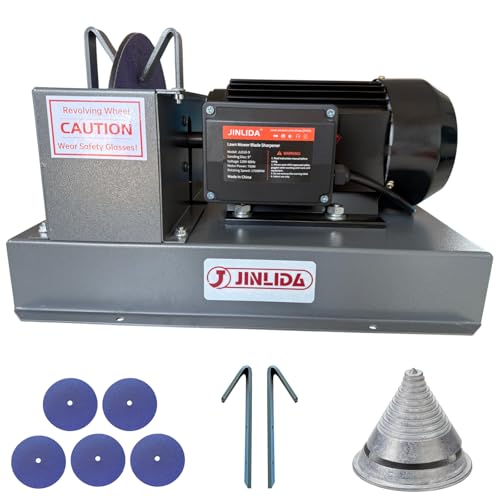
Jinlida JLD20-9 Lawn Mower Blade Sharpener, 1HP 750W Lawn Lawnmower Blade Grinder with 9-inch Ceramic Grinding Wheel and Balancer and 5 Sanding Discs
- Powerful motor: The JLD20-9 series lawn mower blade sharpener adopts a high-performance 750W motor that can output 1HP horsepower…
- Improve sharpening efficiency: Say goodbye to dull blades! Our 9-inch 60 grit ceramic grinding wheel effortlessly solves the probl…
- Complets set: includes 5 replaceable 60 grit purple ceramic grinding discs, 2 40 ° knife holders, and 1 metal balancer for compreh…
This machine targets the serious lawn keeper who sharpens multiple blades at once, maybe for neighbors or as a side gig. The Jinlida packs a 750W motor that spins a 9-inch ceramic grinding wheel at 1700 RPM. That wheel removes metal quickly, and the 60-grit surface leaves a clean edge without much effort.
What sets this apart from cheaper grinders is the integrated design. The steel base and blade mounting bracket are one solid unit, so vibration stays low. You do not fight the machine while you work. The included 30° tool holder keeps your blade at the correct angle, and the kit comes with two 40° holders as well. You also get five replacement ceramic discs, which is generous since these wheels wear down over time. A metal balancer is included, so you can check your work before reinstalling the blade.
This is a heavy unit. It takes up real bench space and weighs enough that you will not want to move it around. The 1700 RPM fixed speed is fine for grinding but does not offer the fine control of a variable-speed machine. If you sharpen delicate or very thin blades, you need a light touch to avoid removing too much metal. For standard mower blades, though, this machine eats through the work.
- 750W motor with 1HP output
- 9-inch 60-grit ceramic grinding wheel
- Includes five replacement discs
- Comes with 30° and 40° blade holders
- Metal balancer included for post-sharpening checks
Best for: The heavy user who sharpens multiple blades regularly and wants a stable, powerful bench grinder with consumables included.
SHARPAL 103N Hand Sharpener

SHARPAL
SHARPAL 103N All-in-1 Knife Garden Tool Lawn Mower Blade Sharpener | Axe, Hatchet, Machete, Pruner, Hedge Shears, Scissors, Gardening Sharpening Tool Gifts for Men
- VERSATILE – The most versatile sharpener in the market to sharpen and hone both single and double beveled blades including knife,…
- SUPERIOR SHARPENING PERFORMANCE – As blades vary from different angles, shape, single or double bevel, etc., to fulfill the best s…
- DURABLE – All sharpening abrasive materials pass 10,000 times field use test. NEVER WEARS OUT
This is the grab-and-go option. The SHARPAL 103N is a manual tool that fits in your hand, works without electricity, and sharpens everything from mower blades to hedge shears to kitchen knives. It is perfect for the homeowner who does not want to set up a grinding station for a single blade.
The tool has five sharpening surfaces built into one body. Three slots preset at optimal angles handle different bevel types. A tungsten carbide bar does the rough work on very dull or nicked edges, while a ceramic bar hones the edge to a fine finish. The oversized handle and hand guard make it safe to use even with work gloves on, which is a real consideration when you are dragging a sharp edge toward your hand.
The trade-off is speed and effort. Sharpening a badly damaged blade with this tool takes real elbow grease and several passes. It is not the right choice if you are restoring a blade that has hit rocks all season. But for routine maintenance, where you touch up the edge every few mows, it takes about five minutes per blade. The rubber over-molded base keeps it steady on your workbench. SHARPAL backs it with a three-year warranty, which is unusual for a hand tool.
- Five sharpening surfaces in one tool
- Handles single and double bevel edges
- Large hand guard for safe use with gloves
- Rubber over-molded grip and base
- Three-year manufacturer warranty
Best for: The casual homeowner who wants a safe, simple tool for quick touch-ups on mower blades and other garden tools without any setup.
Holdwell S Bench Grinder

Holdwell S
Holdwell S Lawn Mower Blade Sharpener, 1HP 750W Bench Grinder with 9-Inch Ceramic Wheel, 30°/40° Angle Brackets, for High/Low Lift, Gator & Flat Blades, with Extra Replacement Sandpapers
- Powerful 1HP 750W Motor: Features a 1 HP aluminum‑housed motor for efficient sharpening with good heat dissipation; solid steel ba…
- 9-Inch Ceramic Grinding Wheel: Equipped with a 9-inch 60-grit ceramic wheel for fast, efficient blade sharpening; comes with extra…
- Dual Angle Sharpening Brackets: Comes with pre-installed 30° and extra 40° angle brackets to ensure consistent, professional sharp…
The Holdwell S is the professional’s choice. It shares the same 750W motor and 9-inch ceramic wheel as the Jinlida, but it adds a few extras that matter when you sharpen blades all day. The aluminum housing dissipates heat well, so the motor does not overheat during extended use. The solid steel base keeps vibration down, and the integrated design means nothing wobbles.
The kit includes pre-installed 30° brackets plus an extra 40° bracket, so you can switch between standard and steep-angle blades without fiddling. Six blade hole adapters let you mount blades with different center hole sizes securely. That prevents the blade from slipping mid-grind, which is both a safety issue and a quality issue. You also get a blade balancer to check your work. The package even includes a screwdriver and a clear user manual, so setup is a three-step process.
This machine is not cheap, and it is not small. It demands a permanent spot on a sturdy bench. The 1HP motor is loud, so ear protection is a must. For the homeowner who sharpens one blade twice a year, this is overkill. But for someone who maintains multiple mowers or does sharpening for hire, the speed and consistency justify the price.
- 750W motor with aluminum housing
- 9-inch 60-grit ceramic wheel included
- 30° and 40° angle brackets pre-installed
- Six blade hole adapters for secure mounting
- Includes balancer, sandpapers, and manual
Best for: The landscaper or serious hobbyist who needs a durable, high-volume sharpening station with all the accessories included.
Why Blade Sharpness Matters More Than You Think
A dull blade does more damage than you realize. When the edge is rounded, the mower does not slice grass. It tears it. Torn grass blades develop brown, ragged tips within a day. That stress makes your lawn more susceptible to fungus and disease, and it gives the yard a tired, unhealthy look even when you water and fertilize correctly.
Sharpening also saves you time. A sharp blade cuts cleanly, so the mower glides through grass without bogging down. You finish faster and use less fuel. The engine does not work as hard, which reduces wear on the crankshaft and blade adapter. Over a season, that translates to fewer repairs and a longer mower life.
The cost math favors sharpening over replacing. A replacement blade runs $20 to $40. A sharpener costs $30 to $150 once. If you sharpen every 25 hours of mowing, which is the general recommendation, you recover the cost of even a bench grinder within a single season. Professional sharpening services charge $10 to $20 per blade, so doing it yourself pays off after just a few sessions.
How to Tell If Your Mower Blade Is Actually Dull
Do not wait until the grass looks terrible. Check the blade every few mows. The easiest test is visual: look at the cutting edge in good light. A sharp blade has a clean, continuous bevel. A dull one shows a shiny, rounded line where the edge should be. Nicks and dents are obvious signs of damage that need grinding, not just honing.
The grass tells you too. If the tips look frayed or whitish within a day of mowing, your blade is dull. If the mower leaves ragged strips or pulls at the grass instead of cutting it, that is another clue. You might also notice the mower vibrating more than usual. That often means the blade is out of balance, which usually happens after it hits something and gets bent or chipped.
You can do a quick paper test. Put on heavy gloves, remove the blade, and try to slice a sheet of paper with the edge. A sharp blade cuts it cleanly. A dull one crushes or tears it. If the blade fails the test, it is time to sharpen.
The 4 Main Types of Lawn Mower Blade Sharpeners
Knowing the tool categories helps you narrow the field before you look at specific models.
Manual Files and Hand Sharpeners
These are the cheapest and simplest option. A bastard file costs under $15 and works fine if you maintain your blade regularly. You clamp the blade in a vise and push the file along the edge at the correct angle. It takes about ten minutes per blade and requires some arm strength. Hand sharpeners like the SHARPAL 103N speed this up with guided angles. This category suits the homeowner who sharpens once or twice a season and does not mind a little physical work.
Drill Attachments and Angle Grinder Discs
Drill attachments spin a small grinding stone or flap disc at high speed. They are cheap and easy to store, but they are hard to control. You can easily remove too much metal or ruin the blade angle. Angle grinder discs work better because you can see the edge as you work. The best flap disc for this job removes material fast. The SporGain jig turns an angle grinder into a guided system, which solves the control problem.
Bench Grinders and Belt Sanders
Bench grinders like the Jinlida and Holdwell models are the gold standard for serious work. They use a large wheel, often ceramic or corundum, spinning at a steady speed. You hold the blade against the wheel at the correct angle. These machines remove metal quickly and give you a consistent edge. They cost more and take up bench space, but they are the fastest route to a perfect edge.
All-in-One Sharpening Systems
These combine a motor, grinding surface, and angle guides in one package. The SporGain brushless model fits this category. You set the blade in the guide, adjust the angle, and run it across the disc. These systems are user-friendly and produce repeatable results. They cost more than a file but less than a professional bench grinder setup with separate guides.
How We Chose These Products
We selected these five sharpeners because they represent the full range of what works. We looked for products with strong build quality, clear instructions, and enough included accessories to get you started. We favored models with adjustable angle guides or preset jigs, because consistent angle control is the difference between a sharp blade and a ruined one.
We also considered the buyer’s existing tools. The SporGain jig only makes sense if you own an angle grinder. The SHARPAL hand tool works for everyone but demands more effort. The bench grinders are the most capable but require permanent bench space. We matched each product to a specific user profile so you can find the one that fits your workshop and your skill level.
Step-by-Step Guide: How to Sharpen Your Blade Like a Pro
Follow this workflow from start to finish. It covers the steps people often skip, and those steps cause most of the problems.
Step 1: Prep the mower. Disconnect the spark plug wire first. Always. Tip the mower on its side with the carburetor facing up so oil does not leak into the air filter. Remove the blade bolt. Use a breaker bar or an impact wrench. If the bolt is stuck, spray it with penetrating oil and wait ten minutes. Never use a cheater pipe on a ratchet you care about.
Step 2: Clean the blade. Scrape off caked grass and dirt. A wire brush works well. You need to see the bare metal to judge the edge and find any cracks. A cracked blade must be replaced, not sharpened. A bent blade also needs replacement. Sharpening cannot fix structural damage.
Step 3: Sharpen the edge. Clamp the blade securely. Match your sharpener to the blade type. Standard blades take a 30° to 35° angle. Mulching blades often need a steeper angle. High-lift blades require care to maintain the curved profile. Follow the original bevel angle. Do not try to change it. Run the sharpener from the center of the blade outward toward the tip. Keep the tool moving. Do not linger in one spot or you will create a flat spot.
Step 4: Remove the burr. Grinding leaves a thin metal burr on the back edge. Knock it off with a fine file or a sharpening stone. Run the stone along the back edge a few times. This step is easy to skip, but a burr will dull the edge on the first mow.
Step 5: Balance the blade. This step is critical. An unbalanced blade causes vibration that damages the mower’s spindle and engine. Use the balancer that came with your grinder, or buy a magnetic balancer. Place the blade on the balancer. The heavy side will drop. Grind a little more metal off the heavy side, near the end of the blade, not the cutting edge. Recheck until the blade hangs level. You can also use the nail trick: drive a nail into a wall at a slight angle and hang the blade by its center hole. A balanced blade stays level.
Step 6: Reinstall the blade. Put the blade back on with the cutting edge facing the correct direction, which is up toward the mower deck. Torque the bolt to the manufacturer’s specification. For most walk-behind mowers, that is between 30 and 50 foot-pounds. If you do not have a torque wrench, tighten it firmly with a breaker bar, but do not stand on it. Reconnect the spark plug wire.
The Critical Step Everyone Skips: Balancing the Blade
Most DIY guides stop at sharpening. They ignore balance, and that is a mistake. When you grind one side more than the other, the blade becomes heavier on one end. At 3000 RPM, that imbalance creates a vibration you can feel through the mower deck. Over time, it wears out the spindle bearings and can crack the blade adapter. It also makes the mower noisy and uncomfortable to push.
Balancing takes two minutes. Use the metal balancer included with the Jinlida or Holdwell grinders. Place the blade flat on the cone. The heavy side rotates downward. Mark it with a marker. Grind a small amount of metal off the back edge of the heavy side, never the cutting edge. Recheck. Repeat until the blade stays level. If you do not have a balancer, the nail trick works fine. A magnetic balancer is also a worthwhile $10 investment if you sharpen often.
You should also check the blade for straightness while you have it off. Lay it flat on a bench. If it rocks, it is bent. A bent blade creates the same vibration problems as an unbalanced one. Replace it.
Safety Tips and Common Mistakes to Avoid
Safety starts before you touch the blade. Disconnect the spark plug wire. This prevents the engine from accidentally firing while your hand is near the blade. Wear heavy work gloves. The blade edge is sharp even when dull, and the burr left after grinding can slice you easily. Wear safety glasses. Grinding throws sparks and tiny metal shards. A face shield is even better.
Do not overheat the blade. If the metal turns blue, you have burned the temper. This softens the steel, and the blade will dull almost immediately. Keep the blade moving across the grinding surface. Dip it in water every few passes if you are using a bench grinder. The SporGain brushless model’s adjustable speed helps here. Use a slower speed to remove material without building heat.
Do not change the blade’s angle. Match the original bevel. If you make the angle steeper, the edge will be sharper but weaker. It will chip easily. If you make it shallower, the edge will be durable but dull. The included angle guides on the SporGain and the bench grinders exist for this reason. Use them.
Do not sharpen a blade that is cracked or severely bent. Grinding a damaged blade is dangerous. The blade can fracture at speed. Inspect it carefully after cleaning. When in doubt, replace it. A $30 blade is cheaper than a trip to the emergency room.
Frequently Asked Questions
How often should I sharpen my mower blade?
Sharpen every 25 hours of mowing time. For most homeowners, that means once or twice a month during the growing season. If you mow a large yard, hit sandy soil, or frequently mow over sticks and debris, sharpen more often. A quick visual check every few mows tells you when it is time. If the edge looks rounded or shiny, sharpen it.
Can I sharpen a mulching blade the same way as a standard blade?
No. Mulching blades have a curved or angled design that creates a vacuum to recirculate grass clippings. You need to maintain that curve. Sharpen only the straight cutting edge, not the curved portion. Use a steeper angle, around 40°, to keep the edge durable. The SporGain jig and the bench grinders with 40° brackets handle this well. A file is harder to control on a curved blade.
Is it worth buying a bench grinder for one lawn mower?
It depends on how much you value your time. A bench grinder costs $100 to $150 and sharpens a blade in five minutes. A file costs $15 but takes twenty minutes of physical effort. If you sharpen twice a season, the file is fine. If you have a large yard, a rough terrain, or multiple mowers, the bench grinder pays for itself in convenience. It also handles other tools like shovels and hoes.
Why does my mower vibrate after I sharpened the blade?
You likely skipped or failed the balancing step. Grinding removes more metal from one side, making the blade unbalanced. Remove the blade and check it on a balancer. Grind a little more off the heavy side, near the end. Also check the blade for bends. A blade that hit a rock or stump may be bent, and no amount of balancing will fix that. Replace it.
Final Verdict: Which Sharpener Should You Buy?
For most homeowners, the SporGain brushless sharpener is the best balance of power, precision, and ease of use. The adjustable speed prevents blade damage, the angle guides remove guesswork, and the lifetime motor warranty means you will never buy another one. It is the tool we recommend for anyone who wants professional results without a steep learning curve.
If you are on a tight budget and already own an angle grinder, the SporGain adjustable jig is a smart buy. It turns your existing tool into a guided sharpening system for under $50. If you sharpen blades for multiple mowers or run a small sharpening service, the Holdwell S bench grinder offers the speed and durability you need. For the casual owner who wants a five-minute touch-up without any setup, the SHARPAL 103N hand tool is simple and safe.
Whichever you choose, the workflow stays the same: clean the blade, grind the edge, remove the burr, balance it, and torque it back on. For more specific guidance on matching a sharpener to your lawn size, check our guide on the best sharpening tool for small yards. And if you run a machine with a thick, heavy-duty blade, our breakdown of the best sharpener for thick grass covers the extra power you need. A sharp blade makes every mow faster, cleaner, and healthier for your lawn. That alone justifies the cost of a good sharpener.