You’ve seen the photos. A guy in spiked sandals walking across a lush green lawn, grinning like he just discovered fire. Then you read the reviews and half of them say the spikes bent on the first step. The other half swear it transformed their yard.
Here’s the truth most product pages skip: spike aeration works differently than core aeration. Core aerators pull plugs of soil out, which relieves compaction at the root zone. Spike shoes push soil down and to the side, creating channels for air and water. On loamy soil, that’s often enough. On heavy clay, it can compact the soil further if you walk the same path twice.
So the real question isn’t whether spike shoes work. It’s whether they work for your soil type. This guide covers five models that handle different conditions, plus the timing, walking pattern, and prep work that determines whether you see results or just poke holes in dead grass.
Quick comparison of the key specs across all five picks:
| Features | onoxouo Lawn Shoes | Ohuhu Aerator Shoes | Leweio Pre-Assembled | DenForste Aerator Shoes | LawnVigor Aerator Shoes |
|---|---|---|---|---|---|
| Material & Build | 5mm metal sole, 70% thicker | Heavy-duty spiked sandals | 3mm thickened metal sole | Aluminum alloy plus plastic base | 5mm metal sole, anti-clog |
| Spike Length | 2-3/16 inch | Not specified | 2 inch heat-treated | 675Mpa yield strength | 2-3/16 inch heat-treated |
| Fit Range | US 6-11 | One-size-fits-all | Most adult sizes | Women 6-10, Men 6-9 | US 6-12 |
| Clog Resistance | Hollow base reduces mud | Not specified | Standard design | Standard design | Anti-clog metal sole |
| Best Use Case | Clay and compacted soil | General yard maintenance | Budget-conscious clay yards | Hard soil, slopes, rocks | Large yards, clay soil |

onoxouo Lawn Aerator Shoes
The onoxouo pair targets a specific problem: clay soil that laughs at flimsy plastic spikes. The 5mm metal base is roughly 70% thicker than what you’ll find on generic models, and the wider footrest gives you more surface area to push down with. If your lawn has that hard, cracked feel in summer, this is the build quality you want underfoot.
What separates this from cheaper options is the lock-nut spike attachment. Most budget aerator shoes rely on threaded spikes screwed into plastic. Those work loose after a few sessions. Lock nuts keep each 2-3/16 inch spike tight, so you’re not stopping every ten steps to re-tighten. The hollow base also sheds mud instead of packing it in, which matters when you’re working wet clay.
The trade-off is weight. A thicker metal sole means more mass on your feet, and after 20 minutes you’ll feel it in your calves. The adjustable straps fit US 6-11, but if you wear a size 12 boot, look elsewhere. And the hook-and-loop fastening is secure, though it collects grass clippings and needs a rinse after each use.
- 5mm metal sole, 70% thicker than standard models
- 2-3/16 inch spikes secured with lock nuts
- Hollow base design reduces mud buildup
- Adjustable straps fit US shoe sizes 6-11
- Arrives fully assembled, no tools needed
Best for: Homeowners with heavy clay soil who want deep penetration without replacing bent spikes every season.
Ohuhu Lawn Aerator Shoes
Ohuhu built its reputation on budget-friendly garden tools, and this aerator shoe follows that pattern. The hook-and-loop strap system is the headline feature here. It wraps around your shoe quickly and holds firm, which makes a difference if you’re strapping these over bulky work boots instead of thin sneakers.
The one-size-fits-all claim is accurate for most adults, though “fits all” always means “fits most.” The design is straightforward: spiked sandal, two straps, walk. No assembly, no fuss. For someone aerating a small front yard once or twice a year, that simplicity is the whole point. You don’t need a $200 machine for 500 square feet of grass.
Where this falls short is heavy clay. The product data doesn’t specify spike length or sole thickness, and that’s a clue. This is a general-purpose aerator, not a clay-buster. If your soil is rock-hard in August, these spikes may not reach the depth you need. Check the current price on Amazon, because this sits in the budget tier and often fluctuates.
- Hook-and-loop straps for quick on and off
- One-size-fits-all design for most adults
- Free installation, ready out of the box
- Lightweight build suits occasional use
- Works best on loamy or already-loose soil
Best for: Renters or casual gardeners who need a cheap, no-hassle tool for small yards with decent soil.
Pre-Assembled Lawn Aerator Shoes (Leweio)

Leweio
Pre-Assembled Lawn Aerator Shoes with Secure Adjustable Strap for Clay Soil
- Metal Base, Built to Last: Reinforced with a 3MM thickened metal sole that helps reduce breaking and bending issues often found in…
- 2-Inch Heat-Treated Spikes, Effective Soil Penetration: Equipped with sturdy 2-inch heat-treated metal spikes and secure lock nuts…
- Loosens Compacted Soil, Supports Healthier Lawns: The aeration shoes help reduce soil compaction and loosen thick thatch so air, w…
Leweio takes a middle path between flimsy plastic and overbuilt steel. The 3mm metal sole is thicker than the plastic bases on bargain-bin models but lighter than the 5mm options. That balance makes it a reasonable choice if you want durability without feeling like you’re wearing ankle weights.
The 2-inch heat-treated spikes are the real story. Heat treatment hardens the metal, which helps resist bending when you hit a rock or a dry patch. Lock nuts keep them from loosening mid-stride. For clay, sand, or loamy soil, this spike length hits the sweet spot: deep enough to matter, short enough to pull out without a fight.
One honest limitation: the elastic hook-and-loop straps fit most adults, but the range isn’t specified. If you have very wide feet or wear size 13, the fit may be sloppy. And while the 3mm sole handles normal use fine, it won’t survive the same abuse as a 5mm plate if you’re aerating rocky ground. It’s a fair trade for the lighter weight.
- 3mm thickened metal sole resists bending
- 2-inch heat-treated spikes with lock nuts
- Works on clay, sand, and loamy soil
- Elastic hook-and-loop straps fit most adults
- Fully assembled, no setup required
Best for: Budget-conscious buyers who still want metal construction and heat-treated spikes for clay soil.
DenForste Lawn Aerator Shoes

DenForste
DenForste Lawn Aerator Shoes for Grass - Pre-Assembled Grass Aerator Shoes for Lawn - Soil Yard Aerator Tool for Aerating Patio Garden, Black
- Adjustable Size: The 11.5* 5 inch Aerator Shoes fit for women's shoe size 6-10, men's shoe size 6-9, with 3 adjustable Velcro stra…
- Never Broken Shoes Base: Design with using 2 Base of ALUMINUM ALLOY and PLASTIC SOLES to ensure sturdy, durable, and comfortable,…
- Never Bend of Spikes: Heavy Duty Spikes add oxygen, water and nutrients to soil easily. The yield strength reaches 675Mpa which is…
DenForste approaches the design differently. Instead of a single metal plate, it uses a dual-layer base: aluminum alloy on top, plastic sole underneath. The aluminum adds rigidity while the plastic absorbs impact, which cuts down on the jarring feel you get from all-metal shoes on hard ground.
The spikes are rated at 675Mpa yield strength. That’s a specific number, and it matters. Higher yield strength means the spike bends less before it deforms permanently. For rocky soil or slopes, that extra toughness keeps you moving instead of stopping to straighten bent spikes with pliers.
The fit range is the narrowest of the five picks. Women’s 6-10 and men’s 6-9 covers a lot of people, but larger-footed gardeners are out of luck. Three Velcro straps wrap around the heel and top, which holds the shoe steady. Just know the plastic component of the base is the weak point over years of use. It’s not a lifetime tool.
- Aluminum alloy and plastic dual-layer base
- Spikes rated at 675Mpa yield strength
- Three adjustable Velcro straps
- Fits women’s 6-10 and men’s 6-9
- Pre-assembled and ready to walk
Best for: Gardeners with rocky or sloped lawns who need bend-resistant spikes and a cushioned step.
Fully Assembled Aerator Shoes (LawnVigor)

LawnVigor
Fully Assembled Aerator Shoes with 2.2" Bend-Resistant Spikes for Clay Soil | 5mm Metal Base, Secure Ratchet Buckle Helps Keep Shoes in Place, Anti-Clog Design, Fits US Shoe Sizes 6-12 (Black)
- Effective Lawn Aeration for Healthier Grass: Effortlessly reduce soil compaction and boost lawn vitality using our aerator shoes.…
- Fully Assembled and Ready to Use: No tools, no assembly - just strap on and walk! Our aerating shoes with ergonomic design make wa…
- Secure Adjustable Fit for US Shoe Sizes 6-12: Fits comfortably over most footwear for men and women in US sizes 6-12. Our spike sh…
LawnVigor solves a problem most aerator shoes ignore: what happens when the spikes wear down? Instead of forcing you to buy a whole new pair, these spikes are replaceable. That single design choice extends the product’s life by years and makes the upfront cost easier to justify.
The 5mm metal sole matches the onoxouo for thickness, and the anti-clog design keeps mud from packing into the base. The 2-3/16 inch heat-treated spikes handle clay and compacted soil without bending. And the fit range is the widest here: US 6-12, with both a shoelace and buckle system for a stable hold.
Nothing is perfect. The buckle and lace combo takes longer to put on than a simple hook-and-loop strap. If you’re the type who wants to step in and go, that extra 30 seconds per foot gets old. The replaceable spikes also need occasional checking to make sure they’re snug, since they’re designed to come out.
- 5mm metal sole with anti-clog design
- 2-3/16 inch heat-treated, replaceable spikes
- Adjustable shoelace and buckle fit US 6-12
- Ergonomic design for comfortable walking
- Fully assembled and ready to use
Best for: Larger-footed users and anyone who wants a long-term tool with replaceable spikes instead of a disposable pair.
How We Chose These Products
We started with the specs that actually affect performance: sole material and thickness, spike length and treatment, strap design, and fit range. A 3mm plastic sole and a 5mm metal sole are not the same tool, even if they look identical in photos. Spike length determines aeration depth, and heat treatment determines whether those spikes survive a season.
We also weighed real-world usability. Pre-assembled shoes save time. Replaceable spikes save money. Wider fit ranges accommodate more people. And clog resistance matters more than most buyers realize, because stopping every few steps to scrape mud off your soles kills the motivation to finish the job.
Buying Guide: What Really Matters
Spike length is the first spec to check. Two inches is the practical minimum for clay soil. Shorter spikes barely scratch the surface, and longer spikes are harder to pull out. Heat-treated steel resists bending better than untreated metal, so look for that term in the description.
Sole material determines durability and weight. Plastic soles are light but crack under pressure. Metal soles last longer but tire your legs faster. The 3mm to 5mm range is the sweet spot. Anything thinner is a disposable tool.
Strap adjustability decides whether the shoes stay on your feet or slide around mid-step. Hook-and-loop straps are fast but collect debris. Buckle and lace systems hold tighter but take longer to put on. If you’re aerating a large yard, quick straps win. For short sessions, either works.
Lawn Aerator Shoes vs. Core Aerators: Which Should You Buy?
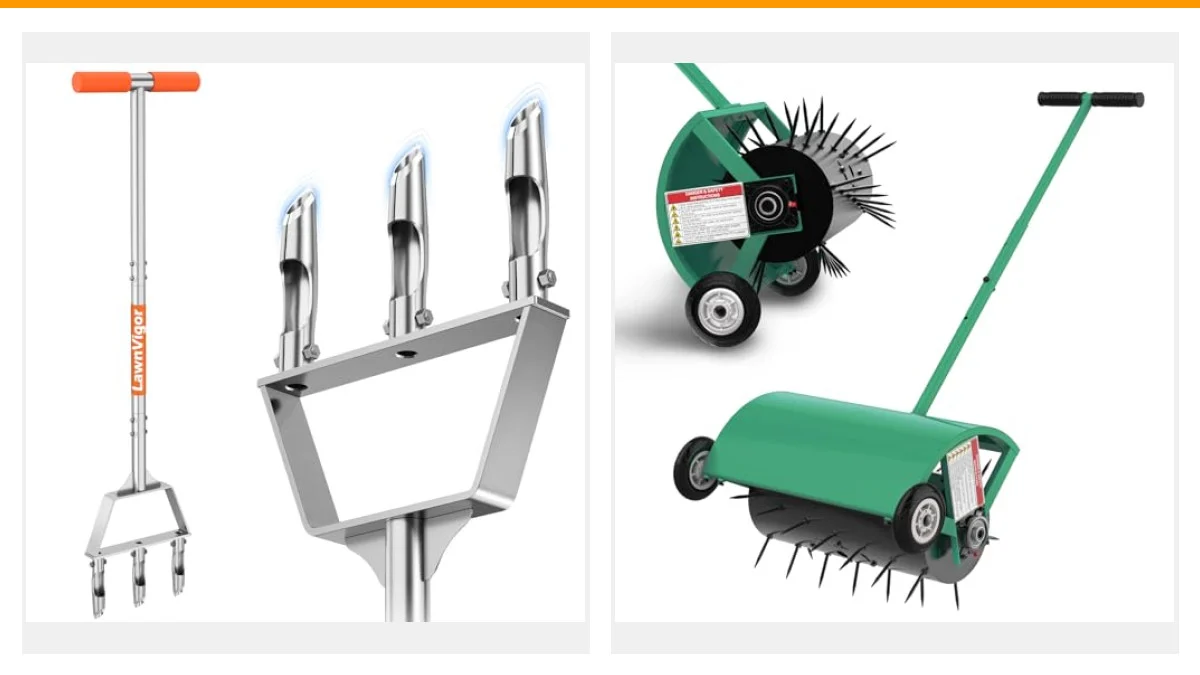
Spike shoes cost a fraction of what a core aerator costs, whether you rent or buy. For a small to medium yard, that savings is real. But core aeration removes soil plugs, which genuinely relieves compaction. Spike aeration pushes soil aside, which helps on loamy ground and does less on heavy clay.
Cost per square foot favors spike shoes for yards under 2,000 square feet. Beyond that, the time investment gets steep. Walking a half-acre in spiked sandals takes hours. A powered core aerator covers the same ground in minutes. If your lawn is large and badly compacted, rent a core aerator once a year and use spike shoes for touch-ups between sessions.
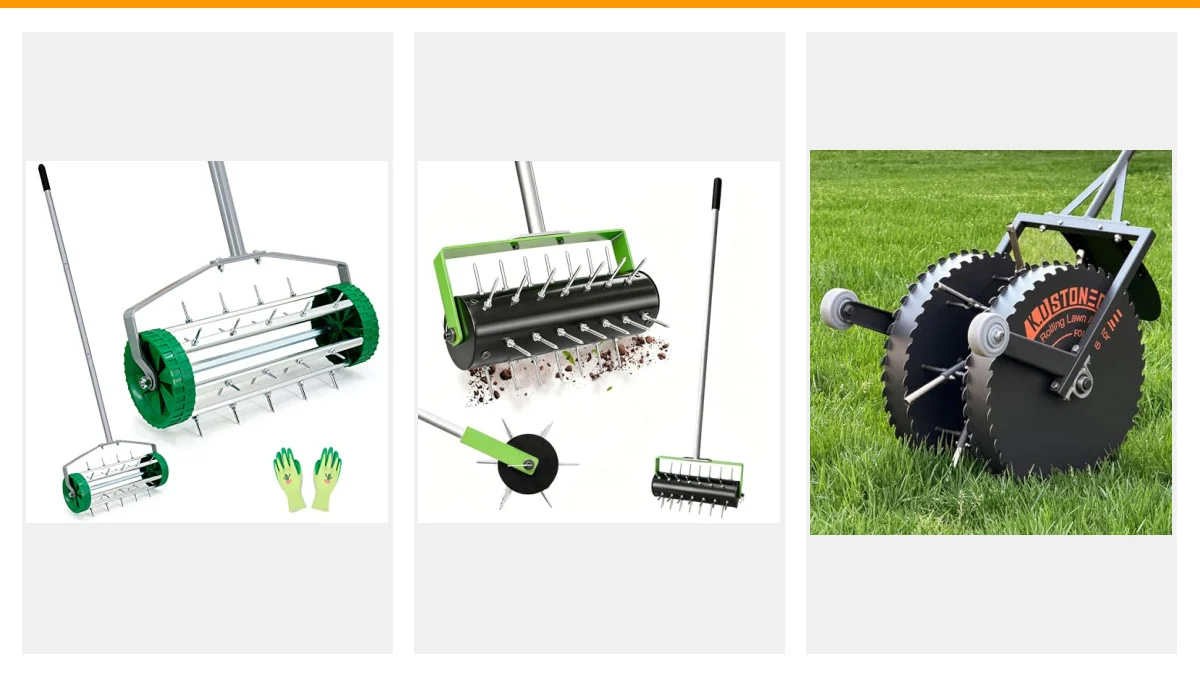
For smaller spaces, a rolling lawn aerator is another option worth considering, especially if you want something you can push rather than wear.
How to Use Aerator Shoes for Maximum Results
Timing matters more than most people think. Early fall is ideal for cool-season grasses because the roots are actively growing and can recover from the holes. Spring works too, but avoid aerating during summer heat or drought. Stressed grass doesn’t bounce back from spike damage.
Water the lawn the day before you plan to aerate. Moist soil lets spikes penetrate deeper and pull out cleaner. Dry clay will stop even the best spikes cold. Mow first at a slightly lower height so the spikes reach the soil without getting tangled in long blades.
Walking pattern matters for even coverage. Go in straight lines north to south, then east to west, like you’re mowing. Overlap each pass by a few inches so you don’t leave strips of un-aerated grass. Avoid walking the same line twice on clay, because double-spiking compacts the soil you just loosened.
Maintenance and Cleaning: Extending the Life of Your Spikes
Rinse the shoes after every use. Mud left on metal spikes causes rust, and rust weakens the steel over time. A quick spray from a garden hose followed by air drying is enough. Don’t store them wet in a shed.
Check the spike tightness before each session. Lock nuts and threaded spikes can loosen with vibration. A quick turn with a wrench takes seconds and prevents a spike from disappearing into the lawn. If your model has replaceable spikes, inspect the threads for wear and swap them out when they stop holding tight.
Store aerator shoes hanging rather than flat on the ground. This keeps moisture from pooling around the base and lets air circulate around the spikes. A simple hook on a garage wall works fine.
Frequently Asked Questions
How do I know if my soil is compacted enough to need aeration?
Push a screwdriver into the soil. If it goes in easily, your soil is fine. If you have to stomp on it, the soil is compacted. Another test: dig up a small square of grass and look at the roots. Shallow, tangled roots that sit right at the surface signal compaction. Deep roots mean the soil is healthy.
Can aerator shoes damage my lawn?
They can if you use them on dry, heat-stressed grass or walk the same path repeatedly on clay. The spikes tear roots when they pull out of dry soil. Water first, aerate during active growth, and vary your path. Used correctly, spike shoes cause minimal damage and often improve growth.
How often should I aerate with spike shoes?
Once or twice a year is enough for most lawns. Heavy clay soil may need three sessions spaced a few weeks apart in fall. Aerating more often than that on the same spots can compact the soil instead of loosening it, especially if you’re not watering beforehand.
Do aerator shoes work on all grass types?
They work best on cool-season grasses like fescue and bluegrass during their active growth periods. Warm-season grasses like Bermuda benefit from aeration in late spring or early summer. The soil type matters more than the grass type. Loamy soil responds well. Heavy clay needs the thicker soles and longer spikes covered in this guide.
Our Top Recommendation
The LawnVigor aerator shoes take the top spot for one reason: replaceable spikes. Every other model becomes useless once the spikes wear down or bend. This one lets you swap them out and keep using the same base for years. The 5mm metal sole, anti-clog design, and US 6-12 fit range round out a package that works for most people.
If you have heavy clay and want maximum sole thickness, the onoxouo is the better pick. Its 70% thicker base and lock-nut spikes handle tough conditions without flexing. For budget buyers, the Leweio offers heat-treated spikes and a 3mm metal sole at a lower cost. And if your lawn is rocky or sloped, the DenForste dual-layer base absorbs impact better than all-metal designs.
For a deeper look at how these compare to other aeration tools, see this manual aerator guide. And if you’re dealing with weeds alongside compaction, a weed-focused aerator may suit your situation better.