You’ve got a tray of leggy tomato seedlings and a clump of potting mix that’s gone hard as a brick. A full-size garden fork would tear those roots to shreds. So would a trowel. What you actually need is a hand fork narrow enough to work a single cell without wrecking the neighbor.
A good seed-tray fork does three jobs: it breaks up compacted potting mix, lifts weeds without disturbing adjacent seedlings, and stays small enough to reach into tight cell packs. The best ones have stainless or carbon steel tines, a forged head that won’t bend, and a handle short enough for precision work but long enough to keep your knuckles out of the soil.
We looked at five forks and fork kits that actually suit seed-tray work, from a heavy-duty stainless model to a budget plastic set. The Haliaeetus Garden Hand Fork takes the top spot for most home gardeners. The Berry&Bird is the better pick if you want something that lasts a decade. And the GOOGO kit is worth considering if you’re just starting seeds for the first time.
Here’s a quick side-by-side of the five picks before we get into the details.
| Features | Haliaeetus Hand Fork | EarthWay 10001 Seeder | Berry&Bird Hand Fork | GOOGO 4-Piece Kit | Garden Guru Fork |
|---|---|---|---|---|---|
| Material & Build | Thick stainless steel, wood handle | Aluminum frame, poly hopper | Stainless steel, FSC ash handle | ABS plastic, lightweight | Stainless steel tines, ergonomic grip |
| Key Specification | 12.3 in, 3-prong tine | 7 seed plates, 30 in row marker | 3-prong, traditional manual build | 12-hole dibber, 30×13 cm | 3-tine fork, hang hole |
| Main Feature | Seamless welded joint | Precision seed spacing | Corrosion-resistant tines | Seed dispenser included | Rust-resistant stainless |
| Performance | Handles hard, rocky soil | Straight rows, accurate depth | Reduces soil adhesion | Fast multi-hole sowing | Works around delicate stems |
| Best Use Case | Weeding and turning soil | Direct-sowing rows outdoors | Pots, beds, borders | Seed trays, small pots | Transplanting, mulching |
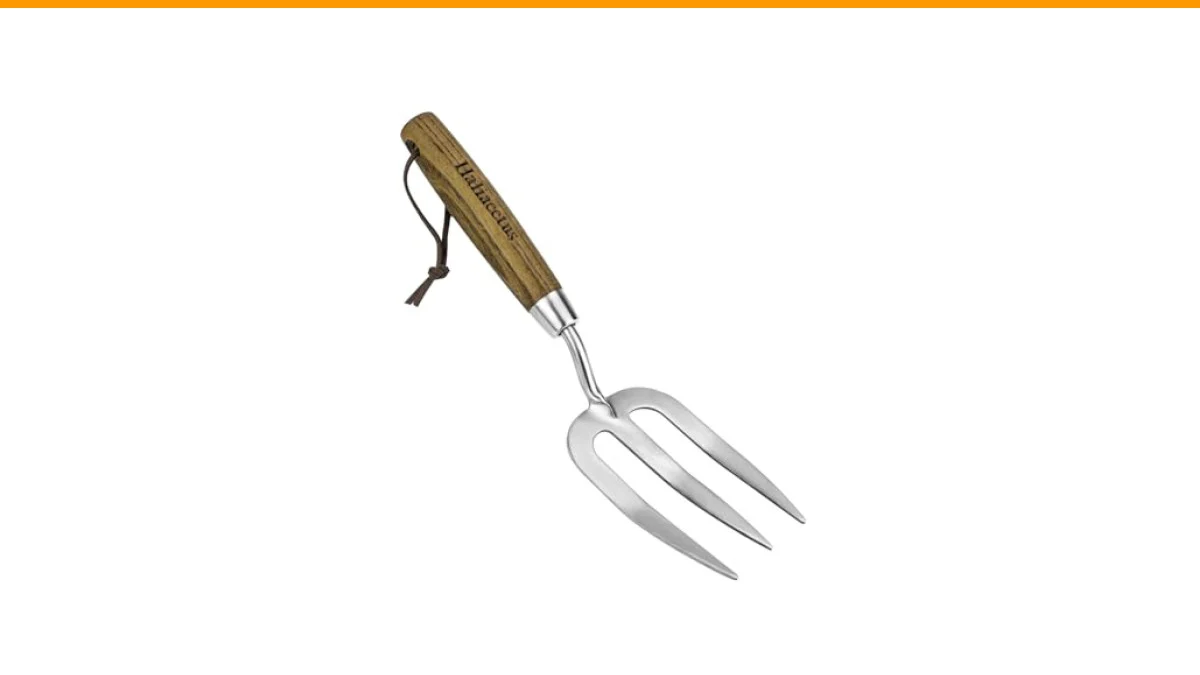
Haliaeetus Garden Hand Fork

Haliaeetus
Haliaeetus Garden Hand Fork, 12.3'' Hand Weeding Fork with Sharp Tine
- 【Great to Uproot Large Weeds】The gardening fork easily goes through the ground to digs deep under the weed and give more reach and…
- 【Loosens Soil Almost Effortlessly】With sharp and sturdy 3 prong tine that make it very easy to break through hard soil, even if yo…
- 【Comfortable Wooden Handle】Wood is a natural shock absorber and will not cause sore wrists even work for a few hours. The handle o…
This is the fork for the gardener who’s tired of cheap tools snapping at the weld. The Haliaeetus is built for people who grow in raised beds, large pots, and deep seed trays where the mix has had time to settle and compact. If you start tomatoes, peppers, or brassicas indoors and then pot them on, this fork handles the middle stage without shredding roots.
The standout detail is the seamless welding on the head. Most budget forks have a visible join where the tines meet the shaft, and that’s exactly where they fail after a season or two. Haliaeetus uses thicker stainless steel and a continuous weld, so the head resists bending even when you hit a rock or a root ball. The wooden handle absorbs shock well, which matters if you’re loosening a whole flat of cells one by one. It also has a nice ergonomic curve that keeps your wrist in a neutral position.
The trade-off is size. At 12.3 inches, it’s a full hand fork, not a micro tool. On a standard 72-cell tray, the tines are wider than a single cell, so you’ll be working two cells at a time. That’s fine for loosening, less ideal for precision weeding between tiny seedlings. If you’re working with 128 or 200-cell plug trays, this fork is too big for the job.
- Thick stainless steel head with seamless welding
- 12.3-inch length suits raised beds and large pots
- Wooden handle absorbs shock and reduces wrist strain
- Lifetime warranty from the manufacturer
- Works best in moist soil after rain or watering
Best for: The home gardener who starts seeds in larger trays and pots and wants one fork that won’t bend or break after a season.
EarthWay Products 10001 Precision Seeder

EarthWay
EarthWay Products 10001 Precision Garden Seeder with 7 Seed Plates, Sweet Corn Planter, Accurate Seed Drill for Gardeners, Durable Corn Planter, Use in Prepared Soil
- Precision Planting with EarthWay Seeder: Achieve consistent plant spacing and accurate seed depth with the EarthWay 10001 Precisio…
- Versatile Seed Planting Tool: Equipped with 7 interchangeable earthway seeder plates, this corn planter can sow 38 types of seeds.…
- Built to Last: Constructed with quality aluminum and a rustproof poly hopper, the EarthWay seeder is designed for longevity. This…
This isn’t a hand fork. It’s a walk-behind precision seeder, and it belongs in this roundup for a specific reason: if your seed-tray work has outgrown trays and moved to direct-sowing rows, this is the tool that replaces hand-forking altogether. Picture a gardener with a 20-foot vegetable row who’s done fiddling with cell packs and wants consistent spacing without bending over.
The EarthWay 10001 comes with seven interchangeable seed plates that cover 38 types of seed, from sweet corn to peas to hemp. A 30-inch row marker keeps your lines straight. The aluminum frame and rustproof poly hopper are built for outdoor use, and the whole thing rolls on prepared soil. For anyone planting a market garden or a serious backyard plot, this saves hours of hand work.
The limitation is obvious. It only works in prepared soil, and it’s useless for seed trays, pots, or anything indoors. It’s also a big investment compared to a hand fork, and the seed plates require some trial and error to dial in the right drop rate. If you’re a container gardener or a balcony grower, skip this one entirely.
- Seven seed plates cover 38 seed types
- 30-inch row marker for even spacing
- Aluminum frame with rustproof poly hopper
- One-year limited warranty and lifetime tech support
- Requires prepared, outdoor soil to function
Best for: The row gardener who’s moved past seed trays and wants precision direct-sowing for corn, peas, and beans.
Berry&Bird Gardening Hand Fork

Berry&Bird
Berry&Bird Gardening Hand Fork, Stainless Steel Hand Weed Fork
- WHAT YOU GET - 1 * Stainless Steel Hand Fork. Our garden forks are made by traditional manual process and can be used for more tha…
- ERGONOMIC DESIGN- Berry&Bird hand fork has good balance and comfortable proportion, which is very suitable for planting in small a…
- STRONG AND TOUGH - Ideal for aerated soil, it will not bend under the action of force when used for harder garden work. The sharp…
Berry&Bird makes tools for people who treat gardening as a long-term hobby, not a seasonal experiment. The ash handle comes from FSC-certified forests, and the stainless steel head is built to last ten years or more with basic care. This is the fork you buy once and hand down. If you’re the type who oils your tools at the end of the season, this one rewards that habit.
The real advantage here is soil release. Stainless steel tines shed wet potting mix far better than painted carbon steel, which means less scraping and less root disturbance when you’re working around seedlings. The fork penetrates clay-heavy mixes without much force, and the balance is good enough that you can choke up on the handle for delicate work in pots and borders. Berry&Bird also backs it with a two-year warranty and a 30-day replacement window.
Two things to know. The wooden handle will need occasional oiling to stay smooth, and the fork is not the cheapest option here. It’s also a 3-prong design, which is fine for loosening but slightly less efficient than a 4-prong for scooping. For seed-tray work specifically, the prongs are spaced wide enough that you’ll want to use the tip rather than the full head.
- Stainless steel head resists rust and soil adhesion
- FSC-certified ash handle, ergonomic shape
- Good balance for pots, beds, and borders
- Two-year warranty plus 30-day replacement
- Handle benefits from occasional oiling
Best for: The long-term gardener who wants a fork that improves with use and doesn’t mind a little maintenance.
4PCS Garden Seed Planting Kit
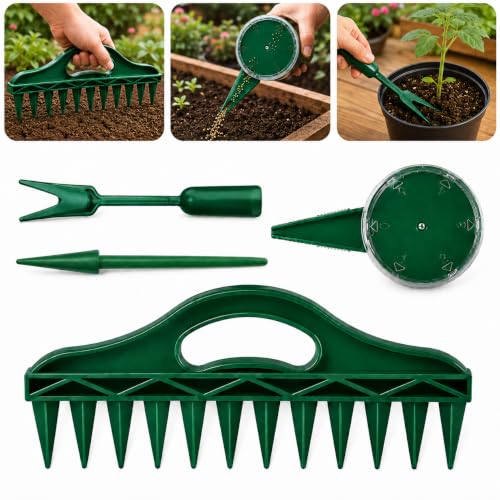
GOOGO
4PCS Garden Seed Planting Tool Kit, Hand Seeder with 12-Hole Dibber and Transplanting Tools, Mini Gardening Tools Set for Vegetable, Flower, Herb and Seed Sowing for Lawn Garden Farm Yard
- 【Complete Seed Planting Tool Kit】This 4-piece seed planter tool set includes a 12-hole dibber, seed dispenser, transplanting tool…
- 【Precise Planting & Efficient Sowing】The 12-hole dibber tool helps create evenly spaced planting holes for more organized seed sow…
- 【Durable & Lightweight Garden Tools】 Made from sturdy ABS plastic, these mini garden tools are lightweight, reusable and comfortab…
This GOOGO kit is aimed at the first-time seed starter. You get a 12-hole dibber, a seed dispenser, a transplanting tool, and a small planting fork, all in one box. The dibber is the star: it punches twelve evenly spaced holes at once across a 30 by 13 cm area, which is exactly the kind of thing that makes sowing a tray feel less tedious. The seed dispenser helps with tiny seeds like basil or lettuce that are hard to place by hand.
For someone starting their first flat of herbs on a windowsill, this kit covers the basics without a big spend. The ABS plastic is lightweight and easy to rinse, and the tools are sized for small hands and small spaces. The transplanting tool is useful for lifting seedlings out of cells without tearing roots, and the planting fork handles light loosening of potting mix.
Honest caveat: plastic tools flex under pressure. If you’re working compacted or clay-heavy soil, these will bend where a stainless fork wouldn’t. The kit is also marked as scarce availability, so it may not stay in stock. And the fork is small enough that it’s really a dibber accessory, not a standalone weeding tool. Treat this as a starter kit, not a lifetime purchase.
- 12-hole dibber for evenly spaced sowing
- Seed dispenser helps with tiny seeds
- Transplanting tool lifts seedlings gently
- Lightweight ABS plastic, easy to clean
- Availability is limited at time of writing
Best for: The beginner starting their first seed trays who wants a complete, low-cost kit rather than a single premium fork.
Garden Guru Stainless Steel Fork

Garden Guru Lawn & Garden Tools
Garden Guru Stainless Steel Hand Weeder Fork Tool – Rust Resistant Stainless Steel – Ergonomic Handle – Great for Planting, Spreading Mulch, Weeding, Loosening & Transplanting Soil
- A must-have hand tool for every gardener. This hand rake is perfect for weeding, loosening and transplanting soil, turning, and sp…
- Stainless steel tines are rust resistant and sturdy, allowing easy penetration of soil. Fork also has the maneuverability to work…
- Ergonomic grip for comfort and control makes weeding and transplanting a breeze. Grip is designed to alleviate pressure on the pal…
Garden Guru targets the gardener who wants a single tool that does several jobs well. This fork is designed for weeding, loosening, transplanting, and spreading mulch, which makes it a solid all-rounder for raised beds, flower borders, and larger pots. The stainless steel tines resist rust and hold their shape better than cheaper forks, and the ergonomic grip is shaped to take pressure off your palm and fingers during long sessions.
What sets it apart is maneuverability. The tines are narrow enough to work around small stems and delicate plants without uprooting them, which is exactly what you want when you’re weeding between seedlings in a tray or a nursery pot. The hang hole on the handle is a small thing, but it matters if you like keeping tools within reach on a hook. Garden Guru also backs it with a lifetime warranty and a 90-day satisfaction guarantee.
The grip is comfortable, but it’s a molded handle rather than wood, so it won’t absorb shock the way an ash handle does. If you have hand or wrist issues and plan to fork for an hour straight, the Berry&Bird or Haliaeetus may be kinder. Also, the tines are on the shorter side, so this isn’t the tool for deep digging in heavy clay.
- Stainless steel tines resist rust and warping
- Ergonomic grip reduces hand and wrist fatigue
- Narrow tines work around delicate stems
- Hang hole for easy storage
- Lifetime warranty and 90-day guarantee
Best for: The multi-task gardener who wants one fork for weeding, loosening, and transplanting in beds and borders.
How We Chose These Products
We started with the seed-tray use case and worked backward. A fork that’s great for turning a compost pile is often wrong for a 72-cell flat. So we prioritized tools with tine spacing narrow enough to work individual cells, heads that won’t bend under hand pressure, and materials that resist rust when they’re stored in a damp greenhouse. The Haliaeetus and Berry&Bird both met those criteria. The Garden Guru came close, and the GOOGO kit earned a spot because it solves the beginner problem of not knowing what tools to buy.
We also weighed the honest trade-offs. The EarthWay seeder is a different category of tool, and we included it because some readers searching for seed-tray forks are actually ready to move outdoors. We didn’t include any product we couldn’t verify against manufacturer specifications. No star ratings, no price claims, no invented performance numbers. If a tool has a limitation, we said so.
Buying Guide: What Really Matters
Fork width versus cell size is the detail most buyers overlook. A standard 72-cell tray has cells roughly 1.5 inches across. A 128-cell tray is closer to 1 inch. If your fork head is wider than the cell, you’ll be loosening two cells at once and disturbing roots in both. Measure your tray cells before you buy. For 128-cell and smaller, look for a narrow 3-prong fork or a dibber-style tool.
Tine count matters too. Three prongs penetrate compacted mix with less resistance and let you work around a single seedling. Four prongs scoop better but disturb more soil. For seed-tray work, 3-prong is usually the better call. Stainless steel resists rust and sheds wet potting mix; carbon steel holds an edge but needs drying and oiling after every use. Forged heads last longer than welded ones, though a good seamless weld like the Haliaeetus uses is a close second.
Handle length should match your tray depth. A short handle gives you precision but puts your knuckles close to the soil. A longer handle keeps your hand clear but reduces control. For standard 2-to-3-inch trays, a 10-to-12-inch fork is the sweet spot. For deep-root trainers or 4-inch pots, go longer. If you want a broader look at hand forks for general garden use, the professional hand fork comparisons cover options beyond seed-tray work.
Hygiene: Sanitizing Between Trays
Damping-off spreads fast in seed trays, and dirty tools are a common culprit. A fork that’s been in a tray with mold or fungus will carry spores to the next flat. Wipe the tines with a 10-percent bleach solution or 70-percent isopropyl alcohol between trays, then let them air dry. Stainless steel handles this routine better than carbon steel, which can pit if bleach sits on it. If you’re starting multiple varieties, keep a spray bottle of alcohol near your bench and hit the fork between each tray. It takes ten seconds and saves entire flats.
Maintenance and Lifespan
Wooden handles need occasional oiling with linseed or tung oil to prevent cracking. Stainless heads need a rinse and dry after use, especially if you’ve been working in wet potting mix. Carbon steel needs a light coat of oil after every session. Store forks hanging rather than tossed in a bucket, which keeps the tines from bending. A well-cared-for stainless fork should last a decade or more. Plastic tools typically last one or two seasons before flexing or cracking.
Frequently Asked Questions
Can I use a full-size garden fork on seed trays?
No. A full-size fork is too wide and too aggressive. It’ll uproot entire cells and destroy the root structure of neighboring seedlings. Stick to a hand fork with a head narrower than your tray cells.
What’s the best fork for tiny 128-cell or 200-cell trays?
Use a dibber or a narrow 3-prong hand fork with tines under an inch wide. The GOOGO 12-hole dibber is designed for this scale. A standard hand fork like the Haliaeetus is too wide for micro cells.
Stainless steel or carbon steel for seed starting?
Stainless steel wins for seed trays. It resists rust, sheds wet potting mix, and handles sanitizing solutions without pitting. Carbon steel holds a sharper edge but requires drying and oiling after every use, which is easy to forget in a busy seed-starting season.
How do I stop my fork from spreading damping-off between trays?
Wipe the tines with 70-percent isopropyl alcohol or a 10-percent bleach solution between every tray. Let them air dry. Keep a dedicated fork for seed-tray work and don’t use it in outdoor soil where fungal spores are more common.
Our Top Recommendation
The Haliaeetus Garden Hand Fork is the best all-around pick for seed-tray work among these five. It has the strongest head, the most comfortable handle for long sessions, and a lifetime warranty that backs up the build quality. It’s not the narrowest fork here, so if you’re working 128-cell trays, look at the GOOGO kit instead. The Berry&Bird is the runner-up for gardeners who want a tool that lasts decades and don’t mind oiling the handle. And if you’re just starting out, the GOOGO 4-piece kit gives you everything you need for a first season without a big commitment. For gardeners ready to move from trays to outdoor rows, the EarthWay 10001 is a different category of tool, but it’s the right one for that job. Whichever you pick, match the fork width to your cell size and keep it clean between trays. That’s the difference between a strong transplant and a flat full of damping-off.