You’ve probably seen the cheap pitchforks at the hardware store. The ones with stamped metal tines that bend the first time you try to lift a heavy load of wet hay or packed manure. It’s a frustrating experience that ends with a bent tool and a sore back.
| 1st Pick |

|
| Garden Care Garden Care Tru Pro Ensilage Fork |
| Buy on Amazon |
A good ensilage fork solves that problem. It needs forged tines, a solid handle connection, and enough reach to keep you from straining. The Garden Care Tru Pro Ensilage Fork, also known as the Truper 33570, is built for exactly that kind of punishment.
This review covers everything you need to know about this specific model. We’ll look at the specs, compare it to cheaper alternatives, and help you decide if it’s the right tool for your barn, garden, or compost pile.
Here’s a quick look at the key specs before we get into the details.
| Features | Garden Care Tru Pro |
|---|---|
| Material & Build | Forged steel tines |
| Key Specification | 10 tines, 30-inch length |
| Handle Type | Steel D-handle grip |
| Main Feature | Rust-resistant finish |
| Best Use Case | Silage, hay, manure |
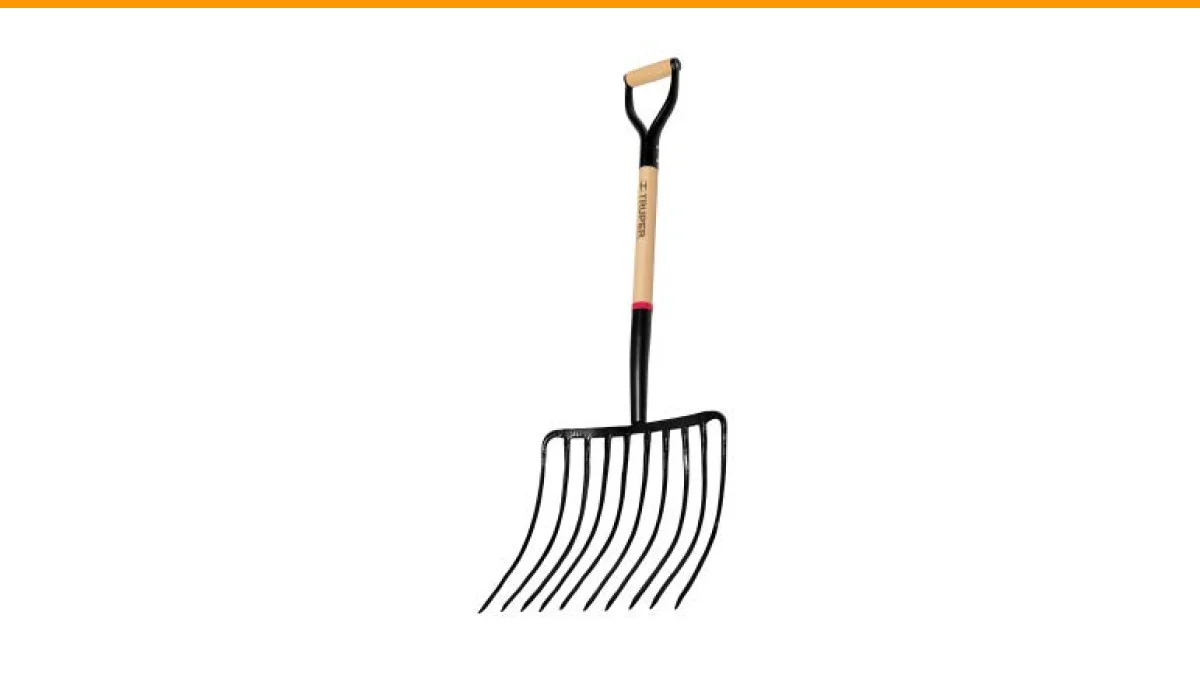
Garden Care Tru Pro Ensilage Fork
This is the tool you buy when you’re tired of replacing bent forks every season. It’s designed for the messy, heavy work that happens on a small farm or in a large garden.
The defining feature here is the set of 10 forged tines. Unlike stamped tines that are cut from a sheet of metal, forged tines are shaped under high heat and pressure. This makes them significantly stronger and less likely to bend when you’re digging into compacted silage or lifting a heavy scoop of wet manure. The 30-inch length gives you decent leverage without being unwieldy in tight spaces like a chicken coop or a stall.
The steel D-handle is another point in its favor. It provides a secure grip, even when your hands are sweaty or covered in gloves. The D-shape also prevents the fork from twisting in your hand when you’re working at an angle, which is a common issue with straight-handle pitchforks. The rust-resistant finish is a practical touch for a tool that will inevitably be exposed to moisture and organic acids.
There are a couple of trade-offs to consider. The steel construction makes it heavier than a plastic or aluminum fork. If you have back problems or need to use it for hours on end, that weight will be noticeable. Also, the 30-inch length is shorter than some traditional hay forks, so you’ll need to bend a bit more if you’re loading a high trailer. It’s a specialized tool, not a do-everything garden fork.
- Forged Steel Tines: Ten tines that resist bending under heavy loads.
- Steel D-Handle: Offers a secure, non-slip grip for better control.
- 30-Inch Length: A balanced size for leverage and maneuverability.
- Rust-Resistant Finish: Helps the tool last longer in damp environments.
- Versatile Application: Works well for silage, hay, straw, and manure.
Best for: The small-scale farmer or serious gardener who needs a durable, no-nonsense fork for moving heavy organic materials.
How We Chose These Products
We focused on tools that solve a specific problem: moving dense, heavy material without the tool failing. The Garden Care Tru Pro stood out because of its construction method. Forged steel is a meaningful upgrade over the stamped metal found on most budget forks. It’s a detail that directly impacts how long the tool lasts and how much load it can handle.
We also looked at the handle design. A D-grip is a small feature, but it makes a big difference in control and comfort. The 30-inch length was evaluated for its balance of reach and maneuverability, which suits the tight quarters of a barn or a raised garden bed. This isn’t a case of picking the most expensive option; it’s about identifying the one that offers the most practical durability for the price.
Buying Guide: What Really Matters
The first thing to check is the tine construction. Forged tines are the gold standard. They are stronger and have a grain structure that resists bending. Stamped tines are cheaper to make but are prone to warping under stress. If you’re only moving loose leaves, stamped is fine. For silage, hay, or manure, you want forged.
Next, consider the handle. A steel D-handle provides excellent grip and prevents twisting. Wood handles can rot or splinter over time. Fiberglass is another option, but it can be more expensive. The steel handle on this Truper model is a solid middle ground for durability and cost.
Finally, think about length and weight. A 30-inch fork is a good all-rounder for most garden and small farm tasks. If you’re tall or need to load a tall truck, a longer handle might be more comfortable. But a shorter handle gives you more control in tight spaces. The weight of a steel fork is a factor; if you plan to use it for hours, you might prefer a lighter model, even if it’s less durable.
Our Top Recommendation
The Garden Care Tru Pro Ensilage Fork is our top pick for anyone who needs a reliable, heavy-duty fork. It hits the sweet spot between price and performance. The forged tines and steel D-handle are features you’d typically find on more expensive professional-grade tools. It’s a buy-once, cry-once kind of purchase.
If you’re on a tight budget and only need a fork for light yard work, a cheaper stamped-steel model might suffice. But if you’re moving silage, hay, or manure on a regular basis, the extra investment in the Tru Pro is worth it. It will save you the hassle of replacing a bent fork in the middle of a job.
Frequently Asked Questions
Is this fork good for moving rocks?
It’s not designed for that. The tines are spaced for organic material like hay and silage. Rocks can get stuck between the tines and put uneven stress on them. A dedicated stone fork or a spade is a better choice for rocky soil.
How do I prevent the tines from rusting?
The fork has a rust-resistant finish, but it’s not rust-proof. After using it for manure or in wet conditions, give it a quick rinse and dry it off. A light coat of oil on the tines at the end of the season will keep them in good shape.
Will the D-handle fit my hand if I have large gloves?
The D-grip is a standard size, but it can feel a bit tight for very large hands with thick winter gloves. For most users, it provides a secure and comfortable grip. If you have extra-large hands, you might want to try one in person before buying.
Can I use this fork for compost?
Yes, it’s excellent for turning compost. The 10 tines are great for aerating the pile and lifting heavy, wet material. It’s also useful for moving mulch and straw.