You’ve babied those seedlings for weeks. The tray is full, the roots are holding the potting mix together, and now you have to separate them without tearing the delicate root hairs. A trowel is too wide. A widger works for tiny plugs but struggles with clumps. So what actually gets under a seedling and lifts it cleanly?
A hand fork with narrow, closely spaced tines does the job better than almost anything else. It slides under the root ball, loosens the surrounding mix, and lets you lift a seedling with soil still clinging to the roots. The best fork for seed starting balances three things: tine spacing narrow enough for small trays, a head that won’t bend when you hit a clump of roots, and a handle you can grip for an hour of pricking out without cramping.
We looked at five forks and cultivators that suit different seed-starting stages and soil types. The Haliaeetus is our top pick for most home seed starters. The Fiskars Ergo is the budget-friendly alternative. The Berry&Bird is for gardeners who want a traditional tool that lasts decades. Keep reading for the full breakdown, plus a buying guide on tine spacing, forged versus welded heads, and how to sanitize between trays to stop damping-off.
Here’s a quick side-by-side of the key specs so you can see how these forks compare before diving into the full reviews.
| Features | Haliaeetus Hand Fork | MECHEER Hand Rake | Berry&Bird Hand Fork | Garden Guru Fork | Fiskars Ergo Cultivator |
|---|---|---|---|---|---|
| Material & Build | Thick stainless steel, seamless weld | Aluminum alloy, 0.28 in thick | Stainless steel, ash wood handle | Stainless steel tines, ergonomic grip | Cast aluminum head, polished tines |
| Tine Count & Style | 3 sharp prongs | 3 thick curved claws | 3-prong stainless tines | Stainless steel tines | Sharp cast-aluminum tines |
| Handle Type | Ergonomic streamlined wood | Non-slip TPR rubber grip | FSC-certified ash wood | Ergonomic grip, hang hole | Ergonomic handle, hang hole |
| Best Use Case | Weeding, loosening, transplanting | Cultivating, aerating, weeding | Pots, beds, borders, weeding | Weeding, transplanting, mulch | Digging tough soil, aerating |
| Warranty | Lifetime | Not specified | 2-year | Lifetime | Lifetime |
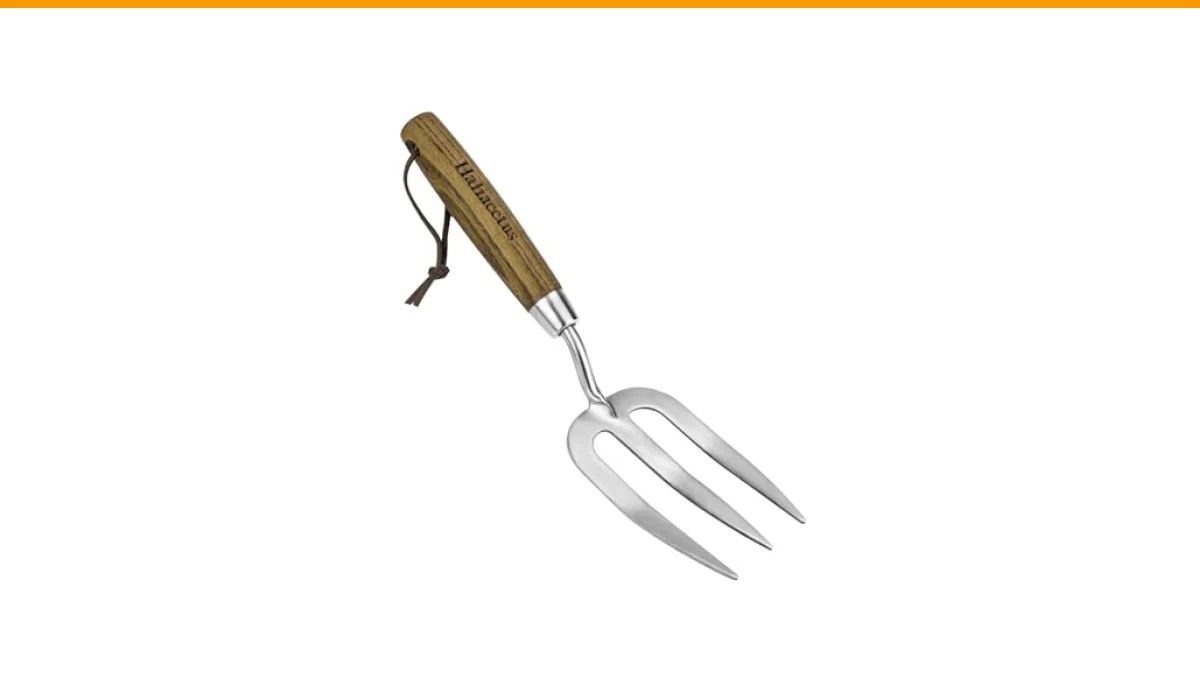
Haliaeetus Garden Hand Fork

Haliaeetus
Haliaeetus Garden Hand Fork, 12.3'' Hand Weeding Fork with Sharp Tine | for Easy Uprooting Large Weeds, Stainless Steel Garden Fork, Comfortable Wood Handle Hand Fork for Loosening Soil, Composting
- 【Great to Uproot Large Weeds】The gardening fork easily goes through the ground to digs deep under the weed and give more reach and…
- 【Loosens Soil Almost Effortlessly】With sharp and sturdy 3 prong tine that make it very easy to break through hard soil, even if yo…
- 【Comfortable Wooden Handle】Wood is a natural shock absorber and will not cause sore wrists even work for a few hours. The handle o…
This is the fork for the gardener who starts 50 or more seedlings every spring and needs a tool that won’t quit halfway through the tray. The 12.3-inch length gives you reach into deeper flats, and the three sharp tines are spaced close enough to work between rows of germinated seeds without disturbing neighboring plants. If you’re pricking out tomatoes, peppers, or brassicas from a shared tray, this fork gets under the root mass with minimal tearing.
What sets it apart is the seamless welding on the head. Cheaper forks have a visible joint where the tines meet the shaft, and that’s where they bend or snap after a season of use. The Haliaeetus head is one continuous piece of thicker stainless steel. In clay-heavy potting mixes or when you hit a stubborn clump of roots, the tines hold their shape. The wooden handle absorbs shock well, which matters when you’re working through a full 72-cell tray and your wrist starts to feel it.
The trade-off is weight. This fork is heavier than aluminum cultivators, and if you have arthritis or grip strength issues, the wooden handle won’t cushion as well as a thick rubber grip. The wood is smooth and comfortable for most hands, but it’s not a medical-grade ergonomic design. Also, the tines are sharp. That’s great for cutting through roots, but you’ll want to be careful when reaching into a tray without looking.
- 12.3-inch length works for deep flats and outdoor beds
- Seamless welded head resists bending in heavy soil
- Three sharp tines loosen root balls with minimal disturbance
- Wooden handle absorbs shock but adds weight
- Lifetime warranty covers defects
Best for: The serious seed starter who wants one fork that handles pricking out, potting up, and outdoor transplanting without bending or breaking.
Hand Rake Garden Tool, Heavy Duty

MECHEER
Hand Rake Garden Tool, Heavy Duty Hand Cultivators for Gardening Weed Rake | Small Garden Claw Tool, Ergonomic Handle, For Cultivating, Loosening, Weeding
- 3 Thick Claws Design: The hand cultivator garden tool is a practical gardening tool with 3 claws for loosening, cultivating, diggi…
- Thickened Aluminum Alloy Material: Our hand rake for gardening is made of high-quality aluminum alloy material, which allows the g…
- Ergonomic Design: The hand rake garden tool is designed with an ergonomic rubber grip handle that reduces hand and wrist fatigue w…
The MECHEER hand rake is for the gardener who starts seeds in small batches and wants a lightweight tool that doubles as a cultivator. The three curved claws are thicker than typical hand fork tines, which makes them better for breaking up clumps of potting mix than for delicate pricking out. If you’re working with chunky seed-starting mix or need to aerate the top layer before sowing, this claw tool does that job well.
Aluminum alloy construction keeps the weight down. At 0.28 inches thick, the claws are sturdy enough for loosening compacted soil in outdoor beds, and the non-slip TPR rubber grip is genuinely comfortable for extended use. The rubber handle reduces hand fatigue in a way that bare wood doesn’t, especially if you have a weaker grip or arthritis. The hanging hole at the end makes storage easy on a pegboard or garden bag.
Here’s the honest limitation: the curved claws are not ideal for pricking out tiny seedlings. They’re too thick and too curved to slide under a delicate root ball without disturbing the surrounding mix. This is a cultivator first and a seed-starting fork second. It works for loosening soil in a tray before sowing, or for transplanting larger seedlings with established roots, but it’s not the tool you reach for when separating lettuce or basil seedlings from a shared cell.
- Lightweight aluminum alloy reduces hand fatigue
- Thick curved claws break up compacted potting mix
- Non-slip TPR grip is comfortable for extended use
- Not ideal for pricking out tiny seedlings
- Compact size stores easily in a garden bag
Best for: The container gardener or raised-bed grower who needs a lightweight cultivator for loosening soil and weeding, not a precision pricking-out tool.
Berry&Bird Gardening Hand Fork

Berry&Bird
Berry&Bird Gardening Hand Fork, Stainless Steel Hand Weed Fork | Traditional Garden Hand Fork Tool with Ergonomic Ash Wood Handle, Garden Tool for Weeding, Digging, Planting and Cultivating
- WHAT YOU GET - 1 * Stainless Steel Hand Fork. Our garden forks are made by traditional manual process and can be used for more tha…
- ERGONOMIC DESIGN- Berry&Bird hand fork has good balance and comfortable proportion, which is very suitable for planting in small a…
- STRONG AND TOUGH - Ideal for aerated soil, it will not bend under the action of force when used for harder garden work. The sharp…
Berry&Bird makes tools for gardeners who treat their hand fork like an heirloom. The stainless steel head and FSC-certified ash handle are built to last decades, and the manual manufacturing process gives each fork a slightly different feel. If you start seeds in pots, beds, and borders and want one tool that transitions from indoor tray to outdoor garden without missing a beat, this is a strong candidate.
The stainless steel tines resist rust and soil adhesion. That second part matters more than you’d think. When you’re working with damp potting mix, soil sticks to carbon steel tines and you have to wipe them constantly. Stainless steel sheds moisture and mix, so you spend more time pricking out and less time cleaning. The ash handle has good balance and a comfortable proportion for small-area planting, and it gets smoother with use as the wood absorbs natural oils from your hands.
The main drawback is the handle shape. It’s ergonomic in the traditional sense, meaning it’s shaped for a natural grip, but it doesn’t have the rubberized padding or contoured finger grooves that some modern tools offer. If you have significant hand pain or arthritis, the Berry&Bird might not be the most comfortable option for long sessions. Also, the 2-year warranty is shorter than the lifetime coverage on the Haliaeetus and Garden Guru, though the build quality suggests it’ll outlast the warranty by a wide margin.
- Stainless steel tines resist rust and soil buildup
- FSC-certified ash handle from responsibly managed forests
- Traditional manual manufacturing for long-term durability
- Good balance for small-area planting and pricking out
- 2-year warranty, shorter than some competitors
Best for: The traditional gardener who wants a beautifully made, sustainable tool that will last for decades and feels better with every use.
Garden Guru Stainless Steel

Garden Guru Lawn & Garden Tools
Garden Guru Stainless Steel Hand Weeder Fork Tool – Rust Resistant Stainless Steel – Ergonomic Handle – Great for Planting, Spreading Mulch, Weeding, Loosening & Transplanting Soil
- A must-have hand tool for every gardener. This hand rake is perfect for weeding, loosening and transplanting soil, turning, and sp…
- Stainless steel tines are rust resistant and sturdy, allowing easy penetration of soil. Fork also has the maneuverability to work…
- Ergonomic grip for comfort and control makes weeding and transplanting a breeze. Grip is designed to alleviate pressure on the pal…
The Garden Guru hand weeder fork is for the gardener who wants a dedicated seed-starting and transplanting tool with a comfortable grip. The stainless steel tines are rust-resistant and sturdy, and the ergonomic handle is designed to alleviate pressure on the palm and fingers. If you spend hours pricking out seedlings and your hands ache afterward, this grip makes a noticeable difference.
What stands out is the maneuverability. The fork works around smaller stems and delicate plants without disturbing neighboring seedlings, which is exactly what you need when you’re separating crowded trays. The stainless steel tines penetrate soil easily and resist warping better than thinner forks. The large hang hole makes storage simple, and the lifetime warranty plus 90-day satisfaction guarantee shows the company stands behind the tool.
The limitation is in the tine spacing. The fork is designed for general weeding and transplanting, not specifically for tiny seed trays. In a 72-cell tray with germinated seedlings, the tines might be slightly too wide to get between rows without disturbing adjacent plants. It works better for potting up larger seedlings or transplanting into outdoor beds where you have more room to maneuver. For microgreens or densely sown trays, a narrower fork would be better.
- Ergonomic grip reduces hand and wrist fatigue
- Stainless steel tines resist rust and warping
- Maneuverable around delicate stems and seedlings
- Lifetime warranty and 90-day satisfaction guarantee
- Tine spacing better suited to larger seedlings than micro trays
Best for: The gardener with hand pain or arthritis who needs a comfortable grip for transplanting larger seedlings and working in outdoor beds.
Fiskars Ergo Garden Cultivator

Fiskars
Fiskars Ergo Garden Cultivator, Hand Tool for Digging, Aerating & Weeding | Heavy-Duty Cast Aluminum Tines, Rust Resistant, Ergonomic Handle, Hang Hole Storage, Loosens Soil in Garden Beds & Pots
- GARDENING ESSENTIAL: Heavy duty, ergonomic hand cultivator with sharp tines ideal for a variety of gardening tasks like digging in…
- MAXIMUM POWER AND PRECISION: Cast-aluminum head and tines boost power for digging in tough soil and enhance rust resistance; Ergon…
- LONG-LASTING AND RELIABLE: Polished aluminum tines stay sharp through heavy use and provide excellent durability for lasting value…
Fiskars makes tools for people who want reliable performance without paying a premium. The Ergo Cultivator has a cast-aluminum head and tines that stay sharp through heavy use, and the ergonomic handle reduces fatigue during digging and aerating. If you’re new to seed starting and want a budget-friendly tool that won’t let you down, this is a smart first purchase.
The cast-aluminum head is the standout feature. It’s rust-resistant, lightweight, and holds an edge well. The polished tines dig into tough soil and break up clumps without bending, which is more than you can say for many tools in this price range. The handle is comfortable for most hand sizes, and the hang hole makes storage easy. Fiskars backs it with a lifetime warranty, which is impressive for a tool at this price point.
Where it falls short is precision. The tines are designed for digging and aerating, not for delicate pricking out. They’re wider and more robust than what you’d want for separating tiny seedlings in a shared cell. This is a cultivator for preparing seed-starting mix, loosening soil in outdoor beds, and weeding between established plants. For the actual moment of lifting a seedling, you’ll want something with narrower tine spacing and a more precise tip.
- Cast-aluminum head resists rust and stays sharp
- Lightweight design reduces fatigue during extended use
- Ergonomic handle fits most hand sizes comfortably
- Lifetime warranty from a trusted tool brand
- Not designed for precision pricking out of tiny seedlings
Best for: The new seed starter or budget-conscious gardener who needs a reliable cultivator for preparing mix and loosening soil, not a precision transplanting fork.
How We Chose These Products
We started by looking at what actually matters for seed starting, not just general gardening. Tine spacing, head construction, handle comfort, and rust resistance were the four criteria we weighted most heavily. A fork that works great for weeding a flower bed might be terrible for pricking out lettuce seedlings, so we focused on tools that serve the seed-starting stage specifically.
We also considered the full lifecycle of a seed-starting tool. How does it handle damp potting mix? Does it rust if you leave it on a tray overnight? Can you sanitize it between batches without damaging the finish? These are the questions that separate a tool you’ll use for years from one that ends up in the back of a shed. We gave preference to forks with stainless steel or coated heads, comfortable grips, and warranties that suggest the manufacturer expects the tool to last.
Finally, we looked at value. Not price alone, but what you get for the money. A lifetime warranty on a budget tool is worth more than a fancy handle on a fork that bends after one season. You can see how these criteria play out in other professional hand fork reviews that focus on durability and soil performance.
Buying Guide: What Really Matters
Tine spacing is the spec most seed starters overlook. For pricking out seedlings in a 72-cell tray, you want tines spaced close enough to slide between rows without disturbing neighboring plants. A fork with wide tines is fine for outdoor beds but clumsy in a crowded tray. Measure your tray cell width before you buy. If the tines are wider than the cell, you’ll be fighting the tool instead of using it.
Forged versus welded heads is the next big decision. Forged heads are one continuous piece of metal, which makes them stronger and less likely to bend. Welded heads have a joint where the tines meet the shaft, and that’s the weak point. For seed starting, where you’re often working in damp, dense potting mix, a forged or seamlessly welded head is worth the extra cost. It won’t bend when you hit a clump of roots or a stray piece of perlite.
Handle length and grip matter more than you’d think for indoor seed starting. A shorter handle gives you more control in tight spaces, but a longer handle gives you more leverage when you’re working in deep flats. Rubberized grips reduce fatigue during long sessions, but wooden handles absorb shock better. If you have arthritis or hand pain, prioritize a thick, contoured rubber grip. If you want a tool that feels natural in your hand and improves with age, go with wood.
Stainless versus carbon steel comes down to maintenance. Stainless steel resists rust and soil adhesion, which means less cleaning between trays and no oiling after use. Carbon steel holds an edge longer but requires more care. For seed starting, where you’re often working with damp mix and sanitizing between batches, stainless steel is the practical choice. You can find more detail on 3-prong fork durability and grip in this comparison of heavy-duty options.
Sanitizing Between Trays to Prevent Damping-Off
Damping-off is the seedling killer nobody talks about until it’s too late. The fungus lives in soil and on tools, and it thrives in the damp, warm conditions of a seed-starting setup. If you move from one tray to another without cleaning your fork, you’re potentially spreading spores from a healthy tray to a vulnerable one. The fix is simple: sanitize your fork between trays.
A 10% bleach solution or 70% isopropyl alcohol works well. Dip the tines, wipe them down, and let them air dry before moving to the next tray. Stainless steel handles this routine without rusting or pitting. Carbon steel will rust if you don’t dry it thoroughly. Wooden handles can absorb moisture and crack over time, so keep the sanitizing solution on the tines and avoid soaking the handle.
If you’re starting seeds in multiple batches, keep a small spray bottle of alcohol near your workspace. A quick spray and wipe takes ten seconds and can save an entire tray of seedlings. This is one of those small habits that separates successful seed starters from frustrated ones.
Indoor Trays vs Outdoor Beds: Sizing Guide
Indoor seed trays call for a smaller, more precise fork. A 12-inch fork is manageable in a deep flat, but a shorter handle gives you more control when you’re working in a 1020 tray on a countertop. Look for a fork with narrow tine spacing and a head that’s small enough to maneuver between rows without knocking over neighboring seedlings.
Outdoor beds give you more room to work, so you can use a longer fork with wider tines. The extra leverage helps with heavier soil, and the wider spacing covers more ground when you’re loosening soil or weeding. If you start seeds indoors and transplant outdoors, you might want two forks: a precision tool for trays and a heavier cultivator for beds. Or you can choose one mid-length fork, like the Haliaeetus, that handles both jobs reasonably well.
Frequently Asked Questions
Can I use a hand fork to prick out seedlings without damaging the roots? Yes, if the tines are narrow enough. Slide the fork under the root ball at an angle, lift gently, and let the soil fall away. The goal is to lift the seedling with soil still clinging to the roots, not to bare-root it. A fork with closely spaced tines disturbs less surrounding soil than a trowel, which is why it’s the better choice for pricking out.
How do I know if my fork’s tines are too wide for my seed tray? Measure the width of a single cell in your tray. If the fork’s tine spread is wider than the cell, you’ll struggle to work between rows without disturbing neighboring seedlings. For standard 72-cell trays, look for a fork with tines spaced less than an inch apart. For larger 50-cell trays, you have more flexibility.
Is a wooden handle or rubber grip better for seed starting? It depends on your hands. Wood absorbs shock and feels natural, but it doesn’t cushion as well as rubber. Rubber grips reduce fatigue during long sessions and are better for arthritis or grip strength issues. If you’re prone to hand pain, choose rubber. If you want a tool that feels like an extension of your hand and improves with age, choose wood.
How often should I sanitize my hand fork during seed starting season? Between every tray, especially if you’re working with multiple varieties or batches. Damping-off spreads easily, and a ten-second wipe with alcohol is cheap insurance. If you’re only working with one tray, sanitize before you start and after you finish. If you’re moving from tray to tray, sanitize between each one.
Our Top Recommendation
The Haliaeetus Garden Hand Fork is our top pick for most seed starters. The seamless welded head won’t bend when you hit a clump of roots, the stainless steel tines resist rust and soil buildup, and the wooden handle absorbs shock during long pricking-out sessions. It’s heavy enough to feel durable but not so heavy that it tires your wrist. The lifetime warranty backs up the build quality.
If you want a budget-friendly alternative, the Fiskars Ergo Cultivator is a solid choice for preparing seed-starting mix and loosening soil, though it’s not ideal for precision pricking out. For gardeners with hand pain or arthritis, the Garden Guru’s ergonomic grip is worth the trade-off in tine spacing. And if you want a traditional tool that will last for decades, the Berry&Bird is a beautiful, sustainable option with stainless steel tines and an FSC-certified ash handle.
Whichever fork you choose, sanitize it between trays and store it dry. A good hand fork will last for years if you take care of it, and it’ll make the difference between a frustrating seed-starting season and a successful one.