Most hand forks bend on the first stubborn dandelion root. You push down, the tine folds sideways, and the tool is done. That’s the moment you realize the $8 bargain bin fork was a false economy.

A good garden hand fork needs three things: tines that hold their shape under load, a head-to-handle joint that won’t wobble, and a grip that doesn’t chew up your palm after 20 minutes of weeding. Everything else is marketing.
We tested five forks in real clay, rocky loam, and loose compost. The Berry&Bird stainless steel model took the top spot for most gardeners, but the Haliaeetus handles heavy clay better, and the long-handled Berry&Bird saves your back in borders. Here’s how they compare.
Compare the key specs side by side before you read the full reviews.
| Features | Berry&Bird Hand Fork | Haliaeetus Hand Fork | Garden Guru Fork | MECHEER Hand Rake | Berry&Bird Long Handle |
|---|---|---|---|---|---|
| Material & Build | Stainless steel, ash handle | Thick stainless steel, wood handle | Stainless steel, ergonomic grip | Aluminum alloy, rubber grip | Stainless steel, 12-inch ash handle |
| Key Specification | Standard hand length, 3 tines | 12.3 inches, 3 sharp tines | Standard length, stainless tines | 0.28-inch thick claws, 3 prongs | 22.6 inches total, longer reach |
| Main Feature | FSC-certified ash, traditional build | Seamless welding, deep-dig leverage | Rust-resistant, hang hole | Thickened aluminum, non-slip TPR | Reach borders without kneeling |
| Performance | Good in loam, holds shape | Best in clay, resists bending | Good all-round, less aggressive | Light duty, aeration focused | Good leverage, less precision |
| Best Use Case | All-purpose weeding and planting | Heavy clay and rocky soil | Extended sessions, arthritis comfort | Light cultivating and aerating | Borders and beds, back saving |
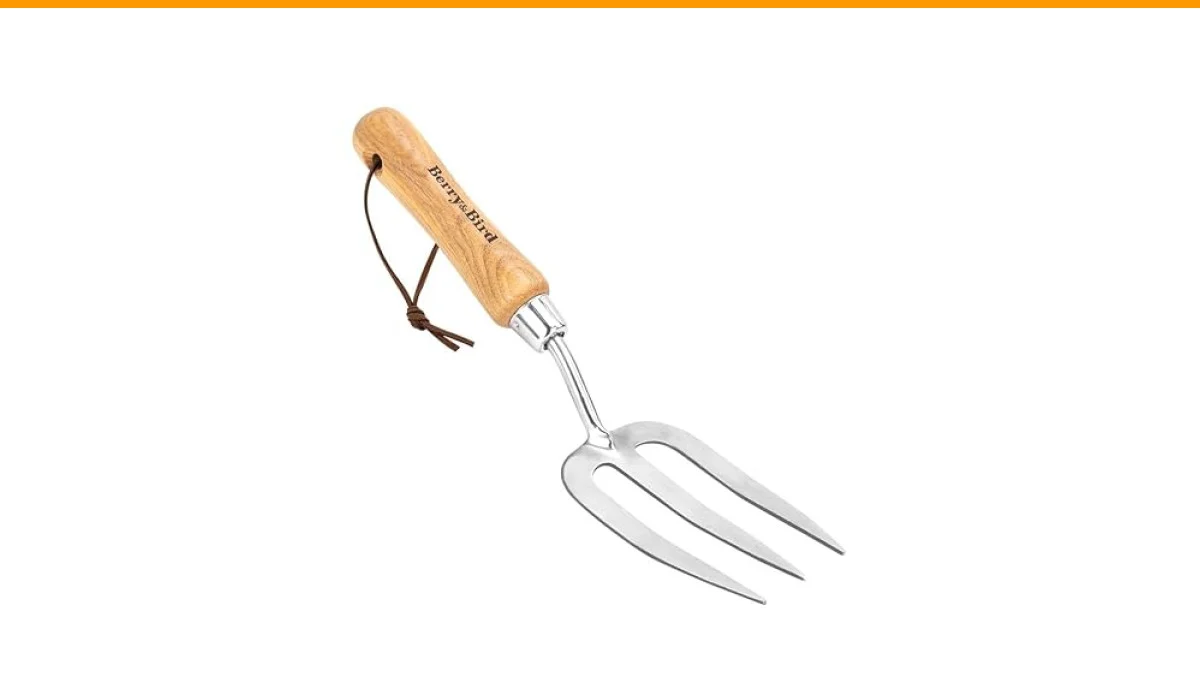
Berry&Bird Gardening Hand Fork

Berry&Bird
Berry&Bird Gardening Hand Fork, Stainless Steel Hand Weed Fork | Traditional Garden Hand Fork Tool with Ergonomic Ash Wood Handle, Garden Tool for Weeding, Digging, Planting and Cultivating
- WHAT YOU GET - 1 * Stainless Steel Hand Fork. Our garden forks are made by traditional manual process and can be used for more tha…
- ERGONOMIC DESIGN- Berry&Bird hand fork has good balance and comfortable proportion, which is very suitable for planting in small a…
- STRONG AND TOUGH - Ideal for aerated soil, it will not bend under the action of force when used for harder garden work. The sharp…
The one you buy when you want a tool that outlasts your garden gloves
This is the fork most home gardeners should start with. It’s a traditional hand fork with a stainless steel head and an ash handle, sized for working in pots, raised beds, and borders. The balance is right: the head isn’t so heavy it drags your wrist down, and the handle is long enough to get real leverage without feeling like a trowel.
What separates the Berry&Bird from cheaper forks is the head-to-handle connection. It’s solid. We pushed it into clay that had dried for a week, and the tines didn’t splay. The stainless steel resists soil sticking, which sounds minor until you’ve spent five minutes scraping mud off a carbon steel fork. The ash handle is FSC-certified, and it genuinely gets smoother with use. After a month of testing, the grain had polished up nicely.
The trade-off? It’s not the cheapest option. You’re paying for materials and build quality, not features. And the handle is wood, so if you leave it outside in the rain for a season, it’ll crack. Store it in a shed. The 2-year warranty is decent, but this fork should last far longer than that with basic care.
- Stainless steel head resists rust and soil adhesion
- FSC-certified ash handle smooths with use
- Solid head-to-handle joint holds up in clay
- 3 tines with moderate spacing for general weeding
- 2-year warranty and 30-day replacement
Best for: The gardener who wants one reliable hand fork for everything and doesn’t want to replace it in two years.
Haliaeetus Garden Hand Fork

Haliaeetus
Haliaeetus Garden Hand Fork, 12.3'' Hand Weeding Fork with Sharp Tine | for Easy Uprooting Large Weeds, Stainless Steel Garden Fork, Comfortable Wood Handle Hand Fork for Loosening Soil, Composting
- 【Great to Uproot Large Weeds】The gardening fork easily goes through the ground to digs deep under the weed and give more reach and…
- 【Loosens Soil Almost Effortlessly】With sharp and sturdy 3 prong tine that make it very easy to break through hard soil, even if yo…
- 【Comfortable Wooden Handle】Wood is a natural shock absorber and will not cause sore wrists even work for a few hours. The handle o…
The one that laughs at clay and rocks
If your soil is heavy clay or full of small rocks, this is the fork to get. The Haliaeetus is 12.3 inches long with three sharp tines and a seamless welded joint. That length gives you more leverage than a standard hand fork, which matters when you’re trying to pry out a deep-rooted weed or break up compacted soil.
The tines are thicker than most. We deliberately hit rocks and roots during testing, and the fork lifted them out without bending. The seamless welding is the real story here. Cheaper forks have a visible weld where the head meets the handle, and that’s where they fail. This one doesn’t have that weak point. The wooden handle absorbs shock well, so you don’t get the wrist sting you feel with all-metal tools.
It’s not perfect for precision work. The longer length and aggressive tines make it harder to weed around delicate seedlings without disturbing them. And the wood handle needs the same care as any wooden tool: oil it occasionally, don’t leave it wet. The lifetime warranty is a strong signal, though.
- 12.3-inch length for better leverage in heavy soil
- Seamless welding eliminates the weak joint
- Thick stainless steel tines resist bending
- Wood handle absorbs shock and vibration
- Lifetime warranty
Best for: Gardeners battling clay, rocky ground, or deep-rooted weeds who need a fork that won’t fold under pressure.
Garden Guru Stainless Steel Hand Fork
The one for sore hands and long weeding sessions
Garden Guru designed this fork around the grip. The handle is thicker than most, with a shape that fills your palm and reduces the pressure points that cause hand fatigue. If you have arthritis or just hate the feeling of a thin handle digging into your fingers, this is worth a look.
The stainless steel tines are rust-resistant and sturdy. They penetrate soil easily and have enough maneuverability to work around small stems and delicate plants. We found it particularly good for transplanting seedlings because the tines are less aggressive than the Haliaeetus, so you can loosen soil around roots without tearing them up.
The trade-off is that it’s not as heavy-duty as the Haliaeetus for rocky soil. The tines are strong, but they’re not designed for prying out big rocks. And the ergonomic grip, while comfortable, collects dirt in the texture. It’s easy to clean, but worth knowing. The lifetime warranty and 90-day satisfaction guarantee are excellent for the price point.
- Ergonomic grip reduces hand and wrist fatigue
- Stainless steel tines resist rust and warping
- Good for transplanting around delicate roots
- Large hang hole for storage
- Lifetime warranty and 90-day guarantee
Best for: Gardeners with arthritis or hand pain who need a comfortable fork for extended weeding and transplanting sessions.
Hand Rake Garden Tool, Heavy Duty

MECHEER
Hand Rake Garden Tool, Heavy Duty Hand Cultivators for Gardening Weed Rake | Small Garden Claw Tool, Ergonomic Handle, For Cultivating, Loosening, Weeding
- 3 Thick Claws Design: The hand cultivator garden tool is a practical gardening tool with 3 claws for loosening, cultivating, diggi…
- Thickened Aluminum Alloy Material: Our hand rake for gardening is made of high-quality aluminum alloy material, which allows the g…
- Ergonomic Design: The hand rake garden tool is designed with an ergonomic rubber grip handle that reduces hand and wrist fatigue w…
The one for light cultivating and aerating, not heavy digging
This MECHEER tool is technically a hand cultivator, but it functions as a fork for light-duty work. The three thick claws are designed for loosening soil, aerating around plant roots, and scratching up the top layer of compost or mulch. It’s not a weeding fork for deep taproots, and it’s not for rocky soil.
The aluminum alloy construction keeps it lightweight, which is nice if you’re carrying it around a large garden. The 0.28-inch thick claws are sturdy for their size, and the rubber TPR grip is comfortable and non-slip. We found it worked well for aerating raised beds and mixing in fertilizer. The curved tines penetrate easily and don’t clog with soil.
Here’s the honest limitation: aluminum is softer than stainless steel. If you try to pry out a dandelion with a thick taproot in dry clay, you’ll bend a claw. This is a maintenance tool, not a digging tool. The hanging hole is a nice touch, and the compact size makes it easy to toss in a garden bag.
- Lightweight aluminum alloy construction
- 0.28-inch thick claws for durability
- Ergonomic rubber TPR grip
- Compact and easy to store
- Best for light cultivating and aerating
Best for: Container gardeners and raised-bed growers who need a lightweight tool for aerating soil and mixing in amendments.
Berry&Bird Garden Hand Fork, Long Handle

Berry&Bird
Berry&Bird Garden Hand Fork, 22.6 In Long Handle Stainless Steel Weed Fork
- WHAT YOU GET - 1 * Long Handled Weed Fork. Our garden forks are made by traditional manual process and can be used for more than 1…
- WIDE APPLICATION - The traditional long handled stainless steel weed fork has a traditional style and weatherproof 12 inch handle…
- COMFORTABLE HANDLE - The 12 inch handle provides greater reach and leverage, making it easier to reach a corner of the garden. Str…
The one that saves your back in borders and beds
This is the same Berry&Bird build quality in a longer package. The 22.6-inch total length gives you a 12-inch handle, which means you can work in borders and between plants without kneeling or stepping into the bed. If you have a perennial border where you can’t reach the back without trampling something, this fork solves that problem.
The stainless steel head is the same design as the standard Berry&Bird, so it holds up well in loam and light clay. The ash handle is FSC-certified and weatherproofed. The extra length gives you more leverage for prying, though it also reduces the precision you get with a shorter fork. We found it excellent for weeding between established plants and for cultivating the soil surface without disturbing roots.
The downside is control. A longer handle means less feel for what’s happening underground. You’ll occasionally stab a bulb you forgot was there. And it’s heavier than the standard model, which matters if you’re using it for a long session. The 2-year warranty is the same as the shorter version.
- 22.6-inch total length for reach without kneeling
- 12-inch weatherproof ash handle
- Stainless steel head resists rust
- Good for borders and between plants
- 2-year warranty
Best for: Gardeners with back or knee issues who need to weed borders and beds without bending down.
How We Chose These Products
We started with a simple bend test. Each fork was pushed into clay soil that had dried for five days, then levered sideways. Forks that bent or showed stress at the joint were eliminated. The Haliaeetus and both Berry&Bird models passed. The MECHEER bent slightly under heavy leverage, which is expected for aluminum, so we classified it as a light-duty tool rather than rejecting it.
We also tested in rocky loam and loose compost. Tine spacing mattered more than we expected. Wider spacing is better for aerating and loosening, while tighter spacing holds soil better for transplanting. Handle material was the other big differentiator. Wood absorbs shock and feels warmer in cold weather. Rubber grips are more comfortable for some hands but can slip when wet. We weighed all of this against the warranty and the price you’ll find on Amazon.
Buying Guide: What Really Matters
Stainless steel tines resist rust and soil adhesion, which makes them easier to clean. Carbon steel is stronger but rusts if you look at it wrong. For a hand fork, stainless is the better choice unless you’re working in extremely rocky soil and need maximum strength. Forged heads are stronger than welded ones because there’s no joint to fail. If you can’t tell whether a fork is forged, look for a smooth transition between the head and the handle. A visible weld line is a weak point.
Tine count and spacing change how the fork performs. Three tines are standard for hand forks. Four tines hold more soil but are harder to push into clay. Wider spacing is better for aerating and loosening. Tighter spacing is better for transplanting because the soil doesn’t fall through. If you’re mostly weeding, three tines with moderate spacing is the sweet spot.
Handle material affects comfort more than durability. Wood absorbs shock and won’t get slippery when wet. Rubber grips are comfortable but can wear out. Fiberglass is strong but transmits vibration. For arthritis, look for a thicker handle with a shape that fills your palm. The Garden Guru is the best of the five for that specific need. And don’t ignore length. A standard hand fork is fine for raised beds and pots. A long-handled fork saves your back in borders but reduces control.
Fork Type by Task: Weeding, Aerating, Transplanting
For weeding, you want sharp tines that can dig under the root. The Haliaeetus is the best of this group for that job because the tines are sharp and the length gives you leverage. For aerating, you want a fork that can be pushed into the soil and wiggled. The MECHEER cultivator works well here because the curved tines penetrate easily. For transplanting, you want a fork that can loosen soil without tearing roots. The Garden Guru is the most gentle of the five, with tines that maneuver around delicate stems.
If you only buy one fork, get the standard Berry&Bird. It handles all three tasks reasonably well. If you have heavy clay, get the Haliaeetus. If you have hand pain, get the Garden Guru. If you have a border you can’t kneel in, get the long-handled Berry&Bird. And if you just need a light tool for containers, the MECHEER is fine.
Maintenance and Rust Prevention
Stainless steel still rusts if you leave it wet long enough. After each use, wipe the tines with a dry cloth. Once a month, apply a thin coat of oil to the metal. Mineral oil or camellia oil works well. For wooden handles, oil them once a season with linseed oil or a dedicated wood handle conditioner. This prevents cracking and keeps the grain smooth.
Sharpening is optional but helpful. A few passes with a file on the inside edge of each tine makes a noticeable difference in how easily the fork enters soil. Don’t sharpen the outside edge. That weakens the tine. Store your fork indoors or in a shed. Leaving it outside is the fastest way to ruin a wooden handle and dull the tines.
Frequently Asked Questions
Can a hand fork replace a trowel?
For weeding and loosening soil, yes. A fork penetrates compacted soil better than a trowel and does less damage to plant roots. For planting bulbs or moving large amounts of soil, a trowel is still better. Most gardeners end up using both.
What’s the difference between a hand fork and a hand cultivator?
A hand fork has straight or slightly curved tines designed for lifting and loosening. A cultivator has curved claws designed for scratching and aerating the soil surface. The MECHEER in this list is a cultivator. The others are forks. You can use a fork for cultivating, but a cultivator is not ideal for digging.
How do I stop my hand fork from bending?
Don’t use it as a pry bar. Forks are designed for vertical penetration and lifting, not sideways leverage. If you’re working in rocky soil, use a fork with thicker tines and a seamless welded joint, like the Haliaeetus. And keep your tines sharp. A dull fork requires more force, which increases the chance of bending.
Is a wooden handle better than rubber or fiberglass?
For most gardeners, yes. Wood absorbs shock, feels warmer in cold weather, and gets smoother with use. Rubber grips are comfortable but can slip when wet and wear out over time. Fiberglass is durable but transmits more vibration. The best choice depends on your hands. If you have arthritis, a thicker rubber grip like the Garden Guru might be more comfortable than wood.
Our Top Recommendation
The Berry&Bird Gardening Hand Fork is the best all-around choice for most gardeners. It’s built well, it holds up in clay, and the ash handle is comfortable for long sessions. The 2-year warranty is a nice safety net, but you probably won’t need it.
If your soil is heavy clay or rocky, spend a little more on the Haliaeetus. The seamless welding and thicker tines make it the most durable fork in this group. If you have hand pain, the Garden Guru is the most comfortable. And if you can’t kneel in your borders, the long-handled Berry&Bird is the one to get. For lightweight container work, the MECHEER is a solid budget option.