

Best Compost Bins for Beginners: A Practical Guide to Your First Bin
Contents
You have a bag of vegetable peels, coffee grounds, and eggshells sitting on the counter. You know tossing them in the trash adds to a landfill, but the idea of a smelly, fly-infested pile in the backyard stops you cold. That’s where most beginners get stuck.
The secret to effortless composting is picking the right vessel for your life. A tumbling composter removes the back-breaking work of turning. A countertop bin handles daily scraps without odor. An inground worm bin does the heavy lifting for you. None of these require a degree in soil science, but they do require a bit of upfront thought about your space and your physical limits.
We sorted through the options and landed on five solid starting points for new composters. Below is a quick comparison, followed by a deep dive into each pick, honest buying advice, and a troubleshooting guide for the first month. If you are still weighing outdoor versus indoor setups, our guide to the best kitchen compost bins covers the countertop side of things in more depth.
Here is how the five finalists stack up on the specs that matter most.
| Features | VIVOSUN Tumbler | VEVOR Tumbler | Epica Countertop | Nazhura Tumbler | TOP XIAN Worm Bin |
|---|---|---|---|---|---|
| Primary Location | Outdoor | Outdoor | Indoor Kitchen | Outdoor | In-Ground Garden |
| Chambers | Dual (43 Gallon) | Dual (43 Gallon) | Single (1.3 Gallon) | Dual (43 Gallon) | Two Bins (8L each) |
| Key Mechanism | 360° Tumbling | 360° Tumbling | Airtight Lid | Rotating Paddles | Worm Digestion |
| Odor Control | Air Vents | Vents & Seal | Charcoal Filter | Insulated Chambers | Underground Design |
| Best Use Case | Continuous Yard Waste | Large Families | Daily Scrap Collection | Fast Batch Composting | No-Turn Garden Beds |

VIVOSUN Outdoor Tumbler
1st Pick

VIVOSUN
VIVOSUN Outdoor Tumbling Composter Dual Rotating Batch Compost Bin, 43 Gallon Black Door
- Twin chambers: Two separate chambers allow one side to finish composting while leaving the other side available to add fresh waste…
- 360⁰ Tumbling Design: The rotating design prevents you from digging or mixing the pile by hand; And the deep fins on eight panels…
- Excellent Aeration: Air vents can make the air fully circulate and will not cause an explosion due to excessive internal pressure;…
The VIVOSUN 43-gallon dual-chamber tumbler is the closest thing to a set-and-forget system for a standard suburban yard. It suits someone who generates a steady mix of grass clippings, fallen leaves, and kitchen scraps and wants finished compost in batches rather than one giant pile that never quite cooks.
The twin chambers are the standout feature here. You fill one side completely, let it break down, and start filling the other. By the time the second chamber is full, the first is usually ready to harvest. That rhythm creates a continuous supply of soil amendment without any downtime. The 360-degree rotation and deep internal fins break up clumps effectively, which is the main job of a tumbler. It also comes with a pair of waterproof gardening gloves and ABS claws, which is a thoughtful touch for someone who doesn’t own gear yet.
No tumbler is perfect, and this one has a trade-off. The plastic body is sturdy, but the metal frame feels like the limiting factor over a long, harsh winter. You also need to be honest about the physical effort. Spinning a 43-gallon drum full of wet material takes some push, even with good bearings. It is not as easy as turning a crank on a smaller unit, but it beats forking a ground pile by a mile.
- Dual 43-gallon chambers allow batch composting in sequence
- Eight internal fins on panels help aerate and break clumps
- Air vents promote airflow and reduce pressure buildup
- Includes waterproof gloves and ABS digging claws
- PP plastic body resists corrosion and weather damage
Best for: The homeowner with a medium-sized yard who wants a steady supply of compost without manual pile turning.
VEVOR Compost Tumbler
2nd Pick

VEVOR
VEVOR Compost Bin, 43-Gal Dual Chamber Composting Tumbler, Large Tumbling Rotating Composter with 2 Sliding Doors and Steel Frame, BPA Free Composter Bin Tumbler for Garden, Kitchen, Yard, Outdoor
- Dual Chamber, High Capacity: Our compost bin features a dual chamber with a generous capacity of 43 gallons. Perfect for large fam…
- Convenient Access: The dual-chamber composter tumbler features a detachable sliding door with a large opening, making it effortles…
- Built to Last: Crafted from high-quality PP materials and supported by sturdy metal components, our compost bin outdoor boasts a r…
The VEVOR 43-gallon dual-chamber tumbler goes after the same job as the VIVOSUN but tweaks the design in ways that matter for specific users. It is a strong option for a larger household that produces a high volume of scraps and does not want to police what goes in the bin too closely.
Two details set it apart. The sliding doors are detachable and create a large opening, which makes loading kitchen waste and shoveling out finished compost noticeably easier than fighting with a small hatch. The unit also claims a robust 110-pound load-bearing capacity thanks to its metal frame and BPA-free PP body. The 360-degree tumble design with internal grooves is standard for the category, but the emphasis on a secure seal is a genuine plus for keeping out rodents and insects, a common beginner worry.
On the downside, the sheer size can become a burden. When one chamber is full and wet, the weight is substantial, and the tumbling action requires real effort from someone with limited upper body strength. The manufacturer claims compost can be ready in 4 to 6 weeks, which is optimistic for most home composters unless you are diligent about the brown-to-green ratio. Expect it to take closer to two months in cooler weather.
- Detachable sliding doors offer wide access for filling and emptying
- Secure seal designed to keep out mice and insects
- Metal frame supports up to 110 pounds of material
- UV-resistant and weatherproof build for year-round outdoor use
- Internal grooves mix material uniformly during rotation
Best for: A family that produces lots of organic waste and wants a pest-resistant, high-capacity unit with easy access.
Epica Kitchen Compost Bin
3rd Pick

Epica
Epica Kitchen Compost Bin for Kitchen Countertops, 1.3 Galllon - Silver
- FEATURED IN BON APPETIT & FORBES: Recognized by renowned magazines, EPICA’s compost bin is a perfectly sized marvel for your kitch…
- CONTROL KITCHEN ODORS NATURALLY: This indoor compost bin with a charcoal filter features an airtight lid and a replaceable activat…
- EASY TO CLEAN & RESISTANT TO LEAKS: This countertop bin features a one-piece molded design that resists rust and leaks. The contai…
The Epica 1.3-gallon countertop bin solves a completely different problem than the tumblers. It is not for making compost; it is for collecting scraps without stinking up your kitchen. This is the first bin a beginner should buy, even if they plan to use a municipal pickup service or a backyard tumbler later.
Its main strength is odor control. The stainless steel body has an airtight lid and a replaceable activated-charcoal filter that neutralizes smells as they develop. The one-piece molded design resists leaks and rust, which means no gross drips on your counter. It is compact at just over seven inches wide and eleven inches tall, so it tucks under cabinets without dominating the workspace. The fact that Bon Appetit and Forbes have featured it tells you it does not look out of place in a modern kitchen.
There are limitations. At 1.3 gallons, you will empty it every day or two in a family of four. The charcoal filters also require maintenance; you have to rinse them gently and let them air dry to extend their life, and they need replacing every three to six months. That is a small recurring cost that some users overlook. Also, while it is dishwasher safe in theory, hand washing is recommended to protect the filter seal, which adds a minute to your daily routine.
- 1.3-gallon capacity holds several days of kitchen scraps
- Airtight lid with activated-charcoal filter reduces odors
- One-piece stainless steel construction resists rust and leaks
- Compact footprint fits on most countertops
- Filters last 3-6 months with proper care
Best for: Anyone who cooks regularly and wants a clean, odor-free way to collect scraps before transferring them to a larger outdoor system.
Nazhura Dual Chamber Composter
4th Pick
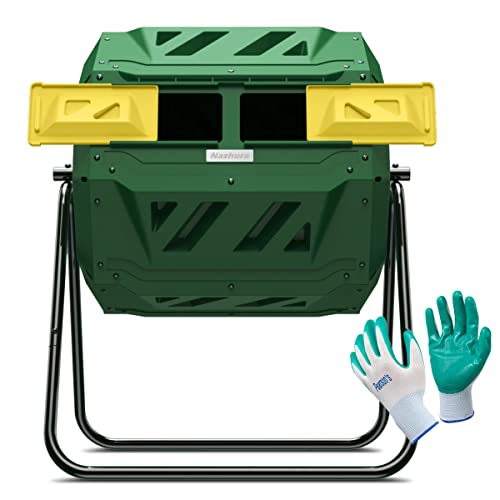
Nazhura
Compost Tumbler Bin Composter Dual Chamber 43 Gallon (Bundled with Pearson's Gardening Gloves)
- ✅Speed Up Composing Process: More advanced models use rotating to bring oxygen to the center of the bin and paddles inside the cha…
- ✅How do Compost Tumblers work? Simple. You load them with green and brown waste from your yard and kitchen. When full, you give th…
- ✅Easy to Access Finished Compost: Just Slide the door open and take the organic fertilizer out when the compost is ready. When a c…
The Nazhura 43-gallon dual-chamber tumbler is the workhorse pick for the beginner who wants to speed up the composting process through design. It is similar to the other tumblers on this list, but it puts extra emphasis on internal paddles and insulation to accelerate breakdown.
The dual-bin layout is familiar, but the execution differs. The unit is designed so that thickly insulated compartments retain heat generated by the decomposing matter. Heat is the engine of hot composting, and retaining it can shave weeks off the process. The internal paddles also mix and aerate the material when you turn the crank, ensuring oxygen reaches the center of the pile. This is the factor that separates a fast, efficient system from a smelly, anaerobic mess.
The trade-off is that this system asks for a bit more attention than a passive bin. You need to be disciplined about adding the right mix of green and brown materials and turning it every few days. The bundled Pearson’s Gardening Gloves are a nice extra, but the unit itself is not fundamentally different from other tumblers in terms of assembly time. It also lacks the sliding door design of the VEVOR, so accessing the finished compost can be slightly messier.
- Dual insulated chambers conserve heat to speed decomposition
- Internal paddles mix and aerate materials during rotation
- 43-gallon total capacity for continuous batch processing
- Sliding door access for easy removal of finished compost
- Bundled with Pearson’s Gardening Gloves
Best for: The beginner who understands the basics and wants an insulated system to produce compost faster, especially in cooler climates.
TOP XIAN Inground Worm Composter
5th Pick

TOP XIAN
TOP XIAN 2-Pack Inground Worm Composter, Outdoor Worm Compost Bin for Garden Beds & Home Use, Vermicomposting Bin for Beginners (9.5x9.5x10.8Inch), Green
- Convenient Inground Worm Composter: Bury this vermicomposting bin underground or in your garden bed. Fill it with organic waste li…
- Durable PP Construction: Made from sturdy PP material, this outdoor farm compost bin is built to last. Measuring 10.8*9.5*9.5inch…
- Easy-to-Use Design: No complex assembly required! Simply dig a hole, place the bin, and start composting. The removable lid and 36…
The TOP XIAN 2-pack inground worm composter takes a radically different approach. Instead of tumbling or heating, it uses worms to do the work directly in your garden bed. This is the quietest, lowest-effort method available, and it is perfect for the beginner who wants to improve soil without managing a standalone pile.
You bury these bins in the ground, fill them with kitchen scraps, paper, and leaves, and let the worms find their way in through the ventilation holes. The worms consume the waste and excrete castings directly into the surrounding soil, which is the most nutrient-dense fertilizer you can produce. The 360-degree ventilation holes keep the environment aerobic and odor-free, which is a major selling point for anyone worried about smell. The set includes two bins, so you can fill one while the other is breaking down, creating a continuous cycle.
This system is not for everyone. It requires you to have an active garden bed or a spot in the yard where you can dig a hole. The 8-liter capacity per bin is small compared to the 43-gallon tumblers, so it cannot handle high volumes of kitchen waste. You also need to purchase worms separately, which is an extra step that surprises some buyers. And because it is underground, you cannot monitor the decomposition process as easily as you can with a visible tumbler.
- Two bins with 8L capacity each for continuous composting
- Bury in-ground to allow worms direct access to waste
- 360-degree ventilation holes ensure aerobic, odor-free breakdown
- No turning or manual mixing required
- Worms not included; purchase separately
Best for: The gardener who wants to enrich existing beds with zero physical effort and does not mind a slower, hands-off process.
How We Chose These Products
We evaluated bins across a few key criteria that trip up beginners. The first was the learning curve. A good beginner bin does not require a master’s degree in microbiology to operate. We favored products with clear mechanisms, whether that was a simple tumble action or a straightforward bury-and-wait approach.
The second criterion was versatility in living situations. We looked at indoor collection, outdoor processing, and direct-soil methods because a person in an apartment has different needs than someone with a half-acre lot. We also considered physical effort. Tumbling a full 43-gallon drum is a workout, and we wanted to be honest about that reality rather than hide it. The final list represents a range of entry points, not just the most popular models.
Buying Guide: What Really Matters
Before you click buy, ask yourself one question: where does the waste go after you collect it? If you have a yard, a tumbler or a static bin makes sense. If you live in an apartment, you need a countertop bin for storage and a plan for transferring waste, like a pickup service or a friend with a garden. The bin is only one piece of the workflow.
Capacity is the next decision. A 1.3-gallon countertop bin holds about two days of scraps for a couple. A 43-gallon tumbler holds months of yard waste. Match the size to your actual output, not your aspirational output. A giant tumbler that you never fill will just sit there and rust. A tiny bin that you empty daily becomes a chore.
Physical effort is the silent killer of composting enthusiasm. Tumblers require you to spin a heavy drum every few days. In-ground worm bins require digging a hole. Countertop bins require frequent emptying and filter changes. Think about your back, your knees, and your schedule. The best bin is the one you will actually use consistently. If you are still deciding between an outdoor unit and a smaller system, check out our comparison of backyard compost bins for more context on sizing.
Our Top Recommendation
For most beginners, the VEVOR 43-gallon dual-chamber tumbler is the best starting point. It balances capacity, pest resistance, and ease of access better than the others. The sliding doors make the routine of filling and harvesting less frustrating, which is the main reason people quit. It is built to handle the weather and the weight of a full load, and the dual-chamber design teaches you the correct rhythm of batch composting from day one.
If you have a smaller household or limited outdoor space, the Epica countertop bin is the essential first purchase. It handles the daily collection problem elegantly and pairs well with any disposal method. For the gardener who wants to skip the machinery entirely, the TOP XIAN worm composter is a brilliant low-effort alternative that builds soil health directly. Those three picks cover nearly every beginner scenario. If you are in a colder region, review our notes on cold climate composting before you commit to a tumbler.
Frequently Asked Questions
How long does compost actually take to finish?
With a tumbler, you can expect usable compost in 6 to 8 weeks during warm weather, assuming you maintain a proper balance of greens and browns and turn it every few days. The 4-week claims some manufacturers make are for perfect conditions with finely shredded material. In-ground worm bins take longer, usually 2 to 3 months, because the worms work at their own pace.
What is the correct ratio of greens to browns?
Aim for roughly one part green material (kitchen scraps, grass clippings) to two or three parts brown material (dry leaves, cardboard, straw). The browns provide carbon and structure, which prevents the pile from turning into a wet, smelly mass. If your bin smells like ammonia, add more browns. If it is not heating up, add more greens.
Why does my compost bin smell bad and attract flies?
That is almost always a sign of too much moisture and too many greens. Stop adding kitchen scraps for a week. Turn the pile or tumble the bin to introduce oxygen, and mix in a generous amount of dry, shredded cardboard or leaves. The goal is a consistency like a wrung-out sponge, not a swamp. Flies are attracted to exposed food, so bury new scraps under a layer of browns.
Can I compost in winter?
Yes, but the process slows down significantly. Microbial activity drops when the temperature falls below 50°F. Tumblers lose heat quickly because they are above ground. You can insulate the bin with a tarp or move it to a sunnier spot, but expect the pile to freeze and resume breaking down in spring. In-ground worm bins are somewhat insulated by the soil, which makes them a better cold-weather option. For more details, see our dedicated guide to composting in cold climates.


