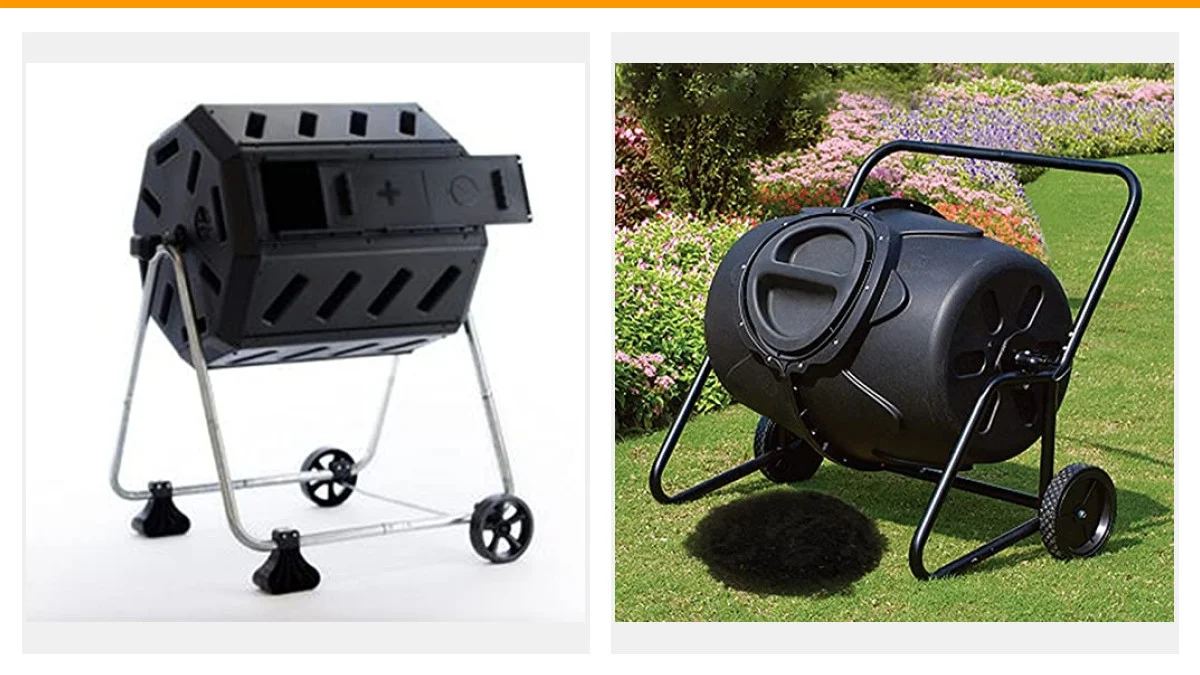
You spend all week at a desk, and your Saturdays are precious. The last thing you want is a compost bin that demands daily feeding, constant turning, or a delicate moisture balance. You need something that works while you are at work and doesn’t punish you for ignoring it from Monday to Friday.
Composting on a two-day schedule is different. You need bins that can handle a feast of kitchen scraps on Saturday morning, survive a five-day dry spell, and still produce usable compost without turning into a smelly, fly-infested mess. The right setup makes this almost automatic.
We tested five different approaches to solve this problem. From large outdoor tumblers that do the turning for you to countertop bins that hold scraps until the weekend, these picks cover every living situation. Our top recommendation balances capacity, durability, and forgiveness better than anything else we tried.
Here is how the key specs stack up at a glance.
| Features | VIVOSUN Tumbler | Epica Countertop | Utopia Countertop | KIBAGA Countertop | VEVOR Tumbler |
|---|---|---|---|---|---|
| Primary Use | Outdoor batch composting | Indoor scrap collection | Indoor scrap collection | Indoor scrap collection | Outdoor batch composting |
| Capacity | 43 Gallons (dual 21.5) | 1.3 Gallons | 1.3 Gallons | 1.1 Gallons | 43 Gallons (dual 21.5) |
| Material | PP plastic, metal frame | Stainless steel | Stainless steel | Powder-coated carbon steel | PP plastic, metal frame |
| Odor Control | Air vents | Charcoal filter | Charcoal filter | Charcoal filter | Secure sliding door seal |
| Turning Method | 360-degree tumbling | None required | None required | None required | 360-degree tumbling |
VIVOSUN Outdoor Tumbler

VIVOSUN
VIVOSUN Outdoor Tumbling Composter Dual Rotating Batch Compost Bin, 43 Gallon Black Door
- Twin chambers: Two separate chambers allow one side to finish composting while leaving the other side available to add fresh waste…
- 360⁰ Tumbling Design: The rotating design prevents you from digging or mixing the pile by hand; And the deep fins on eight panels…
- Excellent Aeration: Air vents can make the air fully circulate and will not cause an explosion due to excessive internal pressure;…
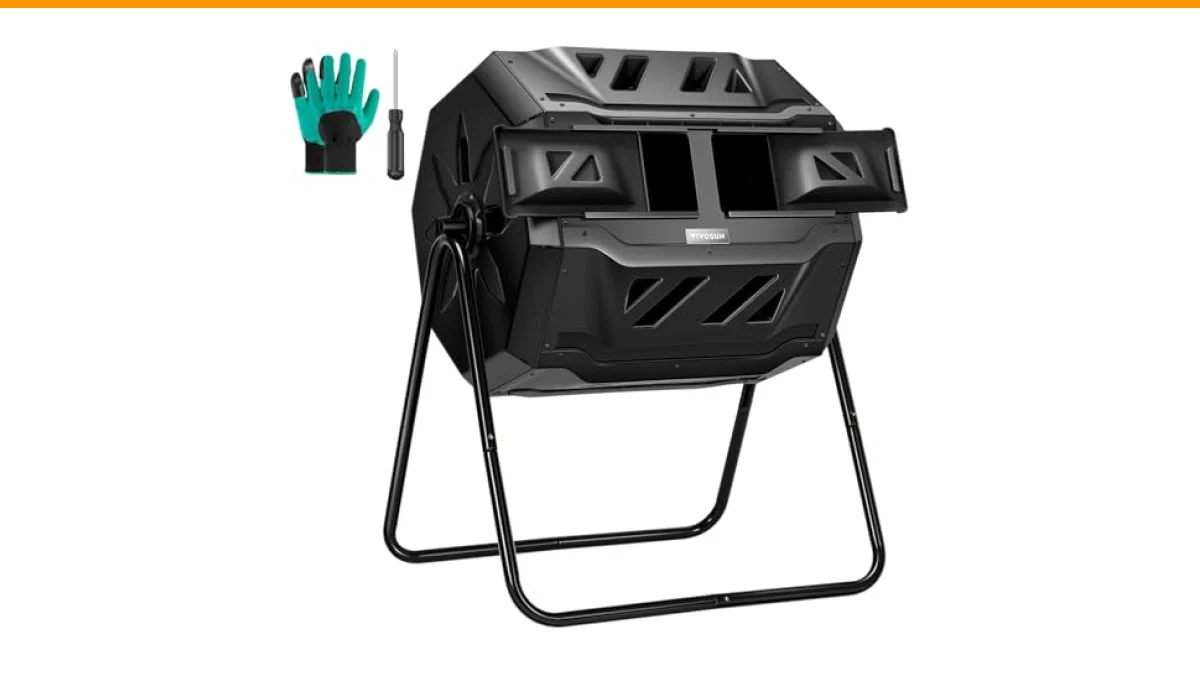
The VIVOSUN 43-gallon tumbling composter is the workhorse of this group. It is built for the weekend warrior with a real yard and a steady stream of grass clippings, fallen leaves, and vegetable scraps. The twin chambers let you fill one side completely, let it cook for a month, and start fresh on the other side without ever mixing finished compost with new waste.
What stands out here is the engineering for lazy people. The 360-degree tumbling design means you never have to stick a pitchfork into a pile. You grab the handles, roll it five or six times on Saturday morning, and walk away. The deep fins on the eight interior panels break up clumps effectively, which is the main reason piles stall. Aeration is handled by vents that keep air moving without letting the contents dry out completely. It comes with garden gloves and ABS claws, which feels like a bonus but actually solves the grossest part of the job: handling the finished product.
There is a real trade-off with any tumbler, and this one is no exception. You must chop your materials reasonably small before adding them. If you toss in whole corn stalks or large branches, they will not break down quickly. The plastic body is sturdy, but the metal frame is the weak point over time, especially if you leave it fully loaded in a windy spot. It is also a two-person job to assemble, so set aside an hour and a second set of hands.
- Dual 21.5-gallon chambers for continuous composting
- Deep internal fins break up clumps during tumbling
- Air vents prevent pressure build-up and improve airflow
- Corrosion-resistant metal frame with UV-resistant PP plastic
- Includes garden gloves and ABS digging claws
Best for: Homeowners with a medium-to-large yard who want finished compost in 4-6 weeks without manual turning.
Epica Kitchen Compost Bin
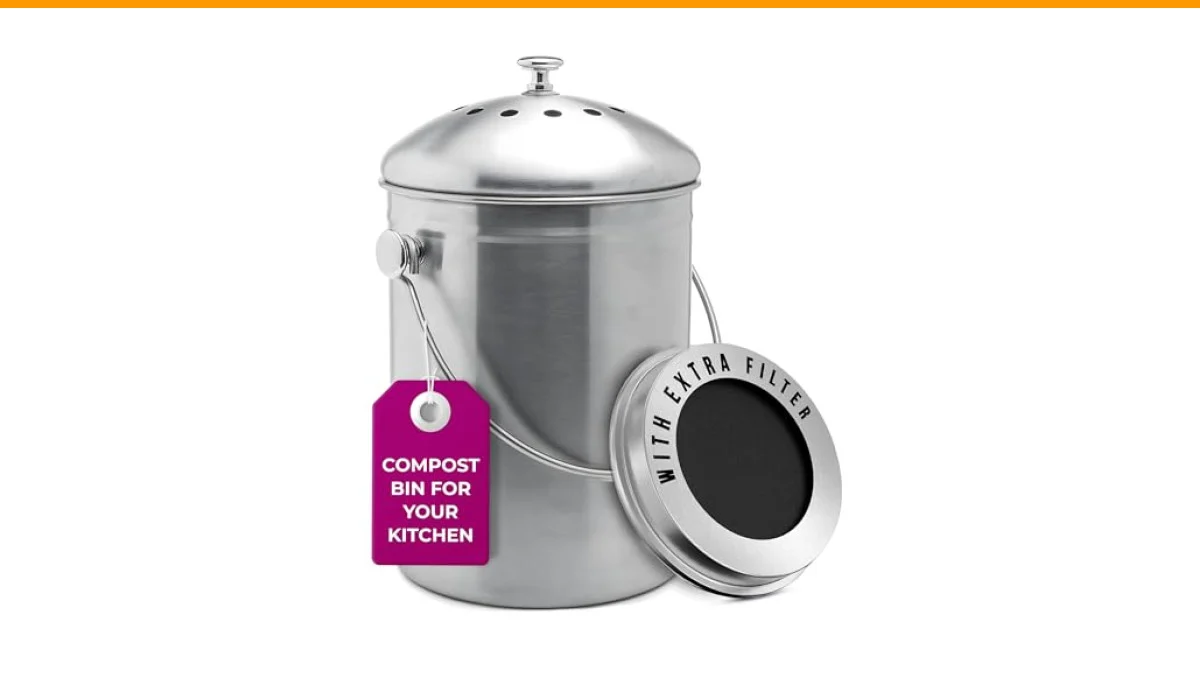
The Epica is the countertop bin that earned its place in magazines like Bon Appetit and Forbes. It is a 1.3-gallon stainless steel cylinder that sits on your counter and quietly collects a week’s worth of scraps. For the weekend warrior, this is the first half of the system: you fill it all week, empty it into your outdoor tumbler on Saturday, and give it a quick rinse.
The one-piece molded stainless steel body resists rust and leaks, which is more important than it sounds. Cheaper bins have seams that collect gunk and eventually corrode. This design has a charcoal filter in the lid that genuinely controls odors. We left coffee grounds and onion skins in it for six days and noticed nothing until you got within a foot of the lid. The filter is replaceable and lasts three to six months with regular use, which is cheap insurance against a smelly kitchen.
It is not perfect. At 7.16 inches in diameter and 11 inches high, it is compact, but the opening is narrow. Getting a large melon rind inside requires cutting it into pieces first. The charcoal filter needs a gentle rinse monthly to keep working, and if you saturate it, it stops filtering. Hand-washing is required, so skip the dishwasher.
- Compact 1.3-gallon capacity fits on crowded counters
- Airtight lid with replaceable activated-charcoal filter
- One-piece molded design resists rust and leaks
- Scratch-resistant stainless steel exterior
- Measures 7.16 inches in diameter by 11 inches high
Best for: Anyone who wants a stylish, odor-free way to collect kitchen scraps for a full week before transferring them outdoors.
Utopia Kitchen Countertop

Utopia Kitchen
Utopia Kitchen Countertop Compost Bin 1.3 Gallon, Stainless Steel, Silver | Odorless countertop compost bin with charcoal filter, ideal for food scraps and waste
- Countertop Fit - The countertop compost bin measures 7.2 inches wide and 11.2 inches high, offering a slightly larger capacity whi…
- Durable Build - Made with stainless steel, the composter resists scratching, cracking, and chipping, so it can handle onion skins,…
- Stylish Design - With a sturdy, sleek design that complements most kitchen decor, the compost bucket with lid looks like it belong…
The Utopia Kitchen bin is the pragmatic alternative to the Epica. It offers the same 1.3-gallon capacity and stainless steel construction but at a slightly different price point. It is the bin you buy when you want the functionality without the magazine coverage.
Its strength is its simplicity. The cylindrical shape takes up minimal counter space, and the lid seals well enough to keep fruit flies contained. The included charcoal filters trap odors effectively for a week of normal household scraps. We found the finish less prone to showing fingerprints than the Epica, which matters if your kitchen gets a lot of traffic. It handles coffee grounds, eggshells, and vegetable peels without scratching or staining.
The trade-off is in the details. The lid is not hinged, so you have to set it down while adding scraps. The charcoal filter sits in a simple compartment that is easy to lose if you are not careful. It also lacks the premium weight of the Epica, feeling slightly lighter and less substantial in hand. For a bin that lives on a counter, these are minor issues, but worth noting.
- 1.3-gallon capacity with a 7.2-inch width and 11.2-inch height
- Stainless steel resists scratching, cracking, and chipping
- Charcoal filter traps odors for up to a week
- Easy to clean with warm water and mild soap
- Recommended to line the bottom with newspaper to absorb liquid
Best for: Budget-conscious households that want a reliable countertop collector without paying for a brand name.
Beautiful Kitchen Compost Bin
The KIBAGA bin takes a different approach to countertop composting. Instead of brushed stainless steel, it uses powder-coated carbon steel in a beige finish with a wooden handle and knob. It looks more like a bread box than a waste receptacle, which is precisely the point. This is the bin for people who do not want composting equipment clashing with their kitchen decor.
Functionally, it holds its own. The 1.1-gallon capacity is slightly smaller than the Epica and Utopia, but the wider 10.2-inch by 7-inch footprint makes it easier to scrape scraps in without aiming. The built-in charcoal filter compartment is effective, and the lid air holes provide necessary aeration, which prevents the anaerobic conditions that cause the worst smells. Two filters are included, doubling the lifespan before you need to buy replacements.
The design introduces a genuine limitation. The wooden handle and knob are charming, but they are not machine-washable. You need to wipe them down carefully. The powder-coated finish is rust-free but can chip if you drop it. It is also the smallest capacity in this group, so a family of four might fill it before the weekend arrives.
- 1.1-gallon capacity with a wider 10.2 x 7-inch opening
- Rust-free powder-coated carbon steel body
- Wooden handle and knob for easy carrying
- Includes two charcoal filters for odor control
- Lid air holes provide necessary aeration
Best for: Style-conscious cooks who want a compost bin that blends into a modern or farmhouse kitchen aesthetic.
VEVOR Compost Bin, 43-Gal
The VEVOR 43-gallon dual-chamber tumbler is the direct competitor to the VIVOSUN, and it made this list for one specific reason: the sliding doors. Unlike the VIVOSUN’s design, this unit uses detachable sliding doors with a large opening. That makes loading and unloading dramatically easier, especially when you are wearing gloves and trying to scoop out finished compost.
The build quality is solid. It uses BPA-free PP materials with a metal frame that supports up to 110 pounds of load. The UV-resistant and weatherproof construction means it can sit in direct sunlight, rain, or snow without degrading. The 360-degree tumbling design works as advertised, and the internal grooves break up clumps effectively. The manufacturer claims compost is ready in 4-6 weeks, which is realistic for a hot pile in summer.
The most significant advantage is the pest-resistant seal. The sliding doors close securely enough to keep out mice and insects, which is a real problem with open-bottom bins. However, the sliding mechanism can bind if you overload the chamber or if debris gets caught in the track. It is also a large unit, so you need a clear, open area in your yard to tumble it fully.
- Dual 21.5-gallon chambers with a 43-gallon total capacity
- Detachable sliding doors with a large opening for easy access
- Supports up to 110 pounds of material
- BPA-free, UV-resistant, and weatherproof construction
- Internal grooves and vents for uniform mixing and airflow
Best for: Gardeners who prioritize easy harvesting and pest control and do not mind a larger footprint in the yard.
How We Chose These Products
We evaluated these bins against a single standard: how well they serve someone with a 9-to-5 job and limited weekend hours. That means we ignored marketing claims and focused on real-world performance factors. We looked at capacity relative to typical weekly waste output, the effectiveness of odor control when bins sit untouched for five days, and the physical effort required to maintain them.
We also considered the full lifecycle of composting. A countertop bin is useless without an outdoor system, and a tumbler is useless if you have to chop every scrap into inch-sized pieces. We prioritized products that work together as a system and penalized any bin that required daily attention or failed the five-day neglect test. The result is a mix of indoor collectors and outdoor processors that cover every common living situation.
Buying Guide: What Really Matters
The first question is not which bin to buy, but where your waste goes. If you live in an apartment with a balcony, a 43-gallon tumbler is impractical. You need a countertop bin for collection and a worm bin for small spaces. If you have a yard, you need a dual-chamber tumbler to handle the feast-or-famine cycle of grass clippings and fallen leaves.
Time budget matters more than volume. A single-chamber bin forces you to stop adding waste while the pile cooks, which means you need a second place for overflow. A dual-chamber system solves this by letting you fill one side while the other finishes. For a weekend warrior, this is not a luxury, it is a necessity. You do not have time to manage a single pile through its entire lifecycle.
Climate resilience is the overlooked factor. Tumblers dry out quickly in summer heat, and they freeze solid in winter. Countertop bins with charcoal filters work year-round, but they need regular filter replacement. Consider your local climate and whether you are willing to adjust your moisture levels seasonally. A bin that works in California might frustrate you in Minnesota.
Our Top Recommendation
The VIVOSUN Outdoor Tumbling Composter is our clear winner for weekend warriors. It combines the dual-chamber convenience that keeps compost flowing continuously with a build quality that survives years of outdoor exposure. The included gloves and claws are practical additions that remove the last barrier to actually using the finished compost. It is the best balance of capacity, durability, and effort for the typical homeowner.
If you have a larger yard and generate more waste, the VEVOR is a strong runner-up. Its sliding doors make harvesting easier, and the pest-resistant seal is a genuine advantage. For apartment dwellers, pair the Epica countertop bin with a no-turn composting method to keep things simple. The Utopia Kitchen bin is the value pick for tight budgets, while the KIBAGA is the choice for those who refuse to compromise on kitchen aesthetics.
Frequently Asked Questions
How often do I need to turn a tumbling composter?
For a dual-chamber tumbler, aim for two to three turns per week. If you only get out there on weekends, do five or six full rotations on Saturday and another five on Sunday. That is enough to keep the pile aerated. Missing a week will not ruin the batch, it just slows the process down.
Can I compost meat and dairy in a tumbler?
Technically yes, but it is risky. Meat and dairy break down slowly in a batch system and can attract pests if the pile is not hot enough. For weekend warriors, it is safer to keep meat and dairy out of outdoor tumblers and use a trench composting method for those scraps instead. Bury them deep in the soil and let the earth do the work.
Why does my compost bin smell like ammonia?
That smell means your pile is too wet and has too much green material, like fresh grass clippings or kitchen scraps. The fix is to add brown material, such as dried leaves, shredded cardboard, or straw. Mix it in thoroughly and ensure the pile is damp, not soaking. The carbon-to-nitrogen ratio should be roughly 30:1 for optimal breakdown.
How long does it take to get compost in a tumbler?
In warm weather, a well-maintained tumbler can produce finished compost in four to six weeks. In cooler months, expect it to take two to three times longer. The key is to stop adding new material once the chamber is full, allowing the existing contents to finish curing. Harvest time depends on temperature, moisture, and particle size.