You work all week, then Saturday morning rolls around and you’re staring at a pile of kitchen scraps that has been sitting in a bin since Tuesday. Maybe it smells. Maybe it’s attracting fruit flies. Maybe you’ve already abandoned one compost setup because it demanded more attention than your lawn.

That’s the real problem for weekend gardeners. Most composting advice assumes you can tend a pile daily. You can’t. So you need a system that forgives five days of neglect, handles a burst of activity on Saturday, and doesn’t punish you with odor or pests when you’re away.
I tested and compared five very different compost bins for this exact scenario. Each one solves the neglect problem differently, and the right choice depends on your yard size, how much waste you generate, and whether you’d rather spin a drum or just toss stuff in a pile. Below you’ll find a spec comparison, then deep reviews of each pick, plus a practical weekend workflow that keeps things running smoothly.
Here is a quick look at how the five contenders stack up.
| Features | VIVOSUN Tumbler | Geobin | VEVOR Tumbler | MyLifeUNIT Bags | Epica Countertop |
|---|---|---|---|---|---|
| Capacity | 43 gal dual chamber | 246 gal expandable | 43 gal dual chamber | 34 gal (2 pack) | 1.3 gal |
| Material | PP plastic, steel frame | Flexible plastic | BPA-free PP, steel frame | Water-resistant fabric | Stainless steel |
| Key Feature | 360-degree tumbling | Easy assembly, movable | Sliding doors, 110 lb load | Top and bottom openings | Charcoal filter lid |
| Best Use Case | Batch composting | High-volume yard waste | Pest-resistant batch | Leaf storage, mobile | Kitchen scrap collection |
| Assembly Effort | Moderate | Minimal | Moderate | None | None |
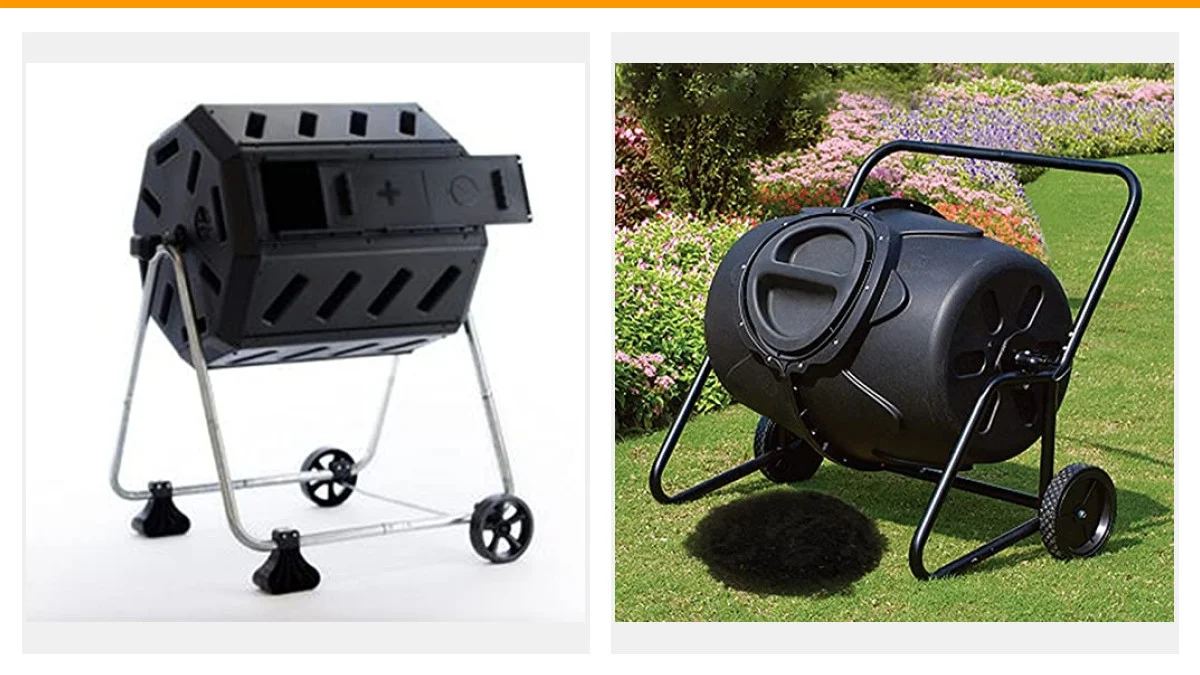
This is the pick for the weekend gardener who wants finished compost in a predictable timeframe without ever turning a pile by hand. The dual-chamber design means you can fill one side completely, let it cook for four to six weeks, then switch to the other side. While side A finishes, side B collects fresh scraps. That rhythm matches a weekend schedule well: you spend ten minutes every Saturday spinning the drum a few times, and the internal fins break up clumps while you’re doing something else.
The 360-degree tumbling action is the main draw here. You don’t need a pitchfork or a compost crank. The deep fins on eight panels do the mixing work, and the air vents keep oxygen flowing through the material. The included garden gloves with ABS claws are a small bonus, useful for digging out finished compost or planting afterward. The steel frame feels solid, and the PP plastic body resists weathering, which matters when the bin sits outside through rain and sun all year.
There are honest trade-offs. Tumbling composters work best with a balanced mix of greens and browns, so if you mostly toss in grass clippings, you’ll get a soggy mess. The 43-gallon capacity is fine for a typical suburban yard, but if you have huge trees dropping leaves every fall, you’ll outgrow it quickly. Also, the door design on some models can be finicky to close securely, so check the latch after you fill it. You’ll also want to place it on level ground, because spinning a fully loaded drum on uneven grass takes more effort than you’d expect.
- Dual 43-gallon chambers for continuous batch composting
- Eight internal fins for aeration and clump breaking
- Steel frame with corrosion-resistant PP body
- Includes waterproof garden gloves and ABS digging claws
- Vents prevent pressure buildup and improve airflow
Best for: The weekend gardener who wants a set-and-forget batch system with minimal physical effort.

Geobin 246 Gallon Compost Bin

VIVOSUN
VIVOSUN Outdoor Tumbling Composter Dual Rotating Batch Compost Bin, 43 Gallon Black Door
- Twin chambers: Two separate chambers allow one side to finish composting while leaving the other side available to add fresh waste…
- 360⁰ Tumbling Design: The rotating design prevents you from digging or mixing the pile by hand; And the deep fins on eight panels…
- Excellent Aeration: Air vents can make the air fully circulate and will not cause an explosion due to excessive internal pressure;…
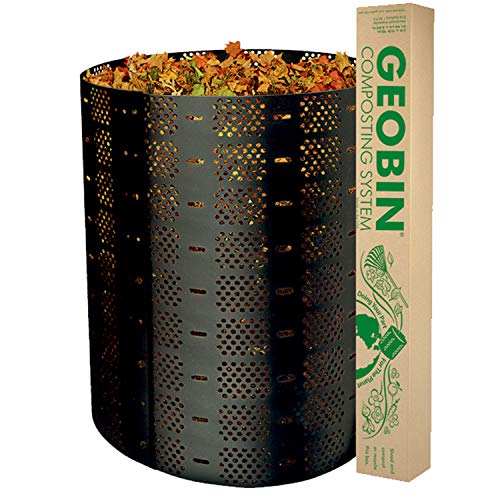
If you measure your yard waste in wheelbarrows rather than buckets, the Geobin is your answer. This is a continuous, open-bottom system that expands up to 246 gallons, which is more than five times the capacity of the tumblers on this list. It’s essentially a flexible plastic cylinder you set on the ground, fill with layers of greens and browns, and let decompose over months. You don’t turn it; you just keep adding to the top and harvest finished compost from the bottom.
The genius of this design for weekend gardeners is that it thrives on neglect. A static pile doesn’t need daily attention. You can ignore it all week, dump a load of grass clippings and kitchen scraps on Saturday, and the worms and microbes do the work. Assembly takes about two minutes with the closure keys, and you can move the whole thing to a new spot when you want to start fresh. The open bottom means earthworms can enter from the soil below, which speeds up decomposition considerably. It’s also one of the least expensive ways to compost a large volume of material.
But this is not a tidy system. An open-top bin can attract rodents if you add food scraps without burying them under a layer of browns. It also has no lid, so heavy rain can soak the pile, and you’ll need to manage moisture by adding dry leaves or cardboard. The flexible walls can bulge if you overfill them. And because decomposition is slow and cold, you won’t get usable compost for several months, not weeks. This is a patience game, but for someone with a big yard and lots of leaves, it’s the most practical option.
- Expandable up to 246 gallons, about 3.75 feet tall
- Assembles in minutes with closure keys, no tools needed
- Open bottom allows worm access and natural drainage
- Easy to move and reassemble in a new location
- Made in the USA from recycled plastic
Best for: Weekend gardeners with large properties and abundant yard waste who prefer a low-cost, low-maintenance continuous pile.
VEVOR 43-Gallon Dual Chamber Composter
The VEVOR tumbler shares a lot of DNA with the VIVOSUN, but it adds a couple of features that matter for weekend use. The sliding doors on each chamber are larger and detach completely, which makes loading a wheelbarrow of scraps and unloading finished compost noticeably easier. The seal around the doors is also tighter, which does a better job keeping out mice and insects. If you’ve ever opened a tumbler to find a family of ants inside, you’ll appreciate that detail.
The build quality is solid for the price. The frame is steel with a powder-coated finish, and the drum is made from BPA-free PP plastic that’s UV-resistant. The manufacturer claims it can handle 110 pounds of material, which is generous for a 43-gallon drum. The 360-degree tumble design means you can roll it end-over-end or side-to-side, and the internal grooves break up clumps effectively. With a good mix of greens and browns, you can expect compost in four to six weeks during warm weather.
The trade-off here is that dual-chamber tumblers require discipline. You need to fill one chamber completely before you start the other, and you need to add the right ratio of browns to greens every time. If you only generate a small bucket of kitchen waste per week, it might take a month to fill one chamber, which means your first batch of compost is a long way off. Also, the sliding doors can be a bit stiff when new, and the latch mechanism takes a few tries to get used to. It’s not a dealbreaker, just something you’ll adapt to.
- Dual 43-gallon chambers with large sliding doors
- BPA-free, UV-resistant plastic with steel frame
- Rated for 110 pounds of material
- Tight seals help keep out pests
- Internal grooves for uniform mixing
Best for: Weekend gardeners who want a pest-resistant tumbler with easy access for loading and harvesting.
MyLifeUNIT 34-Gallon Compost Bags (2-Pack)

VEVOR
VEVOR Compost Bin 43 Gallon Dual Chamber Compost Tumbler 110 lbs Capacity | for Families and Gardeners, with 360° Tumbling, Sliding Door, Air Vents, PP Body and Metal Frame for 4-6 Week Composting
- Dual Chamber, High Capacity: Our compost bin features a dual chamber with a generous capacity of 43 gallons. Perfect for large fam…
- Convenient Access: The dual-chamber composter tumbler features a detachable sliding door with a large opening, making it effortles…
- Built to Last: Crafted from high-quality PP materials and supported by sturdy metal components, our compost bin outdoor boasts a r…
These bags are the wildcard of the group. They’re not a traditional compost bin at all, but rather large, durable fabric containers that hold yard waste while it breaks down. Each bag holds 34 gallons, and you get two of them, so you can run one active pile while the second one rests or stores finished compost. For a weekend gardener with a modest yard, this is a flexible, portable solution that costs less than most tumblers.
The standout feature is the dual openings. The top opening lets you add material, and the bottom opening lets you harvest finished compost without disturbing the whole pile. That’s a genuinely useful design for a batch system. The bags are lightweight, water-resistant, and tear-resistant, so they can sit outside in the weather. They’re also useful for other things: storing leaves, holding garden tools, or even corralling kids’ outdoor toys. The portability means you can move the bag to a sunny spot in spring and a shaded spot in summer to manage temperature.
But these bags are not a complete composting solution on their own. They don’t retain heat as well as a solid bin, so decomposition is slower, especially in cooler months. The fabric breathes, which is good for aeration but means moisture can evaporate quickly, so you’ll need to water the pile occasionally. The instructions warn against letting the compost touch the self-adhesive strips at the bottom when you’re harvesting, which is a minor annoyance. And like the Geobin, an open-top system requires you to bury food scraps to avoid pests. These are best for leaves, grass, and plant trimmings rather than a heavy kitchen-scrap diet.
- Two 34-gallon bags for dual batch processing
- Top and bottom openings for easy access
- Lightweight, water-resistant, tear-resistant fabric
- No assembly required, folds flat for storage
- Versatile for yard waste, storage, or moving
Best for: Weekend gardeners who want a cheap, mobile, no-assembly option for leaves and garden trimmings.
Epica Kitchen Compost Bin

MyLifeUNIT
MyLifeUNIT Compost Bins Outdoor, Composting Bin for Outside Garden, Reusable Garden Yard Waste Bag, 34 Gallons (2 Pack, Black)
- 34 Gallon compost bag, large capacity design for organizing a large amount of kitchen waste and garden waste
- Fast fermentation, suitable for organizing fruit peels, weeds, leaf and plant waste, garden waste, wilted parts, and other materia…
- Also great for storing toys, clothes, laundry, garage tools, shopping, moving, camping and more
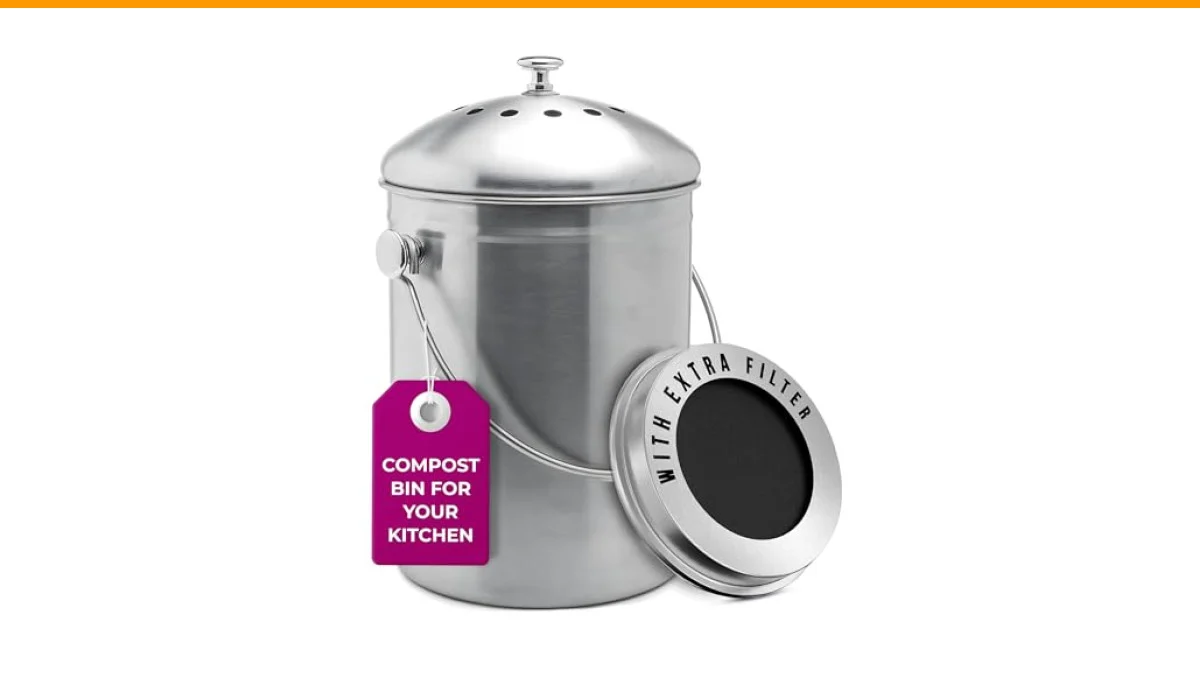
This pick is different because it doesn’t live in the yard. The Epica is a 1.3-gallon countertop bin that solves the first half of the weekend gardener’s problem: what to do with kitchen scraps between trips to the outdoor pile. If you’ve been keeping scraps in a plastic container in the fridge or a bowl on the counter, you know the drill. This bin has an airtight lid and a replaceable activated-charcoal filter that absorbs odors, so it can sit on your counter for days without making the kitchen smell.
The stainless steel body is a step up from plastic. It resists rust and scratches, and the one-piece molded design means there are no seams or crevices where liquids can pool and get gross. It’s easy to wash out with warm water, though you should hand-wash it rather than putting it in the dishwasher. The size is right for a small household: it holds several days’ worth of fruit peels, coffee grounds, and eggshells, which means you only need to empty it when you head out to the garden on Saturday.
The main limitation is the filter. It works well for the first few weeks, but it needs to be replaced every three to six months, depending on how much you use the bin. You can extend its life by rinsing it gently and letting it air dry, but don’t soak it or the charcoal stops working. Also, this bin is not meant for outdoor use or for long-term storage of decomposing waste. It’s a collection point, not a composter. If you let scraps sit in it for more than a week, you’ll get fruit flies regardless of the filter.
- 1.3-gallon capacity, 7.16 inches in diameter and 11 inches high
- Airtight lid with replaceable activated-charcoal filter
- One-piece stainless steel body resists rust and leaks
- Featured in Bon Appetit and Forbes
- Filters last 3-6 months with regular use
Best for: Weekend gardeners who need a clean, odor-free way to collect kitchen scraps during the work week.
Batch vs. Continuous: Which System Survives Neglect?
Before you pick a bin, you need to understand the two basic composting philosophies, because your weekend schedule determines which one fails less often.
Batch composting means you fill a container completely, let it decompose, harvest it, then start over. Tumblers like the VIVOSUN and VEVOR are batch systems. The advantage is speed: if you fill a chamber with the right mix, you get compost in four to six weeks. The disadvantage is that you need enough waste to fill the chamber all at once, or you’ll be waiting a long time for your first batch. For weekend gardeners, this works best if you have a big fall cleanup or a lawn that produces lots of clippings.
Continuous systems like the Geobin and the MyLifeUNIT bags let you add waste as you generate it. The oldest material at the bottom decomposes first, and you harvest from the bottom while adding to the top. The advantage is that you never need to accumulate a full load. The disadvantage is that decomposition is slower and less hot, so it takes months rather than weeks.
For a weekend gardener, the question is simple: do you generate waste in bursts or a steady trickle? If you mow a big lawn and rake leaves, a batch tumbler works well. If you mostly toss in kitchen scraps and a few weeds, a continuous pile is more forgiving. The Epica countertop bin pairs well with either system, since it simply collects scraps until you’re ready to add them to your outdoor pile.
The 2-Day Weekend Workflow (Turn, Water, Harvest)
Here’s a practical schedule that works with any of these bins, assuming you only have Saturday and Sunday to tend things.
Saturday morning, start with the kitchen bin. Empty it into your outdoor composter, whether that’s a tumbler chamber or the top of a Geobin. If you’re adding food scraps to an open pile, bury them under a layer of dry leaves or cardboard to keep pests away. Then check the moisture level. Grab a handful of material from the middle of the pile and squeeze it. It should feel like a wrung-out sponge. If it’s dry, add water. If it’s soggy, add more browns.
Saturday afternoon, turn the pile if you’re using a tumbler. Give it ten full rotations. If you’re using a static bin, use a garden fork to stir the top foot of material. This introduces oxygen, which is the main driver of decomposition. Then leave it alone.
Sunday, do a quick check. Look for signs of heat in the center of a batch pile; steam or warmth means the microbes are active. If the pile is cold and wet, add more browns and turn it again. If it’s dry and dusty, add water. Then harvest any finished compost from the bottom of a continuous bin or from a tumbler chamber that has been resting for several weeks. Spread it on your garden beds, and you’re done for the weekend.
How to Fix the Weekday Neglect Problem (Odor & Pests)
The biggest fear for weekend composters is coming home on Friday to a smelly, fly-infested mess. Here’s how to prevent that.
Odor happens when the pile is too wet or has too much green material. Kitchen scraps are green, high in nitrogen. When they decompose without enough carbon, they produce ammonia and putrid smells. The fix is to add browns every time you add greens. Keep a bag of shredded paper, dry leaves, or cardboard next to your bin, and add a layer on top of every bucket of kitchen scraps. That simple habit prevents most odor problems.
Pests, including rodents and flies, are attracted to exposed food. In an open bin like the Geobin, never dump food scraps on top. Dig a hole in the center of the pile, dump the scraps, and cover them with six inches of browns. In a tumbler, the sealed drum keeps pests out, but make sure the doors are fully closed and latched. The VEVOR’s tighter seals give it an edge here.
Moisture is the other weekday issue. If your bin sits in full sun all week, it can dry out. If it’s in heavy rain, it can flood. A tarp over an open pile helps. For tumblers, the vents allow airflow, but they also let rain in if the drum is positioned with the vents facing up. Keep the drum oriented so the doors are on top during a storm.
What to Do With Your Compost in a Small Garden
So you’ve harvested a few buckets of finished compost. Now what? Many weekend gardeners make the mistake of applying it too thickly, which can smother plants and tie up nitrogen as it finishes decomposing.
For a small vegetable garden, spread a one-inch layer of compost over the soil surface in spring or fall. Don’t dig it in deeply; earthworms will incorporate it for you. For individual plants, add a handful of compost to the planting hole when you set out transplants. For established perennials, top-dress with a half-inch layer around the base each spring.
Compost also works as a component of potting soil. Mix one part compost with two parts regular potting mix for containers. You can also make compost tea by steeping a shovel of compost in a bucket of water for a day, then straining and using the liquid to water your plants. It’s a quick way to stretch a small amount of compost.
If you have more compost than you need, it doesn’t go bad. Store it in a dry place, like a garbage can with a lid, and use it as needed. You can also give it to neighbors who garden.
Common Failures After 12 Months of Weekend Use
No bin lasts forever, and knowing what breaks helps you choose. Here’s what to watch for with each type.
Plastic tumblers, including the VIVOSUN and VEVOR, are vulnerable to UV degradation. After a year or two in direct sun, the plastic can become brittle, especially around the door hinges and latches. The steel frames usually hold up fine, but the plastic drum may develop cracks if you overload it or tumble it aggressively in cold weather when the plastic is more brittle. Look for models with UV-resistant plastic, like the VEVOR claims.
The Geobin’s flexible plastic walls are more forgiving, but the closure keys can wear out or snap if you move the bin frequently. The open bottom means the plastic sits on damp soil, which can accelerate wear over time. The MyLifeUNIT bags are fabric, so the main failure point is the stitching or the self-adhesive strips at the bottom. If you overload them or drag them across rough ground, they can tear.
The Epica countertop bin is the most durable of the group, but its charcoal filter is a consumable part. If you forget to replace it, the bin starts to smell, and you may blame the bin rather than the filter. Set a reminder to swap it every few months.
Quick Comparison Table
If you’re still undecided, here’s a recap of which bin fits which weekend gardener.
| Scenario | Best Pick | Why |
|---|---|---|
| Want fast compost, minimal effort | VIVOSUN Tumbler | Dual chambers, easy spin |
| Lots of leaves and grass | Geobin | Huge capacity, low cost |
| Pest problems in the yard | VEVOR Tumbler | Tight seals on doors |
| Need a portable, cheap solution | MyLifeUNIT Bags | Two bags, no assembly |
| Kitchen scrap storage | Epica | Odor-free on counter |
Frequently Asked Questions
Can I compost if I only have a small balcony? Yes, but you’ll need a different setup than the ones listed here. A worm bin, also called vermicomposting, works well in small spaces. The MyLifeUNIT bag could work on a balcony if you only compost plant-based scraps, but it will attract pests if you add dairy or meat. For a true balcony setup, look for a sealed worm bin that fits under a table.
How do I know when compost is ready to use? Finished compost looks like dark, crumbly soil and has an earthy smell. You shouldn’t be able to recognize any original food scraps or leaves. If you’re using a tumbler, the volume will shrink by about half. A simple test: put a handful in a sealed plastic bag for a week. If it smells sour when you open it, it’s not done.
Should I add compost accelerator or starter? Most weekend gardeners don’t need it. A healthy pile of mixed greens and browns already contains the microbes it needs. Accelerators can help jump-start a pile that’s been sitting cold and wet, but they’re not a substitute for proper moisture and aeration. Save your money unless your pile is struggling.
What’s the easiest way to avoid fruit flies in my kitchen bin? The Epica bin’s charcoal filter helps, but the real trick is emptying it regularly and not leaving it open. Fruit flies lay eggs on exposed produce, so keep the lid closed and empty the bin at least every few days. You can also freeze your scraps before putting them in the bin, which kills any eggs and reduces odor.
The Verdict
For most weekend gardeners, the best overall choice is the VIVOSUN Outdoor Tumbling Composter. It balances capacity, ease of use, and speed better than anything else on this list. The dual chambers give you a continuous supply of compost, and the tumbling action means you never have to turn a pile by hand. It’s not perfect, but it’s the most forgiving of the batch-style bins when you can only tend it on weekends.
If you have a large yard and more leaves and grass than kitchen scraps, the Geobin is the smarter value. It’s cheap, nearly indestructible, and thrives on neglect. If pest pressure is your main concern, the VEVOR tumbler’s sealed doors make it the best dual chamber option for keeping rodents out. And if you’re just starting out or you only have a small garden, the MyLifeUNIT bags offer a flexible, low-cost entry point.
Don’t overlook the Epica countertop bin as a companion to any of these. The hardest part of weekend composting is collecting scraps all week without making your kitchen unpleasant. The Epica solves that problem cleanly. For more guidance on matching a bin to your specific situation, check out this small garden guide or this weekend warrior review. Whichever you choose, the key is to start small, keep it simple, and let the microbes do the heavy lifting.