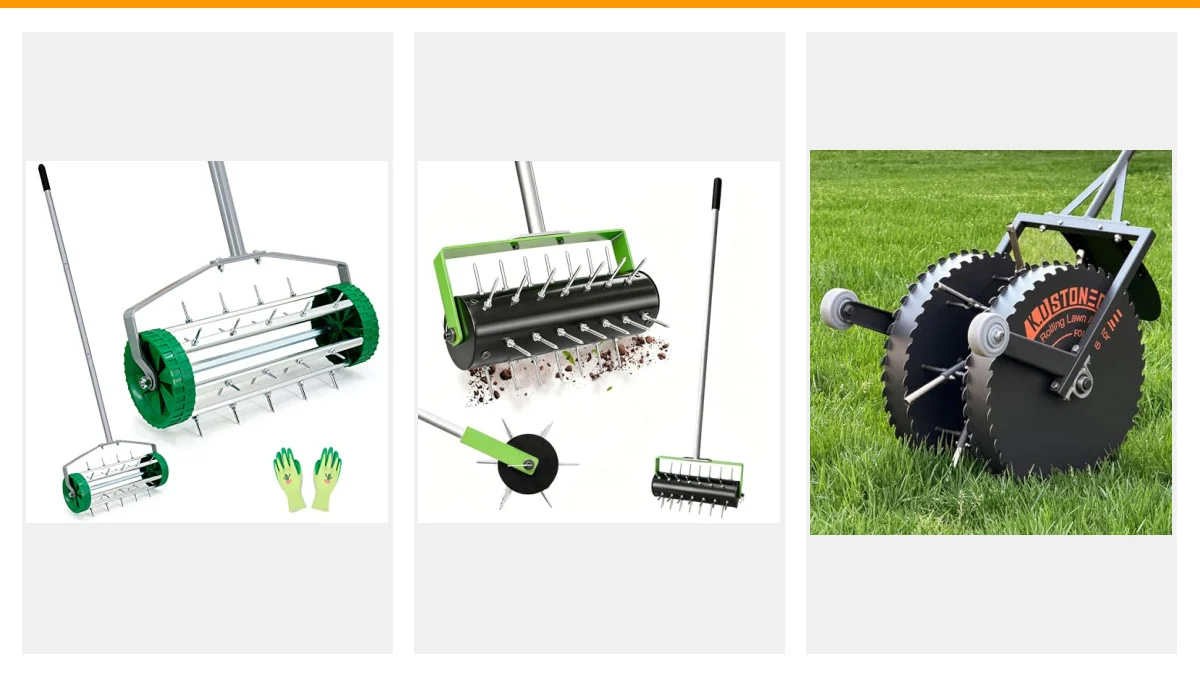
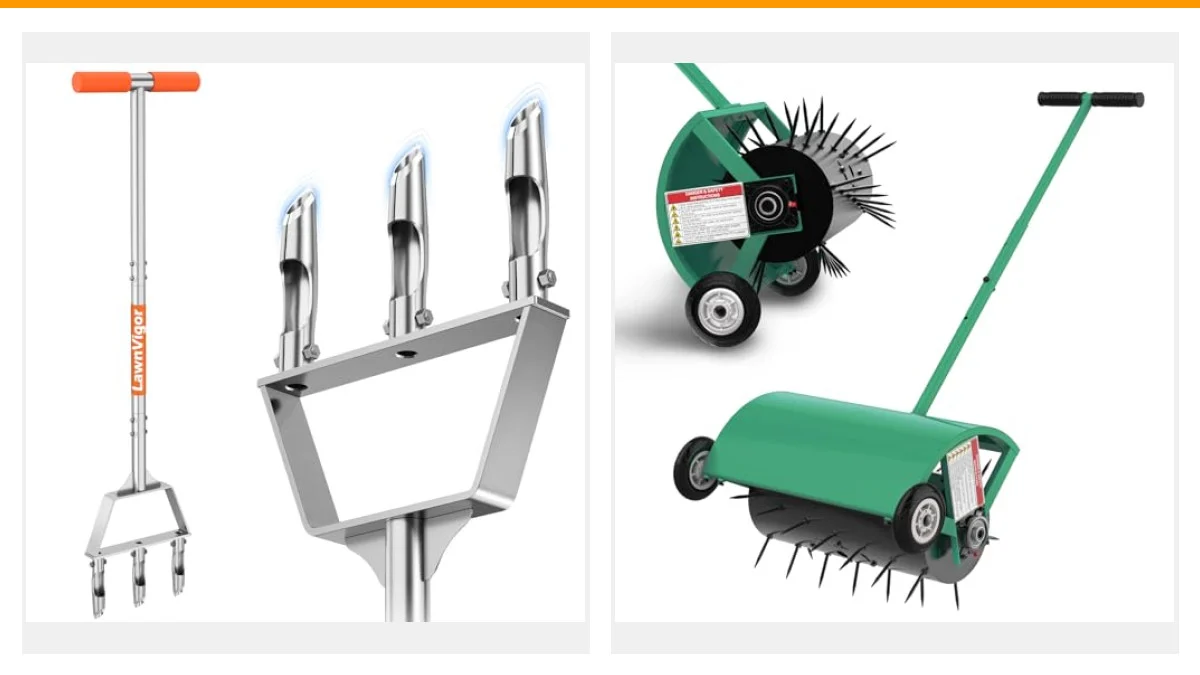
Your phone rings. A property manager wants a quote for a 2-acre HOA common area, but the soil is so compacted the last guy’s aerator just bounced across the surface. You’ve got the crew, the trailer, and the mower. What you don’t have is a reliable way to pull a clean plug from hard, dry clay. That’s the moment a commercial lawn aerator stops being an accessory and starts being a profit center.
Choosing the right machine comes down to matching the tool to the jobs you actually book. A contractor who only does small residential backyards needs something different than a crew dragging equipment behind a 50-horsepower utility vehicle. You’re weighing aeration depth, tine durability, and how much weight you can pile on to force those tines into the ground. Spike aerators punch holes and are cheap to run. Plug aerators pull cores, which relieves compaction more effectively but requires more muscle or horsepower.
We broke down the top five options on the market this year, from a nimble manual unit for tight spots to a heavy-duty tow-behind model built for open turf. We looked for machines that survive repeated use, penetrate tough soil, and don’t break your back or your budget. Our top pick balances raw capability with everyday practicality, and we’ve included alternatives for every type of operation.
Here’s a quick look at how the key specs stack up before we get into the details.
| Features | Saker Manual | Failenfeivp Rolling | hugeneroy Hollow Tine | Garvee Tow Behind | LawnVigor Core |
|---|---|---|---|---|---|
| Type | Step-on spike | Push spike roller | Manual plug puller | Tow-behind spike | Manual plug puller |
| Spikes/Tines | 15 iron spikes | 42 steel pegs | 3 hollow tines | Not specified | 3 hollow tines |
| Core Strength | Double-layer spring | Heat-treated pegs | Tempered steel | Carbon steel frame | Heat-treated tines |
| Key Feature | Self-cleaning | Weight-loadable drum | Non-clog design | Universal ATV hitch | Non-clog inserts |
| Best For | Small yards | Medium lawns | Clay soil spots | Large properties | Homeowners |

Saker Manual Lawn Aerator

Saker
Saker Manual Lawn Aerator Tool with 15 Iron Spikes Black | Double-Layer Soil-Ejecting Spring, Adjustable Height,Heavy-Duty Iron, Included Gloves for Aerating Patio, Yard, Garden
- 【Preparation Before Aeration】:Before using the Saker lawn aerator, trim the lawn and check soil moisture. Soft soil allows easier…
- 【Efficient Manual Lawn Aerator】Saker lawn aerator penetrates the soil with iron nails, making it easy to insert into the ground an…
- 【Time Saving and Labor-Saving Spike Design】The Saker lawn aerator features 15 sharp 2.3-inch iron spikes that create multiple hole…
This is the tool for the solo operator or the homeowner with a postage-stamp yard who wants commercial-grade results without firing up a machine. The Saker is a step-on aerator, meaning you press it into the ground with your foot. It suits anyone doing a quick pass over a small, manageable lawn where a tow-behind unit would be overkill and a rolling drum can’t reach tight corners.
What sets the Saker apart is its self-cleaning design. The double-layer spring system ejects soil and debris as you lift the tool, so you’re not stopping every few steps to kick packed dirt out of the tines. That feature alone saves real time on a job. The 15 sharp iron spikes are each 2.3 inches long, which gives you decent penetration for a manual tool. The 2026 reinforced build uses high-strength screw connections instead of welds on the foot pedal, which addresses the most common failure point on cheap aerators.
You’ll hit its limits on large, hard-packed areas. This is a manual tool, so your body is the engine. Aerating 5,000 square feet with this will leave your legs feeling it the next day. It works best when the soil is soft, so you’ll need to water dry ground a day ahead or wait for rain. The rust-resistant coating helps, but you should still wipe it down after use to keep the spikes clean.
- 15 spikes, each 2.3 inches long, for multiple holes per step
- Double-layer spring system automatically clears soil from tines
- Thickened iron construction with rust-resistant coating
- High-strength screws replace welds on the foot pedal
- Requires pre-moistened soil for best penetration
Best for: The detail-oriented homeowner or landscaper handling small, accessible lawns where precision matters more than speed.
Failenfeivp Rolling Lawn Aerator
If you’re maintaining a few average-sized residential lawns each week, the Failenfeivp rolling aerator hits a sweet spot between manual labor and heavy machinery. It’s a push-style drum with 42 spikes that roll over the turf as you walk. This design shines on flat, open ground where you can keep a steady pace and cover ground faster than you ever could with a step-on tool.
The drum’s unique selling point is its weight capacity. You can fill it with sand or rocks to add downward force, which helps the 2-inch spikes bite deeper into firm soil. That’s a trick you won’t find on most manual rollers. The frame is galvanized steel, so rust isn’t a constant worry. The 55-inch handle means you can walk upright without stooping, which spares your back on long afternoons. The tines are heat-treated, which makes them less likely to bend when you hit a dense patch or a hidden root.
The trade-off here is that it’s a spike aerator, not a plug aerator. Spikes push soil aside, which can actually increase compaction around the hole in heavy clay. It’s fine for routine maintenance on healthy lawns, but it won’t fix a severely compacted field. Also, the rolling action takes some effort to start and stop, especially on slopes. You’ll need a bit of upper body strength to steer it precisely around flower beds and trees.
- 42 heat-treated steel pegs on a rolling drum
- Drum can be filled with sand or rocks for extra weight
- Galvanized steel frame resists rust and corrosion
- 55-inch handle with non-slip rubber grips
- Spiral tine pattern provides a smooth, continuous roll
Best for: The lawn care professional with several medium-sized properties who needs speed and adjustable weight without the cost of a tow-behind unit.
Heavy Duty Steel Hollow Tine Aerator

hugeneroy
Heavy Duty Steel Hollow Tine Core Aerator for Clay Soil, Non-Clog - Blue | Anti-Clogging Beveled Tines, Compacted Soil & Clay Friendly, Replaceable Tines, Wide Foot Plate, Semi-Assembled
- Manual Lawn Aerator for Healthier Grass - This manual lawn aerator strengthens turf health by improving soil airflow and nutrient…
- Professional-Grade Hollow-Tine Aerator - Constructed with industrial-strength steel and tempered hollow tines, this manual lawn ae…
- 3-TINES MANUAL LAWN AERATOR: Our heavy-duty aerator removes soil cores to reduce soil compaction and improve your lawn's health. T…
The hugeneroy aerator is the specialist’s tool for a specific job: pulling actual soil cores from clay-heavy ground. It features three hollow tines that you press into the earth, then pull out, extracting a plug of soil. This is the correct method for relieving compaction because it removes material rather than just poking holes. It’s perfect for the turf manager fixing a sports field corner or the homeowner renovating a lawn that’s turned into a parking lot.
Construction quality is the story here. The tines are made of tempered steel and are replaceable, which extends the tool’s life considerably. The tines are precision-engineered to slice through compacted earth with less effort than you’d expect from a manual puller. The long handle is designed to reduce back strain, and the grip is comfortable for repeated use. Setup takes minutes with the included tools, so it’s ready to go out of the box.
This is hard work, no way around it. Pulling plugs from clay soil is physically demanding, and you’ll only cover a small area per hour. The instructions tell you to push and pull vertically, and you must resist the urge to twist the tines sideways to loosen them—that will bend them. This tool is best for spot-treating problem areas, not aerating an entire acre. If you have a large property, consider this a complement to a powered aerator, not a replacement.
- Three tempered steel hollow tines remove soil cores
- Replaceable tines for long-term maintenance
- Industrial-strength steel frame built for decades of use
- Long handle and easy-grip design reduce fatigue
- Quick assembly with all tools included
Best for: The professional landscaper or dedicated hobbyist who needs to pull cores in clay soil for targeted lawn renovation projects.
Garvee 48″ Tow Behind Aerator

Garvee
Garvee 48" Tow Behind Aerator, Pull Behind Lawn Aerator with Universal Hich | 32 Rust-Proof Knives, 2 in Spikes & Inflatable Wheels, Plug Aerator for Grass Yard Clay Soil
- Deep, Effective Aeration: Equipped with sharp 3 in spikes, this pull behind aerator penetrates deep into soil to improve air, wate…
- Universal Hitch for Easy Attachment: The universal hitch design fits most ATVs and UTVs, making this tow behind aerator a practica…
- Customizable for Better Results: Increase soil aeration depth by adding up to 150 LB weight and easily control the process using t…
This is the machine for the commercial operator who has an ATV, UTV, or small tractor and needs to cover serious acreage. The Garvee tow-behind aerator spreads its weight across a 48-inch-wide frame, making it a practical choice for large residential lots, parks, and common areas. The universal hitch connects to most ATVs and UTVs, so you can turn your existing vehicle into an aeration rig.
The headline feature is the adjustable lever, which lets you control the aeration depth on the fly. Combined with the ability to add up to 150 pounds of weight, you can adapt to changing soil conditions without stopping. The frame is made from heavy-duty carbon steel with a rust-resistant powder coat, so it’s built to live on a trailer and take a beating. Assembly is straightforward with labeled parts and clear instructions.
You’ll need a vehicle with enough power to pull this through dense soil. A small garden tractor might struggle when the weight tray is full and the ground is hard. The spikes are 3 inches long, which is good, but this is still a spike aerator. If you’re dealing with heavy clay compaction, you might want to look for a plug aerator that pulls cores instead. Also, check your turning radius; a 48-inch rigid frame can be tough to maneuver around tight corners.
- 48-inch wide frame covers large areas quickly
- Universal hitch fits most ATVs and UTVs
- Adjustable lever controls penetration depth
- Can add up to 150 pounds of weight for deeper aeration
- Carbon steel with rust-resistant powder coating
Best for: The lawn care business with a utility vehicle that needs to aerate large, open turf areas efficiently and economically.
Manual Lawn Core Aerator
LawnVigor
Manual Lawn Core Aerator for Compacted Soil with Non-Clogging Hollow Tines | Pulls Soil Plugs Easily, Bend-Resistant Steel Frame, Wide Foot Pedal, Replaceable Tines, Ideal for Clay Soil - Orange
- LAWN AERATOR FOR HEALTHIER LAWN GROWTH: Our manual lawn aerators promotes lush, green lawns by delivering essential air, water and…
- BUILT-TO-LAST HOLLOW TINE AERATOR: Made of sturdy metal and heat-treated hollow tines, our plug aerator lawn tool is built to with…
- NON-CLOGGING YARD AERATOR: Designed with 3 hollow tines, this lawn core aerator efficiently removes soil plugs while preventing cl…
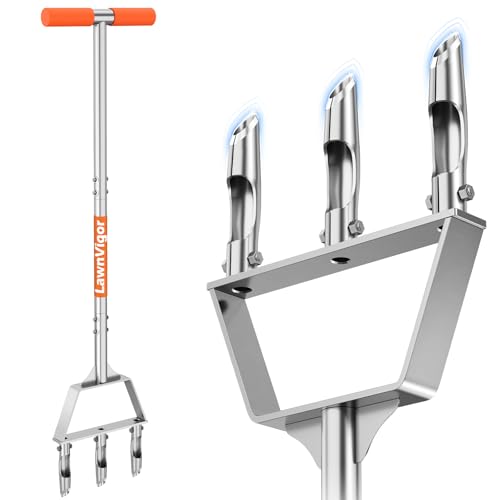
The LawnVigor aerator is a direct competitor to the hugeneroy model, and it’s aimed squarely at the same buyer: the hands-on lawn enthusiast who wants the benefits of core aeration without renting a machine. It’s a manual tool with three hollow tines, designed to pull plugs from compacted soil. It’s ideal for the homeowner who has one lawn to fix and wants to do it right, or for the landscaper who needs a precise tool for small, delicate areas.
Its defining feature is the non-clogging design. The hollow tines come with white plastic inserts that stay in place to help release soil plugs. This is a clever solution to the most annoying problem with manual core aerators—the tines getting jammed with wet, sticky soil. The tines are heat-treated for strength and are replaceable. The ergonomic handle is designed to minimize back strain, which is crucial when you’re bending and pulling for an hour.
Expect a workout. This tool is physically demanding, and you’ll be limited to treating specific spots or small lawns. The instructions stress that you should water dry soil before use and avoid rocking the tool side-to-side in the ground. It’s simple in concept, but the build quality feels solid, and the non-clog feature genuinely works, which puts it a step above cheaper pullers. Just don’t plan on doing a half-acre in one afternoon.
- Three hollow tines remove soil plugs to reduce compaction
- White plastic inserts prevent tines from clogging
- Heat-treated tines are strong and replaceable
- Non-slip ergonomic handle reduces hand fatigue
- Assembly takes minutes with all necessary tools included
Best for: The dedicated DIYer who wants to perform proper core aeration on a small or medium lawn and is willing to put in the physical effort.
How We Chose These Products
We started by defining what ‘commercial’ actually means for a lawn aerator. For this guide, it means a tool that can handle repeated use across multiple jobs without failing. We looked for machines built with heavy-duty materials like carbon steel or reinforced iron, and we prioritized designs that address common failure points, like welded joints that snap or tines that bend on impact.
We then evaluated each product across several practical criteria. Penetration depth matters because aeration is useless if the tines don’t reach the root zone. Weight capacity and the ability to add weight were key differentiators, as they directly impact how well the tool works on hard, dry soil. We also considered the physical demands on the user, the ease of assembly, and the maintenance requirements. Finally, we looked at the specific use case for each tool, ensuring there was a clear ‘best fit’ for different types of buyers, from the solo homeowner to the multi-acre commercial contractor.
Buying Guide: What Really Matters
Before you spend money, figure out the difference between spike and plug aeration. Spike aerators, like the Saker and Failenfeivp, punch solid holes into the ground. They’re fine for loosening soil and improving water flow on healthy lawns. Plug aerators, like the hugeneroy and LawnVigor, pull out a core of soil. This physically removes compacted material and is the superior method for stressed lawns, especially those with heavy clay soil. For commercial work on large properties, a tow-behind plug aerator is the gold standard, but it requires a vehicle to pull it.
Consider the soil moisture. Aeration is a waste of time on bone-dry soil. The tines will struggle to penetrate, and plug aerators will just crumble the soil. The best time to aerate is when the soil is slightly moist, typically a day or two after rain or irrigation. This is why so many tools include instructions to water the lawn beforehand. If you’re a contractor, this means you need to schedule jobs around weather patterns or plan to irrigate the site before you arrive.
Maintenance is not glamorous, but it’s critical for commercial gear. After each use, scrape off any caked-on soil and hose down the tines. Dry the tool thoroughly to prevent rust. For tow-behind models, check the tines for wear and replace them when they’ve lost their sharp edge. Keep moving parts lubricated and check the hitch connection for wear. A few minutes of cleaning after each job will save you from buying a new aerator every season.
Our Top Recommendation
For most professionals, the Garvee 48″ Tow Behind Aerator takes the top spot. It offers the best balance of coverage area, adjustable penetration, and durability for commercial use. The universal hitch means it works with the ATV or UTV you likely already own, and the ability to add up to 150 pounds of weight gives you the power to tackle tough, compacted ground. It’s a serious tool for a serious operation.
If you’re not ready for a tow-behind unit or you only handle smaller properties, the Failenfeivp Rolling Lawn Aerator is a strong runner-up. It’s faster than a manual step-on tool and gives you the weight adjustability to handle varying soil conditions. For the homeowner or landscaper focused on lawn health over raw speed, the LawnVigor Manual Core Aerator is our budget-friendly pick for doing the job right on a small scale, thanks to its effective non-clog design.
Frequently Asked Questions
How often should I aerate a commercial lawn?
It depends on the traffic and soil type. High-use areas like sports fields or paths may need aeration two to three times a year. Lawns on heavy clay soil benefit from an annual core aeration. Lawns on sandy soil may only need it every two to three years. Watch for signs of compaction, like puddling water or thin, patchy grass.
Can I aerate in the summer heat?
It’s risky. Aeration stresses the grass, and doing it during a heatwave or drought can kill it. The ideal times are early spring and early fall when the grass is growing actively and can recover quickly. If you must aerate in summer, water deeply a day or two before and after to help the turf recover.
Is a spike aerator ever a good idea for commercial use?
Yes, but for specific reasons. Spike aerators are cheaper and faster to operate. They’re good for breaking up a thin layer of thatch or helping water penetrate a slightly hard surface. They are not a substitute for core aeration on heavily compacted soil. For a business, they can be a useful tool for routine maintenance on healthy lawns, but you’ll need a plug aerator for renovation jobs.
How do I know if my soil is too dry or too wet?
Grab a handful of soil from a few inches down. If it crumbles and won’t hold a shape, it’s too dry. If it’s muddy and water drips out, it’s too wet. You want it to form a loose ball that breaks apart when you poke it. This ‘soil moisture test’ is the single best way to ensure your aeration job is effective. For more tips on timing, check out our guide on the best aerator for lawn in winter.
For those managing very large areas, understanding the logistics is key. A tow-behind unit is your best bet, and you can see more options in our tow-behind plug aerator guide. If you’re just starting with a smaller property, you might want to compare these to other rolling lawn aerators for small gardens.