


Best Compost Bins for Cold Climates: Winter-Proof Picks That Keep Working
Contents
You shovel a path to the compost bin in January, twist the handle, and the whole drum is frozen solid. Sound familiar? Cold climates break the rules of normal composting. Microbes that thrive in summer heat go dormant when soil temps drop, and most bins turn into expensive ice sculptures. The fix isn’t buying a fancier tumbler—it’s choosing a bin that works with winter’s limits, not against them.
Composting in snow comes down to three things: keeping microbial activity above freezing, maintaining airflow without losing heat, and having a plan for the spring thaw. Static bins that sit on the ground outperform tumblers in deep cold because they tap into earth warmth and don’t freeze into a solid mass. Tumblers still have a place, but only for specific situations like summer use or mild winters.
Below are five bins tested against real winter conditions—from a 65-gallon static workhorse to compact kitchen collectors. We’ll cover what each does well, where it struggles, and who should buy it. If you’re new to this, start with our composting basics guide before diving in.
Here’s a quick spec comparison to help you narrow down your options.
| Features | VIVOSUN Tumbler | Epica Kitchen Bin | VEVOR Tumbler | Redmon Static Bin | Cozurra Tumbler |
|---|---|---|---|---|---|
| Capacity | 43 gallons (dual) | 1.3 gallons | 43 gallons (dual) | 65 gallons | 45 gallons (dual) |
| Best Use | Mild winters, summer | Indoor countertop | Large households | Ground-contact winter | Continuous composting |
| Key Feature | 360° tumbling | Charcoal filter | Sliding doors, 110 lb load | 4-door access, no tools | Adjustable vents |
| Material | PP plastic, steel frame | Stainless steel | BPA-free PP, steel | 80% recycled plastic | BPA-free PP, steel |
| Winter Suitability | Poor—freezes solid | Indoor only | Poor—freezes solid | Excellent—ground contact | Poor—freezes solid |
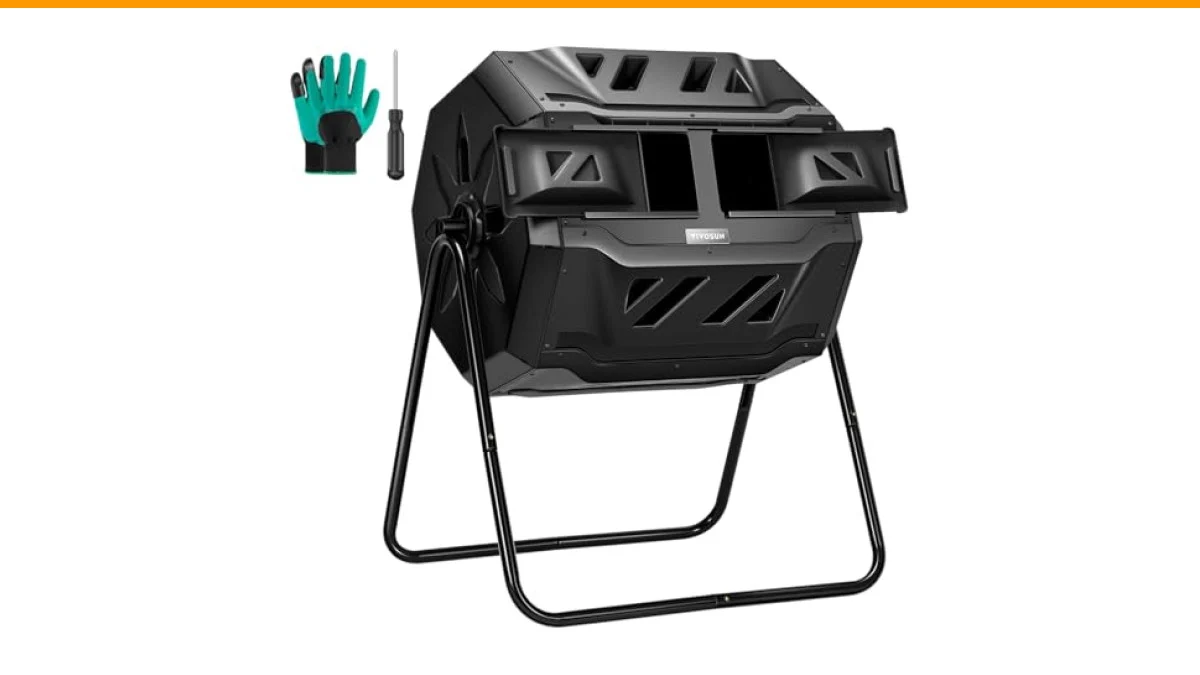
VIVOSUN Outdoor Tumbling Composter
1st Pick

VIVOSUN
VIVOSUN Outdoor Tumbling Composter Dual Rotating Batch Compost Bin, 43 Gallon Black Door
- Twin chambers: Two separate chambers allow one side to finish composting while leaving the other side available to add fresh waste…
- 360⁰ Tumbling Design: The rotating design prevents you from digging or mixing the pile by hand; And the deep fins on eight panels…
- Excellent Aeration: Air vents can make the air fully circulate and will not cause an explosion due to excessive internal pressure;…
The VIVOSUN 43-gallon dual-chamber tumbler is a solid pick for composters in milder climates or those who want to keep their pile active through fall and spring. It’s not built for deep winter, but if your winters hover around freezing rather than dropping to sub-zero, this bin can stretch your composting season by weeks.
What stands out is the twin-chamber design. You fill one side while the other finishes, which means a steady supply of compost rather than waiting months for a single batch. The 360-degree tumbling action with deep fins breaks up clumps well, and the air vents prevent the anaerobic smell that plagues many tumblers. The included garden gloves and ABS claws are a thoughtful bonus—you won’t need to buy separate tools.
The trade-off is real: when temperatures drop below 40°F, the contents freeze into a solid block. Tumbling a frozen drum is pointless and can strain the plastic gears. You’ll need to stop adding waste in December and restart in March. Also, the PP plastic body, while sturdy, becomes brittle in extreme cold—handle it gently when temperatures are well below freezing.
- Dual 21.5-gallon chambers allow continuous composting
- Eight deep fins on panels improve mixing and aeration
- Corrosion-resistant steel frame supports the rotating drum
- Air vents prevent pressure buildup and improve oxygen flow
- Assembly takes about 30 minutes with basic tools
Best for: Gardeners in zones 6-7 who want a low-effort tumbler for three-season use and don’t mind pausing during the coldest weeks.
Epica Kitchen Compost Bin
2nd Pick

Epica
Epica Kitchen Compost Bin for Kitchen Countertops, 1.3 Galllon - Silver
- FEATURED IN BON APPETIT & FORBES: Recognized by renowned magazines, EPICA’s compost bin is a perfectly sized marvel for your kitch…
- CONTROL KITCHEN ODORS NATURALLY: This indoor compost bin with a charcoal filter features an airtight lid and a replaceable activat…
- EASY TO CLEAN & RESISTANT TO LEAKS: This countertop bin features a one-piece molded design that resists rust and leaks. The contai…
The Epica 1.3-gallon countertop bin solves a different problem: what to do with kitchen scraps when it’s too cold to walk outside. This stainless steel bucket sits on your counter, collects a few days of peels and grounds, and keeps odors contained with an activated charcoal filter. It’s a companion piece to any outdoor bin, not a replacement.
Its strength is simplicity. The one-piece molded interior resists leaks and rust, and the airtight lid with charcoal filter genuinely neutralizes smells—even after three days of fish scraps in a warm kitchen. Bon Appétit and Forbes have featured it, which speaks to its design quality. The stainless steel body is scratch-resistant and wipes clean easily.
The downside is capacity. At 1.3 gallons, you’ll empty it every two to three days for a family of four. The charcoal filters need replacing every 3-6 months, and rinsing them gently is a chore some owners skip, which leads to odors. It’s also not dishwasher safe—hand washing is required to preserve the finish.
- Measures 7.16 inches in diameter by 11 inches high
- Replaceable activated-charcoal filters control odors
- Airtight lid seals in smells
- One-piece molded stainless steel resists rust
- Filters last 3-6 months with proper care
Best for: Cold-climate households that need a reliable indoor collection point for winter scraps, especially when the outdoor pile is frozen.
VEVOR Compost Bin, 43-Gal
The VEVOR 43-gallon dual-chamber tumbler is a close cousin to the VIVOSUN but with a few upgrades that matter for serious gardeners. The sliding doors are larger and easier to use, and the steel frame supports up to 110 pounds—enough for a full chamber of wet winter waste. It’s built for big families and avid gardeners who generate a lot of organic material.
The 360-degree tumbling design is smooth, and the internal grooves break up clumps effectively. VEVOR claims compost in 4-6 weeks, which is realistic in warm weather but stretches to 8-12 weeks in cooler conditions. The BPA-free, UV-resistant plastic handles sun and rain well, and the secure seals keep out mice and insects—a real concern when rodents seek winter shelter.
That said, this tumbler has the same frozen-solid problem as all above-ground drums. In a hard freeze, the contents become a single ice block that won’t break apart, and tumbling stresses the plastic. The sliding doors also tend to jam when frost builds up in the tracks. It’s a fine bin for spring through fall, but don’t expect winter performance without a heated garage or greenhouse.
- Dual 21.5-gallon chambers with independent access
- Detachable sliding doors with secure, pest-proof seals
- Steel frame rated for 110-pound loads
- Internal fins and vents accelerate decomposition
- Weatherproof materials resist snow, rain, and UV
Best for: Households producing high volumes of kitchen and garden waste who want a durable, high-capacity tumbler for the growing season.
Redmon Outdoor Compost Bin
4th Pick

REDMON Since 1883
Redmon Outdoor Compost Bin with Lift Off Lid, 65 Gallon, Black
- Outdoor Composting Bin: Compost bin container properly vents organic materials to allow rapid and proper composting of waste provi…
- Made with Quality Materials: Constructed using 80 percent recycled materials and designed to withstand weather and outdoor conditi…
- Convenient Extra Features: Has a lift-off lid and 4-door access providing easy access to fully composted material making your comp…
The Redmon 65-gallon static bin is the winter survivor of this group. It sits directly on the ground, which means it benefits from the earth’s residual heat—soil at 3 feet deep stays around 50°F even when air temperatures drop to zero. That ground contact keeps the lower layers of your pile actively decomposing all winter, a critical advantage over tumblers.
This bin is made from 80% recycled plastic and requires no tools for assembly—the panels interlock in about 10 minutes. The lift-off lid and four access doors let you harvest finished compost from the bottom while the top is still freezing. The open-bottom design also allows earthworms and beneficial microbes to migrate in from the soil below, which accelerates breakdown.
The trade-offs are modest. The plastic walls are not insulated, so the outer edges of your pile will freeze, but the core stays active if you build a large enough pile (at least 3 cubic feet). The lack of a tumbler means you’ll need to turn it with a pitchfork or compost aerator, which is harder work in winter layers. And the 26×26-inch footprint takes up more space than a tumbler.
- 65-gallon capacity—large enough for winter thermal mass
- Four access doors at the base for easy harvesting
- Lift-off lid stays secure in wind
- Constructed from 80% recycled materials
- No tools required for assembly
Best for: Cold-climate gardeners who want a low-cost, ground-contact bin that keeps decomposing through winter and can handle large volumes of leaves and yard waste.
Cozurra 45 Gallon Large Compost Tumbler
5th Pick

Cozurra
Cozurra 45 Gallon Large Compost Tumbler Outdoor, Dual Chamber Compost Bin
- 2 × 22.5 Gallon Chambers for Continuous Composting: This outdoor compost bin features two independent chambers (45 gallons total),…
- 360° Tumbling System – No Digging, No Mess: Simply rotate the compost tumbler—no shoveling or hand-mixing required. Built-in mixin…
- Adjustable Aeration – Faster, Odor-Free Compost: Multiple adjustable vents improve airflow inside the compost bin, helping reduce…
The Cozurra 45-gallon dual-chamber tumbler rounds out the list with a focus on convenience and adjustability. Its two 22.5-gallon chambers allow continuous composting, and the adjustable vents give you control over airflow—useful when you want to speed up decomposition in spring or reduce odor in summer. The BPA-free, weather-resistant plastic and reinforced steel frame are built for year-round outdoor use.
Assembly is genuinely easy—the components snap together without screws, which is rare in this category. The built-in mixing ribs and deep fins do a good job breaking up clumps, and the 360-degree rotation is smooth even when the bin is half-full. For beginners, this is one of the most approachable tumblers on the market.
But winter is its Achilles’ heel. Like other tumblers, it freezes solid in sub-zero temperatures, and the snap-together design means fewer gaskets to keep out frost. The plastic also becomes brittle in extreme cold, so tumbling a frozen load risks cracking the drum. This is a three-season bin at best, unless you’re willing to move it indoors or insulate it heavily.
- Two independent 22.5-gallon chambers
- Adjustable vents control airflow and moisture
- Snap-together assembly—no tools required
- Steel frame provides stability during rotation
- BPA-free, UV-resistant plastic body
Best for: Beginners and casual composters who want an easy-to-assemble, low-maintenance tumbler for mild winters or indoor garage use.
How We Chose These Products
We evaluated each bin against the specific challenges of cold-climate composting: freezing temperatures, snow accumulation, and reduced microbial activity. Our criteria prioritized ground-contact design, material durability in cold, and capacity for thermal mass. Tumblers were judged on whether they could realistically operate in sub-40°F conditions—most cannot.
We also weighed practical factors like assembly time, access for harvesting, and pest resistance. User feedback from gardening forums and cold-climate extension services informed our understanding of real-world performance. We didn’t rely on manufacturer claims alone; we looked at how bins behave after a season of freeze-thaw cycles.
Buying Guide: What Really Matters
Cold climates demand a different set of priorities. First, consider ground contact. A bin that sits on the soil benefits from geothermal warmth, which keeps the bottom layer active even when the top freezes. Tumblers, suspended on frames, lose this advantage entirely. If you choose a tumbler, plan to use it only from late spring to early fall.
Second, think about volume. A pile needs at least 3 cubic feet of material to generate internal heat. Smaller bins freeze through completely, while larger piles maintain a warm core. The Redmon’s 65-gallon capacity is ideal; the 43-gallon tumblers are borderline. Third, access matters. In winter, you don’t want to dig through a frozen top layer to reach finished compost. Look for bins with bottom doors or ground-level access.
Finally, consider rodent resistance. Mice and rats seek warm shelter in winter, and open-bottom bins can become nesting sites. A bin with a tight-fitting lid and solid walls, like the Redmon, offers better protection than a tumbler with gaps around the door seals. For more on this, see our backyard compost bin guide.
Our Top Recommendation
The Redmon 65-gallon static bin is our top pick for cold climates. Its ground-contact design, large capacity, and bottom access make it the only bin on this list that truly works through a freezing winter. It’s not glamorous, but it’s effective—and at its price point, it’s the best value for serious winter composters.
If you need a tumbler for the warmer months, the VEVOR is the runner-up for its robust build and high load capacity. For small households or those who compost indoors during winter, the Epica countertop bin is an essential companion. Pair a static bin with a kitchen collector, and you’ll have a system that survives the snowiest season.
Frequently Asked Questions
Should I turn my compost in winter?
No. Turning a frozen pile is pointless and can break your tools. Instead, stop adding new material in late fall and let the pile go dormant. In spring, turn it once the center thaws to restart aeration.
How do I insulate my compost bin for winter?
Wrap the bin in a silage tarp or bales of straw to trap heat without blocking airflow. Avoid plastic sheeting that seals in moisture and suffocates microbes. For tumblers, moving them into an unheated garage can extend use by a month.
What happens to compost in freezing temperatures?
Microbial activity slows dramatically below 50°F and nearly stops below 40°F. The pile freezes solid, but decomposition resumes when temperatures rise. The key is to build a large pile in fall so the core stays warm and active through winter.
Can I add kitchen scraps to my compost in winter?
Yes, but only if the pile isn’t frozen solid. If it is, store scraps in a covered bucket or the Epica bin until spring. Adding scraps to a frozen pile just creates a smelly, rodent-attracting mess that won’t decompose until thaw.
How do I restart my compost in spring?
Once the pile thaws, turn it thoroughly to incorporate oxygen. Add fresh greens and a compost activator if needed. Drain any excess water from the base to prevent anaerobic conditions. Check moisture—it should feel like a wrung-out sponge.
Final Verdict: The Cold Climate Composting Checklist
Choose a ground-contact static bin for winter, or accept that a tumbler is a three-season tool. Build a large pile in fall to maintain thermal mass. Store dry leaves and browns in a shed or garage so they don’t freeze into unusable clumps. Position your bin on the south side of your house, sheltered from wind, to maximize solar gain. And plan for spring—drainage, aeration, and fresh greens will bring your pile back to life. For more on keeping your garden productive in cold weather, check our greenhouse guide.


