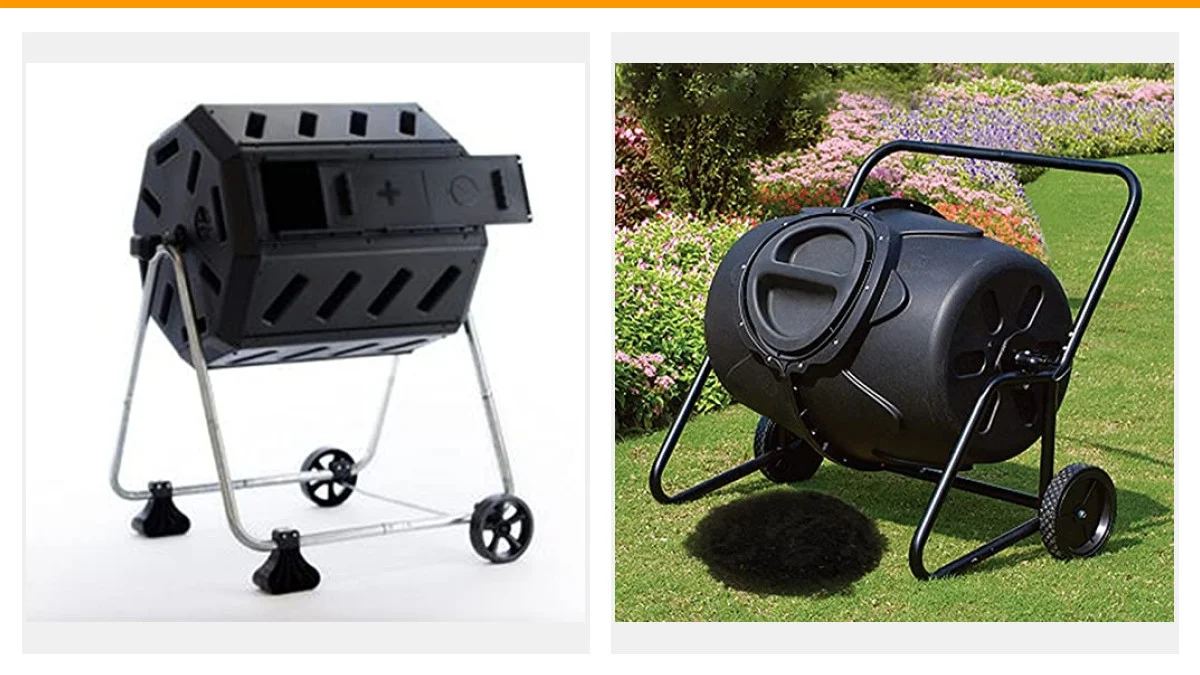
You rinse a jar for recycling without a second thought, but the pile of onion skins, coffee grounds, and wilted lettuce in your trash can still bugs you. Sending food waste to a landfill means it rots without oxygen and creates methane, a greenhouse gas far more potent than carbon dioxide. You want to do better, but the idea of a smelly, fly-attracting bin in your kitchen or a heavy, hard-to-turn pile in your yard has stopped you cold.
A good compost bin solves those problems before they start. The right indoor caddy contains odors with charcoal filters and fits in a corner of your counter. The right outdoor tumbler makes turning the pile as easy as spinning a wheel, and its sealed design keeps pests out. Matching the bin to your living situation and your physical comfort level matters more than any other factor.
We sorted through the options to find five bins that genuinely earn their place in an eco-conscious home. From a sleek countertop caddy for apartment dwellers to a heavy-duty dual-chamber tumbler for serious gardeners, these picks cover the spectrum. Our top recommendation balances ease of use, durability, and real composting power, but the best choice for you depends on where you live and how much effort you want to put in.
Here is a quick look at how the key specs compare across our top picks.
| Features | Epica Countertop | Utopia Kitchen | KIBAGA Countertop | VIVOSUN Outdoor | ANECO Bags |
|---|---|---|---|---|---|
| Best For | Kitchen counter use | Budget countertop | Eco-chic decor | Fast outdoor compost | Lining any bin |
| Material | Premium stainless steel | Stainless steel | Powder-coated carbon steel | PP plastic & metal frame | Corn starch, plant-based |
| Capacity | 1.3 gallons | 1.3 gallons | 1.1 gallons | 43 gallons (2 x 21.5) | 2.6 gallons |
| Odor Control | Airtight lid & charcoal filter | Charcoal filters | Filter & aeration holes | Air vents | N/A (compostable) |
| Key Feature | Rust & leak resistant | Compact cylindrical fit | Wooden handle & knob | 360-degree tumbling | Home compostable |
Epica Kitchen Compost Bin

Epica
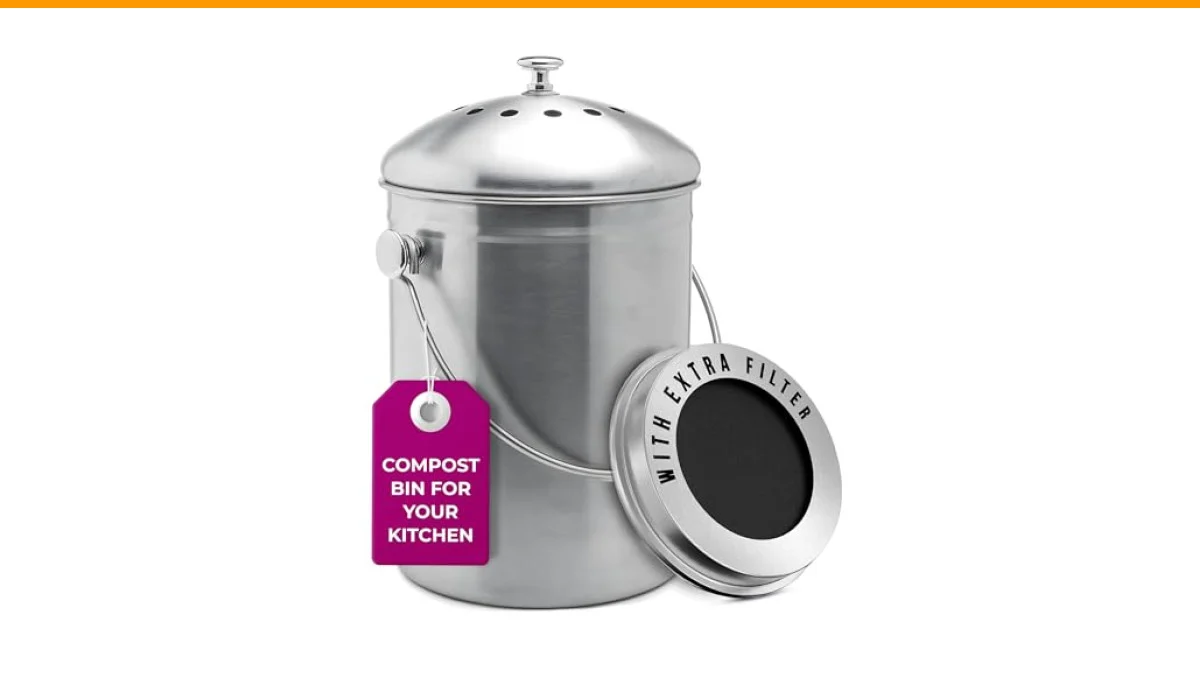
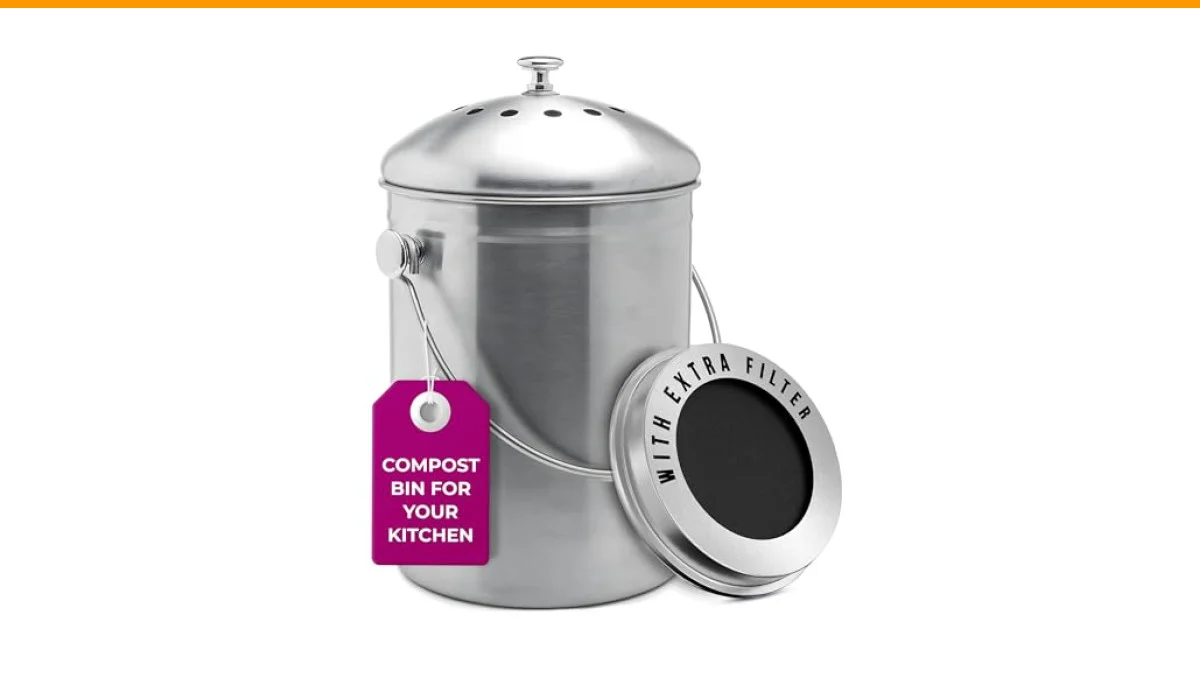
Epica Kitchen Compost Bin for Kitchen Countertops, 1.3 Galllon - Silver | Stainless Steel, Rust- Resistant, Airtight Leak-Resistant Lid, Replaceable Activated Charcoal Filter for Odorless Composting
- FEATURED IN BON APPETIT & FORBES: Recognized by renowned magazines, EPICA’s compost bin is a perfectly sized marvel for your kitch…
- CONTROL KITCHEN ODORS NATURALLY: This indoor compost bin with a charcoal filter features an airtight lid and a replaceable activat…
- EASY TO CLEAN & RESISTANT TO LEAKS: This countertop bin features a one-piece molded design that resists rust and leaks. The contai…
The one that looks like it belongs on your counter.
The Epica is the countertop companion for the home cook who generates scraps daily but refuses to look at an eyesore. It holds 1.3 gallons, which translates to roughly three to four days of scraps for a family of four, and its brushed silver exterior blends with most kitchen appliances. You can keep it right next to the cutting board and toss peels in as you work, which makes the habit stick.
What sets this bin apart is its one-piece molded stainless steel body. There are no seams or crevices where liquid can hide and turn sour. The lid seals tightly, and the activated charcoal filter in the top handles odors between trips to the outdoor pile. Bon Appetit and Forbes have both featured it, which speaks to its design credentials. Cleanup is straightforward: rinse it with warm water and mild soap weekly, and give the filter a gentle rinse every few weeks to keep it working.
It is not perfect. The 1.3-gallon capacity means frequent emptying if you cook a lot from scratch, and the stainless steel exterior shows fingerprints more than a matte finish would. Hand-washing is recommended, so skip the dishwasher. The charcoal filters need replacing every three to six months, which is a small recurring cost to factor in.
- Dimensions: 7.16 inches in diameter, 11 inches high
- Replaceable activated charcoal filter neutralizes odors
- One-piece construction resists rust and leaks
- Scratch-resistant stainless steel built for daily use
- Compact footprint fits under most upper cabinets
Best for: The urban cook who wants a durable, odor-free caddy that sits out in plain sight without apologizing for itself.
Utopia Kitchen Countertop Bin

Utopia Kitchen
Utopia Kitchen Countertop Compost Bin 1.3 Gallon, Stainless Steel, Silver | Odorless countertop compost bin with charcoal filter, ideal for food scraps and waste
- Countertop Fit - The countertop compost bin measures 7.2 inches wide and 11.2 inches high, offering a slightly larger capacity whi…
- Durable Build - Made with stainless steel, the composter resists scratching, cracking, and chipping, so it can handle onion skins,…
- Stylish Design - With a sturdy, sleek design that complements most kitchen decor, the compost bucket with lid looks like it belong…
The budget pick that skips the frills.
Utopia Kitchen takes a no-nonsense approach to the same job as the Epica. This is a 1.3-gallon stainless steel cylinder with a lid and charcoal filters, priced for the shopper who wants function without a premium brand name. It handles the same daily scraps, coffee grounds, and eggshells without scratching or chipping, and its straight-sided design makes scraping out the contents simple when it is time to empty.
The charcoal filters trap odors effectively for a week of accumulation, which is the standard test for any indoor caddy. The finish is more utilitarian than the Epica, but that means it does not show fingerprints as readily. It also sits on the counter without taking over your prep space, so you can keep it within arm’s reach of your main workspace.
The trade-offs are minor but worth noting. The instructions recommend lining the bottom with newspaper or cardboard to absorb excess liquid, which adds a small step to your routine. Draining wet scraps before adding them also helps keep the bin from getting slimy. The filters work well, but they need replacing every couple of months to maintain full odor control, and the bin itself is best cleaned with a quick rinse rather than a deep scrub.
- Measures 7.2 inches wide and 11.2 inches high
- Stainless steel resists scratching, cracking, and chipping
- Charcoal filters trap odors naturally
- Cleans up with mild soap, water, or vinegar
- Minimalist design works with modern or classic kitchens
Best for: The practical shopper who wants a reliable, no-frills countertop bin that does the job without a premium price tag.
Beautiful Kitchen Compost Bin

KIBAGA
Beautiful Kitchen Compost Bin with Smell Proof Lid for Your Countertop | Rust Proof and Odorless 1.1 Gallon Bucket with No Smell Filters - Easy to Clean and Looks Great on Any Kitchen Counter
- Effortless Recycling: Revolutionize your kitchen with KIBAGAs’ countertop compost bin, designed for recycling food & other organic…
- Odorless Composting: The compost bin for the kitchen comes with a built-in charcoal filter compartment ensuring odor-free composti…
- Practical Premium Design: Built to last with rust-free, powder-coated carbon steel, the kitchen compost bin for your countertop el…
The one that makes composting look good.
KIBAGA understands that a compost bin sits on your counter all day, so it should not look like a piece of lab equipment. This bin features a powder-coated carbon steel body in a warm beige tone, topped with a wooden handle and knob. It looks like something you would display on a shelf, not hide under the sink, and it brings a natural, earthy aesthetic to an eco-friendly kitchen.
Beneath the good looks lies a practical design. The charcoal filter sits in a dedicated compartment in the lid, and small air holes provide aeration, which helps prevent the anaerobic conditions that cause bad smells. The 1.1-gallon capacity is slightly smaller than the other countertop picks, but it still holds several days of scraps for a couple. The powder-coated finish resists rust, and the wooden handle makes carrying it to the outdoor pile comfortable.
This bin is not for heavy-duty users. At 1.1 gallons, it fills up fast if you cook large meals or have a big family. The wooden handle and knob require a bit more care than an all-metal bin, since they can absorb moisture over time. It also costs more than the Utopia Kitchen model, so you are paying a premium for the aesthetic.
- 1.1-gallon capacity in a 10.2 x 7 inch footprint
- Rust-free powder-coated carbon steel body
- Built-in charcoal filter compartment with two filters included
- Lid air holes provide necessary aeration
- Wooden handle and knob add a modern, natural touch
Best for: The design-conscious homeowner who wants their sustainability tools to complement their kitchen decor, not clash with it.
VIVOSUN Outdoor Tumbling Composter

VIVOSUN
VIVOSUN Outdoor Tumbling Composter Dual Rotating Batch Compost Bin, 43 Gallon Black Door
- Twin chambers: Two separate chambers allow one side to finish composting while leaving the other side available to add fresh waste…
- 360⁰ Tumbling Design: The rotating design prevents you from digging or mixing the pile by hand; And the deep fins on eight panels…
- Excellent Aeration: Air vents can make the air fully circulate and will not cause an explosion due to excessive internal pressure;…
The workhorse for the suburban backyard.
VIVOSUN takes composting out of the kitchen and into the yard with a 43-gallon dual-chamber tumbling composter. This is the bin for the homeowner with a garden who wants a steady supply of finished compost without the back strain of turning a pile with a pitchfork. The unit sits on a sturdy metal frame, and you spin the drum to mix the contents, which aerates the pile and speeds up decomposition significantly.
The dual-chamber design is the standout feature. You fill one side for a few weeks, then switch to the other side while the first batch finishes curing. This creates a continuous cycle where you always have finished compost ready to spread. The deep fins on the inside of the drum break up clumps as you tumble, and the air vents promote airflow throughout the pile. VIVOSUN even includes a pair of waterproof garden gloves and four ABS plastic claws for digging and planting.
This composter has limitations. It requires outdoor space, so it is not an option for apartment dwellers. The 43-gallon capacity is generous, but tumbling a nearly full drum takes some effort, especially if the contents are wet and heavy. You also need to monitor the moisture level, since a pile that is too dry will not break down, and one that is too wet will clump. The plastic body is durable but not indestructible, so it should be protected from extreme weather or heavy impacts.
- Dual chambers allow continuous composting, one side finishing while the other fills
- 360-degree tumbling design eliminates manual digging and mixing
- Deep fins on eight panels break up clumps for better aeration
- Air vents promote full airflow and prevent pressure buildup
- Premium metal frame with weather-resistant PP plastic body
Best for: The suburban gardener with yard space who wants fast, efficient composting without the physical strain of turning a traditional pile.
ANECO Compostable Waste Bags

ANECO
(Include 10 Bonus Bags) ANECO 100% Compostable Waste Bags 2.6 Gallon | Extra Thick Kitchen Small Compost Bags for Countertop Bin, 110 Count (100 + 10 Extra)
- ⭐ Surprise upgrade! Our pack just got BIGGER – NOW 110 BAGS INSTEAD OF 100, all at the SAME PRICE. We’ve added 10 EXTRA BAGS as a…
- 🍀 Proud to be one of few HOME compostable trash bags in the market, ANECO Compostable bag can break down completely not only in in…
- 🍀 Made from entirely plastic-free materials such as corn starch and plant-based materials, ANECO 2.6 gallon trash bag decomposes f…
The accessory that makes every bin cleaner.
ANECO tackles the messiest part of composting with a simple solution: bags that break down along with your scraps. This pack includes 110 bags (10 bonus bags included) in a 2.6-gallon size, which fits most countertop caddies. The bags are made from corn starch and other plant-based materials, not plastic, so they decompose fully in a home compost system within 6 to 12 months, leaving no microplastics behind.
The material is the story here. Most bags labeled compostable only break down in industrial facilities, but ANECO has earned the OK Compost Home certification, meaning it works in your backyard pile. It also meets the ASTM D6400 standard and holds BPI and Seedling logos for industrial composting. The bags are extra thick, so they hold wet food scraps without tearing or leaking, which addresses the biggest complaint about compostable liners.
These bags are not a standalone compost system. They are an accessory that makes using your existing bin easier and cleaner. They cost more than regular plastic bags, and they do have a shelf life, so you should not stock up for years at a time. They also need the right conditions to break down, so if your compost pile is too dry or cold, the bags will take longer to decompose.
- 110 bags per pack, 2.6-gallon size fits standard countertop caddies
- Made from corn starch and plant-based materials, completely plastic-free
- Certified home compostable by OK Compost Home, BPI, and Seedling
- Extra thick design prevents tearing and leaking with wet scraps
- Decomposes into CO2, water, and organic biomass in 6-12 months
Best for: The zero-waste advocate who wants to line their countertop caddy for easy transfer to the outdoor pile without adding plastic to the waste stream.
How We Chose These Products
We started with the assumption that no single bin works for everyone. An apartment dweller needs something radically different from a rural homesteader, so we evaluated each product against a set of criteria that matter for eco-friendly homes. Material durability ranked high, since a bin that falls apart after a year ends up in a landfill, which defeats the purpose. We also looked at odor control, ease of use, and whether the bin’s design encourages consistent composting habits.
We prioritized products with genuine environmental credentials. The ANECO bags earned a spot because they are certified home compostable, not just industrial. The VIVOSUN tumbler made the cut because its dual-chamber design maximizes efficiency, reducing the time it takes to get usable compost. For indoor bins, we favored stainless steel and powder-coated carbon steel over cheaper plastics, since those materials last longer and resist the wear of daily use. We checked current availability on Amazon and verified that each product is in stock before including it.
Buying Guide: What Really Matters
Match the bin to your space before you look at anything else. A countertop caddy works for apartments and small kitchens, but you need a plan for what happens when it fills up. If you do not have outdoor space, look into bokashi bins or electric composters that break down waste indoors without smell. For suburban homes with a yard, a tumbling composter like the VIVOSUN offers the best balance of capacity and ease. Rural properties with large gardens might benefit from a larger stationary bin or a multi-bin system for continuous composting.
Consider the bin’s own environmental footprint. A cheap plastic bin that cracks in two years is not eco-friendly, no matter how much compost it produces. Stainless steel and powder-coated carbon steel last longer and can be recycled at the end of their life. Look for products with replaceable parts, like charcoal filters, rather than disposable units. And think about where the bin comes from, since shipping heavy items long distances adds to the carbon cost.
Finally, be honest about your physical ability and time commitment. A tumbling composter requires you to spin the drum every few days, which is easier than turning a pile but still takes effort. A countertop caddy requires frequent emptying and filter maintenance. If you want a set-and-forget system, consider a worm bin or a bokashi setup that needs less active management. The right bin is the one you will actually use consistently, not the one with the most impressive specs.
Troubleshooting: Why Your Bin Smells and How to Fix It
A sour, rotten smell usually means your pile is too wet and lacks oxygen. Add brown materials like dried leaves, shredded cardboard, or paper to absorb excess moisture, and turn the pile to introduce air. An ammonia smell signals too many green materials, like fresh grass clippings or food scraps, and not enough browns. Balance the ratio by adding more carbon-rich material. If you see flies or fruit gnats, bury fresh scraps under a layer of finished compost or browns to keep them covered.
When your compost smells like rotten eggs, the pile has gone anaerobic, meaning it lacks oxygen. Turn it immediately and add coarse brown material to create air pockets. For indoor countertop bins, the charcoal filter handles most odors, but if the bin itself smells, clean it with a vinegar solution and let it dry completely before adding new scraps. The goal is a pile that smells like damp earth, not a trash can.
Climate Check: Adjusting Your Composting for Where You Live
Hot, dry climates require more attention to moisture. Your pile will dry out quickly, so water it regularly and add green materials to maintain the moisture level. A tumbling composter in full sun can bake the contents, so consider placing it in partial shade. Cold, wet climates slow down decomposition. Insulate your outdoor bin or move it to a sunnier spot during winter months. You can also stockpile brown materials in the fall to balance the wet greens that accumulate in spring.
Humid climates face the opposite problem: too much moisture. Cover your pile during heavy rain or add more brown materials to absorb the excess. A bin with a lid, like the VIVOSUN, helps control moisture in wet weather. In arid regions, the ANECO bags will decompose more slowly because they need moisture to break down, so be prepared to water your compost pile regularly if you use them.
The Truth About Compostable Bins and Materials
Not everything labeled compostable belongs in your home pile. Many bioplastics only break down in industrial facilities that maintain high, consistent temperatures. The ANECO bags are a notable exception because they carry the OK Compost Home certification, which guarantees they will break down in a backyard bin. Look for this certification, along with BPI and Seedling logos, when buying compostable products.
The bin itself also has a footprint. Stainless steel requires significant energy to produce, but it lasts for decades and can be recycled. Plastic bins are lighter and cheaper but may crack and end up in a landfill. Powder-coated carbon steel offers a middle ground with good durability. Buying a used bin second-hand is the most eco-friendly option, since it keeps an existing product in use. The most sustainable bin is the one you already own or can find used, not necessarily the newest model on the market.
Frequently Asked Questions
Can I compost in an apartment without outdoor space?
Yes. A countertop caddy with a charcoal filter, like the Epica or KIBAGA, collects scraps without odor. For breaking down the scraps themselves, consider a bokashi system, which ferments waste in a sealed bucket, or an electric composter that dehydrates and grinds scraps into a soil amendment. Both work indoors and produce usable material for houseplants or balcony planters.
How often should I empty my countertop compost bin?
Plan to empty a 1.3-gallon caddy every two to three days for a couple, or daily for a larger family. The charcoal filter controls odor for about a week, but the bin will fill up before then. Emptying frequently prevents fruit flies and keeps the bin from getting heavy and hard to carry.
What is the ideal carbon-to-nitrogen ratio for my compost pile?
Shoot for roughly 2 to 3 parts brown materials (carbon-rich, like dried leaves, cardboard, and paper) to 1 part green materials (nitrogen-rich, like food scraps and grass clippings). This ratio provides the energy and protein that microorganisms need to break down the pile efficiently. Too much green causes ammonia smells, and too much brown slows decomposition.
Can I put cooked food scraps in my compost bin?
Yes, but with caveats. Cooked vegetables, rice, and pasta are fine. Meat, dairy, and oily foods attract pests and create odors, so they are best avoided in open bins or tumblers. A bokashi system can handle these items because it ferments them in a sealed container. If you use a tumbling composter, stick to plant-based scraps for the best results.
Our Verdict: The Final Word on Eco-Friendly Composting
The VIVOSUN Outdoor Tumbling Composter takes the top spot for eco-friendly homes with yard space. Its dual-chamber design creates a continuous supply of compost, and the tumbling action makes turning effortless. For apartment dwellers, the Epica Kitchen Compost Bin is the clear winner, combining durable stainless steel construction with reliable odor control in a compact footprint. The KIBAGA offers a more stylish alternative for design-conscious kitchens, while the Utopia Kitchen serves as a solid budget pick. The ANECO bags pair with any bin to make the transfer process cleaner and truly plastic-free.
Start with the bin that fits your living situation, then build your composting routine around it. The best compost bin for eco-friendly homes is the one that turns your food scraps into a resource instead of a problem. For more detailed comparisons, check our guide to dual chamber compost bins or our recommendations for fast composting tumblers. If you are short on space, our vermicomposting guide covers worm bins that work indoors.