Post Hole Digger vs Auger: Making the Right Choice for Your Project
Contents
Understanding the Basics
Imagine you’re preparing to install a fence or plant trees in your garden. You need to dig several holes, and the choice of tools can make a significant difference in your efficiency and effort. Two popular options for digging holes are post hole diggers and augers. While both serve the same purpose, they have distinct characteristics that can impact your work.
This article will clarify the differences between post hole diggers and augers, helping you decide which tool suits your specific needs. You’ll learn about their mechanisms, applications, and how to choose the right one for your project.

VEVOR
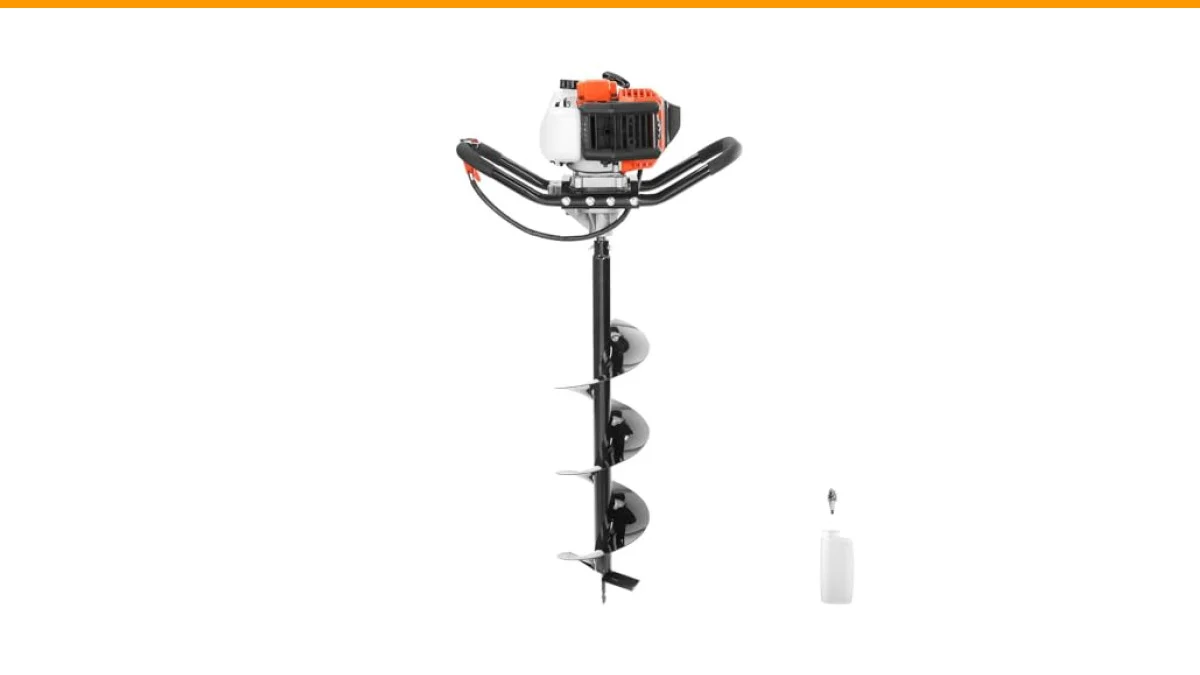
VEVOR Post Hole Digger, 43cc 1250W Auger Earth Digger, Gas-Powered (Fuel)
- Powerful Engine: VEVOR Fuel-powered Auger features a 43CC powerful engine with a maximum rotational power of 9350RPM. The gearbox…
- Sturdy & Durable: The drill bit is made of alloy steel with a powder-coated surface, providing excellent corrosion resistance and…
- Efficient Operation: Equipped with a 1.2m thickened pull cord, which is 1/2 longer than a regular pull cord, making it easier to s…
For those looking for an efficient auger, consider the VEVOR Post Hole Digger. With a powerful 43cc engine and durable construction, it can handle various soil conditions, making it a reliable choice for deep drilling.
Post Hole Digger: Features and Applications
A post hole digger is a manual or powered tool designed specifically for digging narrow holes, typically for fence posts or planting. Manual post hole diggers consist of two blades attached to long handles. When the handles are pushed together, the blades close, scooping out soil from the hole.
Some key features of manual post hole diggers include:
- Ease of Use: They require minimal setup and are easy to operate.
- Portability: Lightweight and easy to carry around.
- Cost-Effective: Generally less expensive than powered alternatives.
However, manual post hole diggers require significant physical effort, especially in hard or rocky soil. They can be limited in depth and diameter (usually around 6 to 12 inches wide and up to 3 feet deep).
Auger: Features and Benefits
In contrast, an auger is a powered tool that can drill larger and deeper holes with less manual labor. Augers come in various sizes, from small handheld models to larger, more powerful versions that can be mounted on tractors or used in construction projects. The VEVOR Post Hole Digger is an excellent example of a powered auger that provides both efficiency and versatility.
Key benefits of using an auger include:
- Efficiency: They dig faster and require less physical effort.
- Depth and Width: Capable of drilling wider and deeper holes (up to 12 inches wide and over 3 feet deep).
- Versatility: Suitable for various soil types and conditions.
However, augers typically require fuel or electricity, and they can be heavier and less portable than manual post hole diggers.
Post Hole Digger vs Auger: A Direct Comparison
| Feature | Post Hole Digger | Auger |
|---|---|---|
| Power Source | Manual or powered | Powered (gas or electric) |
| Ease of Use | Manual effort required | Minimal physical effort |
| Depth of Holes | Up to 3 feet | Over 3 feet |
| Width of Holes | 6-12 inches | Up to 12 inches |
| Portability | Highly portable | Less portable, heavier |
| Cost | Generally less expensive | Higher initial investment |
Common Misconceptions
Are Augers Always More Powerful?
Many assume that augers are always the better choice due to their power. However, the best tool depends on the job. For small, shallow holes, a manual post hole digger may suffice and be more convenient to use.
Do I Need an Auger for Every Project?
While augers offer efficiency, they are not necessary for every project. For light-duty tasks, a manual post hole digger can be more than adequate. Evaluate your specific needs before investing in an auger.
Frequently Asked Questions
What types of soil can I work with using a post hole digger?
Post hole diggers work best in soft to moderately hard soil. Rocky or clay-heavy soils may pose challenges.
Can I use an auger for planting trees?
Yes, augers are excellent for planting trees, as they can easily create deep holes suitable for root systems.
How deep can I dig with a manual post hole digger?
Manual post hole diggers typically allow you to dig holes up to 3 feet deep.
Is it difficult to operate a gas-powered auger?
Operating a gas-powered auger may take some practice, especially for beginners. However, they often come with user-friendly features to ease operation.
How do I maintain my post hole digger or auger?
Regular maintenance includes cleaning soil from the blades, checking for damage, and ensuring moving parts are lubricated.
Final Thoughts
- Choose a post hole digger for small, shallow projects where portability is essential.
- Opt for an auger when you need speed and efficiency for larger, deeper holes.
- Consider the soil type and project scale when selecting your tool.
- Regular maintenance keeps your tools in optimal condition, extending their lifespan.
- Evaluate your budget and needs before purchasing to make the most informed decision.
- For versatile digging, the VEVOR Post Hole Digger is a solid option that combines power and durability.
- Explore options for solar fence post lights to improve your outdoor space once your holes are dug.