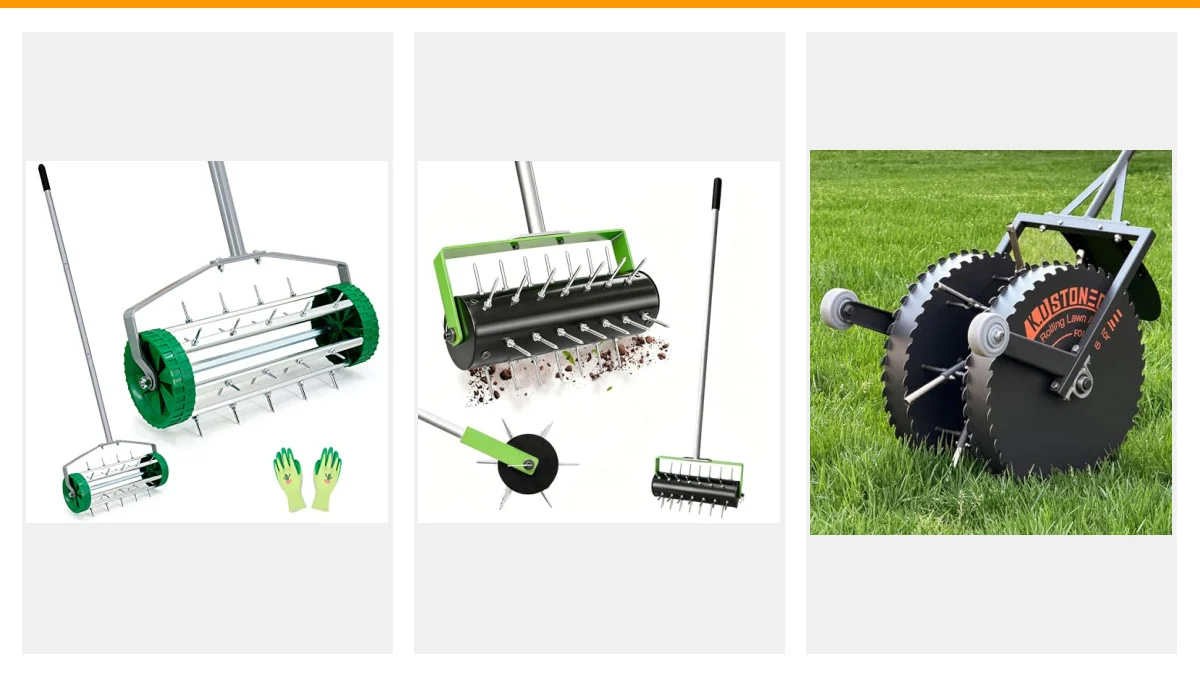
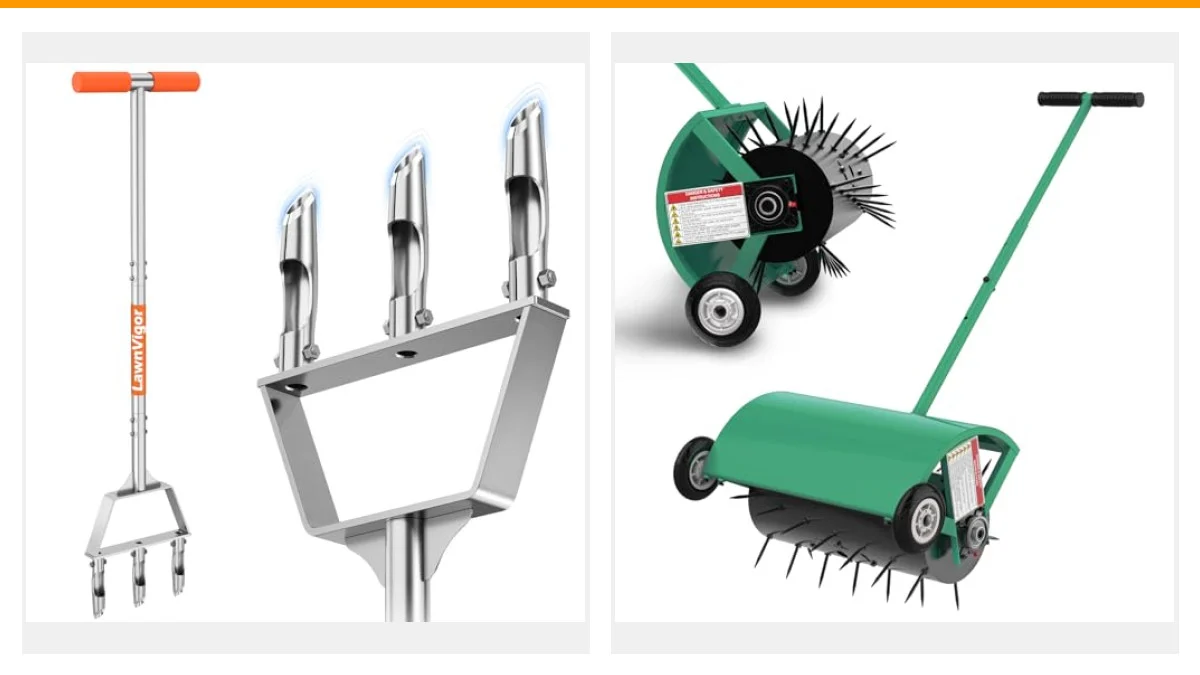
Your lawn feels like a parking lot after a dry summer. Water pools on the surface, fertilizer sits there doing nothing, and the grass looks thin no matter how much you water. That crust on top is compaction, and it blocks everything your grass needs.
A tow behind spike aerator with wheels solves this without renting a machine or paying a landscaper. The right unit punches thousands of small holes in the soil, lets air and water down to the roots, and folds up behind a riding mower or ATV. The key differences between models come down to tine design, working width, build quality and how easily the transport wheels switch between driving and aerating.
We looked at five models that cover the real range of what’s available: two Brinly builds, a VEVOR, a BlumeTrec and a Suchtale. The Brinly SAT2-40BH-P takes our top spot for its patent-pending 3-D tines and extra-strength tow bar. The others each win on a specific trade-off. If you want to compare this category more broadly, our guide to the best tow behind spike aerator options covers the wider field.
Here is a quick look at how the five stack up on the specs that matter.
| Features | Brinly SAT2 Hammered | Brinly SAT2 Carbon | VEVOR 32-Inch | BlumeTrec 40-Inch | Suchtale 40-Inch |
|---|---|---|---|---|---|
| Working Width | 40 inches | 40 inches | 32 inches | 40 inches | 40 inches |
| Tine Count & Type | 11 stars, 12 tips each | 11 stars, 12 tips each | High-strength coring tines | 10 galvanized 3D tines | 10 steel star tines |
| Penetration Depth | Up to 2 inches | Up to 2 inches | Up to 2 inches | Up to 2 inches | Up to 2 inches |
| Weight Tray Capacity | 150 lbs | 150 lbs | 100 lbs | 110 lbs | 110 lbs |
| Transport Wheels | Turf-tread, single lever | Turf-tread, single lever | Not specified | 8-inch rubber, bearing | Bearing-supported wheels |
In this article
Brinly SAT2-40BH-P Tow Behind
Brinly has been making tow-behind lawn equipment for decades, and the SAT2-40BH-P is the model most homeowners land on after their first cheap aerator bends a tine. It runs 40 inches wide with 11 tine stars, each carrying 12 spike tips. That works out to 132 individual contact points rolling across your lawn per pass. The hammered black finish is the only real difference from the carbon version below.
The standout feature is the patent-pending 3-D tine design. Brinly forms these from galvanized steel in a three-dimensional shape rather than a flat stamp, and the company claims double the strength of a conventional tine. In practice, this matters most on hard clay or a lawn that hasn’t been aerated in years. Cheaper tines flex and stay bent after one rocky pass. These hold their shape. The double tow bar and 5/8-inch solid steel axle add to the durability story, and the 150-pound weight tray is the largest in this group. Load it with concrete blocks and you’ll get closer to that full 2-inch penetration depth in dense soil.
The single-lever transport mode is genuinely useful. You flip one handle, the turf-tread wheels drop, and you tow the unit across a driveway or sidewalk without dragging spikes. It’s not perfect though. The lever mechanism needs a firm push to engage, and some owners report it sticking after a season of use if you don’t keep it clean. Assembly takes about 45 minutes and the instructions are adequate rather than great.
- 11 tine stars with 12 spike tips each for dense soil coverage
- Patent-pending 3-D galvanized tines resist bending in compacted ground
- 150-pound weight tray, the highest capacity in this roundup
- Double tow bar and solid steel axle for long-term durability
- Single-lever transport wheel engagement for driveway crossings
Best for: Homeowners with a riding mower and a large, heavily compacted lawn who want a buy-once aerator.
Brinly SAT2-40BH-P Carbon Edition
This is the same aerator as the first pick, wearing a carbon finish instead of hammered black. Every functional spec matches: 40-inch width, 11 tine stars, 12 tips per star, 2-inch penetration, 150-pound tray, single-lever transport wheels. If you’re choosing between the two, the decision comes down to color preference and whatever price is live on Amazon at the moment. Check both listings before you buy, because one is often priced a few dollars lower than the other.
Buyers who want the Brinly build quality but prefer a darker, more modern look on their equipment tend to pick this one. The carbon coating holds up the same way the hammered finish does, and neither shows scratches badly. You get the same 3-D tines, the same extra-strength double tow bar, and the same nylon spacers between each star to cut friction and extend service life.
Here’s the honest downside: paying a premium for a cosmetic variation makes no practical sense. If the carbon version costs more than the hammered one on the day you order, buy the hammered. The finish has zero effect on how the tines penetrate soil or how long the axle lasts. Treat this as a color option, not a different product.
- Identical mechanical specs to the hammered black model
- Carbon finish for buyers who want a darker equipment look
- Same 3-D tines, double tow bar and solid steel axle
- 150-pound weight tray for maximum penetration
- Nylon spacers between tine stars reduce friction
Best for: Shoppers who want the proven Brinly platform and prefer the carbon colorway.
VEVOR Tow Behind Plug Aerator

VEVOR
VEVOR Tow Behind Lawn Spike Aerator, 32 in with Universal Hitch, Heavy Duty & Rust-Resistant, Pull Behind Spike Aerator Tool with Folded Edge Tray, for Farmland & Garden Tractors
- 32-Inch Extra-Wide Working Width: This tow-behind spike aerator features an ultra-wide 32-inch coverage, allowing you to aerate la…
- Reaches the Root Zone: Equipped with high-strength coring tines that penetrate up to 2 inches deep, this tow-behind spike aerator…
- More Efficient & Even Aeration: The tow behind lawn spike aerator with weight tray supports up to 100 lbs of additional weight, he…
VEVOR’s entry is the narrowest unit here at 32 inches, and the listing calls it a plug aerator in the title while describing coring tines in the body. That naming inconsistency is worth knowing before you order, because spike and plug aerators do different jobs. What you actually get is a 32-inch tow-behind unit with high-strength tines that reach about 2 inches deep. It handles dry, hard ground, clay and sandy soil, which covers most of what a homeowner will run into.
The build quality punches above the price point. A fully welded frame, reinforced hardware and a folded-edge weight tray that holds cinder blocks or sandbags without them sliding around. VEVOR added strap slots on the tray, a small detail that matters when you’re towing across uneven ground and don’t want your weights shifting. The 100-pound capacity is lower than the Brinly’s 150, but plenty for most residential lawns. Assembly tools are included, which saves a trip to the garage.
The 32-inch width means more passes. On a half-acre lawn you’ll notice the extra time compared to a 40-inch unit. The tray also maxes out at 100 pounds, so really stubborn clay may need a second pass rather than one heavy run. And the transport wheel setup isn’t as clearly described as the Brinly lever system, so confirm how it engages before you buy if driveway crossings matter to you.
- 32-inch working width, narrower than the 40-inch competitors
- Fully welded steel frame with reinforced hardware
- 100-pound weight tray with strap slots and folded edges
- Handles clay, sandy and dry hard ground
- Assembly socket tool and wrench included
Best for: Budget-conscious buyers with smaller lawns who still want a welded steel frame.
BlumeTrec 40-Inch Tow Behind
BlumeTrec built this one for people who hate skipped strips. The 40-inch frame carries 10 galvanized 3D tines, each with 11 irregular tips, and the tines rotate independently. That independent rotation is the whole point. When you turn your mower at the end of a row, a fixed-tine aerator lifts and misses a patch. These keep revolving through the turn, so you make fewer cleanup passes. The 11 irregular tips per tine also mean the spikes hit at slightly different angles, which helps in soil that isn’t perfectly uniform.
The chassis is all steel with reinforced side plates and a channel-shaped tow bar that resists bending. Metal spacers sit between each star tine to cut friction, and the powder-coat finish handles outdoor storage better than bare steel. The 110-pound weight tray takes cement blocks, and BlumeTrec notes that watering dry ground beforehand improves penetration. That’s a real tip, not marketing. Dry clay is the hardest thing to aerate, and a 20-minute soak the night before makes a noticeable difference.
Two 8-inch rubber tires with bearing-supported wheels roll smoothly, and the side-control lever switches between transport and working mode with one handle. The pin-style hitch fits ATVs, riding mowers and lawn tractors without extra tools. The catch is the 110-pound tray. It’s less than the Brinly’s 150, so in rock-hard soil you may need two passes where a heavier Brinly manages in one. The manual is illustrated and clear, but the assembly still takes the better part of an hour.
- 10 galvanized 3D tines with 11 irregular tips each
- Independently rotating tines reduce skipped areas in turns
- 110-pound weight tray for added penetration
- 8-inch rubber tires with bearing-supported wheels
- Pin-style universal hitch for ATV, mower or tractor
Best for: Lawns with lots of turns and irregular shapes where missed strips are a real annoyance.
Suchtale 40-Inch Tow Behind

Suchtale
Suchtale 40-Inch Tow Behind Spike Aerator with Galvanized Steel Tines, Durable Lawn Aerator Soil Penetrator Spikes Tractor with Extra-Wide Tow Bar for Lawn and Farm, Black
- 10 Star-Shaped Penetrate Soil: Suchtale Spike Aerator with unique 10 steel tines star with 8” diameters, each feature 10 spike une…
- Easy to Install: 40-Inch Tow Behind Spike Aerator with detailed and completed instruction manual, includes Manual with parts break…
- Durable Construction: Designed with high-quality all -steel, and reinforced side plate and solid steel axle for extra strength. Fo…
Suchtale’s 40-inch aerator runs 10 star-shaped steel tines with 8-inch diameters, each carrying 10 uneven spike tips. The tines rotate independently, so like the BlumeTrec, they keep working through turns instead of skipping. Penetration reaches about 2 inches, and the all-steel frame with reinforced side plates and a solid steel axle gives it a sturdy feel for the money. The weight tray accepts up to 110 pounds of blocks or sandbags.
One detail sets this apart from cheaper builds. Suchtale uses a 6mm thick adjust handle instead of the 4mm you find on many budget aerators. That extra 2mm matters because the handle is what you grab to switch modes, and it’s a common failure point on low-cost units. The channel-shaped tow bar resists bending, the adjustable hitch fits different tractor heights, and nylon spacers between each star cut friction the same way the Brinly does. Wheels run on bearings, which helps with load capacity.
The trade-off is refinement. Suchtale is a newer brand without Brinly’s long track record, and the 110-pound tray is again lighter than the Brinly’s 150. The powder-coat finish is decent but not exceptional, so storing it under cover will extend its life. Assembly is straightforward with the included pictorial manual, though the instructions read like a translation in places. The satisfaction guarantee is generous, which takes some of the risk out of trying an unfamiliar name.
- 10 steel star tines with 10 uneven tips each
- 6mm thick adjust handle, thicker than typical 4mm budget builds
- 110-pound weight tray for extra ground penetration
- Bearing-supported wheels handle heavier loads
- Pin-style hitch fits ATVs and riding mowers
Best for: Shoppers who want 40-inch coverage and sturdy hardware without paying Brinly prices.
How We Chose These Products
We started with the specs that actually change how an aerator performs: tine count and design, working width, weight tray capacity, axle and tow bar construction, and how the transport wheels engage. Tine design got the most weight. A flat stamped tine bends in hard soil, and a bent tine stops penetrating. The Brinly 3-D tines and the galvanized 3D tines on the BlumeTrec both address this directly, so both scored well.
We also weighed real-world usability. A 40-inch unit saves passes over a 32-inch one, but only if your mower can pull it and your gate is wide enough. A 150-pound tray beats a 100-pound tray in clay, but only if you have blocks to load. We ranked each product on the balance of coverage, durability and price rather than any single number, and we flagged the honest limitations of each so you can match a unit to your actual lawn instead of a spec sheet.
Buying Guide: What Really Matters
Spike tines versus plug tines is the first decision. Spike aerators push holes in the soil, which relieves surface compaction and lets water and nutrients down to the roots. Plug aerators pull cores out. Spikes are simpler, cheaper and don’t leave mess on the lawn, but they can slightly compact the soil around each hole over time. For most homeowners dealing with a hard, crusty lawn, a spike unit does the job. If you want to see how the other style compares, our breakdown of the best tow behind plug aerator covers that side of the market.
Working width drives how long the job takes. A 40-inch unit covers 25 percent more ground per pass than a 32-inch one, which adds up fast on a half-acre or larger. Just measure your narrowest gate and your mower deck before committing. Weight tray capacity is the second big factor. Heavier trays push tines deeper in compacted clay, so a 150-pound tray gives you more headroom than a 100-pound one. You don’t have to fill it, but having the option helps in tough soil.
Build quality decides how many seasons you get. Look for a solid steel axle, a reinforced or channel-shaped tow bar, and spacers between tine stars to reduce friction. Transport wheels are not a luxury. Without them you drag spikes across every driveway and sidewalk, which dulls them and tears up concrete edges. A single-lever engagement system is faster than fiddling with pins. For a broader look at how these units fit into a full lawn care routine, see our best tow behind aerator overview.
Our Top Recommendation
The Brinly SAT2-40BH-P is our pick, and the reason is simple: it has the strongest tines, the biggest weight tray and the most proven track record of anything here. The patent-pending 3-D tines resist bending in compacted soil, the 150-pound tray gives you the best shot at full 2-inch penetration, and the double tow bar and solid steel axle are built to last. The single-lever transport mode makes driveway crossings painless. Pick the carbon version if you prefer the color, but the hammered black is the same machine.
If budget matters more than maximum weight capacity, the Suchtale 40-Inch is the value pick. It matches the Brinly on width and tine count, adds a thicker adjust handle than most budget builds, and costs less. The BlumeTrec is the best choice for irregular lawns with lots of turns, since its independently rotating tines skip fewer patches. The VEVOR suits smaller properties where a 32-inch width is fine and the welded frame is the priority.
Frequently Asked Questions
Do spike aerators actually help a compacted lawn?
Yes, if you use them properly. Spikes punch holes that let water, air and fertilizer reach the root zone, which is the main problem with compacted soil. The catch is depth. Without enough weight on the tray, the spikes barely scratch the surface and the benefit is minimal. Load the tray with blocks and water the lawn the day before, and you’ll see real results.
How much weight should I put on the tray?
Start with about half the rated capacity and check the penetration. If the spikes are only going in an inch, add more. Most homeowners find 80 to 120 pounds is enough for a normal lawn. Save the full 150 pounds for genuinely hard clay, and remember that extra weight makes the unit harder to pull and turn.
Can I pull one of these behind a riding mower?
All five models here work with a riding lawn mower, and the pin-style hitches on the BlumeTrec, Suchtale and VEVOR also fit ATVs and lawn tractors. Check your mower’s hitch height and make sure it can handle the loaded weight. A small 42-inch mower will pull a 40-inch aerator fine on flat ground, but it may struggle on steep slopes with a full weight tray.
How often should I aerate?
Once a year is enough for most lawns, ideally in early fall when grass is growing and the soil is moist. Lawns with heavy foot traffic or clay soil may need two passes a year, one in spring and one in fall. Aerating right before overseeding gives you the best seed-to-soil contact, which is when the holes pay off the most.