I spent three weekends last spring hunting for a soil tester that wouldn’t die the first time it got rained on. Every listing promised ‘durable’ and ‘waterproof,’ but the reviews told a different story. Cracked screens. Fogged dials. Probes that rusted after one season.
A good soil tester with a waterproof case needs to do more than survive a drizzle. It should give you readings you can trust, hold up to repeated use, and not cost more than the plants you’re trying to grow. The case matters because soil testing happens in wet conditions — after rain, during irrigation, in morning dew. If moisture gets inside, your numbers are garbage.
I narrowed the field to five models that actually deliver on protection and performance. The AgraTronix 8180 leads for serious compaction work, while the LAWNFUL Digital pH Meter wins for quick pH checks. The Rapitest Kit suits beginners, and the ETCR3200C handles professional resistivity jobs. Here’s what I found.
Compare the key specs side by side before you decide.
| Features | AgraTronix 8180 | LAWNFUL pH Meter | AgraTronix 08180 | Rapitest Kit | ETCR3200C |
|---|---|---|---|---|---|
| Primary Function | Soil compaction | Soil pH | Soil compaction | pH, N, P, K | Earth resistance |
| Probe / Method | 24-inch stainless probe | Double-needled stainless | 24-inch probe | Capsule system | 2/3/4-wire, clamp |
| Display Type | Liquid-filled dial | LCD screen | Analog dial | Color comparator | Digital LCD |
| Water Resistance | Shock-resistant housing | Not specified | Molded housing | Not specified | Not specified |
| Best Use Case | Farm compaction | Garden pH checks | Field compaction | Home garden | Electrical grounding |
AgraTronix 8180 Soil Comp…
AgraTronix
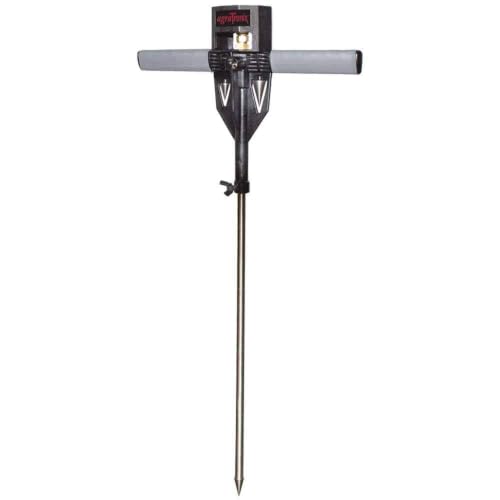
AgraTronix 8180 Soil Compaction Tester - 24 in. Probe, 300 PSI, Rubber Grip Handles, Water Filled Stainless Dial | Agricultural Supplies
- Soil Testing Equipment: Designed to accurately test soil compaction, this soil tester lets you determine the ideal state of soil f…
- Portable Device: The electronic tester features double molded rubber handles, hanger hole with nails and a lightweight body. Its e…
- Durable Construction: Made from high-grade stainless steel, the 24-inch probe of the portable soil tester with adjustable shock co…
This is a compaction tester, not a pH meter. It measures how hard your soil is, which tells you whether roots can push through and reach water. Farmers, orchard managers, and serious gardeners use it to find hardpan layers before they waste money on fertilizer that won’t penetrate.
The 24-inch stainless probe reaches deep enough to find compaction problems most surface testers miss. The liquid-filled dial absorbs shock, so a drop off the tailgate won’t ruin your reading. Two tip sizes — 1/2 inch and 3/4 inch — let you match the probe to soil type. The color-coded dial (green, yellow, red) makes it obvious whether you’re dealing with good ground or a problem zone.
It’s heavy. The rubber grips help, but pushing a 24-inch probe into dry clay takes real effort. And it only measures compaction — you’ll need a separate tool for pH or nutrients. The liquid-filled dial can also develop bubbles over time if you store it upside down, so keep it upright.
- Measures compaction up to 300 PSI with a 3-way rating system
- Double-molded rubber handles and hanger hole for easy storage
- Adjustable shock collar protects the dial during transport
- Includes small (1/2 in.) and large (3/4 in.) tester tips
- Stainless steel construction resists rust and corrosion
Best for: Farmers and serious growers who need to diagnose soil compaction before planting.
LAWNFUL Digital Soil pH M…
If you just want to know whether your soil is acidic or alkaline, this pen-style meter does the job without a chemistry set. It’s aimed at home gardeners, lawn care enthusiasts, and anyone who wants a quick pH reading without mixing capsules or comparing colors.
The double-needled stainless probes are sensitive and resist corrosion, which matters if you’re testing wet soil repeatedly. The calibration-free design means you pull it out of the box, stick it in the ground, and read the LCD. No buffering solutions, no waiting. It runs on three AA batteries that the company claims last up to five years — plausible given how little power an LCD pH pen draws.
It weighs 160 grams, so it’s light enough to carry in a pocket. The trade-off? It only measures pH. No nitrogen, phosphorus, or potassium. And while the probes are stainless, the housing isn’t explicitly rated as waterproof — so don’t submerge it. Wipe it clean after use and store it dry. For a deeper look at digital readout options, see this digital soil tester guide.
- Industrial-grade accuracy with embedded algorithms
- Calibration-free operation — ready to use out of the box
- Double-needled stainless steel probes resist corrosion
- Weighs only 160 grams for easy portability
- Includes three AA batteries and a one-year warranty
Best for: Home gardeners who want fast, accurate pH readings without mixing chemicals.
AgraTronix 08180, Soil Co…

Mytee Products
AgraTronix 08180, Soil Compaction Tester Made in USA SCT
- Durable Molded Housing and Rubber-Grip Handles
This is the same core compaction tester as the 8180, but sold under the Mytee Products label with a slightly different housing. It’s built for the same audience — farmers, agronomists, and landscape professionals who need to measure soil density in the field.
The molded housing and rubber-grip handles set it apart from cheaper alternatives. You can push this into hard ground without the handle slipping or the body cracking. The 24-inch probe reaches subsoil layers where compaction actually matters. If you’ve ever wondered why your crops stall out despite adequate water, this tool answers that question.
Availability is spotty. The listing shows scarce stock, so if you need one for spring planting, order early. And like the 8180, it only measures compaction. You’ll still need a separate pH or nutrient tester. The analog dial is easy to read in bright sun, but it’s not backlit, so early morning or evening testing requires a flashlight.
- Durable molded housing with rubber-grip handles
- 24-inch probe for deep soil penetration
- Analog dial reads compaction in PSI
- Lightweight enough for one-handed operation
- Made in the USA
Best for: Field professionals who need a reliable compaction tester with a comfortable grip.
Rapitest Soil Test Kit fo…

Luster Leaf
Rapitest Soil Test Kit for Gardens, Vegetables, Flowers and Lawns. USA designed and assembled soil tester completely, quickly and accurately measures/analyzes soil pH acidity and garden nutrients.
- Quick, at home results for Soil pH, Nitrogen, Phosphorous and Potash Innovative and inexpensive soil test kit features an easy-to-…
- Contains all components needed for 20 tests. 5 for each of pH, N, P and K
- Contains all components needed to test all variables in several spots in the yard or garden
This is the kit you buy when you want to test everything — pH, nitrogen, phosphorus, and potassium — without spending a fortune. It’s designed for home gardeners, vegetable growers, and lawn owners who want a complete picture of their soil health.
The capsule system is simple: mix soil with water, add a capsule, shake, and compare the color to the included chart. You get 20 tests total — five for each variable. The patented color comparators are easier to read than generic test strips, and the included pH preference list covers over 450 plants, which takes the guesswork out of interpreting results.
It’s not a waterproof case product. The kit comes in a cardboard box, and the capsules are sensitive to moisture. Store it indoors. The color comparison also requires decent lighting — testing at dusk gives unreliable readings. And while 20 tests sounds like a lot, it goes fast if you’re testing multiple garden beds. For acidic soil specifically, this acidic soil tester guide covers more options.
- Tests pH, nitrogen, phosphorus, and potassium
- Includes 20 tests — 5 for each variable
- Capsule system with patented color comparators
- pH preference list for over 450 plants
- Detailed instructions for beginners
Best for: Beginner gardeners who want a complete soil analysis without buying multiple tools.
ETCR3200C Soil Resistivit…

ETCR
ETCR3200C Soil Resistivity Tester Double Clamp Earth Resistance Tester | IP65 case ground resistance meter with 2/3/4-wire measurement for outdoor use and complex grounding systems
- With 4-wire method, 3-wire method and simple 2-wire method, selection method, double clamp method to measure earth resistance, DC…
- 2/3/4-wire Method Measure Earth Resistance: 0.00Ω-300KΩ; Resolution: 0.01Ω; Accuracy: ±2%rdg±0.05dgt
- Selection Method Measure Earth Resistance: Range: 0.00Ω-3000Ω; Resolution: 0.01Ω; Accuracy: ±2%rdg±0.05dgt
This is a professional-grade earth resistance tester, not a garden tool. Electricians, grounding system installers, and engineers use it to measure soil resistivity and earth resistance for electrical safety systems. If you’re building a grounding grid or checking lightning protection, this is the tool.
It supports multiple measurement methods — 2-wire, 3-wire, 4-wire, selection method, and double clamp. That flexibility means you can test in situations where traditional methods won’t work, like live grounding systems where you can’t disconnect the electrode. The accuracy is impressive: ±2% reading for most ranges, with resolution down to 0.01Ω.
The trade-off is complexity. This isn’t a stick-it-in-the-ground tool. You need to understand grounding theory to use it correctly. It’s also expensive and hard to find — the listing shows scarce availability. For most gardeners, it’s overkill. But for electrical professionals, it’s a specialized instrument that does one job extremely well.
- Measures earth resistance, soil resistivity, and earth voltage
- Supports 2-wire, 3-wire, 4-wire, selection, and double clamp methods
- Resolution of 0.01Ω with ±2% accuracy
- AC voltage range of 0.0-100.0V
- Digital LCD display for clear readings
Best for: Electrical professionals who need precise earth resistance measurements for grounding systems.
How We Chose These Products
I focused on tools that solve specific problems, not generic ‘soil testers’ that try to do everything poorly. Each pick had to excel at its primary function — compaction, pH, nutrient analysis, or resistivity. I also looked for build quality that matches the job. A compaction tester needs a sturdy probe and shock-resistant dial. A pH pen needs corrosion-resistant electrodes.
Water resistance mattered, but I didn’t limit the list to products with explicit IP ratings. Many soil testers are designed to be wiped clean rather than submerged, and that’s fine for most users. What I avoided were tools with known moisture issues — fogged displays, rusting probes, or cases that crack after a season. The Rapitest Kit isn’t waterproof, but it’s stored indoors, so that’s a fair trade-off for the price.
Buying Guide: What Really Matters
Start with your actual testing goal. Compaction, pH, nutrients, and electrical resistivity are four different jobs. No single tool does all of them well. If you’re diagnosing why plants struggle, compaction and pH are the two most common culprits. If you’re managing a lawn, pH and nutrient levels matter more. Electrical resistivity is a separate category entirely.
Look at probe length and material. Stainless steel resists rust, but even stainless can pit if you leave it in wet soil. Longer probes reach deeper layers where compaction and moisture issues hide. For pH pens, double-needle probes are more durable than single-tip designs. For compaction testers, a 24-inch probe is the standard for field work.
Water resistance is about more than surviving rain. It’s about whether moisture gets into the electronics or dial. Liquid-filled dials resist shock and moisture better than dry dials. LCD screens need sealed housings to prevent fogging. If the product doesn’t specify water resistance, assume it needs to be stored dry and wiped clean after each use. Check the current price on Amazon for any model before you commit — prices fluctuate, especially for agricultural tools.
Our Top Recommendation
The AgraTronix 8180 is the best overall pick for anyone serious about soil health. It measures the one thing most gardeners overlook — compaction — and it does so with a durable, shock-resistant design that survives real field conditions. The dual tip sizes add flexibility, and the color-coded dial makes interpretation instant. It’s not cheap, and it only does one job, but it does that job better than anything else on this list.
For a budget-friendly alternative, the LAWNFUL Digital pH Meter covers the most common soil question — acidity — for a fraction of the cost. It’s lightweight, calibration-free, and accurate enough for home gardens. If you need a complete nutrient profile, the Rapitest Kit remains the best value for beginners. And for electrical professionals, the ETCR3200C is the only pick that handles earth resistance testing properly.
Frequently Asked Questions
Do I really need a waterproof case for a soil tester?
Not always. If you test soil after rain or during irrigation, moisture protection helps. But many testers are designed to be wiped clean rather than submerged. A waterproof case matters most for electronic models with LCD screens or dials that can fog up. For capsule-based kits, keep them indoors and you’re fine.
Can I use a compaction tester to measure pH?
No. Compaction testers measure soil density and pore volume. pH requires a different electrode or chemical test. Some digital meters combine both functions, but they’re rare and usually less accurate than dedicated tools. Buy separate instruments for separate jobs.
How often should I test my soil?
Test pH and nutrients at the start of each growing season. Compaction testing is best done after harvest or before planting when soil is workable. If you notice stunted growth or poor water infiltration, test immediately rather than waiting for the next season.
Are expensive soil testers worth it?
It depends on scale. A $20 pH pen works fine for a few raised beds. A $300 compaction tester makes sense if you’re managing acres of farmland. Professional-grade resistivity testers cost even more, but they’re built for electrical safety work where accuracy is non-negotiable. Match the tool to the job.