You’ve started your seeds indoors. They’ve sprouted. Now comes the risky part: moving them into the garden or a larger pot. A lot can go wrong. The soil might be too acidic, too wet, or too cold. Your seedlings can go into shock and never recover. A good soil tester removes the guesswork.
But not all testers work for transplanting. Most are designed for mature garden beds. Seedlings have shallow roots. They live in potting mix, not native soil. And they need consistent moisture. This guide focuses on tools that actually help at the transplant moment.
We looked at probe depth, calibration for potting mix, and speed. Here are five testers that solve different problems. The greenhouse seedling trays guide covers similar ground, but this article is all about the transplant step.
Compare the key specs of our five picks at a glance.
| Features | Rapitest Soil Kit | MySoil Lab Test | LAWNFUL Digital Meter | Dewilde pH Strips | AgraTronix Compaction Tester |
|---|---|---|---|---|---|
| Testing Method | Capsule color change | Mail-in lab analysis | Digital pH pen | pH test strips | Analog dial compaction |
| Key Measurement | pH, N, P, K | 13 nutrients + pH | pH only | pH only | Soil compaction (PSI) |
| Speed | Minutes per test | 6-8 days | Instant | ~90 seconds | Instant |
| Best For | Comprehensive home check | Serious soil correction | Quick pH checks | Budget pH screening | Raised bed prep |
| Probe Depth | Not applicable | Not applicable | ~4-6 inches | Not applicable | 24 inches |
Rapitest Soil Test Kit for Gardens

Luster Leaf
Rapitest Soil Test Kit for Gardens, Vegetables, Flowers and Lawns. USA designed and assembled soil tester completely, quickly and accurately measures/analyzes soil pH acidity and garden nutrients.
- Quick, at home results for Soil pH, Nitrogen, Phosphorous and Potash Innovative and inexpensive soil test kit features an easy-to-…
- Contains all components needed for 20 tests. 5 for each of pH, N, P and K
- Contains all components needed to test all variables in several spots in the yard or garden
This is the classic capsule kit from Luster Leaf. You mix soil with water, add a capsule, and match the color. It tests pH, nitrogen, phosphorus, and potassium. The kit includes materials for 20 tests total. That’s five tests for each of the four variables. For a home gardener who wants a full picture before transplanting, this is a solid starting point.
What stands out is the included pH preference list. It covers over 450 plants. You can look up your specific seedlings and see what pH they need. That’s genuinely useful when you’re about to transplant tomatoes, peppers, or brassicas. The color comparator system is patented and easy to read. Results come in minutes, not days.
The trade-off is accuracy. Capsule kits are not lab-grade. Your reading depends on lighting and your color perception. It’s also a multi-step process. You can’t just stick it in the soil and get a number. And it doesn’t measure moisture or temperature. For transplanting, you’ll still need a separate moisture meter.
- Tests pH, nitrogen, phosphorus, and potassium in one kit
- Includes 20 tests total (5 per variable)
- pH preference list for over 450 plants
- Patented color comparator system
- No batteries or calibration needed
Best for: The gardener who wants a broad nutrient snapshot before planting a diverse vegetable garden.
MySoil Soil Test Kit, Unlock Your Lawn & Garden Potential

My Soil
MySoil Soil Test Kit, Unlock Your Lawn & Garden Potential, Complete & Accurate Nutrient and pH Analysis with Recommendations Tailored to Your Soil and Plant Needs
- KNOW BEFORE YOU GROW | Grow the healthiest, sustainable lawn and garden with the most accurate and easy to use professional soil t…
- FAST & ACCURATE | Unlike at-home pH meters and test strips, our mail-in professional lab analysis accurately measures 13 plant-ava…
- FOR ANY GROWING SCENARIO | Tests any soil type and growing condition - lawn & turf, vegetable gardening, flowers, compost, trees,…
MySoil is a mail-in lab test. You collect a soil sample, send it in, and get a detailed report. The analysis covers 13 plant-available nutrients, including nitrogen and pH. Results arrive in 6-8 days. This is not an instant-read tool. It’s for the grower who wants precise data and custom recommendations.
The standout feature is the tailored advice. You get organic and non-organic fertilizer recommendations. It tells you what to apply, how much, and when. For transplanting, this helps you amend your soil before you set out seedlings. You can correct deficiencies ahead of time. The test works for any growing scenario: lawns, vegetables, flowers, compost, trees, and even hydroponics.
The obvious drawback is speed. You can’t test on transplant day. You need to plan weeks ahead. The cost per test is also higher than capsule kits or strips. And it’s overkill if you’re just transplanting a few seedlings into pots. For a small container garden, a digital meter is faster and cheaper. But for a large in-ground garden, the lab data pays for itself.
- Professional lab analysis of 13 nutrients
- Results in 6-8 days via email or app
- Custom organic and non-organic recommendations
- Works for soil, compost, and hydroponics
- No home testing equipment needed
Best for: The serious gardener who wants to correct soil chemistry before a full-season transplant.
LAWNFUL Digital Soil pH Meter, Industrial Grade
This is a handheld digital pH pen. It has double-needled stainless-steel probes. You push it into the soil and get a reading on the LCD screen. It’s calibration-free and ready to use. The unit weighs 160 grams and runs on three AA batteries. Those batteries are included and should last up to five years. For quick pH checks during transplanting, this is the fastest option.
What sets it apart is the industrial-grade build. The probes are anticorrosive and sensitive. You can use it in the garden, in pots, or even in a lab setting. The digital display removes the guesswork of color matching. For seedlings, you can check the pH of your potting mix before you transplant. If it’s off, you adjust before the roots hit the soil.
Here’s the catch: it only measures pH. It doesn’t test moisture, temperature, or nutrients. You’ll need separate tools for those. The probe depth is also limited. It works for shallow root zones, but it won’t tell you what’s happening six inches down. And while it’s calibration-free, some users report it can drift over time. It’s not a lab instrument.
- Digital pH reading with LCD display
- Double-needled stainless-steel probes
- Calibration-free operation
- Includes 3 AA batteries (up to 5 years)
- 1-year warranty
Best for: The container gardener who needs fast, repeated pH checks on potting mix.
Soil Test Kit – 100 Soil pH Test Strips

Dewilde Trading Co
Soil Test Kit – 100 Soil pH Test Strips (3.5–9 Range) for Garden, Lawn & Indoor Plants – Easy At-Home Soil Testing
- Accurate Soil pH Testing: Dewildetradingco Soil pH Test Strips offer measurements of soil pH levels (pH 3.5-9). As an essential to…
- User-Friendly Testing Procedure: The testing process is simple and efficient. Mix the sample soil with water, let the solution sit…
- Cost-Effective and Versatile: With 100 Soil PH checker strips included in each package, Dewildetradingco provides a cost-effective…
These are pH test strips from Dewilde Trading Co. You mix soil with water, let it sit, dip a strip, and compare the color to a chart. The range is pH 3.5 to 9. You get 100 strips in a pack. That’s a lot of tests for a low cost. For seed starting, this is the budget-friendly way to screen your potting mix.
The process takes about 90 seconds per test. You need to wait 30 minutes for the soil solution to settle. That’s slower than a digital pen. But it’s still faster than a lab. The strips are portable and easy to store. You can test multiple trays or pots in one session. The color chart is printed on the bottle, so you don’t lose it.
The main limitation is precision. Color matching is subjective. Different people see different shades. The strips also only measure pH. They don’t tell you about nutrients or moisture. And the 30-minute wait means you can’t test on a whim. You need to plan ahead. For a quick screen, though, they work fine.
- 100 pH test strips per pack
- pH range 3.5 to 9
- Results in about 90 seconds after mixing
- Color chart on bottle
- No batteries or calibration
Best for: The budget-conscious seed starter who wants to screen many pots at once.
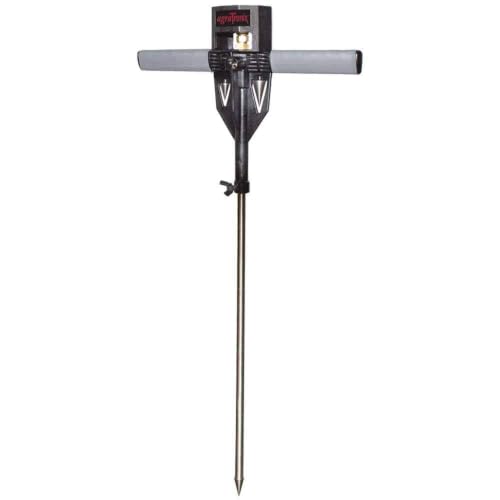
AgraTronix 8180 Soil Compaction Tester
This is a different kind of tool. The AgraTronix 8180 measures soil compaction, not pH or nutrients. It has a 24-inch stainless-steel probe and a liquid-filled dial. You push it into the soil and read the pressure on a 3-way rating system. Green means good. Red means poor. For transplanting, this tells you if your soil is too hard for roots to penetrate.
What makes it useful is the depth. Seedlings have shallow roots, but they need to grow down. If your garden bed is compacted, roots will struggle. This tester shows you where the problem lies. You can then till or amend before transplanting. The rubber grip handles and lightweight body make it easy to use. The dial is shock-resistant.
This is a specialized tool. It doesn’t measure pH, moisture, or nutrients. It’s also expensive compared to other testers. And it’s not for containers. You need a garden bed or lawn. The probe is 24 inches, which is overkill for small raised beds. But for in-ground gardens, it’s a valuable diagnostic.
- 24-inch stainless-steel probe
- Measures compaction in PSI
- Color-coded 3-way rating system
- Liquid-filled dial for shock resistance
- Two tester tips (1/2 in. and 3/4 in.)
Best for: The in-ground gardener who suspects compacted soil is stunting transplant growth.
How We Chose These Products
We focused on the transplant moment. That means probe depth matters. A tester needs to reach the seedling root zone, usually the top 4-6 inches. We also looked at how each tool handles potting mix. Most soil testers are calibrated for native soil. Potting mix has different density and pH. We prioritized tools that work in both.
Speed was another factor. Transplanting is time-sensitive. You don’t want to wait days for results. We favored instant-read meters and strips over lab kits for this reason. But we included one lab kit for growers who plan ahead. We also considered cost and ease of use. A tool you won’t use is a waste of money.
Buying Guide: What Really Matters
Probe depth is the first thing to check. Seedlings have shallow roots. A tester with a 2-inch probe won’t tell you what’s happening at 4 inches. Look for a probe that reaches at least 4-6 inches. For container gardening, a shorter probe is fine. For raised beds, you might want more depth.
Calibration is the second factor. Digital meters often claim to be calibration-free. That’s convenient, but they can drift. Analog meters and strips don’t need calibration, but they’re less precise. Lab kits are the most accurate, but they’re slow. Match the tool to your need. If you’re testing potting mix, a digital pen works well. If you’re testing native soil, a lab kit gives you the full picture.
Moisture and temperature are often overlooked. Seedlings are sensitive to both. A soil tester that only measures pH misses half the story. Consider a 3-in-1 meter if you want moisture and light too. But remember: multi-function tools often compromise on accuracy. For the plant health monitoring side, you might need separate tools.
Soil Temperature: The Forgotten Transplant Factor
Most soil testers don’t measure temperature. That’s a problem. Seedlings are fussy about soil temp. Tomatoes won’t grow if the soil is below 50°F. Peppers need even warmer soil. If you transplant too early, roots won’t establish. The plant sits there, stressed, until conditions improve.
A soil thermometer is a separate tool. But you can use a digital pH meter with a temperature probe if it has one. The LAWNFUL doesn’t. The MySoil lab kit doesn’t either. So you’ll need to buy a thermometer separately. It’s worth it. Check soil temp before you transplant. Wait until it’s consistently warm.
Testing Before and After Transplant
Test your soil before you transplant. That’s obvious. But test again after. Why? Transplant shock changes soil dynamics. Roots release exudates. Moisture levels shift. A week after transplanting, check pH and moisture again. If pH has drifted, you can correct it before the plant suffers.
This is where a fast tool helps. A digital meter or strips let you retest quickly. A lab kit takes too long. For post-transplant monitoring, keep it simple. Check moisture daily. Check pH every few days. Adjust as needed. The raised straw bale gardens guide has similar advice for bale gardening.
Common Transplanting Mistakes Testers Reveal
One mistake is ignoring pH. If your potting mix is too acidic, seedlings can’t take up nutrients. A pH test catches this. Another mistake is overwatering. A moisture meter shows you when soil is too wet. Seedlings rot in soggy soil. A third mistake is compacted soil. The AgraTronix tester reveals hardpan layers that block roots.
You can also spot nutrient deficiencies early. Yellowing leaves might mean nitrogen lack. A capsule kit or lab test confirms it. But don’t over-test. Too much data can confuse you. Test before transplant. Test after if something looks wrong. Otherwise, trust your eyes.
Frequently Asked Questions
Do I need a lab test for seedlings?
Probably not. Lab tests are for serious soil correction. If you’re transplanting a few seedlings into pots, a digital meter or strips are enough. Lab tests make sense if you’re amending a large garden bed and want precise nutrient data. For most home growers, a fast tool is more practical.
How often should I test during transplant season?
Test your soil once before transplanting. Then test again one week after. If everything looks good, you’re done. If plants show stress, test again. Don’t test daily. Soil conditions don’t change that fast. Over-testing leads to unnecessary adjustments.
Can I use a soil tester on potting mix?
Yes, but with caution. Most testers are calibrated for native soil. Potting mix is lighter and often has different pH. Digital meters usually work fine. Capsule kits and strips may give slightly off readings. Check the manufacturer’s instructions. Some tools specify they work in potting mix.
What’s more important: pH or moisture for transplanting?
Both matter. pH affects nutrient availability. Moisture affects root health. If you have to choose one tool, get a 3-in-1 meter that measures both. But if you’re on a budget, start with a moisture meter. Overwatering kills more seedlings than pH problems.
Our Top Recommendation
The LAWNFUL Digital Soil pH Meter is our top pick for transplanting seedlings. It’s fast, easy to use, and gives instant pH readings. The industrial-grade probes handle potting mix and native soil. It’s not perfect. It only measures pH. But for the transplant moment, pH is critical. Pair it with a moisture meter for complete coverage.
If you want a budget option, go with the Dewilde pH strips. They’re cheap and work well for screening. For a comprehensive nutrient picture, the Rapitest kit is a solid choice. And if you have compacted soil, the AgraTronix tester is worth the investment. The MySoil lab kit is best for serious gardeners who plan weeks ahead. Pick the tool that matches your scale and timeline.