Your cold frame is doing its job. The glass is fogged, the lettuce looks perky, and you’re ready to start hardening off seedlings. Then you poke a cheap pH pen into the bed and get a reading that makes no sense. That’s the cold frame problem in a nutshell. Cold, damp soil throws off most garden testers, and the tools sold for raised beds and lawns don’t always translate to a 6-inch frame bed.
A good cold frame soil tester needs three things: accuracy in soil below 50°F, a probe short enough for shallow beds, and a body that survives condensation and frost. Digital pens win on speed. Colorimetric kits win on pH precision. Compaction testers matter if you’re growing root crops in the same frame year after year. The right pick depends on what you’re actually growing and how much you want to spend.
Below are five testers that hold up in real cold frame conditions, plus a comparison table, a buying guide built around cold-weather performance, and answers to the questions that come up most. The LAWNFUL digital pen is our top overall pick for most gardeners, but the MySoil lab kit is the smarter choice if you want real nutrient data.
Here’s a quick side-by-side of the key specs that separate these five testers.
| Features | LAWNFUL Digital pH Meter | AgraTronix 8180 Compaction | MySoil Lab Test Kit | Rapitest Soil Test Kit | AgraTronix 08180 Compaction |
|---|---|---|---|---|---|
| Testing Method | Digital pen, dual probes | Stainless dial, 24-inch probe | Mail-in lab analysis | Capsule colorimetric | Stainless dial, 24-inch probe |
| What It Measures | Soil pH only | Soil compaction (PSI) | 13 nutrients plus pH | pH, N, P, K | Soil compaction (PSI) |
| Probe Depth | Short, shallow-bed friendly | 24 inches deep | No probe, scoop sample | No probe, scoop sample | 24 inches deep |
| Cold-Weather Edge | Battery, LCD, instant read | Liquid-filled dial resists shock | Lab handles cold samples | No batteries to fail | Rubber grips stay usable |
| Best Use Case | Quick pH checks in frames | Root crops, compacted beds | Full nutrient picture | Budget multi-test | Backup compaction checks |
LAWNFUL Digital Soil pH M…
The one you grab when you need a fast pH reading before the sun burns off.
The LAWNFUL digital pH meter is a handheld pen built for gardeners who want a number on a screen, not a color to interpret. It’s industrial grade according to the manufacturer, which mostly means the dual stainless-steel probes are sensitive and corrosion-resistant. For cold frame work, that matters. Frame soil stays damp for weeks, and cheap probes rust or drift when they sit in moisture. This one weighs about 160 grams, so it disappears in a jacket pocket between checks.
What stands out is the calibration-free setup. You pull it out, push the probes into the bed, and read the LCD. No buffer solutions, no dial twisting. The included AA batteries are rated for roughly five years of normal use, which is a real advantage in a cold frame. Battery failure from cold is one of the most common reasons digital meters give wrong numbers in early spring. The one-year warranty also covers replacement if the unit fails, which is more than most budget pens offer.
Here’s the honest trade-off: this is a pH-only meter. It won’t tell you nitrogen, phosphorus, potassium, or moisture. If you’re managing a cold frame for seed starting and just want to know whether your mix is acidic or alkaline, that’s fine. If you’re diagnosing yellowing leaves or poor germination, you’ll need a broader kit. The probes also need a wipe-down after each use in damp soil, or residue builds up and readings drift.
- Dual stainless-steel probes resist corrosion in damp frame beds
- Calibration-free design saves time on cold mornings
- Runs on three AA batteries included, rated for about five years
- Weighs roughly 160 grams, pocket-portable
- Covered by a one-year replacement warranty
Best for: Gardeners who want a fast, no-fuss pH reading in a cold frame without mixing solutions or waiting on a lab.
AgraTronix 8180 Soil Comp…
AgraTronix
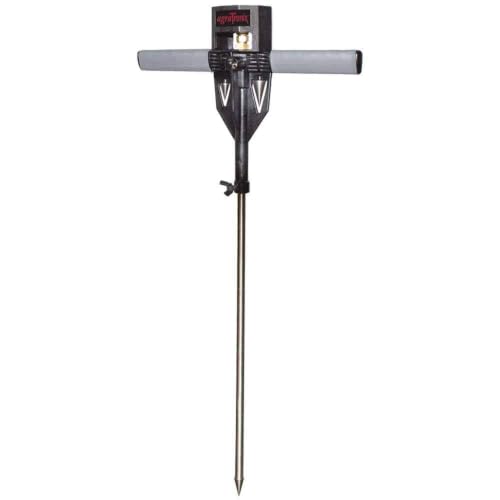
AgraTronix 8180 Soil Compaction Tester - 24 in. Probe, 300 PSI, Rubber Grip Handles, Water Filled Stainless Dial | Agricultural Supplies
- Soil Testing Equipment: Designed to accurately test soil compaction, this soil tester lets you determine the ideal state of soil f…
- Portable Device: The electronic tester features double molded rubber handles, hanger hole with nails and a lightweight body. Its e…
- Durable Construction: Made from high-grade stainless steel, the 24-inch probe of the portable soil tester with adjustable shock co…
The one for growers who keep root crops in the same frame season after season.
Compaction isn’t the first thing most cold frame gardeners think about, but it should be. Shallow frame beds get walked around, knelt on, and watered heavily. Over a few seasons, the soil underneath can lock up. The AgraTronix 8180 measures that compaction directly. It’s a 24-inch stainless probe with a liquid-filled dial that reads in PSI, and the dial is color-coded green, yellow, and red so you can judge growing quality at a glance. This is a tool for someone serious about soil structure, not just pH.
The build quality is the selling point. Double-molded rubber handles stay grippable in cold, wet conditions, which matters when you’re pushing a probe into dense soil in February. The liquid-filled dial absorbs shock during transport and storage, so it survives being tossed in a shed. Two interchangeable tips come with it, a half-inch and a three-quarter-inch diameter, letting you match the probe to looser or firmer soil. That flexibility is rare at this price point.
The catch is availability. This model is often in scarce supply, so check stock before you commit. It also measures compaction only. You’ll still need a separate pH tool or a lab kit to understand nutrients. And the 24-inch probe is overkill for a frame bed that’s only 6 to 8 inches deep. You’ll use maybe a third of its length, which feels wasteful if compaction isn’t your main concern.
- 24-inch stainless probe with adjustable shock collar
- Liquid-filled dial reduces shock damage
- Two tips included: 1/2-inch and 3/4-inch diameter
- Color-coded green, yellow, red reading zones
- Rubber-grip handles stay usable in wet, cold conditions
Best for: Cold frame growers raising carrots, beets, or other root crops who need to monitor soil density over multiple seasons.
MySoil Soil Test Kit, Unl…

My Soil
MySoil Soil Test Kit, Unlock Your Lawn & Garden Potential, Complete & Accurate Nutrient and pH Analysis with Recommendations Tailored to Your Soil and Plant Needs
- KNOW BEFORE YOU GROW | Grow the healthiest, sustainable lawn and garden with the most accurate and easy to use professional soil t…
- FAST & ACCURATE | Unlike at-home pH meters and test strips, our mail-in professional lab analysis accurately measures 13 plant-ava…
- FOR ANY GROWING SCENARIO | Tests any soil type and growing condition - lawn & turf, vegetable gardening, flowers, compost, trees,…
The one you buy when you want the full picture, not just a pH number.
MySoil takes a different approach. You collect a soil sample from your frame, mail it in, and get back a professional lab analysis covering 13 plant-available nutrients plus pH. Results come in 6 to 8 days. For cold frame gardeners, this solves a problem no handheld meter can: it tells you what’s actually in the soil, not just how acidic it is. If your seedlings stall or your lettuce yellows despite good watering, the answer is usually a nutrient gap, and this kit finds it.
The recommendations are the real value. You don’t just get numbers. You get a tailored plan telling you what to apply, how much, and when, with both organic and non-organic options. That level of specificity is hard to get from a $20 pen. The kit works for any growing scenario, including compost, raised beds, and soil-less media, so it’s not a one-trick tool. For a cold frame used to start seeds in custom mixes, that versatility matters.
Two limitations stand out. First, you’re waiting over a week for results, so this isn’t a tool for same-day decisions. Second, it’s a per-sample cost. If you want to test multiple frames or different zones, you’ll buy multiple kits. That adds up fast. It’s also not something you’ll use weekly. Think of it as a seasonal diagnostic, not a daily meter.
- Mail-in lab analysis measures 13 nutrients plus pH
- Results returned in 6 to 8 days
- Custom fertilizer recommendations, organic and conventional
- Works for soil, compost, and soil-less seed-starting mixes
- Best used once or twice per season, not daily
Best for: Seed-starting gardeners who want a complete nutrient profile and a specific amendment plan rather than a single pH reading.
Rapitest Soil Test Kit fo…

Luster Leaf
Rapitest Soil Test Kit for Gardens, Vegetables, Flowers and Lawns. USA designed and assembled soil tester completely, quickly and accurately measures/analyzes soil pH acidity and garden nutrients.
- Quick, at home results for Soil pH, Nitrogen, Phosphorous and Potash Innovative and inexpensive soil test kit features an easy-to-…
- Contains all components needed for 20 tests. 5 for each of pH, N, P and K
- Contains all components needed to test all variables in several spots in the yard or garden
The one you keep in the shed for quick multi-nutrient checks without batteries.
Rapitest is the classic capsule system. You mix a soil sample with water, add a capsule, shake, and match the color against a comparator. It measures pH, nitrogen, phosphorus, and potassium, with five tests for each. That’s 20 tests total, enough to sample several spots in a frame bed or compare frames side by side. For a beginner, this is the cheapest way to get a full nutrient snapshot without mailing anything off.
The cold-weather advantage is simple: no batteries, no electronics, nothing to fail when temperatures drop. Color comparators work at any temperature as long as you can see them. The kit also includes a soil pH preference list covering over 450 plants, which is genuinely useful when you’re deciding what to sow in a frame. Instructions are clear enough for a first-timer, and the whole thing stores in a small box.
Color matching is subjective, and that’s the main weakness. Two people can look at the same tube and disagree on whether it’s closer to 6.0 or 6.5. In dim winter light, that gets harder. You also can’t reuse capsules, so once your 20 tests are gone, you’re buying refills. And the kit doesn’t measure moisture or temperature, both of which matter in a cold frame.
- Tests pH, nitrogen, phosphorus, and potassium
- 20 total tests, five per nutrient
- No batteries or electronics to fail in cold
- Includes pH preference list for 450+ plants
- Capsule system requires refills after 20 tests
Best for: Budget-minded gardeners who want a broad nutrient check and don’t mind reading colors instead of numbers.
AgraTronix 08180, Soil Co…

Mytee Products
AgraTronix 08180, Soil Compaction Tester Made in USA SCT
- Durable Molded Housing and Rubber-Grip Handles
The one that shows up when the 8180 is out of stock.
This listing is the same AgraTronix 08180 compaction tester sold under the Mytee Products brand. If the 8180 above is unavailable, this is where you’ll likely find it. The tool itself is identical in function: a 24-inch stainless probe, a liquid-filled dial, and molded rubber-grip handles. For cold frame growers dealing with compacted beds, it does the same job. The only difference is the seller and the listing.
What you get is durable construction and a straightforward reading. Push the probe into the soil, watch the dial, and compare the needle position against the color zones. Green means good growing conditions, red means the soil is too dense for healthy roots. The rubber grips are the standout feature in cold weather. They stay comfortable and non-slip even when your hands are numb, which is more than can be said for bare metal handles.
The trade-offs mirror the 8180. It measures compaction only, so you’ll need separate tools for pH and nutrients. The 24-inch probe is longer than most frame beds need. And because it’s a rebranded listing, warranty support may route through a different seller. Check the current price and return policy before ordering, since availability and terms can shift.
- Same 24-inch stainless probe as the 8180
- Liquid-filled dial resists shock during storage
- Molded rubber-grip handles for cold, wet hands
- Color-coded reading zones for quick judgment
- Sold under Mytee Products branding
Best for: Growers who want the AgraTronix compaction tester but need an alternative listing when the primary one is out of stock.
How We Chose These Products
We started with the cold frame itself. A frame bed is shallow, damp, and often shaded, which means standard garden testers don’t always perform the way their specs suggest. We looked for tools that work in soil below 50°F, survive condensation, and don’t require a lab or a power source to give a useful reading. Battery life, probe material, and dial or display durability all factored in.
We also weighed what each tool actually measures. pH alone is useful, but nutrient data and compaction readings solve different problems. A tester that’s accurate but only covers one variable earns its place if that variable is the one you need. We favored tools with clear reading methods, minimal calibration fuss, and honest limitations. No product made the list on brand name alone.
Buying Guide: What Really Matters
Cold soil distorts readings more than most gardeners realize. Below 50°F, many digital meters drift, and pH pens without temperature compensation can be off by half a point or more. If you’re testing in early spring or late winter, look for a meter that either compensates for temperature or is simple enough that drift is minimal. Colorimetric kits sidestep the issue entirely because they don’t rely on electronics.
Probe depth is the second factor. Cold frame beds are typically 6 to 8 inches deep. A 24-inch compaction probe works, but you’re only using the top portion. A short-probe digital pen or a scoop-and-test kit fits shallow beds better. If you’re testing a sandy soil mix, probes slide in easily but readings can fluctuate with moisture, so take two or three samples and average them.
Moisture and pH interact in a frame. Condensation keeps soil damp, and damp soil reads differently than dry soil on most meters. Test after watering has settled, not immediately after. For frames used to start seeds, a balcony plot tester approach works well: sample small zones, compare results, and adjust amendments gradually. And if you’re managing several frames, a community garden setup mindset helps, since shared tools need to be durable and simple to use.
Our Top Recommendation
The LAWNFUL digital pH meter is the best all-around pick for most cold frame gardeners. It’s fast, calibration-free, and built to handle damp soil without rusting. The five-year battery life and one-year warranty add real value. It won’t tell you about nutrients, but for a quick pH check before sowing, it’s hard to beat.
If you want the full nutrient picture, the MySoil lab kit is the runner-up and worth the wait. For budget shoppers, the Rapitest kit covers four variables for less than a single lab test. And if compaction is your concern, the AgraTronix 8180 is the specialist tool, with the 08180 listing as a backup when stock runs low.
Frequently Asked Questions
Do cheap meters work in cold soil?
Some do, but accuracy drops. Budget digital pens often lack temperature compensation, so readings below 50°F can be off. A cheap pen still tells you whether soil is roughly acidic or alkaline, which is enough for many cold frame decisions. If you need precise numbers, spend more or use a colorimetric kit.
How often should I test frame soil?
Test pH every two to three weeks during active growth, and run a full nutrient test once at the start of each season. Compaction checks are best done before planting, not after roots fill the bed. Over-testing wastes capsules and batteries without adding useful data.
Can I use a lawn moisture meter in a cold frame?
You can, but shallow frame beds and damp conditions can skew readings. Moisture meters designed for lawns assume deeper soil and drier conditions. A dedicated cold frame tester or a simple hand-squeeze test often gives a clearer picture.
What’s the biggest mistake cold frame gardeners make with testers?
Testing right after watering. Wet soil reads differently than soil at normal moisture, and the error is bigger in cold conditions. Wait a few hours after watering, then sample. Wiping probes between tests also prevents cross-contamination and drift.