You volunteered to manage the tool shed. Now three plot holders are arguing about why their tomatoes failed, someone left a rusty pipe in the compost, and the treasurer wants to know if the group should buy a $30 meter or a $30 lab test.
A good soil tester for a community garden has to survive shared use, work across raised beds and in-ground plots, and produce results a committee can actually discuss. Accuracy matters, but so does durability, battery life, and whether five people can figure out how to use it without a training session.
This guide covers five testers that fit different committee budgets and goals, from a capsule kit that costs less than a bag of fertilizer to a mail-in lab analysis that checks for lead. We also walk through composite sampling, heavy-metal screening, and how to turn numbers into a group amendment plan.
| Features | Rapitest Soil Kit | MySoil Lab Kit | Buladeke 7-in-1 | SONKIR 3-in-1 | YAMRON 4-in-1 |
|---|---|---|---|---|---|
| Test Method | Capsule color comparator | Mail-in lab analysis | Digital probe | Analog needle | Digital probe |
| Measures | pH, N, P, K | 13 nutrients plus pH | Moisture, pH, temp, light, EC, TDS | Moisture, pH, light | Moisture, pH, temp, light |
| Power Source | None | None | 4 AAA batteries | None | 4 AAA batteries |
| Heavy Metals | No | No | No | No | No |
| Best Use Case | Group teaching tool | Safety screening | Shared tool shed | Loaner program | Raised bed checks |
Rapitest Soil Test Kit

Luster Leaf
Rapitest Soil Test Kit for Gardens, Vegetables, Flowers and Lawns. USA designed and assembled soil tester completely, quickly and accurately measures/analyzes soil pH acidity and garden nutrients.
- Quick, at home results for Soil pH, Nitrogen, Phosphorous and Potash Innovative and inexpensive soil test kit features an easy-to-…
- Contains all components needed for 20 tests. 5 for each of pH, N, P and K
- Contains all components needed to test all variables in several spots in the yard or garden
This is the kit to buy when your garden committee wants to teach new members what soil testing actually means. The Rapitest uses capsules and color comparators, so there is no screen, no battery, and no calibration. You mix soil with water, add a capsule, and match the liquid color to a chart. It feels like a science class, which is exactly the point for a group that runs workshops.
The kit contains enough capsules for 20 tests, split evenly across pH, nitrogen, phosphorus, and potassium. That means you can sample five different plots or five spots in one large shared bed. The included pH preference list covers more than 450 plants, which helps when a member asks why their blueberries are struggling in neutral soil.
Color matching is subjective. Two people can look at the same vial and see slightly different shades, so results are approximate rather than precise. The capsules also have a shelf life, and a damp tool shed will shorten it. Store the kit indoors and designate one person to reorder capsules each spring.
- No batteries or calibration needed
- 20 tests total, five for each of pH, N, P, and K
- Includes pH preference list for over 450 plants
- Good for group demonstrations and beginner education
- Capsules degrade in humid storage
Best for: Committees that run soil workshops and want a low-cost teaching tool for new members.
MySoil Soil Test Kit

My Soil
MySoil Soil Test Kit, Unlock Your Lawn & Garden Potential, Complete & Accurate Nutrient and pH Analysis with Recommendations Tailored to Your Soil and Plant Needs
- KNOW BEFORE YOU GROW | Grow the healthiest, sustainable lawn and garden with the most accurate and easy to use professional soil t…
- FAST & ACCURATE | Unlike at-home pH meters and test strips, our mail-in professional lab analysis accurately measures 13 plant-ava…
- FOR ANY GROWING SCENARIO | Tests any soil type and growing condition - lawn & turf, vegetable gardening, flowers, compost, trees,…
Community gardens on former industrial land have a safety question that cheap meters cannot answer. The MySoil kit is a mail-in lab analysis that measures 13 plant-available nutrients plus pH. You collect a sample, send it in, and get results in six to eight days. It is the closest thing to a cooperative extension test without leaving your neighborhood.
The report includes custom recommendations for organic and non-organic amendments, telling you what to apply, how much, and when. That level of detail matters for a group making a collective decision about compost or lime. One report can guide an entire season of purchases.
It does not screen for lead or other heavy metals. If your garden sits on urban fill or near old painted structures, you still need a separate heavy-metal test from a certified lab. The MySoil kit also tests one composite sample per purchase, so a large garden with distinct zones may need multiple kits.
- Measures 13 plant-available nutrient levels plus pH
- Results in 6-8 days via mail-in lab analysis
- Works for soil, compost, raised beds, and containers
- Provides organic and non-organic amendment recommendations
- Does not test for lead or heavy metals
Best for: Garden committees that need accurate nutrient data and a shared amendment plan for the season.
Buladeke Moisture Meter
Buladeke
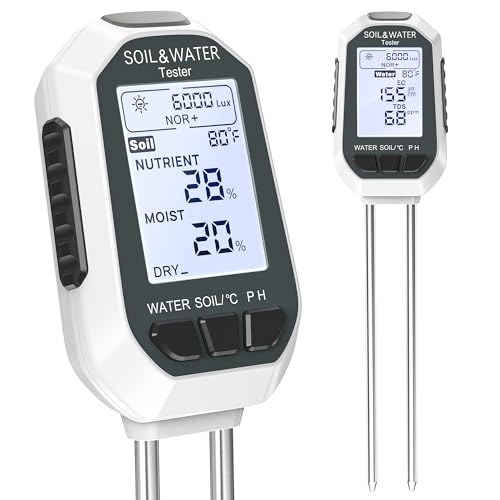
Buladeke Moisture Meter for Plants,7-in-1 Digital Soil Tester Kit | Soil pH Tester with LCD - Measures pH, EC, TDS, Fertility, Temp, Moisture & Sunlight, Garden Tools for Indoor & Outdoor
- 【7-in-1 Features】This is a 7-in-1 multi-function soil tester. Our soil tester quickly measures soil moisture, pH, temperature and…
- 【Large Screen & LCD Backlight】The Soil Moisture Meter has a large LCD display with white backlight that clearly shows the numerica…
- 【Fast and accurate measurement】With the latest 2025 probe technology, it can quickly and accurately measure soil pH, moisture, tem…
Shared tool sheds are hard on electronics. The Buladeke 7-in-1 is built for that environment, with a large backlit LCD screen and a probe that reads moisture, pH, temperature, light intensity, EC, and TDS. The fertility function gives a rough sense of nutrient availability without sending anything to a lab.
The screen is the standout feature. White backlighting means you can read it at dusk or in a shaded hoop house. Readings appear in about 10 seconds after you push the probe roughly 10 cm into moist soil. The device warns you when the four AAA batteries run low, which prevents the surprise dead-meter problem that plagues shared equipment.
It cannot measure liquids directly, and forcing the probe into dry, hard soil will damage it. That is a real risk in a community garden where multiple people use the same tool without reading instructions. The EC and TDS functions are more useful for hydroponic growers than for in-ground plots, so some features may go unused.
- 7-in-1 digital readings: moisture, pH, temp, light, fertility, EC, TDS
- Large LCD with white backlight for low-light reading
- Results in about 10 seconds at 10 cm depth
- Low-battery warning helps shared users
- Probe can be damaged by dry, hard soil
Best for: Gardens with a shared tool shed that want one durable digital meter for multiple plot checks.
SONKIR Soil pH Meter

SONKIR
SONKIR Soil pH Meter, MS02 3-in-1 Soil Moisture/Light/pH Tester Gardening Tool Kits for Plant Care, Great for Garden, Lawn, Farm, Indoor & Outdoor Use (Green)
- Kindly NOTE: This soil tester can not be applied to test pH value of any other liquid. If the soil is too dry the indicator will n…
- 3 METERS IN ONE: Soil moisture level, Soil pH value and Sunlight level could be tested easily according to your need by switching…
- NO BATTERY NEEDED: Simply insert the meter into soil, wait few minutes, accurate test results will be displayed on the readout pan…
Loaner programs need tools that cannot be broken by neglect. The SONKIR MS02 is a 3-in-1 analog meter that reads moisture, pH, and light with no battery at all. You switch the function button, insert the probe, and wait a few minutes for the needle to settle. There is nothing to charge and nothing to calibrate.
The build is sturdy enough for repeated use across a season. The compact size fits in a pocket or a shed drawer, and the analog display is easy to read in bright sun where digital screens wash out. For a garden that lends tools to members, this is the lowest-maintenance option on the list.
Accuracy is the trade-off. Analog meters are less precise than digital or lab tests, and the needle will not move at all in dry soil. You have to water the test area first and wait before measuring. The pH range is broad, so it tells you acidic, neutral, or alkaline rather than an exact number.
- 3-in-1 analog readings: moisture, pH, and light
- No battery required
- Compact and portable for loaner programs
- Works indoors and outdoors
- Needle will not move in dry soil
Best for: Gardens that lend tools to members and need a battery-free meter that survives rough handling.
YAMRON 4-in-1 Soil Moisture Meter

YAMRON
4-in-1 Soil Moisture Meter Digital Plant Temperature/Soil Moisture/PH Meter/Sunlight Intensity Backlight LCD Display Soil Test Meter for Gardening, Farming and Outdoor Plants
- 【4 in 1 function】This is a 4-in-1 multifunctional soil tester.Our soil tester fastly to measure soil moisture, pH, temperature and…
- 【Large Screen & Backlight LCD Display】The Soil Tester uses a large LCD screen and white backlight to conveniently display and read…
- 【Quick Accurate measurement】The latest probe detection technology in 2026 can quickly and accurately measure the pH, moisture and…
Raised beds dry out faster than in-ground plots, and the YAMRON 4-in-1 is designed for quick moisture checks across many containers. It measures moisture, pH, temperature, and sunlight on a large backlit LCD. The 45-degree rotating head lets you read the screen without bending over, which is a small but genuine comfort improvement when you are checking twenty beds in a row.
Setup is simple: insert the probe about 4 inches into moist soil, wait 10 seconds, and read the numbers. The instructions recommend taking readings from at least five locations and averaging them, which is good advice for any community garden with variable soil. The visual display uses graphics alongside numbers, so new members can interpret results without a manual.
Like other digital probes, it cannot test liquids and should not be forced into dry, hard soil. The four AAA batteries are not included, so budget for those separately. The rotating head is a nice feature, but it adds a hinge that could loosen with heavy shared use over several seasons.
- 4-in-1 readings: moisture, pH, temperature, sunlight
- Large backlit LCD with 45-degree rotating head
- Reads in about 10 seconds at 4 inches depth
- Visual graphics help beginners interpret data
- Batteries not included; hinge may loosen over time
Best for: Raised-bed gardens that need fast moisture and temperature checks across many plots.
How We Chose These Products
We evaluated each tester against the realities of shared use, not just backyard convenience. Durability mattered. So did battery life or battery-free operation, since a dead meter in a tool shed helps nobody. We looked at whether the instructions were clear enough for a new member to use without a demonstration.
Accuracy claims were weighed against the method. Lab analysis beats digital probes, and digital probes beat analog needles for precision. We also considered what each kit measures. A tester that reads NPK is more useful for a group amendment plan than one that only reads moisture, even if the moisture meter is easier to use. You can see a similar evaluation approach in this expert-tested soil test kit review.
Buying Guide: What Really Matters
Start with your garden’s history. If the land was previously industrial, near a highway, or part of an older residential lot with painted structures, heavy-metal screening is non-negotiable. None of the five testers here measure lead. You will need a certified lab test for that, often through your state’s cooperative extension service. The best soil tester for city gardens guide covers urban contamination in more detail.
Next, decide between a one-time lab analysis and a reusable meter. A lab test gives you a detailed nutrient profile and amendment recommendations, but it costs more per sample and takes a week or more. A digital or analog meter gives you instant readings you can repeat across plots and seasons. Many gardens use both: a lab test every two or three years, and a meter for routine checks.
Think about who will use the tool. Analog meters survive neglect better than digital ones. Digital meters with backlit screens are easier for evening checks. Capsule kits are best for group education but require careful storage. Match the tool to your members, not to a spec sheet. If your garden focuses on a specific crop, a targeted guide like the tomato garden soil tester comparison can help narrow the choice.
How to Take an Accurate Composite Sample
A single probe reading tells you about one spot. A composite sample tells you about the whole plot. For a community garden, composite sampling is the only fair way to make group decisions about amendments.
Use a clean trowel or soil auger. Collect eight to ten small cores from different spots in the plot, digging about six inches deep. Mix them in a clean plastic bucket. Remove stones, roots, and debris. Let the sample air-dry on newspaper for a day, then seal it in a labeled bag.
Label everything. Plot number, date, depth, and who collected it. If your garden has distinct zones, such as a sandy section and a clay section, sample them separately. One bag per zone. This prevents the classic mistake of averaging a wet low spot with a dry high spot and getting a number that describes neither.
Reading Results: pH, NPK, and Organic Matter
pH tells you how acidic or alkaline your soil is. Most vegetables prefer a range between 6.0 and 7.0. A reading below 6.0 means acidic soil, which can lock up nutrients. Above 7.5 means alkaline, which can make iron and manganese unavailable to plants.
NPK stands for nitrogen, phosphorus, and potassium. Nitrogen drives leafy growth. Phosphorus supports roots and flowers. Potassium helps overall plant health and disease resistance. A lab test reports these as pounds per acre or parts per million. A home kit gives you a low, medium, or high rating.
Organic matter is the percentage of decomposed plant and animal material in your soil. It improves water retention, drainage, and nutrient holding capacity. Most garden soils aim for 3% to 6%. You can improve organic matter with compost, cover crops, and mulch. A lab test measures it; most home meters do not.
Tester vs Lab Test: Which Does Your Garden Need?
Home testers win on speed and cost per use. You can check moisture before watering, pH before planting, and temperature before sowing. A digital meter pays for itself in a season if members use it regularly. Analog meters are cheaper still and need no batteries.
Lab tests win on accuracy and detail. They measure nutrients a home kit cannot, and they can screen for heavy metals if you request it. A lab report gives you a baseline you can compare year over year. For a community garden making collective decisions about soil amendments, that baseline is worth the cost.
The practical answer for most gardens is both. Use a meter for routine checks and a lab test every two to three years, or whenever you suspect contamination. If your garden is on a former industrial site, start with the lab test before you plant anything edible.
Maintenance, Calibration, and Sharing Etiquette
Digital probes need occasional calibration. Check the manual for instructions. Most use a calibration solution or a simple reset. Analog meters usually need no calibration, but the needle should rest at zero when not in soil. If it drifts, the meter may be damaged.
Clean the probe after every use. Wipe it with a damp cloth and dry it before storage. Do not submerge the meter body in water. Store meters indoors, not in a freezing or damp shed. Batteries should be removed if the meter will sit unused for months.
Sharing etiquette matters as much as maintenance. Create a sign-out sheet. Include a one-page instruction card with the meter. Ask users to report damage or low batteries. A small laminated card taped to the shed wall prevents most problems.
Frequently Asked Questions
How often should we test?
Test moisture weekly during the growing season. Test pH and nutrients at the start of each season, and after any major amendment like lime or compost. A full lab test every two to three years is enough for most gardens, unless you suspect contamination or a major problem.
Can we test raised beds and containers?
Yes. Digital and analog probes work in raised beds and large containers. For small pots, use a smaller probe or a lab test. Collect separate samples for raised beds and in-ground plots, since their soil mixes and drainage differ.
Are cheap meters accurate?
Cheap analog meters are less precise than digital or lab tests. They are fine for spotting broad trends, such as dry versus wet or acidic versus alkaline. Do not rely on them for exact pH values. For precise numbers, use a lab test or a calibrated digital meter.
Do any of these test for lead?
No. None of the five testers in this guide screen for lead or other heavy metals. If your garden is on urban fill or near old buildings, contact your state cooperative extension service for a heavy-metal test. Do this before growing root vegetables or leafy greens.
Our Top Recommendation
The MySoil Soil Test Kit is the best choice for most community gardens. It gives you accurate nutrient data, a clear amendment plan, and results a committee can discuss. The mail-in format means one sample covers an entire plot, and the recommendations save money on fertilizer you do not need.
For gardens that want an instant-reading tool for routine checks, the Buladeke 7-in-1 is the runner-up. Its backlit screen and low-battery warning make it easy to share. The SONKIR 3-in-1 is the budget pick for loaner programs, and the Rapitest kit is the best teaching tool for group workshops.