Best Soil Tester for Sandy Soil: 5 Testers That Actually Handle Fast-Draining Ground
Contents
Sandy soil is a pain to read. Water runs straight through it, nutrients leach out before roots grab them, and a cheap probe often gives you a number that means nothing. If you have ever watered a raised bed and watched it dry out by lunch, you know the problem.
A good tester for sandy ground needs to handle low moisture, low nutrient retention, and quick pH swings. Digital meters give you fast readings across several spots. Lab kits tell you what is actually available to the plant, not just what is sitting in the water. Both approaches work, but they solve different problems.
Below are five testers worth your time. The Buladeke 7-in-1 is the strongest all-rounder for sandy beds, the SONKIR is the no-battery backup, the YAMRON adds a rotating screen, and the two lab kits cover the nutrient side that meters cannot touch. For a broader look at matching a tester to your soil type, see this acidic soil tester guide.
Here is a quick spec comparison before the full reviews.
| Features | Buladeke 7-in-1 | SONKIR MS02 | YAMRON 4-in-1 | Rapitest Kit | MySoil Lab Kit |
|---|---|---|---|---|---|
| Measurement type | Digital, 7 functions | Analog, 3 functions | Digital, 4 functions | Chemical capsule tests | Mail-in lab analysis |
| Power source | 4 AAA batteries | None needed | 4 AAA batteries | None needed | None needed |
| Nutrient testing | EC and TDS only | No | No | N, P, K | 13 nutrients |
| Screen type | Backlit LCD | Analog dial | Backlit LCD, 45° tilt | Color comparator | Online report |
| Best use case | Fast multi-spot checks | Budget backup tool | Comfortable readouts | Home garden basics | Serious soil correction |
Buladeke Moisture Meter f…
1st Pick
Buladeke
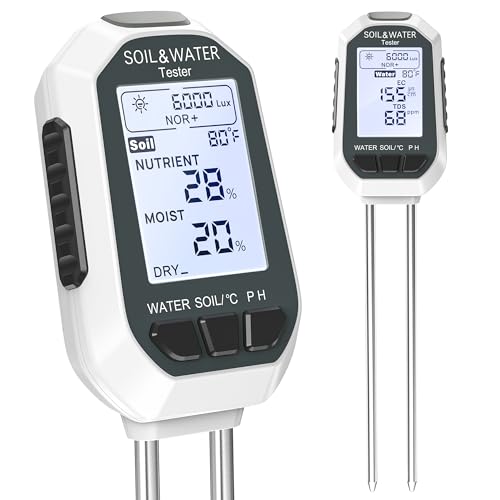
Buladeke Moisture Meter for Plants,7-in-1 Digital Soil Tester Kit
- 【7-in-1 Features】This is a 7-in-1 multi-function soil tester. Our soil tester quickly measures soil moisture, pH, temperature and…
- 【Large Screen & LCD Backlight】The Soil Moisture Meter has a large LCD display with white backlight that clearly shows the numerica…
- 【Fast and accurate measurement】With the latest 2025 probe technology, it can quickly and accurately measure soil pH, moisture, tem…
The Buladeke 7-in-1 is the pick for anyone managing sandy beds, containers, or a mix of indoor and outdoor plants. It reads moisture, pH, temperature, light, fertility, EC, and TDS from one probe. That range matters in sand, where moisture and nutrient levels change fast and you need to check several spots in one pass.
The backlit LCD is the standout feature. Sandy soil often reads dry on the surface while staying damp two inches down, so you need a clear number, not a vague needle. Insert the probe about 10 cm deep, wait ten seconds, and you get a reading you can actually act on. The EC and TDS functions also help you judge whether your watering is flushing nutrients out of the root zone, which is a constant battle in sandy ground.
Here is the honest catch: this meter cannot test liquids, and forcing the probe into dry, hard sand will damage it. You need to moisten the test area and wait about ten minutes before measuring. That extra step is annoying when you just want a quick check. It also runs on four AAA batteries, which are not included.
- Seven functions in one handheld unit
- White backlit screen readable in daylight or dark
- Low battery warning built in
- Ten-second read time at 10 cm depth
- Not for direct liquid testing
Best for: Gardeners who want one digital tool to track moisture, pH, and fertility across several sandy beds without buying separate meters.
SONKIR Soil pH Meter, MS0…
2nd Pick

SONKIR
SONKIR Soil pH Meter, MS02 3-in-1 Soil Moisture/Light/pH Tester Gardening Tool Kits for Plant Care, Great for Garden, Lawn, Farm, Indoor & Outdoor Use (Green)
- Kindly NOTE: This soil tester can not be applied to test pH value of any other liquid. If the soil is too dry the indicator will n…
- 3 METERS IN ONE: Soil moisture level, Soil pH value and Sunlight level could be tested easily according to your need by switching…
- NO BATTERY NEEDED: Simply insert the meter into soil, wait few minutes, accurate test results will be displayed on the readout pan…
The SONKIR MS02 is the tool you grab when batteries die or you just want something that always works. It measures moisture, pH, and light through a simple analog dial, and it needs no power at all. For sandy soil, that simplicity is the point. You can leave it in a shed for a year and it still reads on the first insert.
Build quality is better than the price suggests. The probe feels solid and the function button switches cleanly between the three modes. It handles garden beds, lawns, and farm plots without fuss. If you keep a sandy vegetable patch and want a rough pH and moisture check before planting, this does the job in a couple of minutes.
The trade-off is precision. Analog needles drift, and dry sandy soil often will not move the indicator at all until you water it first. You also get no temperature or nutrient data. Treat it as a rough guide, not a lab instrument, and it will serve you well for years.
- Three functions: moisture, pH, sunlight
- No batteries, no charging, no cables
- Compact enough for a pocket or tool bag
- Works indoors and outdoors
- Requires moist soil for accurate pH readings
Best for: Budget-minded gardeners who want a dependable, battery-free backup meter for quick sandy-soil checks.
YAMRON 4-in-1 Soil Moistu…
3rd Pick

YAMRON
4-in-1 Soil Moisture Meter Digital Plant Temperature/Soil Moisture/PH Meter/Sunlight Intensity Backlight LCD Display Soil Test Meter for Gardening, Farming and Outdoor Plants
- 【4 in 1 function】This is a 4-in-1 multifunctional soil tester.Our soil tester fastly to measure soil moisture, pH, temperature and…
- 【Large Screen & Backlight LCD Display】The Soil Tester uses a large LCD screen and white backlight to conveniently display and read…
- 【Quick Accurate measurement】The latest probe detection technology in 2026 can quickly and accurately measure the pH, moisture and…
The YAMRON 4-in-1 covers moisture, pH, temperature, and sunlight with a digital screen that tilts up to 45 degrees. That tilt sounds like a gimmick until you use it. In a low raised bed or a sandy row crop, you can read the screen without crouching or bending over, which matters if you are checking twenty spots in one session.
Readings come fast. Insert the probe about 4 inches deep, wait ten seconds, and the numbers appear. YAMRON recommends averaging readings from at least five locations for pH and moisture, and that advice is especially sound in sand. Sandy ground varies more from spot to spot than clay does, so a single reading can mislead you. The backlit LCD stays legible in bright sun or after dusk.
My main complaint is the battery requirement. Four AAA batteries are not included, and the low-battery alert only helps after you have already bought them. The probe also cannot handle dry, hard soil, so you need to water the test area and wait ten minutes first. Skip that step and you risk bending the tip.
- Four functions with a 45-degree rotating head
- Large backlit LCD with visual icons
- Ten-second read at 4-inch depth
- Recommends five-point averaging for accuracy
- Not for liquid testing or hard, dry soil
Best for: Growers with raised beds or low planters who want comfortable, tilt-screen readings without bending down.
Rapitest Soil Test Kit fo…
4th Pick

Luster Leaf
Rapitest Soil Test Kit for Gardens, Vegetables, Flowers and Lawns. USA designed and assembled soil tester completely, quickly and accurately measures/analyzes soil pH acidity and garden nutrients.
- Quick, at home results for Soil pH, Nitrogen, Phosphorous and Potash Innovative and inexpensive soil test kit features an easy-to-…
- Contains all components needed for 20 tests. 5 for each of pH, N, P and K
- Contains all components needed to test all variables in several spots in the yard or garden
The Luster Leaf Rapitest kit takes a completely different approach. Instead of a probe, you mix soil samples with capsule reagents and compare the resulting color against a chart. It measures pH, nitrogen, phosphorus, and potassium, with five tests for each. That covers 20 total tests, enough to sample several spots in a sandy yard or garden.
Nutrient testing is where this kit earns its place. Sandy soil leaches nitrogen and potassium quickly, and a digital meter simply cannot tell you how much is left. The Rapitest capsules give you a real read on what is available. The included pH preference list for over 450 plants is a genuinely useful reference, especially when you are deciding what to plant in ground that drains fast.
Color comparison takes practice. Two people can look at the same tube and see slightly different shades, so your first few tests may feel uncertain. The kit also uses up its capsules as you go, and replacements cost money. It is slower than a probe and messier, but it answers questions a probe never will.
- Tests pH, nitrogen, phosphorus, and potassium
- 20 total tests, five per variable
- Patented color comparator system
- Plant pH preference list for 450+ species
- No batteries or electronics
Best for: Home gardeners who need to know actual nutrient levels in sandy soil before adding fertilizer.
MySoil Soil Test Kit, Unl…
5th Pick

My Soil
MySoil Soil Test Kit, Unlock Your Lawn & Garden Potential, Complete & Accurate Nutrient and pH Analysis with Recommendations Tailored to Your Soil and Plant Needs
- KNOW BEFORE YOU GROW | Grow the healthiest, sustainable lawn and garden with the most accurate and easy to use professional soil t…
- FAST & ACCURATE | Unlike at-home pH meters and test strips, our mail-in professional lab analysis accurately measures 13 plant-ava…
- FOR ANY GROWING SCENARIO | Tests any soil type and growing condition - lawn & turf, vegetable gardening, flowers, compost, trees,…
The MySoil kit skips the at-home guesswork entirely. You collect a soil sample, mail it in, and get a professional lab report covering 13 plant-available nutrients plus pH. Results arrive in six to eight days. For sandy soil, this is the most accurate option on the list because it measures what the plant can actually access, not just what is present in the sample.
The report includes custom recommendations for what to apply, how much, and when, with both organic and non-organic options. That specificity saves money. Sandy soil often gets over-fertilized because nutrients wash away and gardeners assume the soil is starving. A lab report tells you exactly what is missing and what is not.
The obvious downside is the wait. Six to eight days is a long time when you want to plant this weekend. It also tests one sample per kit, so a large property needs multiple kits. And the brand shows an availability date, so check current stock before ordering.
- Lab analysis of 13 plant-available nutrients
- Includes nitrogen and pH measurement
- Results in six to eight days
- Custom organic and non-organic recommendations
- Works for lawns, gardens, compost, and containers
Best for: Serious growers who want precise, lab-grade data before amending sandy soil.
How We Chose These Products
We focused on how each tester performs in fast-draining, low-nutrient ground. Sandy soil punishes tools that need constant moisture to read, so we favored options that either handle dry conditions well or clearly warn you when they do not. We also weighed the number of functions against real usefulness. A meter with seven readings is only valuable if those readings help you make a decision.
Accuracy claims got scrutiny. Digital meters give fast numbers but vary by spot, so we noted which products recommend averaging multiple readings. Lab kits and capsule tests take longer but tell you what is actually available to plants. We included both types because sandy soil problems usually need both a quick check and a deeper analysis. You can see similar reasoning applied to other soil types in this alkaline soil testing guide.
Buying Guide: What Really Matters
Decide first whether you need speed or depth. A digital probe gives you an instant moisture and pH reading, which is perfect for deciding when to water a sandy bed. A lab kit or capsule test tells you which nutrients are missing, which is what you need before spending money on fertilizer. Most sandy-soil gardeners end up wanting both.
Check the probe depth and read time. Sandy soil dries from the top down, so a shallow reading can say dry while the root zone is still damp. A 10 cm probe depth is a reasonable minimum for most garden plants. Ten seconds is a typical read time for digital units; analog meters may need a few minutes to settle.
Battery life and replacement cost matter more than people expect. A no-battery analog meter never leaves you stranded, but it is less precise. Digital meters with backlit screens are easier to read but need four AAA batteries, usually not included. Factor that into the total cost. For specialized growing situations, this precision farming soil tester breakdown covers tools built for tighter tolerances.
Our Top Recommendation
The Buladeke 7-in-1 is the best soil tester for sandy soil overall. It reads moisture, pH, temperature, light, fertility, EC, and TDS from one probe, and the backlit screen makes those numbers usable in any light. The EC and TDS functions are especially relevant in sand, where nutrients flush out fast and you need to know if your watering is stripping the root zone.
The SONKIR MS02 is the runner-up for anyone who wants zero maintenance. It costs less, needs no batteries, and still covers the three basics. If you want a comfortable readout without bending, the YAMRON 4-in-1 with its 45-degree tilt screen is the better pick. And if nutrient accuracy matters more than speed, the MySoil lab kit delivers data no handheld meter can match.
Frequently Asked Questions
Why do cheap soil meters give bad readings in sand?
Sandy soil holds little water and conducts electricity poorly. Many analog meters rely on moisture between the probes to complete a circuit, so dry sand gives a needle that barely moves. Digital meters with their own power source handle dry conditions better, but even they need a slightly moistened test area for reliable pH.
Can I test sandy soil pH without watering it first?
Not accurately. Most probe-style testers need some moisture to read pH. Water the test spot, wait about ten minutes, then insert the probe. This applies to both the Buladeke and YAMRON units. The Rapitest and MySoil kits use a soil sample mixed with solution, so they avoid this step entirely.
How many spots should I test in sandy soil?
At least five. Sand varies more from one spot to another than clay or loam does, because water and nutrients move through it unevenly. Average your readings for a realistic picture. If one spot reads very differently from the others, test it again before amending the whole bed.
Is a lab test worth it for a small sandy garden?
Yes, if you have struggled with poor growth despite regular watering and fertilizing. Sandy soil often gets over-amended because nutrients leach away and gardeners assume the soil is deficient. A lab report tells you exactly what is missing, which usually saves more on fertilizer than the kit costs.