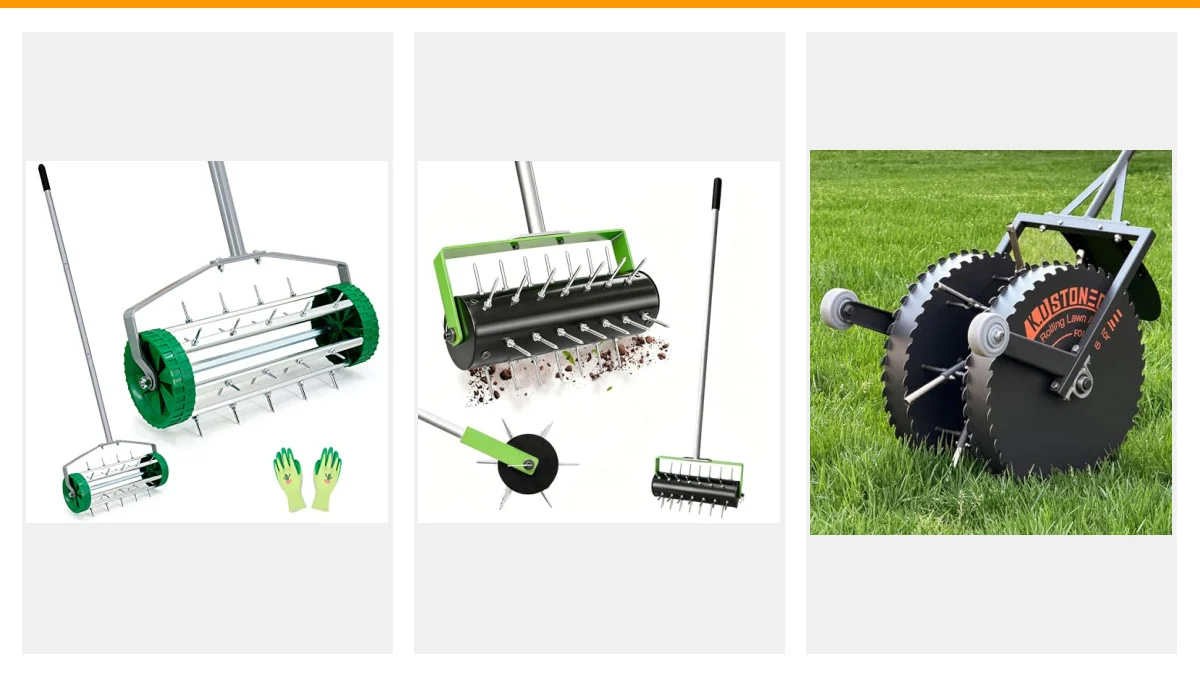
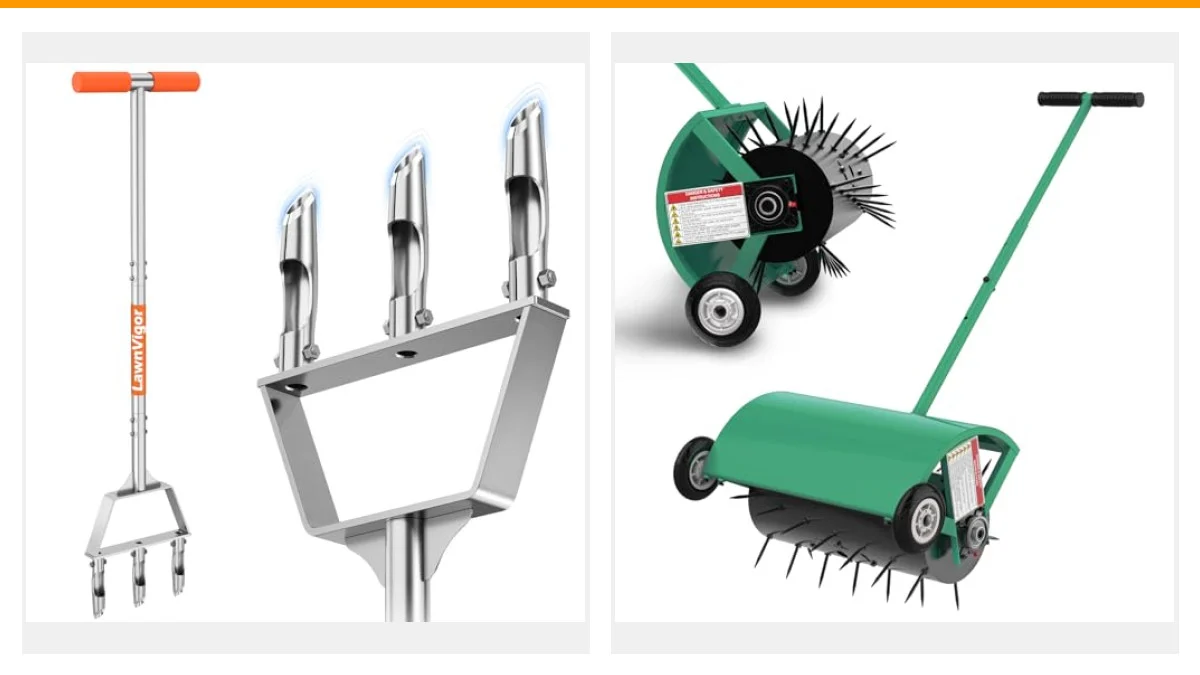
Your lawn feels like a parking lot in July. Water pools on top instead of soaking in. Fertilizer sits there doing nothing because the roots can’t reach it. That’s compaction, and on a small lawn it’s usually worse than you think, because foot traffic concentrates in a few narrow paths.

A good small aerator fixes this without you renting a machine or hiring a service. The key word is small. Full-size plug aerators and tow-behind drums are overkill for a townhome yard or a 40-foot strip of grass. What you want is a manual tool with enough spikes or tines to cover ground efficiently, a handle height that doesn’t wreck your back, and a build that survives clay.
Below are five manual aerators that actually suit small yards. Two are spike tools, two are hollow-tine core tools, and one is a wide-coverage spike model built specifically for tight spaces. I’ll tell you who each one fits, where it struggles, and what the real effort looks like per 1,000 square feet.
Here’s the quick spec comparison before the detailed reviews. Prices shift constantly, so check the current price on Amazon for each.
| Features | Walensee 15-Spike | LawnVigor Core | Grenebo 16-Spike | Bigwish Stainless Core | Walensee 4-Row |
|---|---|---|---|---|---|
| Aeration Type | Spike | Hollow tine core | Spike | Hollow tine core | Spike |
| Spike or Tine Count | 15 iron spikes | 3 hollow tines | 16 steel spikes | 3 hollow tines | 20 steel spikes |
| Depth | 2.8 inches | Not specified | 3.1 inches | Not specified | 2.8 inches |
| Build Material | Powder-coated iron | Heat-treated metal | 2mm reinforced steel | Stainless steel | Heavy-duty steel |
| Best Use Case | Small lawns, edges | Compacted soil spots | Frequent seasonal upkeep | Clay-heavy yards | Tight spaces, borders |
In this article
- Walensee Manual Lawn Aerator
- Manual Lawn Core Aerator
- Grenebo Lawn Aerator Manual
- Bigwish Stainless Core Aerator
- Walensee 4-Row Lawn Aerator
- How We Chose These Products
- Buying Guide: What Really Matters
- How to Aerate Hard Soil Without Breaking Tines
- Effort, Time, and Maintenance Reality Check
- When and How Often to Aerate
- After Aerating: Overseeding and Fertilizing
- Our Top Recommendation
- Frequently Asked Questions
Walensee Manual Lawn Aerator

Walensee
Walensee Aerator Lawn Tool, 15-Spike Manual Lawn Aerator Tool for Yard | Alternative to aerator shoes, patented grass aerator lawn tool creates holes for easier lawn aeration and healthier roots.
- 【EFFECTIVE MANUAL LAWN AERATOR TOOL】: Walensee spike lawn aerator helps loosen soil and create small channels so air, water, and n…
- 【15 SHARP IRON SPIKES FOR BETTER COVERAGE】: Designed with 15 sturdy iron spikes, each about 2.8 inches long, this manual lawn aera…
- 【NO MORE SPIKED SHOE HASSLES】: Unlike plastic or metal lawn aerator shoes that may require strap adjustments, shoe-size matching,…
This is the tool for the homeowner with a postage-stamp lawn and a bad back. The 34.6-inch handle means you stand mostly upright while working, which matters more than most reviews admit. If your yard is a 20-by-30-foot rectangle out back, this covers it in a few passes.
Fifteen iron spikes arranged in three rows give you decent hole density per step. Each spike runs about 2.8 inches deep, which is enough to open channels for water and fertilizer on lightly compacted ground. The cushioned T-handle and foot pedal let you push down with body weight instead of arm strength. Assembly takes a few minutes and the whole thing breaks down for storage, which helps if you’re short on garage space.
Here’s the honest part. Spike aerators don’t remove soil plugs, so on genuinely hard clay they mostly punch holes and can actually worsen compaction over years of repeated use in the same spots. Walensee’s own product notes say it’s not for heavy sticky clay or rocky ground. Water the lawn first if the soil is dry. And don’t expect it to handle a quarter-acre.
- 15 spikes in a three-row layout, roughly 2.8 inches long
- 34.6-inch handle reduces bending during long sessions
- Foot pedal adds leverage for pushing spikes into soil
- Detachable design for compact storage
- Powder-coated iron resists rust with basic care
Best for: Someone with a small, lightly compacted lawn who wants a low-effort tool they can store in a shed corner.
Manual Lawn Core Aerator
LawnVigor
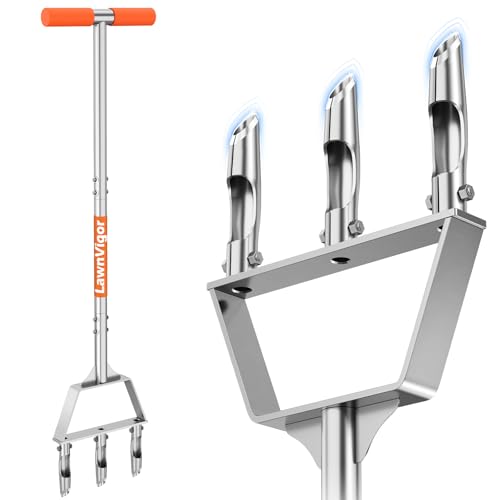
Manual Lawn Core Aerator for Compacted Soil with Non-Clogging Hollow Tines | Pulls Soil Plugs Easily, Bend-Resistant Steel Frame, Wide Foot Pedal, Replaceable Tines, Ideal for Clay Soil - Orange
- LAWN AERATOR FOR HEALTHIER LAWN GROWTH: Our manual lawn aerators promotes lush, green lawns by delivering essential air, water and…
- BUILT-TO-LAST HOLLOW TINE AERATOR: Made of sturdy metal and heat-treated hollow tines, our plug aerator lawn tool is built to with…
- NON-CLOGGING YARD AERATOR: Designed with 3 hollow tines, this lawn core aerator efficiently removes soil plugs while preventing cl…
Core aeration is the real fix for compaction, and this LawnVigor tool does it manually. Three hollow tines pull actual soil plugs out of the ground instead of just poking holes. That’s a meaningful difference on clay or heavily trafficked soil, because removing a plug creates space for roots to expand into.
The design includes white plastic inserts inside the tines. Those inserts help push soil plugs out so the tines don’t clog. Leave them in. The ergonomic non-slip handle sits at a height meant to reduce back strain, and the whole unit assembles in minutes with the included tools. Heat-treated tines are replaceable, which extends the tool’s working life well past a single season.
Three tines means slow going. You’ll be stepping, pressing, pulling, and clearing plugs repeatedly. On 500 square feet of clay, expect an hour or more for a thorough pass. The manufacturer warns against rocking or twisting the tool while it’s in the ground, and that’s not a suggestion. Side-to-side force bends hollow tines fast. Dry soil is the other failure mode. Water the area a day before you start.
- Three hollow tines remove genuine soil plugs
- Replaceable tines extend tool lifespan
- Plastic inserts prevent clogging during extraction
- Non-slip ergonomic handle for control
- Quick assembly with included hardware
Best for: A patient gardener with compacted clay soil who wants real core aeration on a small patch without renting equipment.
Grenebo Lawn Aerator Manual

Grenebo
Grenebo Lawn Aerator Manual Aerator Lawn Tool with 16 Spikes, Black Green | Metal Grass Aerator for Yard, Lawn Aeration, Automatic Soil Ejection, Pre-Assembled Lawn Aerator Tool
- Efficient 16 Sharp Spikes Lawn Aerator: Grenebo Yard aerator features 16 sharp spikes in a stable 4×4 layout, creating more holes…
- Self-Cleaning for Efficient Aeration: This lawn air aerator tool uses dual-layer rebound springs to shake off soil and debris, eli…
- Durable, Heavy-Duty Construction: This manual aerator lawn tool with heavy-duty welding, 2mm reinforced steel, and powder-coated f…
Grenebo’s 16-spike aerator targets the person who aerates twice a year and wants the job done quickly. The 4×4 spike layout creates more holes per step than the Walensee 15-spike model, and the spikes run 3.1 inches, which is the deepest in this group. On a small yard, that extra depth means better water penetration during dry spells.
The standout feature is the dual-layer rebound spring system. After each step, springs shake soil and debris off the spikes automatically. That sounds like a small thing until you’ve spent twenty minutes scraping mud off a spike tool with a stick. Self-locking nuts keep the spikes tight over repeated use, and the powder-coated 2mm steel frame resists rust. Gloves, wrenches, and a hex key come in the box.
Spikes retract for storage, which makes this safer to hang on a wall than a fixed-spike tool. The trade-off is the same as any spike aerator: no plug removal. On hard, dry ground the spikes can struggle to reach full depth. And the spring mechanism adds a few moving parts that could eventually wear, though the design is simple enough to maintain.
- 16 spikes in a 4×4 grid, 3.1 inches long
- Dual-layer rebound springs self-clean the spikes
- 2mm reinforced steel with powder coating
- Retracting spikes for safer storage
- Full hardware kit and gloves included
Best for: A homeowner who wants fast seasonal aeration and doesn’t want to clean mud off spikes after every session.
Bigwish Stainless Core Aerator

Bigwish
Lawn Aerator Tool, Stainless Steel Manual Core Aerator with 3 Hollow Tines | Heavy Duty Aeration Tool, Adjustable Height, Yard Aerator & Soil Aerator Tool for Soil Plug Removal, Lawn Garden Care
- 【TRUE CORE AERATION FOR HEALTHIER LAWNS】This manual lawn aerator removes soil plugs to relieve compaction at the root level. By cr…
- 【FULL STAINLESS STEEL CONSTRUCTION】Crafted from rust-resistant stainless steel, this plug aerator is built for durability and long…
- 【ADJUSTABLE HEIGHT FOR BETTER LEVERAGE】The adjustable handle design allows you to customize working height for improved posture an…
Stainless steel changes the math on core aerators. Most manual plug tools rust at the tine welds after a couple of wet seasons. Bigwish uses full stainless construction, which holds up in damp conditions and clay-heavy yards where moisture lingers. If you’ve owned a cheap core aerator that bent on the second use, this is the upgrade path.
The adjustable handle sets working height for your body, which helps if you’re tall or short. Combined with the step bar, you can drive the tines into compacted soil with foot pressure instead of pure upper-body force. Three hollow tines extract plugs consistently, and the solid frame resists flexing when you lever the tool back to release a plug. That lever action is where cheap tools fail.
Adjustable height means one more joint to check for wobble, and stainless adds weight. This isn’t the tool for someone who wants a five-minute job. Core aeration is slow work regardless of brand. Bigwish recommends watering dry areas 12 to 24 hours before use, and that prep step matters more on clay than any tool feature.
- Full stainless steel frame and tines resist rust
- Adjustable handle height for better posture
- Step bar drives tines into compacted ground
- Reinforced hollow tines resist bending
- Suited to clay-heavy and compacted soil
Best for: Someone with clay soil and a history of bending cheap aerator tines who wants a tool that lasts multiple seasons.
Walensee 4-Row Lawn Aerator
Twenty spikes across four rows is the widest coverage in this lineup. Walensee built this version for people aerating lawn edges, garden borders, and narrow strips where a rolling aerator or a tow-behind unit can’t reach. If your grass wraps around a patio, driveway, or flower beds, this tool fits those awkward zones.
Each spike measures 2.8 inches, and the 9.2 by 5.5-inch foot plate gives you stable footing while you press down. The four-row layout means fewer passes over the same ground compared with a three-row tool, which saves time on a small lawn. Aeration before overseeding or fertilizing improves seed-to-soil contact and helps nutrients reach the root zone instead of running off.
Twenty spikes also means more resistance when you push into the soil. On hard ground, you’ll feel it in your legs. Water first. The 34.6-inch overall length suits average-height users, though very tall users may want something longer. And like every spike tool here, it doesn’t remove plugs, so pair it with a core aerator if your soil is badly compacted.
- 20 steel spikes in four rows for wide coverage
- 2.8-inch spike length for root-zone channels
- 9.2 x 5.5-inch foot plate for stable pressure
- 34.6-inch length suits most users
- Ideal for edges, borders, and tight spots
Best for: A small-yard owner with irregular lawn shapes who needs to aerate borders and narrow strips a wider tool can’t reach.
How We Chose These Products
Selection started with one filter: does this tool make sense for a lawn under a quarter acre? Full-size plug aerators and rolling drums got cut immediately. From there, I weighed tine or spike count, depth, build material, and whether the handle height actually reduces strain for a normal adult.
Soil type drove the rest. Clay and hard ground punish weak tools, so stainless steel and heat-treated tines earned extra weight in the scoring. I also looked at maintenance realities: replaceable tines, rust resistance, and whether the tool stores without becoming a hazard. Products with vague or missing specs on depth and material were ranked lower, because buyers deserve to know what they’re pressing into the ground.
Buying Guide: What Really Matters
Spike versus core is the first decision. Spike aerators punch holes and work fine on lightly compacted soil, but repeated use on clay can compact the soil further by pushing particles sideways. Core aerators remove plugs, which genuinely relieves compaction. If your lawn has standing water, bare patches, or soil you can’t push a screwdriver into, go core.
Tine count and spike length come next. More spikes mean faster coverage but harder pushing. Three hollow tines is standard for manual core tools because more tines make the tool impossible to drive by hand. Spike length of 2.8 to 3.1 inches reaches the root zone on most cool-season grasses. Anything under 2 inches is mostly cosmetic.
Handle height and foot plate decide whether you’ll actually finish the job. A 34-inch handle suits most people around 5’6″ to 6’0″. If you’re taller, look for adjustable models. A wide foot plate spreads your weight and reduces the force needed per push. For a deeper look at powered options for larger small yards, this rolling aerator comparison covers the next tier up.
How to Aerate Hard Soil Without Breaking Tines
Water the lawn 12 to 24 hours before you start. You want moist soil that holds together when you squeeze it, not mud. Dry clay is the number one cause of bent tines and stuck plugs. If you can’t water the whole yard, work in sections over a few days.
Push straight down. Don’t rock, twist, or pry the tool side to side while the tines are buried. That lateral force is what snaps hollow tines. If a plug won’t release, pull straight up, then clear the tine with a screwdriver or the tool’s own insert system. On the hardest spots, go over the area twice with a spike tool first to open channels, then follow with a core aerator.
Effort, Time, and Maintenance Reality Check
Realistic numbers. A spike aerator covers roughly 1,000 square feet in 20 to 30 minutes if the soil is soft. A three-tine core aerator takes 60 to 90 minutes for the same area, because every plug needs a separate press, pull, and clear cycle. That’s the trade-off for better results.
Physical strain matters. Core aeration works your legs, back, and grip. If you’re small-framed or have back issues, a spike tool with a foot pedal is the gentler option, even if it’s less effective. Maintenance is simple: rinse and dry the tines after use, check nuts and bolts monthly during the season, and store indoors or under cover. Rust starts at the welds, so a quick wipe with an oiled rag at season’s end adds years.
When and How Often to Aerate
Cool-season grasses respond best to aeration in early fall, when growth is active and temperatures are mild. Warm-season grasses do better in late spring. Aerating in the middle of summer heat stresses the lawn. Aerating right before winter dormancy wastes the benefit.
Once a year is enough for most small lawns. Lawns with heavy foot traffic, dogs, or clay soil may need twice. Don’t aerate the same ground more than twice a year with a spike tool, since repeated spike holes can compact soil further. Core aeration is safer for repeat use.
After Aerating: Overseeding and Fertilizing
The 48 hours after aeration are the best window for overseeding. Seed falls into the open holes and makes contact with soil instead of sitting on thatch. Spread seed at the rate on the bag, then top-dress lightly with compost or a thin layer of soil. Keep the area moist for two weeks.
Fertilizer applied right after aeration reaches the root zone faster. Use a starter fertilizer if you overseeded, or a balanced slow-release formula if you didn’t. Skip weed-and-feed products during this window, since the open holes let herbicide reach grass roots and can damage new seedlings. If your yard has a lot of dead material on top, this petrol scarifier and aerator guide explains when dethatching should come first.
Our Top Recommendation
For most small yards with real compaction, the Bigwish Stainless Core Aerator is the pick. Stainless construction survives clay and wet seasons, the adjustable handle fits different body heights, and the step bar reduces the force needed per plug. It’s slower than a spike tool, but it actually fixes the problem. The LawnVigor core aerator is a solid runner-up if you want a lighter, lower-cost entry into core aeration.
If your soil is only lightly compacted and you want speed, the Grenebo 16-spike aerator wins on convenience. The self-cleaning springs are a genuine time-saver, and the 3.1-inch spikes reach deeper than most spike tools. For tight borders and irregular lawn shapes, the Walensee 4-row covers ground a wider tool can’t touch. And if you’d rather not do it by hand at all, this tow-behind plug aerator roundup covers powered alternatives for slightly larger small yards.
Frequently Asked Questions
How do I know if my soil is too wet or too dry to aerate?
Squeeze a handful of soil. If it crumbles and won’t hold shape, it’s too dry. Water it and wait a day. If it drips water or feels slick, it’s too wet. Wait two days. You want soil that holds together like a damp sponge but doesn’t glisten.
Can a spike aerator make compaction worse?
Yes, on clay soil with repeated use in the same spots. Spikes push soil particles sideways instead of removing them, which can tighten the soil around each hole. Use a spike tool for light maintenance and a core aerator for real compaction relief.
How many tines should a manual core aerator have?
Three is the practical maximum for hand-powered tools. Four or more tines require more force than most people can generate by stepping down. If you need more coverage per pass, that’s when you move to a powered or tow-behind aerator.
Do I need to fill the holes after core aeration?
No. Leave the plugs on the surface. They break down in two to four weeks and return organic matter to the soil. If you overseed, you can rake them lightly to break them up, but don’t remove them.