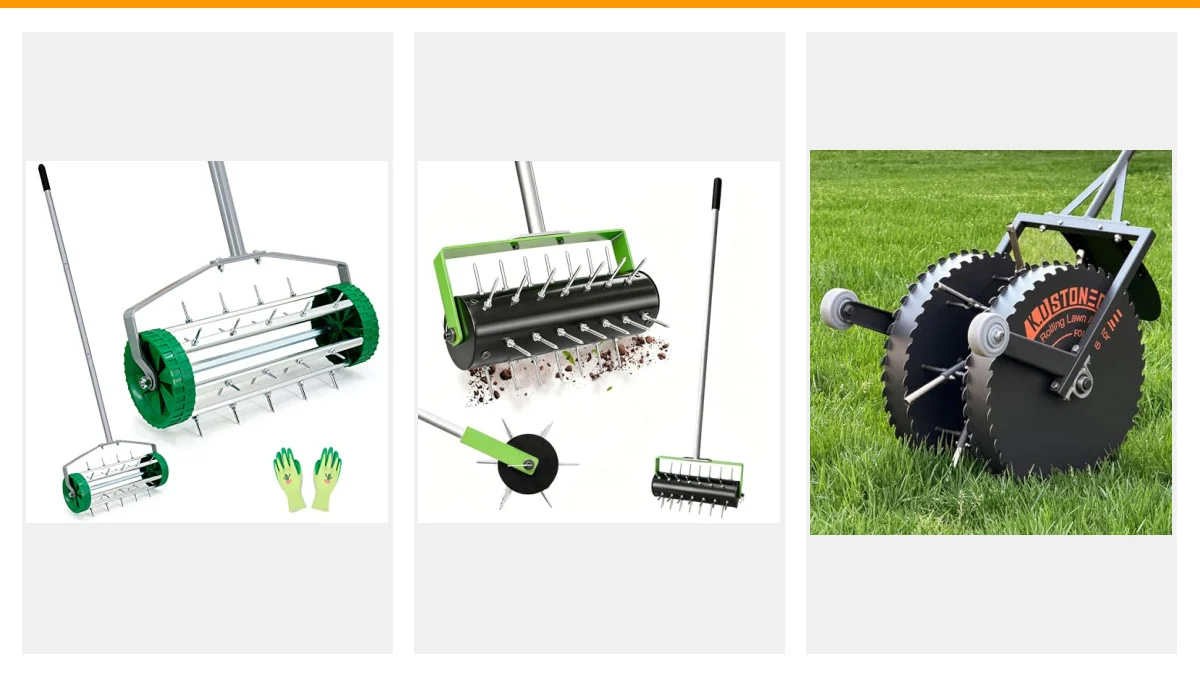
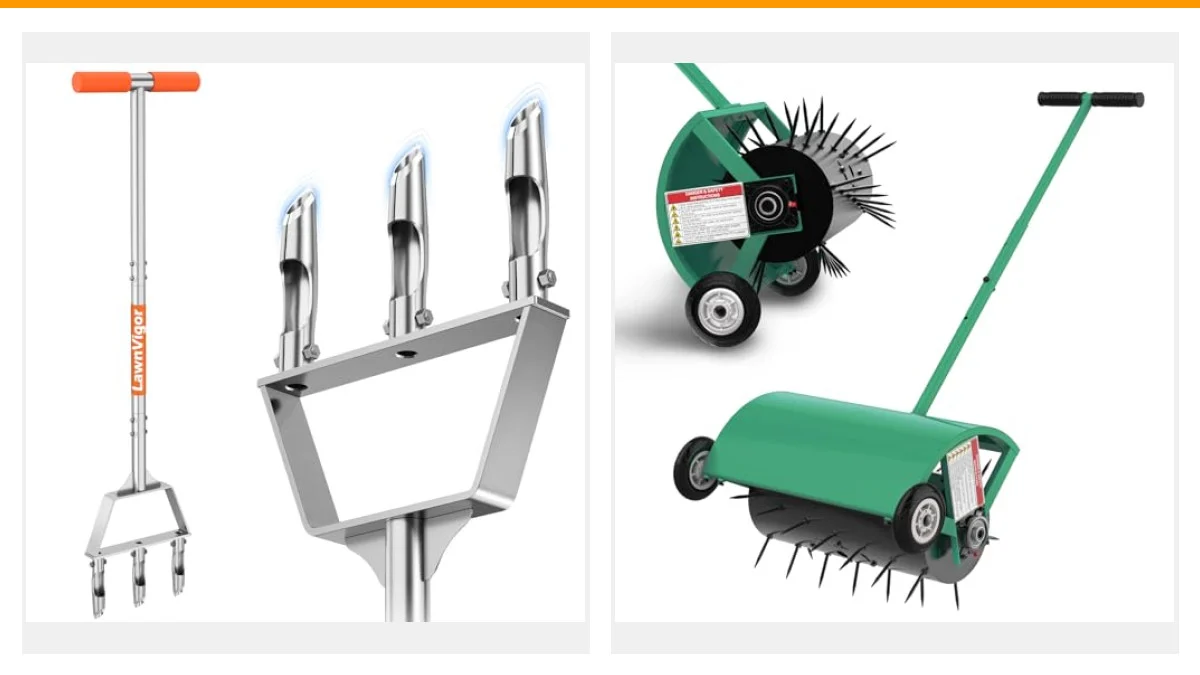
Your lawn looks tired. Water pools in spots, the grass feels spongy underfoot, and fertilizer seems to vanish without doing much. That’s soil compaction at work. Grass roots can’t push through hard ground, so they stay shallow and weak.


A rolling lawn aerator fixes the problem without a rental machine or a crew of landscapers. The best models punch holes or pull plugs as you walk, letting air, water, and nutrients reach the root zone. The right pick depends on your soil type, lawn size, and how much physical effort you’re willing to put in.
Below are five rolling aerators worth your attention, matched to specific buyer situations. You’ll also find coverage math, a spike-vs-coring decision framework, and a soil moisture test that makes or breaks your results. If you only have a few minutes, jump to the top recommendation at the end.
Here’s a quick side-by-side of the key specs that separate these five models.
| Features | K.D STONEDGE Coring | SENVERT Spike Aerator | Failenfeivp 42-Spike | YihuaTop 42-Spike | dexirona Core Aerator |
|---|---|---|---|---|---|
| Aeration Type | Hollow-tine coring | Spike | Spike | Spike | Dual-row hollow tine |
| Spike/Tine Count | Patented rotary coring | Spiral-spiked tread | 42 reinforced pegs | 42 matrix spikes | Dual-row hollow tines |
| Base Weight | Balanced manual design | 32 lbs (55 lbs max) | Fillable drum | 32 lbs (70 lbs max) | Fillable drum |
| Roller Width | Compact drum | Standard drum | Standard drum | 13.5-inch drum | Wider coverage drum |
| Best Lawn Size | Small to medium | Small to medium | Medium yards | Medium to large | Medium to large |
Patented Rolling Lawn Aer…
This one is for the homeowner who understands the difference between poking holes and actually removing plugs. The K.D STONEDGE uses a patented rotary coring design that extracts soil plugs rather than just pushing soil aside. If your lawn has a thick thatch layer or heavy clay, that distinction matters a lot.
The manual push operation is balanced by design, so you’re not fighting the machine as you walk. It’s a workout, no question. But the tradeoff is real aeration depth without gas, cords, or a rental fee. Small to medium lawns are the sweet spot here, and the build quality suggests it’ll survive several seasons of spring and fall treatments.
The catch? Coring leaves plugs on the surface. Some people find that messy and want to rake them back in. It’s also slower than a spike roller because each plug takes effort to pull. If your soil is bone-dry and rock hard, you’ll want to water first or you’ll just bounce across the surface.
- Hollow-tine coring pulls actual plugs, not just spikes holes
- Balanced manual design reduces pushing fatigue
- Heavy-duty build for repeated seasonal use
- Works best on small to medium lawns
- Requires moist soil for clean plug extraction
Best for: Homeowners with compacted clay or thatch-heavy lawns who want genuine core aeration without renting equipment.
SENVERT Rolling Lawn Aera…
Picture someone with a modest front yard, a garage that’s already full, and no interest in storing a bulky machine. The SENVERT rolling aerator fits that person well. It arrives mostly assembled, so you attach the handle and start rolling within minutes.
What sets this model apart is the auxiliary wheel system. Those TPR wheels let you roll the aerator across your driveway or patio without the spikes gouging the surface. That’s a small feature with big practical value. The spiral-spiked tread pattern also rolls smoother than straight-row spikes, which means less bouncing and better directional control.
At 32 pounds, it penetrates most soils on its own. You can add sand or stones through the covered drum opening to reach 55 pounds for harder ground. Just don’t add water. The manufacturer specifically warns against it, likely because moisture inside the drum causes rust over time. Compared to aerator shoes or step-style tools, this covers ground faster with less physical strain.
- 32 lbs base weight, expandable to 55 lbs with sand or stones
- Auxiliary TPR wheels protect driveways during transport
- Spiral spike pattern improves rolling smoothness
- Handle-only assembly, ready in minutes
- Never fill the drum with water
Best for: Suburban homeowners with small-to-medium lawns who need easy storage and don’t want to damage hardscape surfaces.
Failenfeivp Rolling Lawn…
Here’s a model built for the person who wants maximum spike count and doesn’t mind a bit of setup. The Failenfeivp carries 42 reinforced pegs arranged in a spiral pattern. When you look at the drum from the side, those tines form a near-perfect circle, which keeps the roll smooth and reduces the vertical hopping you get from cheaper spike rollers.
Each peg is heat-treated for hardness. That’s not marketing fluff. Heat treatment genuinely reduces bending and warping, especially when you hit a rock or a root. The galvanized steel frame resists rust, which matters if you live in a humid climate or store the tool outside. The drum accepts sand or rocks for extra ballast, letting the pegs bite deeper into dense soil.
The 55-inch handle means no bending, and the rubber grips are comfortable for extended sessions. One honest caveat: the fillable drum starts empty, so you’ll need to source your own sand or gravel before the first use. Also, 42 spikes create a lot of holes close together, which is great for aeration but can look aggressive on thin turf.
- 42 heat-treated steel pegs resist bending and warping
- Spiral tine pattern reduces vertical runout
- Galvanized steel frame fights rust and corrosion
- 55-inch handle with ergonomic rubber grips
- Drum accepts sand or rocks for added penetration
Best for: Lawn owners with medium-sized yards and tough soil who want a high spike count and durable construction at a reasonable cost.
YihuaTop Rolling Lawn Aer…
If your lawn is on the larger side and you want to finish aeration in fewer passes, the YihuaTop deserves a look. The 13.5-inch wide drum covers more ground per rotation than standard-width rollers. That width difference adds up fast across a half-acre or more.
The 42 spikes sit in a matrix layout for even hole spacing. Base weight is 32 pounds, enough for common soils, but the weight chamber accepts sand to push total mass to 70 pounds. That’s the heaviest ballast option in this group. The manufacturer recommends pulling rather than pushing once you’ve loaded it, which makes sense. Pulling a 70-pound roller is far less punishing than pushing it.
Height adjustment is a nice touch. You can set the handle to your preferred working position without stooping. Assembly is straightforward since the spikes come pre-installed. The main limitation is maneuverability. A wider drum means a larger turning radius, so tight corners and narrow garden beds get awkward.
- 13.5-inch drum width covers more ground per pass
- 32 lbs base weight, expandable to 70 lbs with sand
- 42 matrix-layout spikes for even hole spacing
- Adjustable handle height prevents bending
- Pull rather than push when fully loaded
Best for: Homeowners with medium-to-large lawns and hard, compacted soil who want deep spike penetration and fewer passes.
Heavy-Duty Rolling Core L…
This is the one for someone who wants true core aeration but doesn’t want to rent a machine every fall. The dexirona uses dual-row hollow tines that pull actual soil plugs. That’s a different category of result than spike aeration. Plugs come out, soil relaxes, and roots get room to expand.
The dual-row design covers more area per rolling pass, which cuts down the number of times you walk the same strip. The drum accepts water or sand for ballast, letting you dial in penetration depth based on current soil conditions. No gas, no cords, no rental window. You aerate when your schedule allows.
The honest tradeoff is speed. Hollow tines require more force to push into the ground than solid spikes, even with ballast. You’ll move slower, and you’ll feel it in your arms and back after a full lawn. The manufacturer suggests working when soil is slightly moist, which is good advice. Dry clay will stop hollow tines cold.
- Dual-row hollow tines pull real soil plugs
- Fillable drum accepts water or sand for ballast
- Wider coverage per pass than single-row coring
- No rental equipment needed
- Requires slightly moist soil for best results
Best for: Serious lawn caretakers with medium-to-large yards who want plug-pulling core aeration without the cost of a tow-behind machine.
Spike vs. Coring Aerators: Which Do You Need?
This is the decision that trips up most buyers. Spike aerators push soil aside to create holes. Coring aerators remove small plugs of soil entirely. Both relieve compaction, but they work differently and suit different situations.
Go with a spike aerator if your lawn is mildly compacted, you want faster coverage, and you don’t mind a lighter treatment. Spike models are easier to push and generally cheaper. They’re a solid maintenance tool for lawns that get aerated regularly.
Choose a coring aerator if your soil is heavily compacted, you have a thick thatch layer, or you’ve never aerated before. Core aeration is the more thorough option because it actually removes material and creates space for roots to expand. The tradeoff is slower passes and more physical effort. For a deeper look at how these compare across sizes, this rolling aerator breakdown covers more ground.
Buying Guide: What Really Matters
Spike length and tine depth determine how far into the soil your aerator reaches. Two-inch spikes handle most residential lawns. If your compaction runs deeper than that, you’ll need ballast weight to push the tines further down. Without enough weight, even long spikes just skim the surface.
Roller width drives your coverage math. A 13.5-inch drum covers roughly 1.1 square feet per rotation. An 18-inch drum covers about 1.5 square feet. That difference means fewer passes on large lawns but harder maneuvering around obstacles. Match the width to your lawn’s shape. Wide-open spaces favor wider drums. Landscaped yards with beds and trees favor narrower ones.
Ballast weight is the lever you pull when spikes won’t penetrate. A 32-pound base weight works for loamy soil. Bumping to 55 or 70 pounds helps in clay. But here’s the catch: heavier rollers can worsen compaction on already-compacted soil if you run them too often. Use the minimum weight that gets penetration, and don’t aerate more than twice a year.
Handle ergonomics matter more than most buyers expect. A 55-inch handle keeps you upright. Adjustable height lets you find a comfortable pushing or pulling angle. Rubber grips prevent blisters during long sessions. These details don’t sound important until you’ve spent an hour hunched over a short-handled tool.
Build material decides how many seasons you get. Galvanized steel resists rust. Heat-treated spikes resist bending. Powder-coated frames hold up better than bare metal. If you store your aerator in a shed or garage, rust is less of a concern. If it sits outside, prioritize rust-resistant construction.
How to Aerate Correctly
Timing matters as much as technique. For cool-season grasses like fescue and bluegrass, aerate in early fall. The grass is actively growing, and the holes heal before winter. Warm-season grasses like Bermuda and zoysia prefer late spring or early summer, when they’re pushing new growth.
Soil moisture is the make-or-break variable. Test it by pushing a screwdriver into the ground. If it slides in easily, you’re ready. If it takes real force, water the lawn lightly the day before and try again. Dry, hard soil defeats even the best aerator. Soggy soil creates messy plugs and clogs hollow tines.
For passes per square foot, aim for two to three passes in different directions on heavily compacted lawns. One pass is enough for routine maintenance. Overlap your rows by about half the drum width to avoid missed strips. On a 1,000-square-foot lawn with a 13.5-inch drum, expect roughly 15 to 20 minutes per pass at a steady walking pace.
If you’re working a bigger property, these manual aerators for large areas cover models built for more ground. And if your yard is on the smaller side, there are compact rolling aerators designed to fit tighter spaces without sacrificing performance.
Maintenance, Storage, and Safety
Rinse the drum and tines after each use, especially if you added sand or stones. Trapped moisture causes rust from the inside out. Dry everything with a rag before storing. A light coat of oil on the spikes or tines adds another layer of protection.
Inspect spikes and tines before each session. Bent pegs create uneven holes and make the roller wobble. Replace or straighten them early. Check the handle connections too. Loose bolts turn a smooth roll into a rattling, unpredictable push.
Store the aerator upright on a dry surface. If your model has auxiliary wheels, use them to roll it into storage rather than dragging it. Wear gloves and closed-toe shoes while working. Core aerators leave plugs on the surface, which can be slippery on slopes.
Frequently Asked Questions
How often should I aerate my lawn?
Once a year for most lawns. Twice a year if your soil is heavy clay or gets heavy foot traffic. More than that risks breaking down the soil structure without giving grass time to recover.
Can I aerate when the soil is wet?
Slightly moist is ideal. Soggy soil clogs hollow tines and creates muddy plugs. Dry soil blocks penetration. The screwdriver test is your best gauge. If it slides in with light pressure, conditions are right.
Do I need to remove the plugs after core aeration?
No. Let them break down naturally. They return organic matter to the soil. If the look bothers you, drag a rake across them lightly to spread the plugs out. They’ll disappear within a week or two of normal watering.
Will a rolling aerator work on Bermuda grass?
Yes, but timing matters. Aerate Bermuda in late spring or early summer when it’s actively growing. Avoid dormant season. The holes won’t heal, and you’ll invite weeds into the open spaces.
How We Chose These Products
We evaluated each aerator on aeration type, spike or tine construction, drum width, ballast capacity, handle design, and build material. Products with heat-treated spikes or hollow tines scored higher because they hold up better over repeated use. Fillable drums earned extra points for versatility across different soil conditions.
Real-world usability factored in heavily. Auxiliary wheels, pre-installed spikes, adjustable handles, and rust-resistant coatings all matter when you’re actually using the tool. We also considered who each model suits best, because a 70-pound roller is overkill for a postage-stamp lawn, and a lightweight spike roller won’t cut it on hard clay.
Our Top Recommendation
The SENVERT rolling aerator takes the top spot for most homeowners. It balances weight, ease of use, and practical features better than anything else in this group. The auxiliary wheels alone save your driveway and your back. The 32-pound base weight handles typical residential soil, and the 55-pound max gives you room to go deeper when needed.
For heavy compaction or first-time aeration, the dexirona dual-row core aerator is the stronger choice. It pulls real plugs and covers more ground per pass. The K.D STONEDGE is a solid alternative for smaller lawns where the patented coring design shines. And if budget is tight, the Failenfeivp delivers 42 heat-treated spikes at a price that’s hard to argue with.
Whichever you pick, check the current price on Amazon and confirm the drum width fits your lawn’s layout. A great aerator that’s the wrong size for your yard just collects dust in the garage.