Your lawn feels spongy underfoot. Water pools instead of soaking in. You rake and rake, but a brown layer of thatch sits there like a bad carpet. That layer is the problem, and a regular mower won’t fix it.


A dedicated scarifier cuts through thatch and moss. An aerator opens the soil so air and nutrients reach the roots. The best machines do both jobs with one engine and a quick head swap. Petrol models bring the torque and freedom of movement that corded electric tools can’t match on larger plots.
This guide covers five machines: one petrol 2-in-1, three electric options, and a lightweight electric for smaller gardens. We’ll also cover the petrol ownership reality — fuel, servicing, safety, and a seasonal calendar. If you want the short version, the Bofoluer 7HP petrol model is the strongest all-rounder for big lawns, while the Westinghouse is the smarter buy if your lawn is under a quarter acre.
| Features | Bofoluer 7HP Petrol | Westinghouse 16-Inch | MZK 13-Inch | Greenworks 14-Inch | MZK 15-Inch |
|---|---|---|---|---|---|
| Power source | 212cc 4-stroke petrol | 15-amp corded electric | 13-amp corded electric | 13-amp corded electric | 13-amp corded electric |
| Working width | 16 inches | 16 inches | 13 inches | 14 inches | 15 inches |
| Depth settings | 5 positions, central lever | 5 positions | Adjustable, -0.47 to 0.16 in | 3 positions | Adjustable, -0.47 to 0.24 in |
| Collection bag | 45L (13.2 gal) | 14.5 gal | 30L | Not specified | 45L |
| Best use case | Large lawns, no cord | Mid-size lawns, low upkeep | Small yards, tight spaces | Budget-conscious buyers | Mid lawns, big bag |

2-in-1 Gas Lawn Scarifier…
This is the machine for the person with a half-acre or more who is tired of dragging extension cords across the grass. The Bofoluer runs a 212cc four-stroke engine that puts out 4.5kW. That’s real torque. It pushes through thick thatch and compacted soil without bogging down the way a 13-amp electric motor will on a heavy first pass.
The tool-free cassette system is the standout feature. You swap between the scarifying reel and the dethatching tines without reaching for a wrench. A single lever controls all five depth settings, ranging from -0.6 inches to +0.6 inches. That range matters. You can set it shallow for a light spring clean or drop it deep in autumn to slice through matted moss. The 45L catcher holds enough debris that you’re not stopping every five minutes.
Here’s the honest trade-off. This is a petrol machine, which means fuel, oil changes, air filters, and spark plugs. It’s louder than any electric model on this list. If you have close neighbours or a noise-sensitive household, that’s a real consideration. It also weighs considerably more than the 19.5-pound MZK, so pushing it uphill will test your arms.
- 212cc 4-stroke engine with 4.5kW output
- Tool-free cassette swap between scarifier and dethatcher
- 5-position central height adjustment from -0.6 to +0.6 inches
- 45L debris bag and 1-gallon fuel tank
- Steel frame built for repeated seasonal use
Best for: Homeowners with large lawns who want cord-free power and don’t mind basic engine maintenance.
Westinghouse 16″ 15-Amp 2…

Westinghouse
Westinghouse 16" 15-Amp 2-in-1 Electric Dethatcher and Scarifier with Collection Bag
- TWO HEADS, ONE MACHINE: 24 spring tines rake out buried thatch, dead grass and organic debris; a 20-blade scarifier head slices na…
- 15 AMP MOTOR, UP TO 3500 RPM: Corded electric power drives through thick thatch and dense dirt with no batteries, gas, oil or engi…
- 16" PATH, 5 DEPTH SETTINGS: Cover more lawn per pass with a 16 inch working width, 5 depths from -0.5" to +0.25" for light raking…
The Westinghouse targets a different buyer: someone with a quarter-acre to half-acre lawn who wants petrol-level performance without the petrol headaches. It runs on a 15-amp corded motor that spins up to 3,500 RPM. That’s enough to pull buried thatch and slice through compacted dirt on most residential lawns.
Two heads come in the box. The 24 spring tines rake out dead grass and organic debris. The 20-blade scarifier head cuts narrow channels into the soil so water and nutrients reach deeper roots. Swapping takes seconds. Five depth settings run from -0.5 inches to +0.25 inches, and the handle adjusts to three heights. At 29.5 pounds with a centre carry handle, it’s manageable for most adults.
The limitation is the cord. You’ll need an outdoor-rated extension lead long enough to reach your furthest corner, and you’ll be managing that cable around trees and garden beds. The 14.5-gallon bag is smaller than the Bofoluer’s, so expect more emptying stops on a heavy thatch year. And the 2-year warranty is decent but not exceptional.
- 15-amp motor, up to 3,500 RPM
- 24 spring tines and 20-blade scarifier head included
- 5 depth settings from -0.5 to +0.25 inches
- 14.5-gallon rear collection bag
- 29.5 lbs with folding handle and carry grip
Best for: Suburban gardeners who want strong electric performance and zero engine maintenance.
MZK 13-Inch Electric Deth…
Small gardens and narrow side strips are where this MZK earns its keep. The 13-inch rake path fits through gates and around tight borders where a 16-inch machine simply won’t go. At 19.5 pounds, it’s the lightest tool in this roundup. One-handed manoeuvring around shrubs is realistic.
The 13-amp copper motor delivers 3,700 RPM, which is actually higher than the Westinghouse’s 3,500 RPM. Depth adjusts from -0.47 inches to 0.16 inches. That’s a narrower range than the petrol Bofoluer, but for a small lawn with moderate thatch, it’s plenty. The 30L bag is proportionate to the machine’s size. Dual safety switches prevent accidental starts, which is a thoughtful touch for households with curious kids.
Don’t expect this to tame a neglected half-acre. The 13-inch width means more passes, and the smaller motor will strain in dense, wet thatch. You’ll also need to manage a cord. For a courtyard or a modest front lawn, though, it’s a sensible, low-effort choice.
- 13-amp motor producing 3,700 RPM
- 13-inch working width, adjustable depth from -0.47 to 0.16 inches
- Quick-switch dethatcher and scarifier blades
- 30L collection bag
- 19.5 lbs with foldable handle and dual safety switches
Best for: Owners of small or awkwardly shaped lawns who need a light, manoeuvrable tool.
Greenworks 13 Amp 14-Inch…
Greenworks
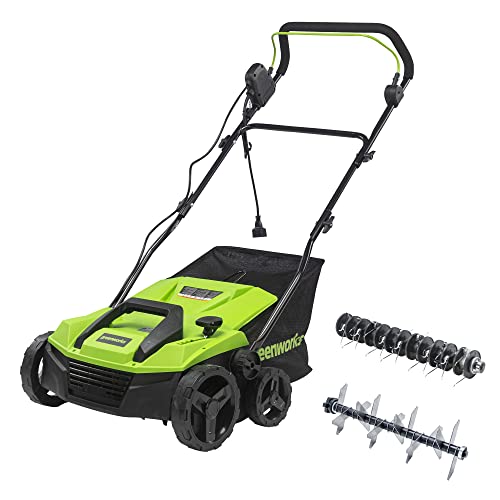
Greenworks 13 Amp 14-Inch Corded Dethatcher / Scarifier, 2-in-1 Electric Lawn Rake with 3-Position Depth Adjustment & Push-Button Start, Lawn Care Tool for Healthy Yard Maintenance
- 2-IN-1 DESIGN - 13A 14-Inch Dethatcher / Scarifer provides the power and versatility to keep your lawn healthy.No load speed : 320…
- LIGHTWEIGHT, EASY TO USE - Lightweight design allows for easy manuevering. Easy push button start
- QUICK RELEASE - Quickly and easily switch between the included dethacther and scarifier attachments
Greenworks has a solid reputation in corded garden tools, and this 14-inch model sits in the middle of the range. It’s for the buyer who wants a recognised brand, a simple setup, and a price that undercuts the higher-spec electric models. The 13-amp motor runs at 3,200 RPM with no load.
What stands out is the simplicity. Push-button start, quick-release heads, and a three-position depth adjustment. There’s no confusion about setup. The lightweight design makes it easy to push across a flat lawn. Greenworks also gives clear guidance on timing: dethatch in early spring or early autumn for cool-season grasses, and late spring through early summer for warm-season varieties.
Three depth positions is fewer than the five on the Westinghouse and Bofoluer. For a lawn with light thatch, that’s fine. For a heavily matted lawn, you’ll want more granular control. The 14-inch width sits between the MZK 13-inch and the larger 16-inch machines. It’s a compromise, but a reasonable one for the price bracket.
- 13-amp motor, 3,200 RPM no-load speed
- 14-inch working width
- 3-position tine depth adjustment
- Quick-release dethatcher and scarifier attachments
- Push-button start and lightweight build
Best for: Budget-focused buyers who want a trusted brand for a modest-sized lawn.
MZK Lawn Dethatcher Elect…
This is the bigger sibling to the 13-inch MZK. The 15-inch rake path and 45L bag make it a better fit for medium lawns where the smaller model would mean too many passes and too many emptying stops. The 13-amp motor still delivers 3,700 RPM, so power is unchanged.
The depth range stretches slightly further than the 13-inch version, from -0.47 inches to 0.24 inches. That extra reach helps when you’re scarifying rather than just dethatching. The 45L bag matches the petrol Bofoluer’s capacity, which means fewer interruptions on a full lawn clean-up. At 27.5 pounds, it’s heavier than the 13-inch MZK but still lighter than most petrol machines.
The trade-off is the same as any corded tool: you’re tethered. And 27.5 pounds gets tiring on slopes or if you’re pushing through thick growth. The dual safety switches and foldable handle are welcome, but the depth adjustment mechanism isn’t as refined as the central lever on the petrol model.
- 13-amp motor with 3,700 RPM
- 15-inch working width
- Adjustable depth from -0.47 to 0.24 inches
- 45L collection bag
- 27.5 lbs with foldable handle and dual safety switches
Best for: Medium-lawn owners who want a large bag and don’t want to pay petrol prices.
How We Chose These Products
We started with the core job: removing thatch and opening soil. Any machine that can’t do both well didn’t make the cut. From there, we weighed engine or motor power against working width and bag capacity. A 16-inch path with a 45L bag makes sense for a large lawn. A 13-inch path with a 30L bag suits a courtyard. Matching the tool to the plot size matters more than raw specs.
We also factored in the ownership experience. Petrol machines bring power and freedom but demand fuel, servicing, and noise tolerance. Electric models are simpler but tethered. We looked at depth range, head-swap convenience, weight, and safety features. No single machine wins everywhere. The right pick depends on your lawn size, your tolerance for maintenance, and whether a cord is a dealbreaker.
Buying Guide: What Really Matters
Working width decides how many passes you’ll make. A 16-inch machine covers ground faster. A 13-inch tool fits tighter spaces. Measure your lawn’s narrowest point before you buy. If you have a gate or a border strip, a wide machine becomes useless.
Depth adjustment is the other big one. Three positions will handle light thatch. Five positions gives you the control to go shallow in spring and deep in autumn. Petrol models often have a central lever, which is easier to use than individual tine adjustments. Check the range too. A machine that only goes to -0.5 inches won’t cut as deep as one that reaches -0.6 inches.
Power source comes down to lawn size and patience. Petrol suits large plots and rough terrain. Electric suits smaller lawns and buyers who prefer plug-and-go simplicity. Corded electric is cheaper to buy and run than petrol, but you’ll manage a cable. There’s no battery option in this roundup, so if you want cordless, you’ll need to look at a different category.
Our Top Recommendation
The Bofoluer 7HP petrol scarifier is the best overall pick for anyone with a large lawn. The 212cc engine, 16-inch width, 45L bag, and tool-free head swap make it a genuinely capable 2-in-1. It’s the machine that will handle a neglected lawn in one session rather than three. Yes, you’ll service the engine. Yes, it’s loud. But the power and freedom are worth it on a big plot.
For smaller lawns, the Westinghouse 16-inch electric is the smarter buy. It matches the Bofoluer’s width, has five depth settings, and needs no fuel or oil. The MZK 15-inch is a solid budget alternative with a bigger bag than the Westinghouse, while the 13-inch MZK suits tight gardens. The Greenworks is the entry-level option if you want a known brand at a lower cost.
Frequently Asked Questions
Can I use a petrol scarifier on wet grass? No. Wet grass clumps and clogs the tines. Wait for a dry day, ideally after a light dew has lifted. Dry thatch also breaks up more easily, so the machine works less hard.
How often should I scarify my lawn? Once a year for most lawns. Cool-season grasses respond well to early spring or early autumn scarifying. Warm-season grasses prefer late spring to early summer. If your lawn is heavily thatched, you might need two passes in the first year.
Do I need to overseed after scarifying? It’s a good idea. Scarifying opens the soil and exposes bare patches. Overseeding right after gives new grass a chance to establish before weeds move in. Keep the seed moist for the first two weeks.
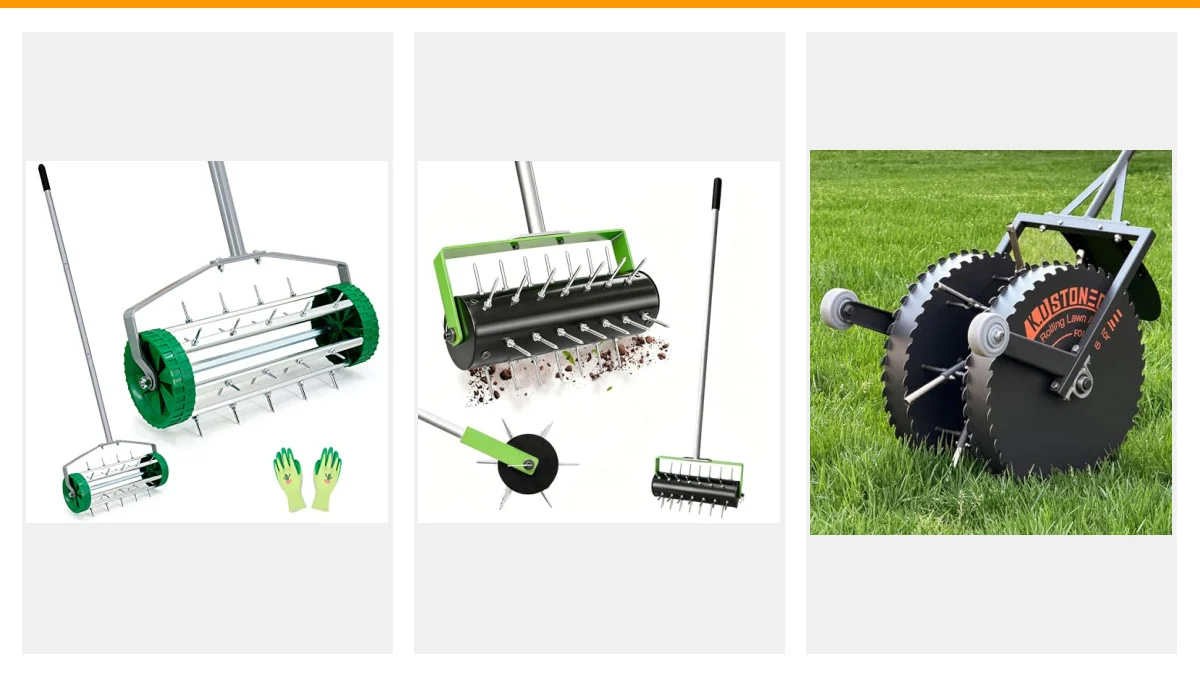
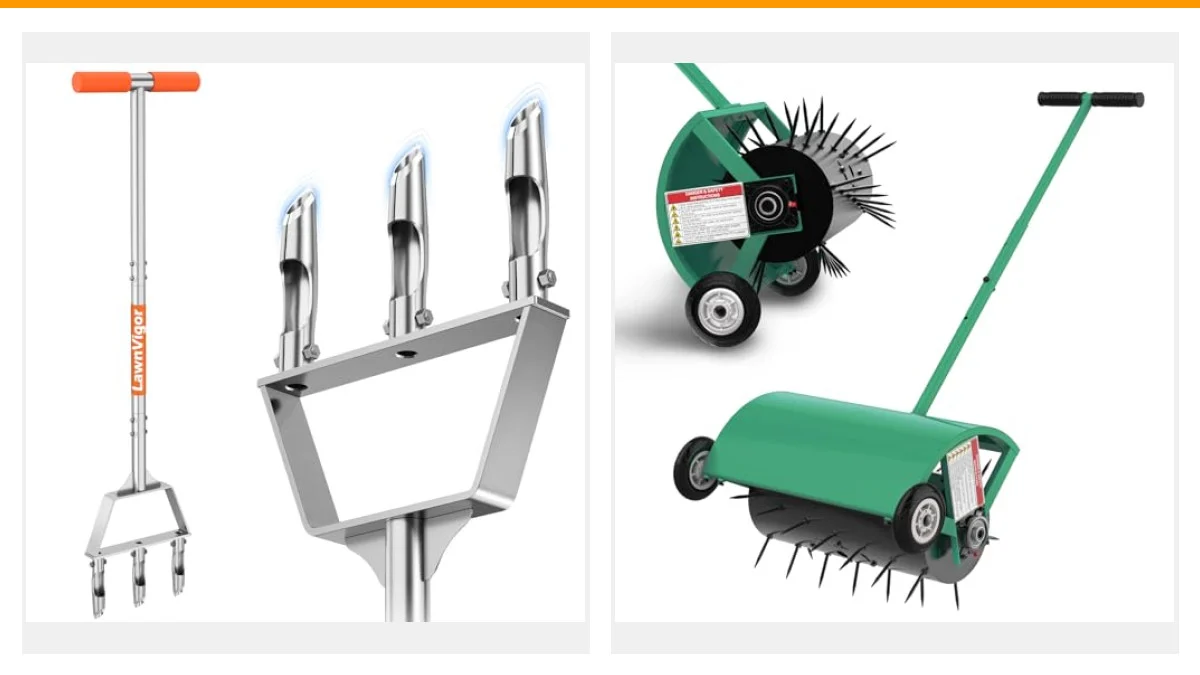
What’s the difference between a scarifier and an aerator? A scarifier cuts through thatch and moss on the surface. An aerator penetrates the soil to relieve compaction. A 2-in-1 machine like the Bofoluer does both jobs with different heads. For deep compaction, a spike or plug aerator may still be needed as a separate tool.
Petrol vs Electric vs Manual: Which Should You Buy?
Petrol wins on power and freedom. No cord, no battery limits, and enough torque to handle thick thatch on a large lawn. The cost is maintenance, noise, and fumes. You’ll need to store fuel safely, change the oil, and replace spark plugs. If you have a half-acre or more and want one machine to do the heavy lifting, petrol is the right call.
Electric is simpler and cheaper to run. A 15-amp corded model like the Westinghouse delivers enough power for most suburban lawns. You’ll manage a cord, and you’ll need an outdoor-rated extension lead. For lawns under a quarter-acre, electric is often the smarter buy. Manual scarifiers exist, but they’re only realistic for very small lawns or spot treatment. They’re hard work and slow.
Petrol Engine Care: Fuel, Servicing and Winter Storage
Petrol scarifiers need more attention than electric tools. Use fresh fuel. Stale petrol causes starting problems and clogs the carburettor. If you’re not using the machine for a month or more, add a fuel stabiliser or drain the tank. Check the oil before each use and change it according to the manual. Air filters and spark plugs are cheap to replace and prevent bigger issues.
Winter storage matters. Drain the fuel or run the engine until it stops. Clean the tines and the underside of the deck. Store the machine in a dry place. A little preparation in autumn saves a frustrating start in spring. For more detail on petrol machine selection, this professional gardener’s petrol scarifier picks is worth a read.
Cost of Ownership: Fuel, Tines and Rental Compared
Petrol isn’t just the purchase price. Fuel costs add up over a season. Tines and scarifying blades wear down and need replacing every year or two, depending on use. Servicing costs — oil, filters, plugs — are modest but ongoing. A rental machine avoids those costs but comes with its own hassle: booking, transport, and limited time. For a large lawn, buying usually makes more sense over three or four seasons.
Electric models cost less to run. Electricity is cheaper than petrol, and there’s no engine servicing. Replacement tines are the main consumable. If your lawn is small, the total cost of electric ownership will be lower. If you have a large plot and heavy thatch, petrol’s productivity can offset its higher running costs.
Safety When Using a Petrol Scarifier
Petrol machines produce carbon monoxide. Never run one in a shed, garage, or any enclosed space. Work outdoors with good ventilation. Handle fuel carefully: store it in an approved container, refuel when the engine is cool, and never smoke nearby. Wear sturdy boots, long trousers, and eye protection. Ear defenders are wise — petrol scarifiers are loud.
Keep children and pets away from the working area. Clear stones, toys, and debris before you start. The tines spin fast and can throw objects. Push the machine at a steady pace. Let the engine do the work rather than forcing it through thick growth. If the machine jams, switch it off and wait for the tines to stop before clearing the blockage.
How to Scarify and Aerate: Step-by-Step
Start with a dry lawn. Set the depth shallow for the first pass. Walk in straight lines, overlapping slightly. Empty the bag when it’s about two-thirds full — a full bag reduces airflow and collection. For heavy thatch, make a second pass at a deeper setting, but go at right angles to the first.
After scarifying, switch to the aerator head if you have one. Run it over the lawn to relieve compaction. Then overseed any bare patches. Water lightly and keep the area moist for two weeks. Avoid heavy foot traffic during recovery. For a broader look at scarifier and aerator options, this comparison of top scarifiers and aerators covers more models.
Seasonal Lawn Calendar: When to Scarify, Aerate and Overseed
Early spring: scarify lightly to remove winter debris and moss. Follow with a light aerate if the soil is compacted. Overseed thin patches. Early autumn: the main scarify session for cool-season grasses. This is when thatch is thickest and recovery is fastest. Aerate after scarifying, then overseed. Late spring to early summer: warm-season grasses benefit from scarifying after the second mowing. Avoid scarifying in drought or extreme heat.
Timing matters more than frequency. Scarifying at the wrong time stresses the grass. Scarifying at the right time stimulates growth. Keep a simple log of what you did and when. After a season or two, you’ll know your lawn’s rhythm.
Verdict
The best petrol lawn scarifier and aerator for most large-lawn owners is the Bofoluer 7HP. It combines a powerful engine, a wide working path, and a genuine 2-in-1 head system. For smaller lawns, the Westinghouse 16-inch electric is the smarter, lower-maintenance choice. The MZK 15-inch offers a big bag at a lower price, while the 13-inch MZK and Greenworks suit tight spaces and tight budgets. Pick based on your lawn size, your tolerance for maintenance, and whether a cord is a dealbreaker.