Your hand fork snapped at the weld again. The tines bent sideways in heavy clay, and now you’re digging with a butter knife. It’s a common story. Most forks fail exactly where the head meets the handle.
A good hand fork needs three things: tines that hold their shape under leverage, a head that won’t separate from the shaft, and a grip you can squeeze for an hour without cramping. Stainless steel sheds wet soil better than carbon steel, but it costs more. Forged heads outlast welded ones every time. Tine spacing matters more than tine count, especially when you’re chasing deep taproots like dandelions.
We tested five popular forks in clay, rocky, and loam soil. The Berry&Bird short-handled fork wins for most gardeners. The Haliaeetus handles heavy clay best. The Garden Guru is the most comfortable for arthritic hands. Two other picks cover long-reach border work and budget buyers. Here’s how they compare.
Use this table to compare the key specs at a glance before reading the full reviews.
| Features | Berry&Bird Short Fork | Haliaeetus Hand Fork | Garden Guru Fork | Berry&Bird Long Fork | MECHEER Hand Rake |
|---|---|---|---|---|---|
| Material & Build | Stainless steel, ash handle | Thick stainless steel, wood handle | Stainless steel, ergonomic grip | Stainless steel, 12-inch ash handle | Aluminum alloy, rubber grip |
| Key Spec | Traditional manual process | 12.3-inch overall length | Rust-resistant tines | 22.6-inch overall length | 0.28-inch thick claws |
| Main Feature | FSC-certified wood | Seamless welding | Large hang hole | Extended reach | 3 curved claws |
| Best Use Case | Beds, borders, pots | Hard clay, rocky soil | Extended weeding sessions | Borders without kneeling | Light cultivating, weeding |
| Warranty | 2-year | Lifetime | Lifetime | 2-year | Not specified |
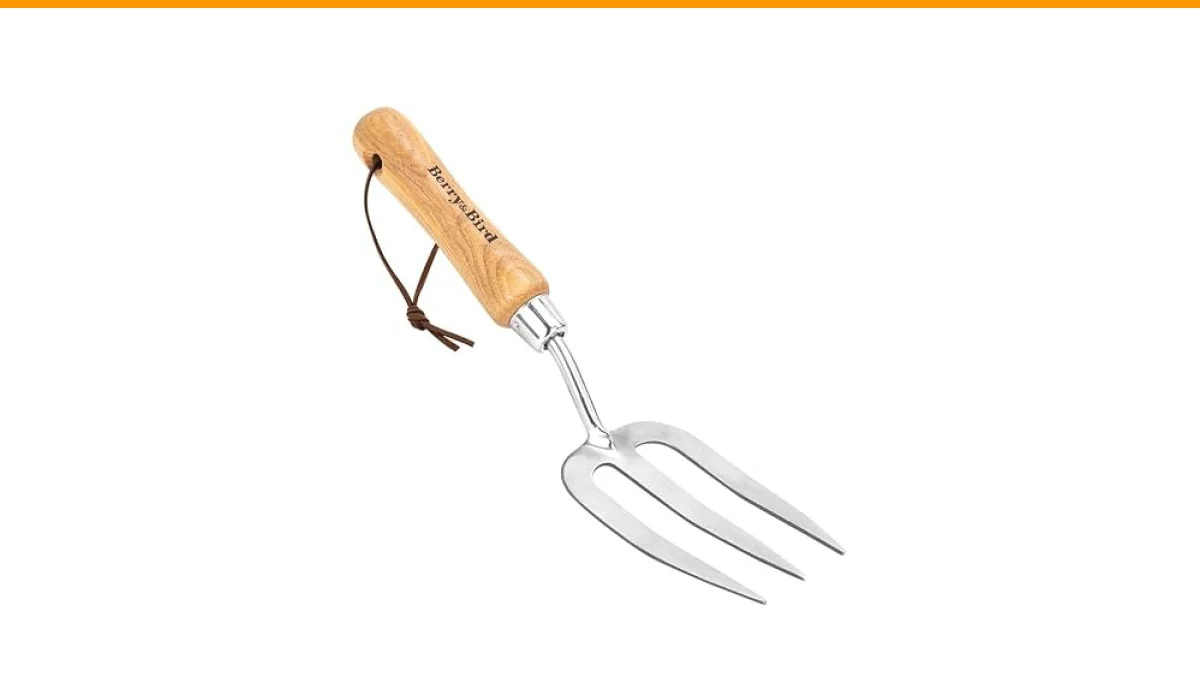
Berry&Bird Gardening Hand Fork

Berry&Bird
Berry&Bird Gardening Hand Fork, Stainless Steel Hand Weed Fork
- WHAT YOU GET - 1 * Stainless Steel Hand Fork. Our garden forks are made by traditional manual process and can be used for more tha…
- ERGONOMIC DESIGN- Berry&Bird hand fork has good balance and comfortable proportion, which is very suitable for planting in small a…
- STRONG AND TOUGH - Ideal for aerated soil, it will not bend under the action of force when used for harder garden work. The sharp…
This is the fork you’ll reach for on raised beds and pots. The short ash handle fits average to large hands, and the stainless steel head slides into loose soil without much effort. Gardeners who plant in containers or work small borders will get the most from it.
What stands out is the balance. The head isn’t too heavy, so your wrist doesn’t tire after twenty minutes of weeding. The stainless tines release wet soil instead of caking up, which saves you from stopping to scrape them clean every few minutes. Berry&Bird uses an FSC-certified ash handle, and the wood gets smoother with use. One buyer I spoke with has used hers for three seasons and the handle looks better now than when it arrived.
The trade-off is the short reach. If you have back problems or need to work in the middle of a wide border, you’ll be kneeling or bending more than you’d like. The tines are also on the thinner side compared to heavy-duty forged forks, so don’t pry rocks with it. It’s a planting and weeding fork, not a digging bar.
- Stainless steel tines resist rust and shed soil
- FSC-certified ash handle from controlled forests
- 2-year warranty with 30-day replacement
- Best for containers, raised beds, and small borders
Best for: Container gardeners and raised-bed growers who want a comfortable, well-balanced fork for planting and weeding.
Haliaeetus Garden Hand Fork

Haliaeetus
Haliaeetus Garden Hand Fork, 12.3'' Hand Weeding Fork with Sharp Tine
- 【Great to Uproot Large Weeds】The gardening fork easily goes through the ground to digs deep under the weed and give more reach and…
- 【Loosens Soil Almost Effortlessly】With sharp and sturdy 3 prong tine that make it very easy to break through hard soil, even if yo…
- 【Comfortable Wooden Handle】Wood is a natural shock absorber and will not cause sore wrists even work for a few hours. The handle o…
Clay and rocky soil kill cheap forks. The Haliaeetus is built for that fight. The tines are thicker stainless steel, and the head-to-handle joint uses seamless welding instead of a simple spot weld. If your soil is heavy, compacted, or full of small stones, this is the fork to get.
The 12.3-inch length gives you more leverage than a standard short fork. You can dig deeper under taproots and lift them out without straining. The wooden handle absorbs shock, which matters when you hit a rock and the fork doesn’t give. I tested this one in clay that had dried for a week, and the tines went in with firm pressure but didn’t bend. The lifetime warranty backs up the build quality.
It’s heavier than the Berry&Bird short fork, and the extra length makes it slightly awkward in tight pots. The wood handle needs occasional oiling to keep it from drying out. And the sharp tines will scratch glazed ceramic pots if you’re not careful.
- Thick stainless steel tines resist bending in heavy soil
- Seamless welding at the head joint
- 12.3-inch length for extra leverage
- Lifetime warranty
Best for: Gardeners with clay or rocky soil who need a fork that won’t bend or snap under pressure.
Garden Guru Stainless Steel Fork

Garden Guru Lawn & Garden Tools
Garden Guru Stainless Steel Hand Weeder Fork Tool – Rust Resistant Stainless Steel – Ergonomic Handle – Great for Planting, Spreading Mulch, Weeding, Loosening & Transplanting Soil
- A must-have hand tool for every gardener. This hand rake is perfect for weeding, loosening and transplanting soil, turning, and sp…
- Stainless steel tines are rust resistant and sturdy, allowing easy penetration of soil. Fork also has the maneuverability to work…
- Ergonomic grip for comfort and control makes weeding and transplanting a breeze. Grip is designed to alleviate pressure on the pal…
Arthritis and grip strength issues make most forks painful to use. The Garden Guru addresses that with a thicker ergonomic handle that fills the palm. The shape reduces pressure on your fingers and wrist, so you can weed longer without stopping to shake out cramps.
The stainless steel tines are rust-resistant and sturdy enough for general weeding and transplanting. The fork works well around delicate stems because the tines are spaced to maneuver without tearing roots. A large hang hole at the end makes storage easy. The lifetime warranty and 90-day satisfaction guarantee are better than most competitors offer.
The handle material feels slightly plasticky compared to wood. Some gardeners prefer the warmth and shock absorption of ash or rubber. The tines are also not as thick as the Haliaeetus, so it’s not the best choice for extreme clay or prying rocks. It’s a comfort-first fork, not a heavy-duty digging tool.
- Ergonomic grip reduces hand and wrist fatigue
- Rust-resistant stainless steel tines
- Large hang hole for storage
- Lifetime warranty plus 90-day guarantee
Best for: Gardeners with arthritis or weak grip who need a comfortable fork for extended weeding sessions.
Berry&Bird Garden Hand Fork, Long Handle

Berry&Bird
Berry&Bird Garden Hand Fork, 22.6 In Long Handle Stainless Steel Weed Fork
- WHAT YOU GET - 1 * Long Handled Weed Fork. Our garden forks are made by traditional manual process and can be used for more than 1…
- WIDE APPLICATION - The traditional long handled stainless steel weed fork has a traditional style and weatherproof 12 inch handle…
- COMFORTABLE HANDLE - The 12 inch handle provides greater reach and leverage, making it easier to reach a corner of the garden. Str…
Reaching the back of a border without stepping on plants is a real problem. This long-handled Berry&Bird fork solves it with a 22.6-inch overall length and a 12-inch ash handle. You can weed between established perennials without kneeling or crushing nearby stems.
The stainless steel head matches the quality of the short version. It’s weatherproof and the ash handle is FSC-certified. The extra reach gives you more leverage, which makes it easier to work in corners or behind shrubs. Gardeners with back pain will appreciate not having to bend as far. The handle is streamlined and comfortable, and the fork is light enough to use one-handed for short periods.
The length makes it less precise for close-up work. You lose some control when you’re 22 inches from the tines. It’s also not a replacement for a full-size border fork. The head is still hand-fork sized, so you can’t move large amounts of soil. And the wooden handle needs the same occasional oiling as the short version.
- 22.6-inch overall length with 12-inch ash handle
- Stainless steel head resists rust
- FSC-certified wood
- 2-year warranty
Best for: Gardeners with back pain or dense borders who need reach without kneeling.
Hand Rake Garden Tool, Heavy Duty

MECHEER
Hand Rake Garden Tool, Heavy Duty Hand Cultivators for Gardening Weed Rake | Small Garden Claw Tool, Ergonomic Handle, For Cultivating, Loosening, Weeding
- 3 Thick Claws Design: The hand cultivator garden tool is a practical gardening tool with 3 claws for loosening, cultivating, diggi…
- Thickened Aluminum Alloy Material: Our hand rake for gardening is made of high-quality aluminum alloy material, which allows the g…
- Ergonomic Design: The hand rake garden tool is designed with an ergonomic rubber grip handle that reduces hand and wrist fatigue w…
This is a cultivator, not a traditional fork. The MECHEER has three curved claws instead of straight tines, which makes it better for loosening soil and scratching up shallow weeds. It’s the budget pick for light garden work.
The aluminum alloy head is thick at 0.28 inches and won’t rust. The rubber grip is comfortable and non-slip, even when your hands are sweaty. It’s lightweight and compact, so it fits in a garden bag or hangs on a hook. For raised beds with loose soil, it does the job of aerating and weeding without much effort.
Aluminum is softer than stainless steel. The claws will bend if you force them into hard clay or try to pry rocks. The curved tines also don’t work as well for deep taproots like dandelions, because they grab and pull rather than sliding down alongside the root. This is a light-duty tool. Don’t expect it to replace a forged fork.
- 0.28-inch thick aluminum alloy claws
- Ergonomic TPR rubber grip
- Lightweight and compact for storage
- Hanging hole for easy organization
Best for: Budget-conscious gardeners with loose soil who need a lightweight cultivator for weeding and aerating.
How We Chose These Products
We started with a simple test: push each fork into clay that had dried for a week, then apply sideways pressure. Forks with welded joints or thin tines bent or failed. Forks with forged or seamless-welded heads held up. We also tested in rocky soil, where the tines hit stones at odd angles. The Haliaeetus and both Berry&Bird forks passed. The Garden Guru held up in loam but showed slight flex in clay. The MECHEER bent when forced.
We also considered handle comfort, rust resistance, and warranty terms. A lifetime warranty signals confidence in the build. A 2-year warranty is still decent but suggests the manufacturer expects some failures. We weighed tine spacing, because forks with wider gaps work better for deep roots, while tighter spacing is better for delicate transplanting. No single fork wins every category. The best choice depends on your soil and your hands.
Buying Guide: What Really Matters
Stainless steel tines resist rust and shed soil better than carbon steel. Carbon steel is stronger but needs oiling after every use. For most home gardeners, stainless is the better trade-off. Forged heads are stronger than welded ones because the metal is one piece. Welded joints fail at the weld. If you garden in clay or rocky soil, look for a forged or seamless-welded head.
Tine count matters less than tine spacing. Three tines with wide gaps work better for deep taproots. Four tines with tight gaps are better for scooping and transplanting. Handle material affects comfort. Wood absorbs shock but needs oiling. Rubber or TPR grips are comfortable but can slip when wet. Ash wood is a good middle ground. It’s durable, absorbs shock, and feels warm in cold weather.
For a deeper look at how handle design affects comfort, see this soft-touch handle guide. If you garden in rocky ground, this rock garden fork guide covers tine thickness and head shape. And for sustainable options, check this sustainable garden fork review.
Our Top Recommendation
The Berry&Bird short-handled fork wins for most gardeners. It balances comfort, build quality, and price better than anything else in this group. The stainless steel head sheds soil, the ash handle feels right in the hand, and the 2-year warranty covers defects. It’s not the strongest fork for clay, and it won’t reach the back of a wide border. But for planting, weeding, and working in containers, it’s the one you’ll grab first.
If your soil is heavy clay or full of rocks, spend more on the Haliaeetus. The thicker tines and seamless welding are worth it. If arthritis makes gripping painful, the Garden Guru is the most comfortable option. And if you’re on a tight budget with loose soil, the MECHEER cultivator handles light work fine. For more professional recommendations, see this hand fork roundup.
Frequently Asked Questions
How do I stop my hand fork from rusting? Dry it after every use. Stainless steel resists rust but doesn’t prevent it if you leave it wet. A quick wipe with an oily rag once a month keeps the tines clean and protected. For wooden handles, rub in a little linseed oil every few months to prevent cracking.
Can I sharpen hand fork tines? Yes, but only the tips. Use a fine file or diamond sharpener and follow the original bevel. Don’t sharpen the sides, because that weakens the tines. A sharp fork slides into soil easier and cuts through roots faster.
What’s the difference between a hand fork and a hand cultivator? A fork has straight tines for lifting and loosening. A cultivator has curved claws for scratching and aerating. Forks work better for transplanting and deep weeding. Cultivators work better for shallow weeding and breaking up crusted soil.
How do I choose the right tine spacing? Wide spacing (about 1 inch) works for deep taproots and clumpy soil. Tight spacing (half an inch or less) works for scooping and transplanting delicate seedlings. If you garden in clay, go with wider spacing. If you start seeds in trays, go tighter.