You kneel beside a rock garden, fork in hand, ready to pry out a stubborn dandelion wedged between two slabs of granite. The tines hit stone. The handle twists. The weed wins. It’s a familiar frustration for anyone who gardens in rocky, crevice-filled beds.


A good hand fork for rock gardens needs more than sharp tines. It needs narrow spacing that slips between stones, a head that won’t bend when you lever it, and a handle that absorbs shock instead of sending it into your wrist. Stainless steel tines resist rust from damp gravel. A forged or well-welded joint survives years of abrasive soil. Weight matters too, because you’ll be working at awkward angles.
We looked at five hand forks and cultivators that suit rocky conditions. The Haliaeetus Garden Hand Fork is our top pick for its balance of reach and strength. The Fiskars Ergo is the budget-friendly alternative. The Berry&Bird is the premium choice for gardeners who want a tool to last a decade. Below you’ll find a comparison table, detailed reviews, a buying guide, and answers to common questions about working in rock gardens.
Here’s a quick look at how these five tools compare on the specs that matter most in rocky soil.
| Features | Haliaeetus Fork | MECHEER Hand Rake | Berry&Bird Fork | Garden Guru Fork | Fiskars Ergo Weeder |
|---|---|---|---|---|---|
| Material & Build | Thick stainless steel, seamless weld | Aluminum alloy, 0.28 inch claws | Stainless steel, ash wood handle | Stainless steel tines, ergonomic grip | Cast aluminum angled head |
| Tine Configuration | 3 sharp prongs | 3 thick curved claws | 3 stainless pins | Stainless steel tines | Single angled weeder head |
| Handle Type | Ergonomic wooden handle | Rubber grip, non-slip TPR | FSC ash wood handle | Ergonomic grip | SoftGrip ergonomic handle |
| Best Use Case | Deep weeding in rocky clay | Loosening soil between rocks | Precision work in tight crevices | Transplanting around delicate stems | Uprooting dandelions and thistles |
| Warranty | Lifetime warranty | Not specified | 2-year warranty | Lifetime warranty | Full lifetime warranty |
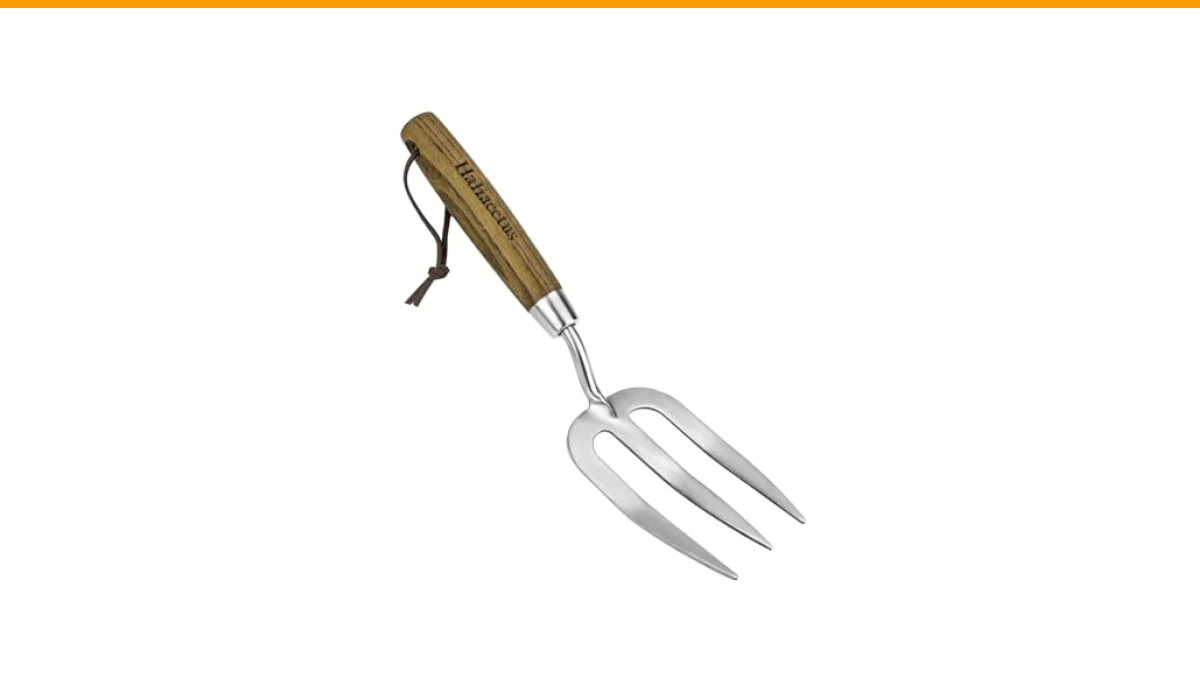
Haliaeetus Garden Hand Fork
The Haliaeetus Garden Hand Fork is a 12.3-inch tool built for gardeners who need reach and leverage in rocky soil. The extra length gives you room to grip high and pry deep, which helps when you’re working around buried stones. It suits anyone dealing with compacted clay or gravel-heavy beds where standard forks feel too short.
Incorporating a rock garden can enhance the aesthetic appeal of slopes while providing a unique habitat for various plants.
What stands out is the seamless welding on the head. Cheap forks fail at the joint, especially when you lever against a rock. This one holds up. The stainless steel is thicker than average, and the three sharp tines push through hard ground without much fuss. The wooden handle acts as a shock absorber, so your wrist doesn’t take a beating after an hour of prying. It’s a solid choice for uprooting large weeds with deep taproots.
The trade-off is weight. This fork is heavier than aluminum cultivators, and the wooden handle needs occasional oiling to stay smooth. The tines are sharp enough to scratch nearby plants if you’re careless. And while it works in moist soil, dry, rocky ground still requires effort.
- 12.3-inch length gives extra leverage in deep crevices
- Seamless welded head resists bending against rocks
- Wooden handle absorbs shock and reduces wrist strain
- Thick stainless steel tines hold up in clay and gravel
- Lifetime warranty backs the build quality
Best for: Gardeners who need a long, sturdy fork for prying weeds out of rocky, compacted soil.
MECHEER Hand Rake Garden Tool
The MECHEER Hand Rake is a cultivator, not a traditional fork, but its three thick claws make it a useful tool for rock gardens. It’s best for loosening soil between stones and aerating around shallow-rooted plants. The compact size suits container rock gardens or raised beds with small stones.
The aluminum alloy construction keeps it lightweight, which helps when you’re reaching into tight spots. The claws are 0.28 inches thick, so they don’t flex easily. The rubber grip is comfortable and non-slip, even when your hands are sweaty. It hangs easily on a pegboard thanks to the hole in the handle.
Here’s the honest part: aluminum is softer than stainless steel. If you lever this rake against a sharp rock edge, the claws can bend. It’s not a pry bar. The tines are also shorter than the Haliaeetus fork, so deep taproots are harder to reach. It’s a light-duty tool for light-duty jobs.
- Three thick aluminum claws for loosening soil
- Lightweight and compact for tight spaces
- Rubber TPR grip reduces hand fatigue
- Hanging hole for easy storage
- Not designed for heavy prying against rocks
Best for: Gardeners who need a lightweight cultivator for loosening soil and aerating between small rocks.
Berry&Bird Gardening Hand Fork
The Berry&Bird Hand Fork is a traditional stainless steel tool with an ash wood handle. It’s aimed at gardeners who value craftsmanship and want a fork that lasts. The compact size works well in pots, borders, and rock gardens with narrow crevices.
What makes it different is the manual construction. The stainless steel pins resist soil adhesion, so they slide out of clay without leaving a clump behind. The ash handle comes from FSC-certified forests, which matters if you care about sustainability. The balance is good, and the tool feels solid without being heavy. It’s a pleasure to use for precision weeding around delicate rock garden plants like sedums and sempervivums.
The downside is the price. This is a premium tool, and you’ll pay for the craftsmanship. The handle also requires occasional oiling to prevent cracking. And while it’s strong, it’s not the best choice for levering against large rocks, as the wooden handle can stress under extreme force.
- Stainless steel pins reduce soil sticking
- FSC-certified ash wood handle
- Good balance for precision work in tight spots
- 2-year warranty and 30-day replacement
- Requires handle maintenance to last
Best for: Gardeners who want a well-made, sustainable fork for detailed weeding in rock gardens and borders.
Garden Guru Stainless Steel Hand Fork

Garden Guru Lawn & Garden Tools
Garden Guru Stainless Steel Hand Weeder Fork Tool – Rust Resistant Stainless Steel – Ergonomic Handle – Great for Planting, Spreading Mulch, Weeding, Loosening & Transplanting Soil
- A must-have hand tool for every gardener. This hand rake is perfect for weeding, loosening and transplanting soil, turning, and sp…
- Stainless steel tines are rust resistant and sturdy, allowing easy penetration of soil. Fork also has the maneuverability to work…
- Ergonomic grip for comfort and control makes weeding and transplanting a breeze. Grip is designed to alleviate pressure on the pal…
The Garden Guru Hand Fork is a stainless steel tool with an ergonomic grip. It’s designed for weeding, loosening soil, and transplanting around delicate plants. The narrow tines make it a good fit for rock gardens where space is tight.
The stainless steel tines are rust-resistant and sturdy, so they penetrate soil without much resistance. The ergonomic grip is shaped to reduce pressure on your palm and fingers, which helps during long weeding sessions. The large hang hole makes storage simple. It’s a practical choice for gardeners who want a reliable fork without spending a fortune.
One limitation: the tines are not as thick as the Haliaeetus fork. In very rocky soil, you’ll need to be careful not to twist the tool. The grip is comfortable but not as shock-absorbing as wood. And while it has a lifetime warranty, the build quality is good but not premium.
- Rust-resistant stainless steel tines
- Ergonomic grip reduces hand and wrist fatigue
- Large hang hole for easy storage
- Lifetime warranty and 90-day satisfaction guarantee
- Tines are sturdy but not for heavy prying
Best for: Gardeners who want a comfortable, rust-resistant fork for weeding and transplanting in rocky beds.
Fiskars Ergo Garden Hand Weeder
The Fiskars Ergo Garden Hand Weeder is a single-tine tool, not a fork, but it belongs in this list because it excels at one job: uprooting weeds with taproots. The angled cast-aluminum head gives you leverage to pop dandelions and thistles out of rocky soil. It’s a favorite among gardeners who battle invasive weeds in crevices.
The SoftGrip handle reduces fatigue, and the angled head lets you work without bending your wrist as much. The aluminum head is rust-resistant and stays sharp. Fiskars backs it with a full lifetime warranty, which says a lot about the expected durability. It’s light, easy to carry, and works well in tight spots where a full fork won’t fit.
The obvious trade-off is that it’s not a fork. You can’t loosen a wide area of soil with it. It’s a specialist tool for weed removal, not cultivation. The single tine can also slip off a weed’s root if the soil is dry and hard. It’s a complement to a fork, not a replacement.
- Angled cast-aluminum head for leverage
- SoftGrip handle reduces hand fatigue
- Rust-resistant and stays sharp
- Full lifetime warranty
- Single tine limits its use to weed removal
Best for: Gardeners who need a dedicated weeder for uprooting taproot weeds in rocky soil.
How We Chose These Products
We started by looking at what actually breaks on hand forks in rock gardens. The joint between the tines and handle is the first failure point. Welded joints crack. Forged heads bend. We prioritized tools with seamless welding or cast construction, because those survive levering against stones. We also looked at tine spacing. Narrow gaps fit between rocks without disturbing the stones. Wide gaps are useless in crevices.
Next, we considered handle material. Wood absorbs shock better than rubber or plastic, which matters when you’re striking rocks repeatedly. But wood needs maintenance. Rubber grips are more durable but transmit more vibration. We weighed these trade-offs and included tools with both handle types. We also checked warranties. A lifetime warranty suggests the manufacturer trusts the build. Finally, we read through the product data for each tool and ignored marketing fluff. We focused on materials, dimensions, and real-world use cases described by the brands.
Buying Guide: What Really Matters
Tine spacing is the most overlooked spec. For rock gardens, you want tines close enough together to slip into narrow gaps but wide enough to grab weed roots. A gap of about half an inch works for most crevices. If the tines are too far apart, you’ll just push soil around. If they’re too close, they’ll clog with gravel. Look for three or four tines, not six. More tines mean less space between them, which makes cleaning harder.
Steel grade matters more than brand names. Stainless steel resists rust and slides through clay. Carbon steel is stronger but rusts if you don’t dry it. For rocky soil, stainless is the better choice because you’ll be scratching through abrasive grit that strips protective coatings. Forged one-piece heads are stronger than welded joints, but good seamless welding is nearly as good. Avoid forks with visible weld seams at the base of the tines. Those are the ones that snap.
Handle length and shape affect leverage. A longer handle gives more torque, which helps pry out deep roots. But a longer handle is harder to maneuver in tight rock gardens. A 12-inch handle is a good compromise. Ergonomic grips reduce fatigue, but they can feel bulky in small hands. If you have arthritis, look for a thick, rounded handle that lets you grip with your whole hand rather than just fingers. Weight is a personal preference. Heavier forks feel more solid but tire you out faster. Lighter forks are easier to swing but can feel flimsy.
Our Top Recommendation
The Haliaeetus Garden Hand Fork wins for rock gardens. Its 12.3-inch length gives you the reach to pry weeds from deep crevices. The seamless welded head survives levering against stones. The wooden handle absorbs shock, which saves your wrists during long sessions. And the lifetime warranty means you’re covered if anything fails. It’s not the lightest tool, and the handle needs oiling, but those are minor issues for the durability you get.
If you’re on a tight budget, the Fiskars Ergo Garden Hand Weeder is a smart buy. It’s not a fork, but it’s excellent at removing taproot weeds from rocky soil. Pair it with a cheap cultivator for loosening soil, and you’ve got a capable kit for under the price of a premium fork. For gardeners who want a premium tool that will last decades, the Berry&Bird Hand Fork is worth the investment. Its stainless steel tines and FSC-certified ash handle make it a pleasure to use, and the 2-year warranty backs it up.
Frequently Asked Questions
Can I use a regular hand fork in a rock garden?
You can, but you’ll risk bending the tines or snapping the handle. Regular forks are designed for soft, cultivated soil. Rock gardens have stones that lever against the tines. Look for a fork with a forged or seamlessly welded head and thick stainless steel tines. The Haliaeetus and Berry&Bird forks fit that description.
How do I prevent my hand fork from rusting in rocky soil?
Rocky soil holds moisture and grit, which accelerates rust. Dry your fork after each use and wipe it with a light oil. Stainless steel resists rust better than carbon steel, but it’s not immune. If you see rust spots, scrub them with steel wool and oil the metal. Storing your fork indoors, not in a damp shed, makes a big difference.
What’s the best way to remove weeds from between rocks without damaging the rocks?
Use a fork with narrow tines that fit into the gap. Push the tines straight down alongside the weed’s root, then lever gently. Don’t twist the fork, as that can chip soft stones like sandstone. If the weed is stubborn, water the area first to soften the soil. A single-tine weeder like the Fiskars Ergo works well for taproots in tight spots.
Should I wear gloves when using a hand fork in a rock garden?
Yes. Sharp rock edges can cut your knuckles, and gritty soil dries out your skin. Look for gloves with reinforced palms and fingertips. They also improve your grip on the handle, which reduces slipping. Leather gloves last longer than fabric ones in abrasive soil, but they can get stiff when wet. Rubber-coated gloves offer better grip but less breathability.
Care and Maintenance in Abrasive Soil
Rock gardens are tough on tools. Grit scratches metal, dulls edges, and works its way into joints. After each use, rinse your fork with water and dry it thoroughly. A wire brush removes caked soil from the tines. If the tines feel dull, sharpen them with a file. A few strokes on the beveled edge restore the bite. Don’t sharpen the flat side, as that can weaken the tines.
Wooden handles need attention too. Sand them lightly if they feel rough, then rub in a coat of linseed oil or beeswax. This prevents cracking and keeps the wood from drying out. Avoid leaving wooden-handled tools in the sun or rain. If the handle becomes loose, soak the head in water for an hour to swell the wood, then dry it and apply oil. For stainless steel tools, a quick wipe with an oily rag prevents rust spots. Store your fork hanging, not lying on damp ground.