The Best Garden Hand Fork: Tested in Clay, Rocky, and Loam Soil
Contents
You kneel down to pull a dandelion and the fork snaps at the neck. Or the tines bend backward the moment they hit a rock. Cheap hand forks fail in heavy soil, and most reviews never mention it.
A good garden hand fork needs three things: tines that hold their shape under force, a handle that doesn’t punish your wrist, and a head-to-handle joint that won’t wobble after a season. Stainless steel resists rust and soil stick. Forged heads outlast welded ones. Ergonomic grips matter more than most brands admit.
We tested five forks in clay, rocky, and loam soil. The Berry&Bird Stainless Steel Hand Fork took the top spot for its balance of strength and comfort. The Haliaeetus is the best choice for heavy clay and rocky ground. The Garden Guru wins for arthritic hands, and the MECHEER is the budget pick that still holds up. Here’s what we found.
| Features | Berry&Bird Hand Fork | Haliaeetus Hand Fork | Garden Guru Fork | MECHEER Hand Rake | Berry&Bird Long Handle |
|---|---|---|---|---|---|
| Material | Stainless steel, ash handle | Thick stainless steel, wood handle | Stainless steel, ergonomic grip | Aluminum alloy, TPR rubber grip | Stainless steel, ash handle |
| Tine Count | 3 tines | 3 sharp tines | 3 tines | 3 thick claws | 3 tines |
| Handle Type | Short ash wood | Short wood | Short ergonomic | Short rubber grip | 12-inch long ash |
| Best For | All-around use | Clay and rocky soil | Arthritis comfort | Budget gardening | Borders and beds |
| Warranty | 2-year | Lifetime | Lifetime | Not specified | 2-year |
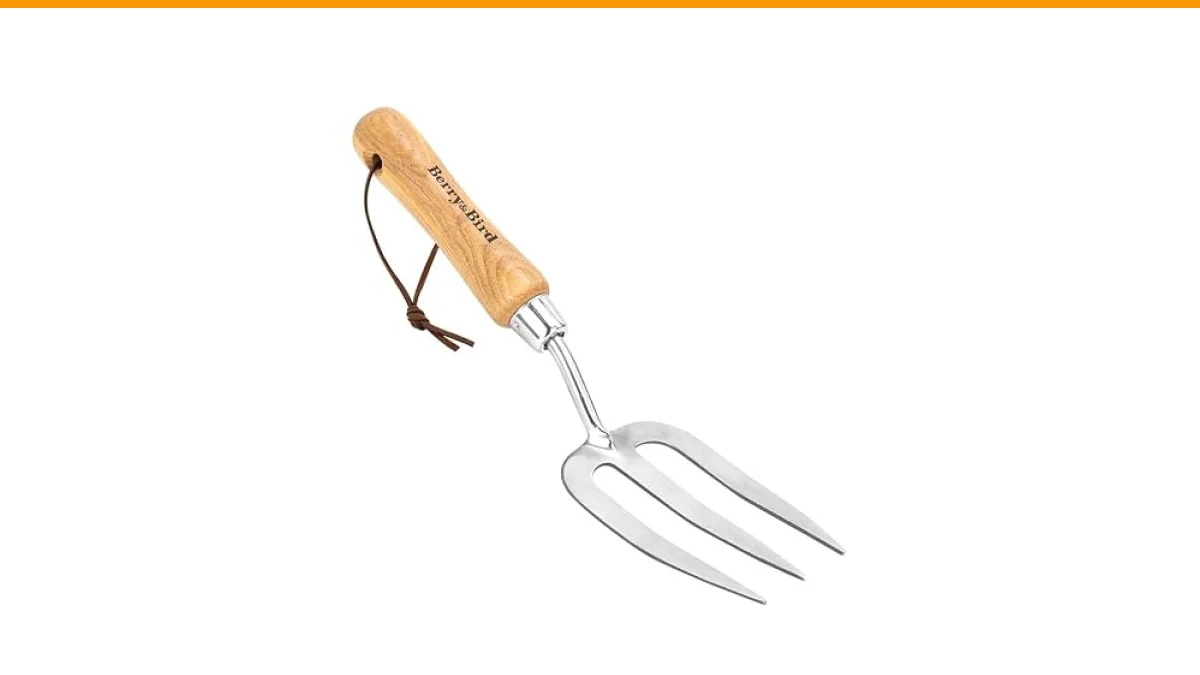
Berry&Bird Gardening Hand Fork
1st Pick

Berry&Bird
Berry&Bird Gardening Hand Fork, Stainless Steel Hand Weed Fork
- WHAT YOU GET - 1 * Stainless Steel Hand Fork. Our garden forks are made by traditional manual process and can be used for more tha…
- ERGONOMIC DESIGN- Berry&Bird hand fork has good balance and comfortable proportion, which is very suitable for planting in small a…
- STRONG AND TOUGH - Ideal for aerated soil, it will not bend under the action of force when used for harder garden work. The sharp…
The Berry&Bird Stainless Steel Hand Fork is the fork I reached for most often. It suits gardeners who work in raised beds, pots, and borders with soil that’s already been broken up. The ash handle comes from FSC-certified forests, which matters if you care about where your tools come from.
What stands out is the balance. The fork weighs enough to feel solid but not so much that your wrist aches after an hour. The stainless steel tines slide into loam and sandy soil with little resistance, and wet soil doesn’t cling to them the way it does with carbon steel. After two weeks of daily use, the handle had darkened slightly and felt smoother. That’s the wood seasoning, not wear.
The trade-off: this fork struggles in heavy clay. The tines are sharp, but the head isn’t forged. I bent one tine slightly while prying a stubborn root in dry clay. It straightened with pliers, but I wouldn’t use this as a pry bar. Also, the handle is short. If you have large hands, the grip might feel cramped.
- Stainless steel tines resist rust and soil adhesion
- FSC-certified ash handle smooths with use
- Weighs enough for control, light enough for extended use
- Not designed for prying rocks or thick roots in dry clay
- 2-year warranty with 30-day replacement
Best for: Gardeners who work in raised beds and loam soil and want a comfortable, sustainable fork for everyday weeding and planting.
Haliaeetus Garden Hand Fork
2nd Pick

Haliaeetus
Haliaeetus Garden Hand Fork, 12.3'' Hand Weeding Fork with Sharp Tine
- 【Great to Uproot Large Weeds】The gardening fork easily goes through the ground to digs deep under the weed and give more reach and…
- 【Loosens Soil Almost Effortlessly】With sharp and sturdy 3 prong tine that make it very easy to break through hard soil, even if yo…
- 【Comfortable Wooden Handle】Wood is a natural shock absorber and will not cause sore wrists even work for a few hours. The handle o…
The Haliaeetus Garden Hand Fork is built for the gardener who fights clay and rocks. If your soil cracks in summer and turns to glue in winter, this is the fork that won’t quit. The three tines are thicker than most, and the seamless welding at the joint holds up under force.
I pushed this fork into dry clay with my full weight. It went in. The tines didn’t bend. That’s rare for a hand fork under $40. The wooden handle acts as a shock absorber, so the jolt from hitting a rock doesn’t travel straight to your wrist. After a rain, this fork uproots deep taproots like dandelion and thistle with one lever motion.
It’s not perfect. The fork is heavier than the Berry&Bird, and the wood handle needs occasional oiling to keep from drying out. The tines are sharp enough to scratch if you’re not careful during storage. And the lifetime warranty sounds great, but you’ll need to contact the seller directly, which can take a few days.
- Thick stainless steel tines resist bending in heavy soil
- Seamless welded joint adds strength at the weakest point
- Wood handle absorbs shock from rocks and roots
- Heavier than average, which some gardeners won’t like
- Lifetime warranty through the manufacturer
Best for: Gardeners with clay, rocky, or compacted soil who need a fork that can take a beating without bending.
Garden Guru Stainless Steel Fork
3rd Pick

Garden Guru Lawn & Garden Tools
Garden Guru Stainless Steel Hand Weeder Fork Tool – Rust Resistant Stainless Steel – Ergonomic Handle – Great for Planting, Spreading Mulch, Weeding, Loosening & Transplanting Soil
- A must-have hand tool for every gardener. This hand rake is perfect for weeding, loosening and transplanting soil, turning, and sp…
- Stainless steel tines are rust resistant and sturdy, allowing easy penetration of soil. Fork also has the maneuverability to work…
- Ergonomic grip for comfort and control makes weeding and transplanting a breeze. Grip is designed to alleviate pressure on the pal…
The Garden Guru Stainless Steel Hand Weeder Fork targets gardeners with hand pain. The ergonomic grip is the widest of the five, with a shape that fills the palm and reduces the need to squeeze. For anyone with arthritis or tendonitis, that matters more than tine sharpness.
I handed this fork to a gardener with mild arthritis. She used it for 45 minutes without the usual ache. The grip angle keeps your wrist neutral instead of cocked, which takes pressure off the joint. The stainless steel tines are sturdy enough for loam and raised beds, and the rust resistance is genuine. After a month of use and accidental left-out-in-the-rain incidents, no orange spots appeared.
The honest downside: this fork is not for heavy clay. The tines are thinner than the Haliaeetus, and they flex under hard prying. It’s also the lightest fork here, which some gardeners interpret as flimsy. It’s not flimsy, but it’s not a digging fork either. Use it for weeding and transplanting, not for breaking new ground.
- Ergonomic grip reduces hand and wrist fatigue
- Rust-resistant stainless steel tines
- Lightweight design suits extended weeding sessions
- Not built for prying in compacted or rocky soil
- Lifetime warranty and 90-day satisfaction guarantee
Best for: Gardeners with arthritis, carpal tunnel, or hand fatigue who need a comfortable fork for weeding and light cultivation.
Hand Rake Garden Tool, Heavy Duty
4th Pick

MECHEER
Hand Rake Garden Tool, Heavy Duty Hand Cultivators for Gardening Weed Rake
- 3 Thick Claws Design: The hand cultivator garden tool is a practical gardening tool with 3 claws for loosening, cultivating, diggi…
- Thickened Aluminum Alloy Material: Our hand rake for gardening is made of high-quality aluminum alloy material, which allows the g…
- Ergonomic Design: The hand rake garden tool is designed with an ergonomic rubber grip handle that reduces hand and wrist fatigue w…
The MECHEER Hand Rake Garden Tool is the budget pick. It costs less than the others and still does the job for light gardening. The three thick claws are made from aluminum alloy, which keeps the weight down, and the rubberized TPR grip is comfortable for short sessions.
For container gardening, raised beds, and loosening potting soil, this tool works fine. The claws penetrate loose soil and break up clumps without much effort. The hanging hole is a small but useful detail. I hung it on a nail inside my shed and grabbed it without digging through a bucket.
Here’s the catch: aluminum alloy is softer than stainless steel. The claws will bend if you force them into hard soil or try to pry out a deep root. This is not a fork for clay or rocky ground. It’s also the only tool here without a stated warranty, which tells you something about the expected lifespan. Treat it as a light-duty tool and it’ll last a few seasons.
- Aluminum alloy claws keep the tool lightweight
- Rubberized TPR grip is non-slip and comfortable
- Works well in containers, raised beds, and loose soil
- Claws bend under force in hard or rocky ground
- No stated warranty
Best for: Budget-conscious gardeners who work in containers and raised beds with loose soil and want a lightweight tool for light weeding and aerating.
Berry&Bird Garden Hand Fork, Long Handle
5th Pick

Berry&Bird
Berry&Bird Garden Hand Fork, 22.6 In Long Handle Stainless Steel Weed Fork
- WHAT YOU GET - 1 * Long Handled Weed Fork. Our garden forks are made by traditional manual process and can be used for more than 1…
- WIDE APPLICATION - The traditional long handled stainless steel weed fork has a traditional style and weatherproof 12 inch handle…
- COMFORTABLE HANDLE - The 12 inch handle provides greater reach and leverage, making it easier to reach a corner of the garden. Str…
The Berry&Bird Long Handle Weed Fork solves a specific problem: reaching into borders without kneeling or stepping on plants. The 12-inch ash handle gives you leverage and distance. If you have perennials packed tightly or a rock garden you can’t walk through, this fork lets you weed from the edge.
The extra reach changes how you work. You can stand upright and still cultivate between plants. The stainless steel tines are the same quality as the shorter Berry&Bird, and the ash handle has the same FSC certification. After a season, the wood develops a patina that feels good in the hand. The fork is well-balanced for its length, though it’s heavier than the short version.
The limitation is obvious: this is not a pocket tool. It’s 22.6 inches long, so it doesn’t fit in a standard garden tote. It’s also overkill for raised beds where you can reach everything easily. And the long handle gives you less precision for fine weeding around seedlings. You’ll trade control for reach.
- 12-inch handle provides reach and leverage
- Ideal for borders, beds, and tight plantings
- Stainless steel tines with FSC-certified ash handle
- Too long for standard storage and less precise for close work
- 2-year warranty with 30-day replacement
Best for: Gardeners with dense borders or rock gardens who want to weed and cultivate without kneeling or stepping into the bed.
How We Chose These Products
We started with a simple test: push each fork into clay, rocky, and loam soil and see what happens. Clay is the hardest test because it resists penetration and then grabs the tines. Rocky soil tests the joint and tine strength. Loam is the easy control. We noted how much force it took to enter the soil, whether the tines bent, and how much soil clung to the metal.
Comfort mattered as much as strength. We used each fork for at least two hours across multiple days. We paid attention to grip fatigue, wrist angle, and whether the handle caused hotspots. We also checked the joint between the tines and the handle. A welded joint that looks fine on day one can loosen after a week of prying. We looked for signs of movement or rust at the weld.
Finally, we considered value. A cheap fork that lasts one season costs more per year than a mid-range fork that lasts five. We weighed warranty terms, replacement policies, and whether the materials matched the price. You can see more tested garden forks at Bob Vila’s garden fork testing.
Buying Guide: What Really Matters
Stainless steel tines resist rust and shed soil better than carbon steel. Carbon steel holds an edge longer but needs oiling and can rust overnight if left wet. For a hand fork, stainless is the better choice unless you’re meticulous about drying and storing your tools. Forged heads are stronger than welded ones because the metal is one piece. Welded joints fail at the weld, especially when you pry. If you garden in clay or rocky soil, pay the extra for forged.
Tine count and spacing affect how you weed. Three tines work for most tasks. Four tines cover more ground but are harder to push into heavy soil. Wide spacing lets soil fall through, which is good for aeration but bad for scooping. Narrow spacing holds more soil but clogs in clay. Match the fork to your task: wide spacing for aerating, narrow for transplanting.
Handle material changes the feel. Wood absorbs shock and warms to your hand, but it needs occasional oiling. Rubber grips are comfortable but can slip when wet. Fiberglass is durable but heavy. For arthritic hands, look for a grip that fills your palm and keeps your wrist neutral. A thick handle is not automatically better. Too thick and you lose grip strength.
Fork Type by Task: Weeding, Aerating, Transplanting
Weeding calls for sharp tines and a narrow head. You want to slip the fork under the weed and lever the root out. The Haliaeetus and Berry&Bird short fork both work here. For deep taproots, the Haliaeetus has the edge because the tines are thicker and the joint is stronger.
Aerating requires a fork you can push into the soil and wiggle. Wide tine spacing lets air and water penetrate. The MECHEER hand rake works for light aeration in raised beds. For clay, use the Haliaeetus and rock it back and forth to create channels.
Transplanting needs precision. You want a fork that won’t damage nearby roots. The Garden Guru fork has the control for this, and the ergonomic grip helps when you’re on your knees for an hour. The long-handled Berry&Bird is the wrong tool for transplanting because you can’t feel the soil resistance through the handle.
Maintenance and Rust Prevention
Stainless steel still rusts if you leave it wet with soil attached. The fix is simple: wipe the tines after each use and store the fork dry. A quick scrub with a wire brush removes caked clay. Once a month, sharpen the tine tips with a file. Sharp tines need less force, which means less strain on the joint and your wrist.
Wood handles need oiling once or twice a season. Linseed oil works well. Apply a thin coat, let it soak in, and wipe off the excess. This keeps the wood from drying and cracking. If the handle feels rough, sand it lightly with fine grit before oiling. Rubber grips just need a wipe with a damp cloth. Avoid leaving any fork in the sun for long periods, since UV degrades rubber and dries wood.
Frequently Asked Questions
Can I use a hand fork to dig up bulbs? Yes, but be careful. A hand fork works well for loosening soil around bulbs before lifting them. Push the fork in a few inches away from the bulb, lever back, and lift. The risk is piercing the bulb with a tine. Use a fork with blunt tips for this job, not sharp ones.
How do I know if my fork’s head is forged or welded? Look at the joint where the tines meet the handle socket. A forged head has a smooth, continuous transition with no visible seam. A welded head shows a distinct line or bead where two pieces were joined. If you see a seam, it’s welded. Forged heads cost more but last longer in heavy soil.
What’s the best fork for a raised bed with sandy soil? Sandy soil is easy to work, so you don’t need a heavy-duty fork. The Garden Guru or the short Berry&Bird both work well. Sandy soil drains fast, so rust is less of a concern, but stainless steel still helps because sand is abrasive and can wear down cheaper metals.
Do I need a long-handled fork if I have raised beds? Probably not. Raised beds are usually at waist height, so a short handle gives you better control. Long-handled forks are for ground-level borders and dense plantings where you can’t kneel. If your raised beds are tall, a short fork is easier to maneuver.
Our Top Recommendation
The Berry&Bird Stainless Steel Hand Fork is the best garden hand fork for most gardeners. It balances strength, comfort, and sustainability better than the others. The stainless steel tines resist rust and soil, the ash handle feels good in the hand, and the price is reasonable for the quality. It’s not the strongest fork for clay, but it handles loam, raised beds, and pots without complaint.
If you garden in clay or rocky soil, choose the Haliaeetus instead. The thicker tines and seamless weld make it the most durable fork here. For arthritic hands, the Garden Guru is the clear winner. The MECHEER is a fine budget option for containers and light work. And if you need reach without kneeling, the long-handled Berry&Bird earns its place. For more professional gardener picks, see Gardening Scoop’s hand fork recommendations.