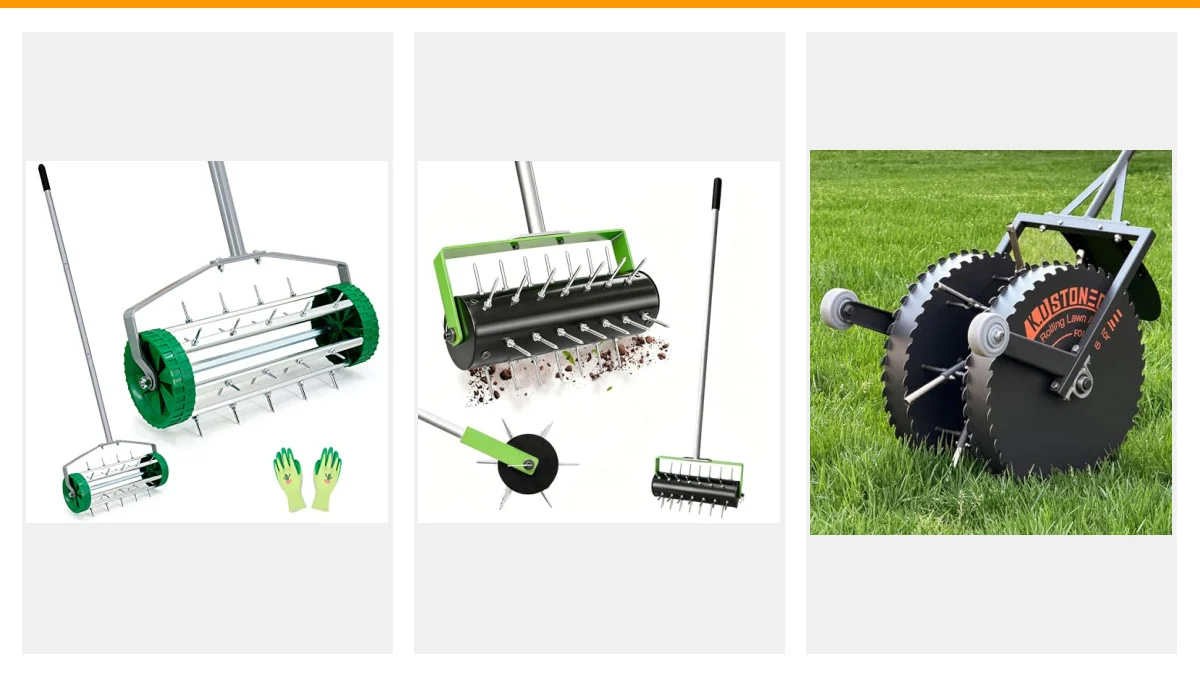
Your lawn can look fine from the driveway, but walk across it after a rain and you’ll notice the problem. Water pools in low spots, the grass thins out in the same places every year, and a garden fork barely sinks in. That’s soil compaction, and one of the cheapest ways to fix it is a manual core aerator.
A core aerator pulls small plugs of soil out of the ground instead of just poking holes. Those holes let air, water, and fertilizer reach grass roots, which is why lawns bounce back after a single session. Hand-powered models work especially well on small to medium yards, and they’re easier to store than a gas-powered machine.
I compared four of the most talked-about manual core aerators: the Yard Butler, the LawnVigor, the Xuperace, and the hugeneroy. Each one pulls plugs instead of just puncturing the soil, but they differ in build, tine design, and how much effort they take. Here’s which one fits which yard.
Here’s a quick look at how the four aerators compare on the specs that matter most.
| Features | Yard Butler | LawnVigor | Xuperace | hugeneroy |
|---|---|---|---|---|
| Build | Powder-coated steel | Sturdy metal, heat-treated tines | High-strength alloy frame | Industrial-strength steel |
| Tine Setup | Dual plug design | 3 hollow tines | 3 hollow tines | 3 deep hollow tines |
| Clog Handling | Standard plug release | White inserts push plugs out | Side-eject ramp design | Non-clog hollow tines |
| Best Use Case | Small to medium lawns | Everyday lawn maintenance | Harder, compacted ground | Clay soil and heavy jobs |
In this article
Yard Butler Core Aerator

Yard Butler
Yard Butler Manual Lawn Coring Aerator, ID-6C - Lawn Care Tool for Aerating - Long-Handled - Power-Coated Steel Construction - Comfortable Cushioned Handles Garden Tool - Easy to Use
- Revive Soil with Less Effort: The Yard Butler Manual Lawn Coring Aerator improves airflow and nutrient absorption using dual plugs…
- Built for Durability & Comfort: Crafted from a powder coated steel design and engineered for year-round use and long-lasting perfo…
- Ergonomic & Efficient: Features a long handle for extra leverage, this DIY lawn care tool is easy to use without bending or back s…
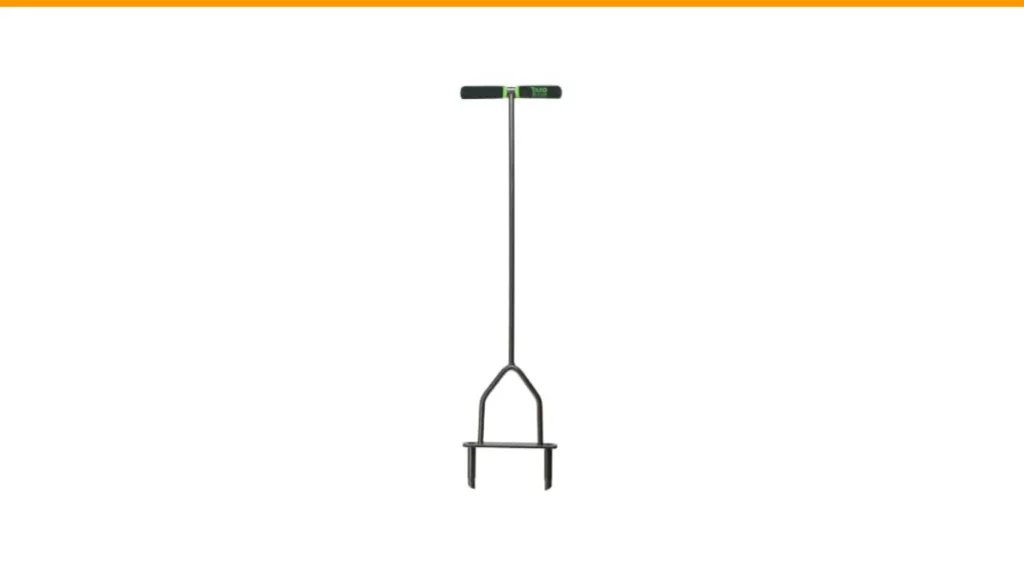
The Yard Butler suits a homeowner with a small to mid-sized lawn who wants to fix compaction without renting a machine. It’s the simplest of the four: a long handled tool with dual coring plugs and a foot bar you press down with your whole foot. The cushioned handles sit at a comfortable height, so you’re not bending your back on every step.
The powder-coated steel frame feels built to last. It doesn’t have the flimsy hinge points you see on cheaper tools, and the foot bar gives you serious leverage. That lever action matters in dense soil. You can push down with your entire leg instead of hopping on a narrow step, which means the plugs come out more consistently across the yard.
There’s a trade-off here. The Yard Butler doesn’t have replaceable tines like some newer designs, so you’re buying a single welded unit. It also demands decent soil moisture. Run it through dry clay and you’ll fight the ground the whole way. Water the lawn the day before or wait until after a rain, and the tool does its job without much strain.
- Long-handled design keeps your back straight while you work
- Dual plug coring action pulls two soil cores per step
- Foot bar spreads pressure across your whole foot
- Powder-coated steel resists rust and chipping
- Cushioned handles reduce grip fatigue
Best for: Homeowners with small to medium lawns who want a simple, back-friendly manual aerator for yearly maintenance before overseeding.
LawnVigor Manual Core Aerator
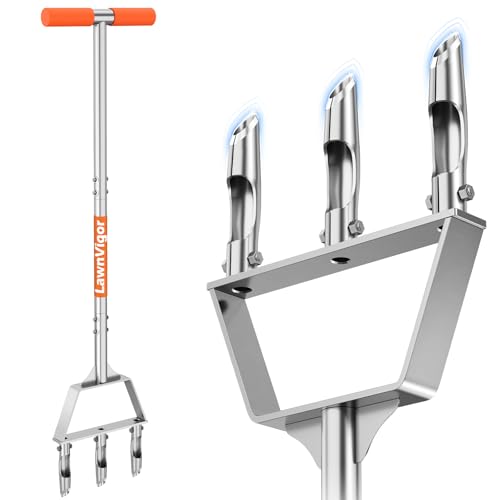
LawnVigor
Manual Lawn Core Aerator for Compacted Soil with Non-Clogging Hollow Tines | Pulls Soil Plugs Easily, Bend-Resistant Steel Frame, Wide Foot Pedal, Replaceable Tines, Ideal for Clay Soil - Orange
- LAWN AERATOR FOR HEALTHIER LAWN GROWTH: Our manual lawn aerators promotes lush, green lawns by delivering essential air, water and…
- BUILT-TO-LAST HOLLOW TINE AERATOR: Made of sturdy metal and heat-treated hollow tines, our plug aerator lawn tool is built to with…
- NON-CLOGGING YARD AERATOR: Designed with 3 hollow tines, this lawn core aerator efficiently removes soil plugs while preventing cl…
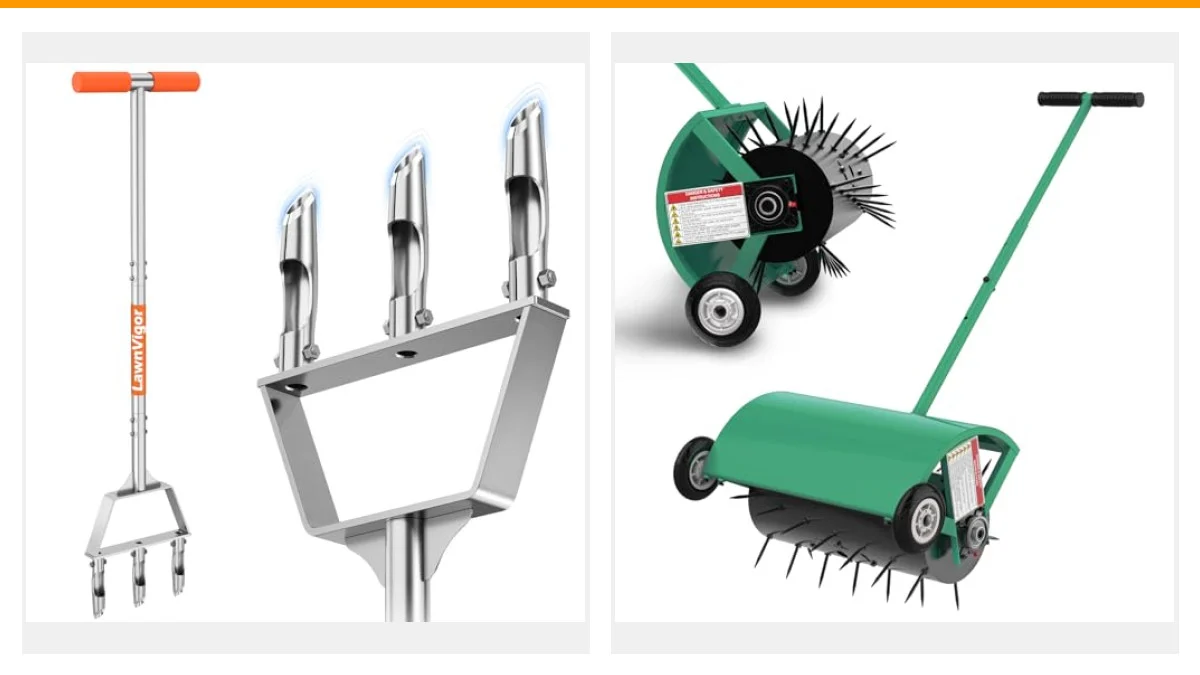
The LawnVigor is for gardeners who want three hollow tines and a tool that won’t clog in damp soil. Its biggest difference is the white plastic inserts inside the tines. You leave those in place, and they help push soil plugs out cleanly instead of leaving plugs stuck in the tines after every other step.
The heat-treated tines stay sharp through tough ground, and they’re replaceable. That’s a real advantage for anyone who plans to use the aerator for years. When the metal eventually dulls, you can swap out the tines rather than buy a whole new tool. Assembly takes just a few minutes with the included tools, so you’re not spending an afternoon putting it together.
The catch is that the LawnVigor requires the right technique. The manufacturer says to water dry soil before use and to avoid rocking, twisting, or prying the tool side-to-side once it’s in the ground. Follow that and plug removal is smooth. Ignore it and you risk bending the tines or wrenching your wrists. The plastic inserts look a little odd, but they’re essential to how the tool works.
- Three heat-treated hollow tines pull clean soil cores
- White plastic inserts help release plugs during use
- Replaceable tines extend the tool’s overall lifespan
- Non-slip ergonomic handle reduces hand strain
- Quick assembly with all necessary tools included
Best for: Gardeners who want a mid-priced manual aerator with replaceable tines and reliable plug release in damp soil.
Xuperace Lawn Aerator Tool
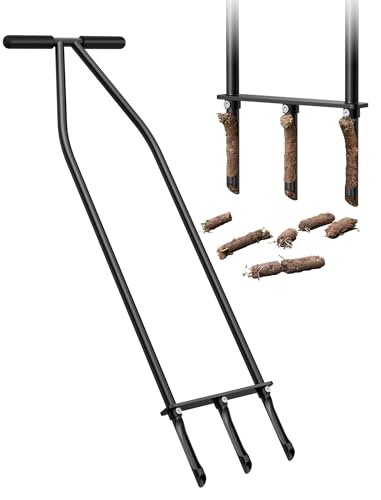
Xuperace
Xuperace Lawn Aerator Tool, Core Aerator Lawn Tool with Alloy Steel Material, Sturdy Grass Aerator for Lawn Health Soil Yard Aerator
- 【Real Core Aerator】Our core aerator has 3 hollow tines to help loosen soil and reduce soil compaction. It can pull plugs of soil o…
- 【Patented Innovative】New design where eject soil plugs out the side. It solve the clogging problem. After thousands of tests, the…
- 【Knee-Friendly Design】Our team of lawn care experts designs the convenient and labor-saving soil aerator. You can step on the foot…
The Xuperace stands out for people who struggle with knee pain or have hard, compacted ground. Instead of a traditional foot bar, it uses a footplate that lets your knee move freely while you press down. The frame is integrally formed from high-strength alloy, so there’s no weak joint where parts meet. The three hollow tines pull real plugs, not just spike holes.
Its patented design shoots soil plugs out through a side ramp. That solves the clogging problem that plagues many manual aerators. You don’t have to stop and poke a screwdriver through hollow tines every few steps. The tines are also replaceable and connect to the frame with screws, so maintenance is straightforward.
There’s a thoughtful detail for harder ground: you can remove the middle tine to reduce resistance and make the tool easier to press in. That leaves you with two tines, which works fine on tough spots. On very dry soil, though, this tool still struggles. It works best on moist grass, so water the lawn beforehand or pick a day after rain.
- Knee-friendly footplate allows a natural stepping motion
- Patented side-eject ramp pushes plugs out the side
- Three hollow tines made from high-strength alloy
- Middle tine can be removed for harder ground
- Replaceable tines attached with screws
Best for: Gardeners with compacted, uneven soil who want a knee-friendly tool that keeps working without clogging.
hugeneroy Heavy Duty Core Aerator

hugeneroy
Heavy Duty Steel Hollow Tine Core Aerator for Clay Soil, Non-Clog - Blue | Anti-Clogging Beveled Tines, Compacted Soil & Clay Friendly, Replaceable Tines, Wide Foot Plate, Semi-Assembled
- Manual Lawn Aerator for Healthier Grass - This manual lawn aerator strengthens turf health by improving soil airflow and nutrient…
- Professional-Grade Hollow-Tine Aerator - Constructed with industrial-strength steel and tempered hollow tines, this manual lawn ae…
- 3-TINES MANUAL LAWN AERATOR: Our heavy-duty aerator removes soil cores to reduce soil compaction and improve your lawn's health. T…
The hugeneroy is designed for clay soil and serious manual lawn care. It has three tempered hollow tines on an industrial-strength steel frame, and the tines are built to keep removing plugs without bending. This is the heavy-duty option in the group, perfect for people who know their yard needs more than a light once-over.
The long handle and comfort-grip grip cut down on hand fatigue, and the quick-set assembly means it’s ready within minutes out of the box. The tempered tines are replaceable too, which matters when you’re working in abrasive clay. Over a few seasons, you can just swap out the worn parts instead of retiring the whole tool.
Like the other manual aerators, this one demands the right moisture level. The manufacturer recommends watering dry areas 24 hours before use and always pushing and pulling the tool vertically. No sideways twisting, no prying motions. If you respect that, the coring action stays clean and the tines stay straight. The blue finish is just a bonus, though it’s not why you buy it.
- Tempered hollow tines handle heavy clay soil
- Three tines remove soil cores to reduce compaction
- Long handle prevents back strain during long sessions
- Replaceable tines make long-term maintenance easier
- Quick assembly with included tools
Best for: Homeowners with heavy clay or highly compacted soil who want a durable manual aerator they can keep using for years.
How We Chose These Products
I focused on manual core aerators that actually pull soil plugs, not tools that just puncture the ground with solid spikes. Spike aerators can make compaction worse, so the distinction matters. Each product here uses hollow tines or a dual plug design that removes a core of soil from the lawn.
I also weighed build quality, tine replacement options, and how each tool handles clogging. A manual aerator is only as good as its simplest step, and a tool that clogs every few pushes becomes useless quickly. Ergonomics mattered too, because bending and twisting are the main reasons people abandon manual lawn care.
Buying Guide: What Really Matters
Before you buy, check your soil type and compaction level. If you have clay soil, look for tempered steel tines and a sturdy frame like the hugeneroy. If your ground is only mildly compacted, a lighter tool like the LawnVigor or Xuperace will work fine. The right tool mostly depends on how much force you need to get the tines into the ground.
Moisture is the second big factor. Manual core aerators work best when the soil is damp but not soaking wet. Water the lawn a day before aeration, or wait until after a rain. Dry soil makes any manual aerator feel twice as heavy, and wet mud just smears the holes shut. Most manufacturers say this clearly, but people still skip the prep and blame the tool.
Think about the physical effort too. A long handle and a foot bar make it easier to press down with your body weight. A tine-replacement system matters if you plan to use the tool for a decade. And if you have knee problems, a footplate design like the Xuperace could be the difference between a useful tool and one that sits in the shed.
Our Top Recommendation
The Yard Butler is the best all-around pick for most homeowners. It’s simple, well built, and easy to use, and the foot bar gives you the leverage you need for a small to medium lawn. It doesn’t have replaceable tines, but it also doesn’t have parts that are likely to fail. For a straightforward tool that gets the job done without fuss, that’s the one.
If you have heavy clay soil, go with the hugeneroy. If you want to preserve your knees and deal with hard ground, the Xuperace is the obvious choice. And if you want a budget-friendly option with replaceable tines that you can assemble in minutes, the LawnVigor is a solid value. The best pick depends on your yard, but you can’t go wrong with any of these four.
Frequently Asked Questions
When should I use a core aerator instead of a spike aerator?
Use a core aerator when the soil is compacted or you’re planning to overseed. Core aerators remove plugs of soil, which creates space for roots and reduces thatch buildup. Spike aerators just poke holes and can actually compact the soil around the holes, making the problem worse over time.
How often should I aerate my lawn with a manual tool?
Most lawns benefit from aeration once a year, usually in early fall or spring when the grass is actively growing. If you have heavy clay soil or high foot traffic, twice a year might be better. Manual aeration takes longer than powered aeration, but the results build up over time.
Can I aerate when the soil is dry?
No. Dry soil makes it nearly impossible to pull clean plugs, and you risk bending the tines. Water the lawn thoroughly 24 hours before aeration, or wait until a day after a good rain. The soil should be moist enough to hold together without being muddy.
Should I aerate before or after overseeding?
Aerate first, then overseed. The holes give grass seeds a place to land and make better soil-to-seed contact. You can spread seed after aeration, then lightly rake the area or water it in. Aeration also helps fertilizer reach the root zone, so it’s a good time to feed the lawn too.