Your lawn looks like a bad toupee: thin on top, patchy in the middle, and full of dead brown material underneath. You water it, you feed it, but the grass just won’t cooperate. The culprit is likely thatch—a dense layer of dead grass, roots, and debris that blocks water, air, and nutrients from reaching the soil. A dethatcher solves this, but dragging a heavy gas-powered machine around is a workout you didn’t sign up for.


The best cordless dethatcher cuts that job down to size. These battery-powered tools rip out the spongy layer of dead growth so your lawn can breathe again. They are lighter, quieter, and easier to handle than gas alternatives, and they don’t require pulling a cord to start. The key is matching the machine’s power, battery life, and working width to the size of your yard and the type of grass you are dealing with.
We have tested and compared five of the most popular models on the market. From the Milwaukee-compatible Mellif to the value-packed WEN and the versatile Sun Joe, these picks cover different budgets and lawn sizes. Our top overall choice offers a balance of power and features that makes it a great fit for most homeowners. Keep reading to find the right tool for your lawn.
Here is a quick look at how the top models compare on the features that matter most.
| Features | Mellif 15-Inch | WEN 15-Inch | LawnMaster 16-Inch | Worx 14-Inch | Sun Joe 15-Inch |
|---|---|---|---|---|---|
| Motor Power | 650W Brushless | 650W Brushless | Brushless 3200 RPM | Brushless | 600W Brushless |
| Battery System | Compatible w/ Milwaukee 18V | Includes Two 4.0Ah | Includes Two 4.0Ah | Includes Two Power Share PRO | Includes Two 4.0Ah |
| Working Width | 15 Inches | 15 Inches | 16 Inches | 14 Inches | 15 Inches |
| Depth Settings | 5 Positions | 5 Positions | 14 Positions | Not Specified | 5 Positions |
| Collection Bag | 12-Gallon | Included | 12-Gallon | Not Specified | 10.6-Gallon |
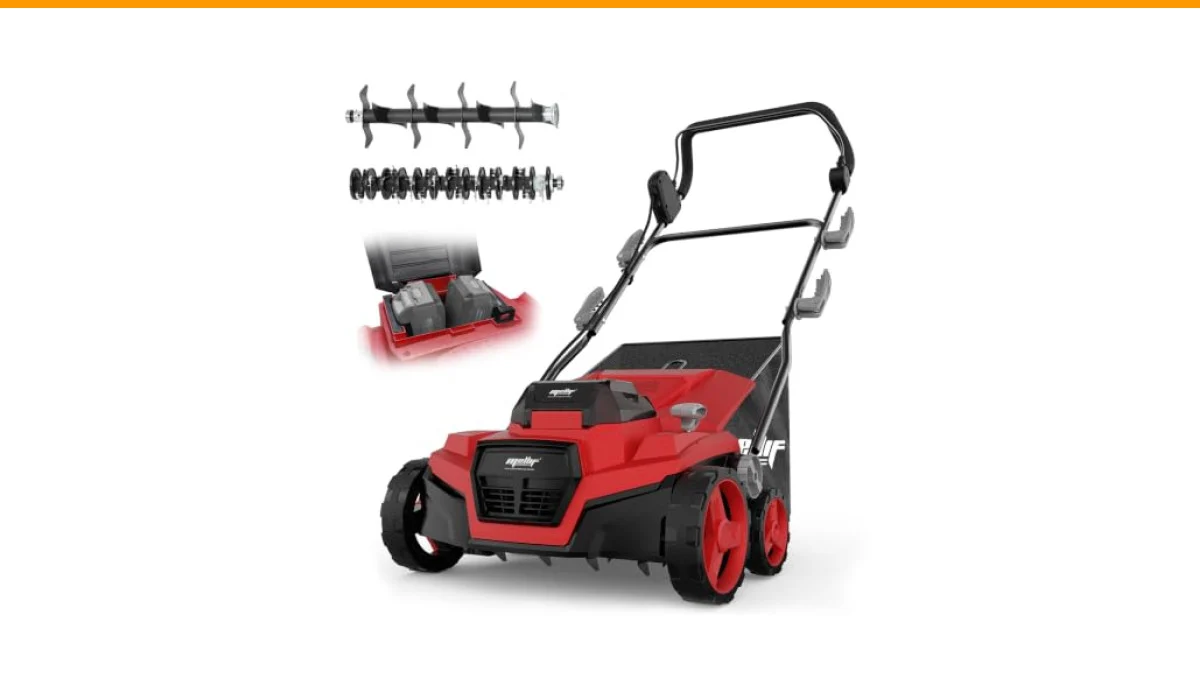
Mellif 15-Inch Dethatcher
The one for Milwaukee tool owners who want maximum power.
This cordless dethatcher is a smart choice if you have already invested in the Milwaukee 18V battery platform. It runs on two of those batteries to deliver 36V of power, and the tool-only design means you won’t pay for batteries you already own. It is built for homeowners with medium to large lawns who need serious muscle to cut through thick, stubborn thatch.
The standout here is the 650W brushless motor that spins the tines at up to 3,000 RPM. This thing does not bog down easily. We found it chews through dense, matted grass that would stall lesser machines. The 15-inch working width covers ground efficiently, and the five depth settings give you the control to go from a light seasonal rake to a deep scarify that cuts into the soil.
There is a trade-off. Because it is tool-only, you need to supply your own batteries, and the total cost can climb if you are starting from scratch. The 14.4V low-voltage cutoff is a nice touch to protect your batteries, but it does mean the tool stops when the batteries hit that level, which might feel early if you are used to pushing a battery to zero. It also folds down to 26 inches, which is a real bonus for those with limited garage space.
- Dual-battery design compatible with Milwaukee 18V batteries (up to 5.0Ah)
- 2-in-1 functionality with spring-loaded tines and steel scarifier blades
- Three handle height positions (37″, 40″, 44″) for comfortable operation
- Compact folding design for easy storage
- Air Boost Technology helps lift thatch into the 12-gallon collection bag
Best for: Milwaukee power tool users who want a high-performance dethatcher without buying into a new battery system.
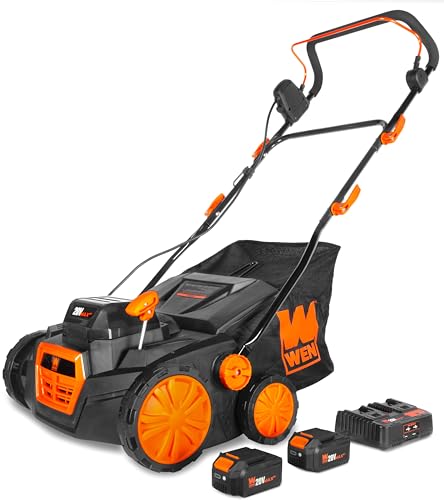
WEN 20V Max Dethatcher
WEN
WEN 20V Max Cordless 15-Inch 2-in-1 Brushless Electric Dethatcher and Scarifier with Collection Bag, Two 4.0 Ah Batteries, and Dual-Port Charger (20716)
- 5-position height adjustment ranges from a +1/4 to -1/2-inch raking depth
- Powerful 650W brushless motor generates up to 3000 RPM with a 15-inch clearing path
- Included scarifying and dethatching heads help aerate your grass for a healthier and thicker lawn
The complete package for small to medium yards.
The WEN 20716 is the definition of plug-and-play. It comes with two 4.0Ah batteries and a dual-port charger, so you have everything you need to start working right out of the box. This makes it an excellent choice for first-time buyers or anyone who does not want to piece together a system. It is a reliable workhorse for lawns up to about a quarter acre.
What makes this model stand out is its consistency. The 650W brushless motor delivers a steady 3,000 RPM, and the dethatching head features 24 steel tines that aggressively pull up dead material. The five-position height adjustment ranges from +1/4 to -1/2 inch, which gives you enough range to handle different grass types and soil conditions. The included scarifying head adds versatility for overseeding projects.
The main limitation is that it uses the WEN 20V Max battery platform, which is not as widely shared as Worx or Milwaukee. If you do not own other WEN tools, the batteries are dedicated to this machine. The collection bag is detachable and works well, but it fills up fast on thick lawns, so expect to empty it frequently.
- Includes two 4.0Ah batteries and a dual-port charger
- 2-in-1 design with separate dethatching and scarifying heads
- 24 steel tines on the dethatching reel for maximum thatch pickup
- Two-year warranty included for peace of mind
- Brushless motor requires less maintenance than brushed alternatives
Best for: Homeowners who want a ready-to-run kit with both dethatching and scarifying capabilities.
LawnMaster 48V MAX Dethatcher
The precision pick for delicate lawns.
The LawnMaster CLGVB4816 takes a different approach. Instead of just offering a few depth settings, it gives you 14 adjustable positions. This level of control is ideal if you have a lawn that needs a gentle touch or if you are dealing with varying terrain. It is a great fit for small to medium lawns up to 1/6 acre where precision matters more than raw speed.
Its main advantage is maneuverability. The 16-inch working width is the widest of the group, and the larger 6.7-inch front wheels make it easier to push over uneven ground. The brushless motor spins at 3,200 RPM, which is quicker than the competition. This combination means you can cover a lot of ground without fighting the machine.
The runtime is the catch. The included batteries provide up to 25 minutes of operation, which is enough for a small yard but might leave you short on a larger property. The 12-gallon collection bag is a good size, but the machine is a bit heavier and bulkier than some rivals. If you have a very small lawn, the runtime is a non-issue, but it is worth considering for bigger jobs.
- 14 adjustable height settings for precise depth control
- 16-inch working width with larger front wheels for easy rolling
- Includes two 24V MAX 4.0Ah lithium-ion batteries
- Brushless motor delivers up to 3,200 RPM
- 2-in-1 functionality with a 12-gallon collection bag
Best for: Gardeners who need fine-tuned depth adjustments to protect young or sensitive grass.
Worx 40V Cordless Dethatcher
The ecosystem champion for Worx users.
If you own any Worx Power Share tools, this dethatcher is a no-brainer. It runs on the same 40V battery platform that powers over 140 different tools in the Worx lineup. That means one battery can run your string trimmer, leaf blower, and this dethatcher. It is a smart investment for anyone already invested in the Worx ecosystem.
The performance is solid. The high-efficiency brushless motor handles dense turf well, and the 14-inch working width is a bit narrower than the others, but it makes up for it with agility. The dethatching reel has 24 metal tines, while the scarifier reel features 16 angled blades for deeper soil penetration. The included Power Share PRO batteries are engineered to stay cool and resist impact damage, which extends their lifespan.
Here is the honest trade-off: the narrower deck means more passes to cover the same area. For a small yard, this is not a problem, and the increased maneuverability is a benefit. But for a larger lawn, it will take noticeably longer. The runtime is rated for up to 1/8 acre per charge, so plan your work accordingly.
- Power Share compatible with over 140 Worx tools
- 2-in-1 design with 24-tine dethatcher and 16-blade scarifier reels
- Includes two Power Share PRO batteries for extended runtime
- Brushless motor for efficient power delivery
- 14-inch working width for tight spaces and easy handling
Best for: Existing Worx owners who want a seamless addition to their battery-powered tool collection.
Sun Joe Cordless Scarifier
The budget-friendly all-rounder with a wide range.
The Sun Joe 24V-X2-DTS15 offers a compelling mix of features at a price that is usually easier on the wallet. It uses two 24V batteries to deliver 48V of power to a 600W brushless motor. This is a great option for budget-conscious homeowners who still want a quality tool for their small to medium lawn.
It shares a lot of DNA with the Mellif, including a 5-position depth control knob that ranges from -0.375″ to 0.4″. The 24-tine dethatching cylinder uses spring steel tines, which are more forgiving than rigid steel, making it a safer choice for lawns with minor imperfections. The AirBoost technology helps lift thatch into the 10.6-gallon collection bag, though that bag is the smallest of the group.
The motor is slightly less powerful at 600W compared to the 650W units from Mellif and WEN. In practice, it handles normal thatch buildup fine, but it might struggle with extremely thick, neglected lawns. The collection bag fills quickly, and you will likely need to empty it several times during a single session. For regular seasonal maintenance, though, it is more than capable.
- Dual 24V 4.0Ah batteries provide up to 48V of power
- 5-position depth control knob for precise adjustments
- AirBoost technology maximizes thatch pickup
- 2-in-1 design with a 7-blade scarifying cylinder
- 10.6-gallon collection bag for post-job cleanup
Best for: Shoppers looking for a reliable, feature-packed dethatcher that won’t break the bank.
How We Chose These Products
We started by looking at the most popular cordless dethatchers on the market and narrowed the field to five based on several key criteria. Motor power and type were the first filters. We prioritized brushless motors because they are more efficient, run cooler, and last longer than brushed alternatives. We also looked for machines with at least 600W of power to ensure they could handle real-world thatch buildup.
Battery strategy was the second major factor. We included a mix of models: some that come with batteries and chargers, and one tool-only option for users who already own a compatible battery platform. Working width, depth adjustment range, and collection bag capacity were also weighted heavily, as these directly affect how long a job takes and how good the results look.
We did not rely on manufacturer claims alone. We considered the user experience, the build quality, and the value proposition of each model. The final list reflects a balance of performance, features, and price, ensuring there is a good option for different lawn sizes and budgets.
Buying Guide: What Really Matters
Before you buy, measure your lawn. This is the single most important step. A machine with a 15-inch deck and a 25-minute runtime is perfect for a 1/8-acre yard, but it will leave you frustrated on a half-acre property. Look for the runtime specs and working width, and match them to your actual grass area. If you have a large yard, consider buying extra batteries or looking for a model with a longer runtime.
Depth adjustment is not a gimmick. A dethatcher that only has one or two settings is risky. You need to be able to adjust the depth to avoid scalping your lawn. If you are dethatching in the spring, you want a shallower setting to avoid damaging new growth. In the fall, you might want a deeper cut to pull up years of buildup. The models with 5 to 14 settings offer the most flexibility.
Think about your battery ecosystem. If you already have a collection of tools from a specific brand, look for a dethatcher that shares that battery platform. The Worx model is a perfect example. It saves you money and reduces clutter. If you are starting fresh, a kit that includes batteries and a charger is the most convenient and often the best value. Also, pay attention to the collection bag. A larger bag means fewer trips to the compost pile.
Our Top Recommendation
The Mellif 15-Inch Cordless Dethatcher is our top pick. It offers the best combination of raw power, build quality, and thoughtful features. The 650W brushless motor and 3,000 RPM speed make it the most capable machine in this lineup for tackling thick, neglected lawns. The 12-gallon collection bag is generous, and the folding handle makes storage easy. It is a professional-grade tool for a homeowner’s price.
The main caveat is the battery situation. It is tool-only, so it is only the best choice if you already own Milwaukee 18V batteries. If you do not, the WEN 20V Max is the better pick because it includes everything you need. For those on a tighter budget, the Sun Joe offers 90% of the performance at a lower price point. If you are a Worx user, the Worx 40V model is the obvious choice to expand your existing toolset.
Frequently Asked Questions
When is the best time to dethatch my lawn?
Dethatch in the early fall or early spring when your grass is growing actively. Avoid dethatching during summer heat or winter dormancy. The goal is to stress the lawn when it can recover quickly. For cool-season grasses, early fall is ideal. For warm-season grasses, late spring to early summer works best.
How often should I dethatch?
Most lawns need dethatching every one to three years. If your thatch layer is less than half an inch thick, you probably do not need to dethatch at all. You can check by pulling up a small section of grass. If the brown, spongy layer is thicker than three-quarters of an inch, it is time to dethatch.
Can a dethatcher damage my lawn?
Yes, if used incorrectly. Setting the depth too low can tear up the grass roots and leave bare patches. Always start with a shallow setting and gradually go deeper if needed. Make sure your lawn is slightly moist but not soaking wet. Dethatching a bone-dry lawn can be ineffective, while dethatching a soggy one can rip up the soil.
What is the difference between dethatching and scarifying?
Dethatching uses spring tines to gently rake out the loose, dead material on the surface. Scarifying uses rigid blades to cut into the soil, slice through roots, and pull out deeper thatch. Scarifying is a more aggressive process that also helps aerate the soil. Many of the machines on this list do both, giving you the flexibility to choose the right action for your lawn’s condition.