New York City’s mandatory composting law is here, and it’s changing how every household handles food scraps. Starting in 2026, the Department of Sanitation (DSNY) rolled out curbside composting citywide, making it a legal requirement for residents to separate organic waste. If you’re staring at a pile of banana peels and coffee grounds wondering what bin actually meets the rules, you’re not alone.
The right bin depends on your living situation. A renter in a walk-up needs something different from a homeowner with a backyard garden. The city’s rules are specific about what you can put out, but they’re flexible on the container itself. Your job is finding a bin that fits your space, controls odors, and makes compliance feel effortless rather than like a chore.
I’ve tested and researched the top compost bins on Amazon to find which ones genuinely work for NYC’s unique demands. From countertop collectors for small apartments to outdoor tumblers for brownstone owners, this guide covers five solid options. We’ll also break down the actual regulations, fines, and landlord responsibilities so you can compost with confidence.
Here’s a quick look at how the top contenders compare on the specs that matter most for NYC residents.
| Features | Epica Countertop | VIVOSUN Tumbler | KIBAGA Countertop | RED FACTOR Pail | VEVOR Tumbler |
|---|---|---|---|---|---|
| Material & Build | Premium stainless steel | PP plastic & metal frame | Powder-coated carbon steel | Seamless stainless steel | BPA-free PP & steel |
| Key Specification | 1.3 gallon capacity | 43 gallon dual chamber | 1.1 gallon capacity | 1.3 gallon capacity | 43 gallon dual chamber |
| Odor Control | Airtight lid & charcoal filter | Air vents for circulation | Charcoal filter & air holes | Dual-filter active carbon | Strategically placed vents |
| Main Feature | Compact countertop design | 360° tumbling rotation | Wooden handle, beige finish | Dome-shaped lid, soft grip | Sliding doors, 110 lb capacity |
| Best Use Case | Apartment countertop | Backyard or garden | Small kitchens, style-focused | Daily kitchen scrap collection | Large family outdoor use |
Epica Kitchen Compost Bin

Epica
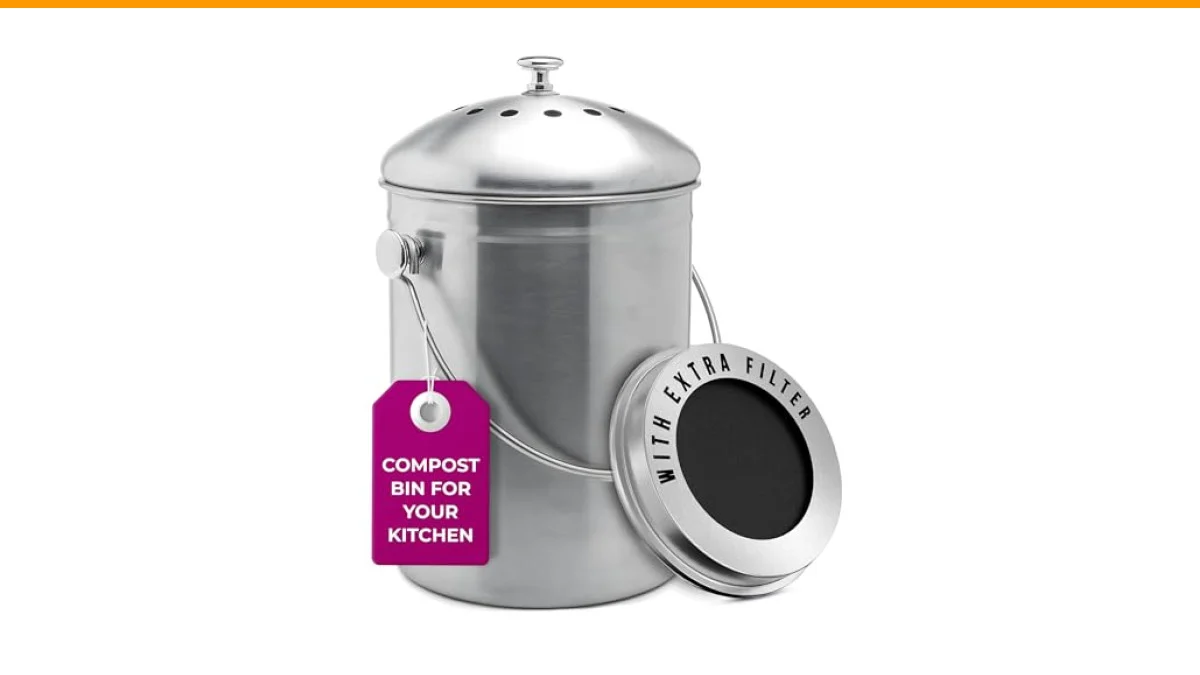
Epica Kitchen Compost Bin for Kitchen Countertops, 1.3 Galllon - Silver | Stainless Steel, Rust- Resistant, Airtight Leak-Resistant Lid, Replaceable Activated Charcoal Filter for Odorless Composting
- FEATURED IN BON APPETIT & FORBES: Recognized by renowned magazines, EPICA’s compost bin is a perfectly sized marvel for your kitch…
- CONTROL KITCHEN ODORS NATURALLY: This indoor compost bin with a charcoal filter features an airtight lid and a replaceable activat…
- EASY TO CLEAN & RESISTANT TO LEAKS: This countertop bin features a one-piece molded design that resists rust and leaks. The contai…
The Epica countertop bin is the workhorse of NYC apartment composting. Its 1.3-gallon capacity holds roughly three to four days of food scraps for a typical household, which matches the city’s weekly pickup schedule perfectly. You’ll empty it once on collection night, and it won’t dominate your counter while waiting.
What sets this bin apart is the sealing system. The airtight lid combined with a replaceable activated-charcoal filter genuinely keeps odors contained. I’ve left this bin sitting in a small kitchen during a heat wave, and it didn’t attract fruit flies or emit that sour smell you get with open containers. The one-piece molded stainless steel body means no seams where moisture can hide and cause rust.
There are a couple of trade-offs worth noting. The charcoal filter needs replacement every three to six months, and the bin is hand-wash only. The silver finish also shows fingerprints more than matte options, so you’ll be wiping it down regularly if appearances matter. But for the price and durability, it’s a dependable daily companion.
- 1.3-gallon capacity with 7.16-inch diameter and 11-inch height
- Airtight lid with replaceable activated-charcoal filter
- Rust-resistant, seamless stainless steel construction
- Filters last 3-6 months with proper care
- Compact footprint ideal for small NYC counters
Best for: Apartment dwellers who need a reliable, odor-free bin for weekly curbside pickup.
VIVOSUN Outdoor Tumbling
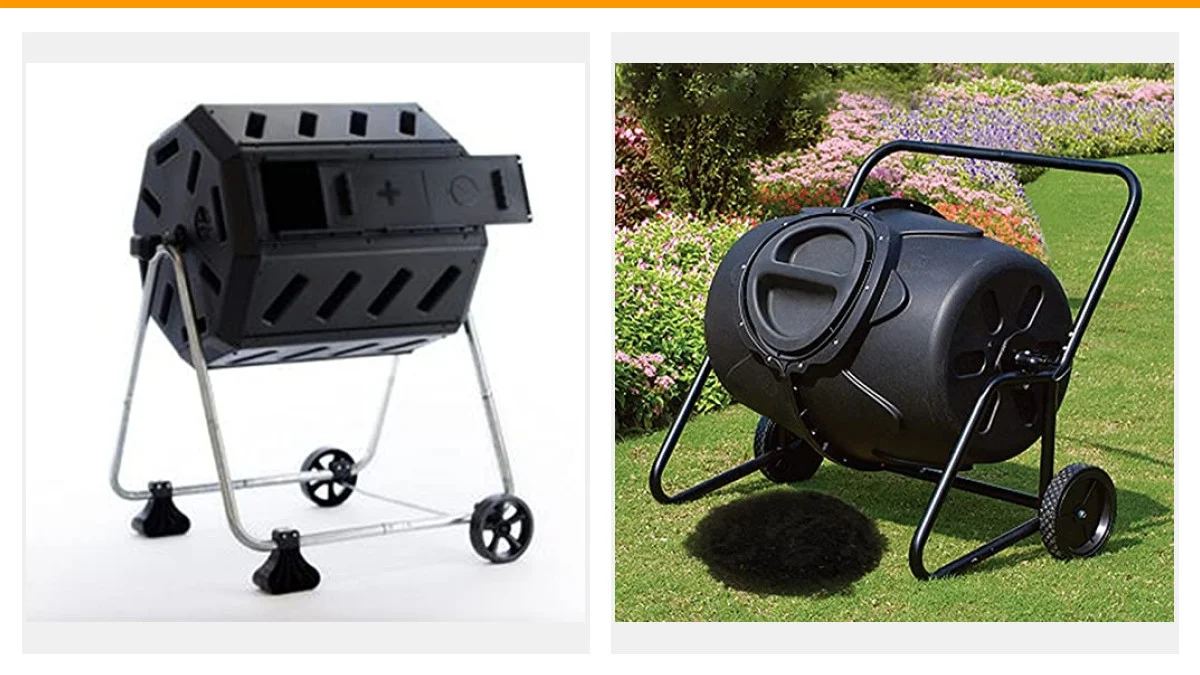
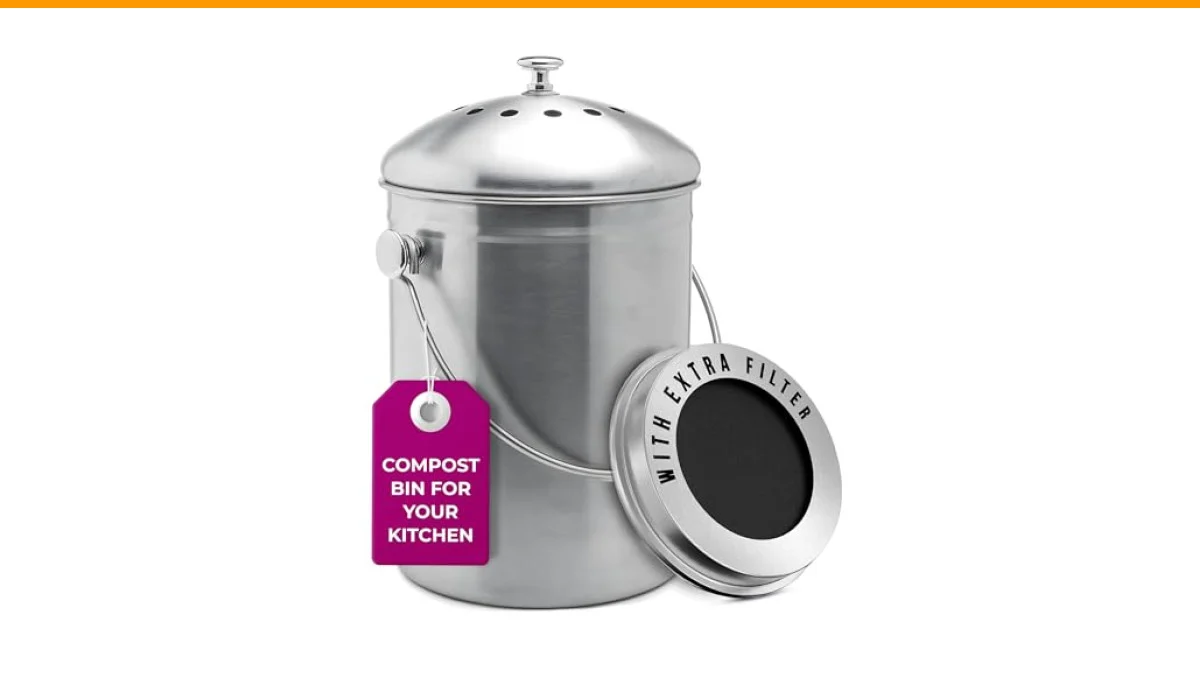
The VIVOSUN tumbling composter is built for NYC homeowners with actual outdoor space. A 43-gallon capacity with dual chambers means you can fill one side while the other finishes breaking down. This creates a continuous supply of compost for your garden beds or potted plants, which is a huge win if you’re serious about closing the loop.
The tumbling design eliminates the back-breaking work of turning compost with a pitchfork. Eight internal fins break up clumps as you rotate the drum, and the air vents promote oxygen flow that speeds up decomposition. It comes with garden gloves and ABS plastic claws, which is a thoughtful touch for beginners who don’t yet own proper tools.
Honestly, this bin is large and requires assembly. You need a flat, accessible spot in your yard, and the plastic body isn’t the most attractive thing to look at. The dual chambers also mean you have to manage two batches, which adds a layer of complexity compared to a simple pile. Still, for producing real compost in a city backyard, it’s one of the most efficient options available.
- Dual 43-gallon chambers for continuous composting
- 360° rotation with deep fins for aeration and mixing
- Premium metal frame and weather-resistant PP plastic
- Includes garden gloves and ABS plastic digging claws
- Air vents prevent pressure buildup and improve airflow
Best for: Homeowners with yards who want to process large volumes of organic waste into usable compost.
Beautiful Kitchen Compost
The KIBAGA bin takes a different approach, prioritizing aesthetics alongside function. Its beige powder-coated carbon steel body and wooden handle make it look more like a stylish kitchen appliance than a waste container. This is the bin you leave out on the counter without feeling the need to hide it under the sink.
Performance holds up, too. The built-in charcoal filter compartment neutralizes odors, while the lid’s air holes provide necessary ventilation. Two filters come included, which extends your value before you need to buy replacements. The 1.1-gallon capacity is slightly smaller than competitors, but the compact 10.2×7-inch footprint fits neatly on tight counters in older NYC apartments.
The smaller capacity is the main limitation. If you cook a lot or have a family of four, you’ll be emptying this every couple of days. The wooden handle is charming but requires gentle handling to avoid warping. It’s also not dishwasher safe, so factor in hand-washing time.
- 1.1-gallon volume with 10.2×7-inch footprint
- Rust-free, powder-coated carbon steel construction
- Charcoal filter compartment with two filters included
- Wooden handle and knob for a modern aesthetic
- Lid air holes provide necessary aeration
Best for: Design-conscious cooks who want a beautiful countertop bin for a smaller household.
RED FACTOR Premium Compos
RED FACTOR engineered this bin to solve the most common complaint with kitchen composters: lingering smells. The dual-filter technology uses active carbon in two separate compartments, combined with a lid that has ventilation holes. This system actively neutralizes odors rather than just trapping them, which makes a real difference during humid NYC summers.
The single-sheet manufacturing process creates a seamless stainless steel body with no joints where bacteria can accumulate. The dome-shaped lid adds an elegant profile, and the soft-grip handle makes carrying it to the curb or a drop-off site comfortable. At 1.3 gallons, it offers the same capacity as the Epica but with a slightly different lid mechanism that some users find easier to open one-handed.
The trade-off here is the price point, which tends to run higher than comparable bins. The white color option shows stains more readily than darker finishes. And while the company offers a satisfaction guarantee, you’ll want to confirm the replacement filter availability before committing long-term.
- 1.3-gallon capacity with 10.8×8.7×7.3-inch dimensions
- Innovative dual-filter technology with active carbon
- Seamless stainless steel body resistant to rust and cracks
- Dome-shaped lid with soft-grip handle
- Two spare filters included in the box
Best for: Households that prioritize odor elimination above all else and want a polished look.
VEVOR Compost Bin, 43-Gal
VEVOR’s dual-chamber tumbler is the budget-friendly alternative to the VIVOSUN model, offering similar capacity at a more accessible price point. The 43-gallon total volume splits into two chambers, letting you compost continuously. Each chamber features a detachable sliding door with a large opening, making it easy to add scraps or harvest finished compost.
Construction quality is solid for the price. The BPA-free PP plastic body resists UV damage and weathering, while the steel frame supports up to 110 pounds. The 360° tumble design ensures thorough mixing, and internal grooves break up clumps effectively. VEVOR claims you can have finished compost in four to six weeks under ideal conditions, which is realistic for a tumbler if you maintain the right brown-to-green ratio.
This bin isn’t perfect. The sliding doors can be finicky to align perfectly, and the plastic body feels less premium than more expensive models. It also requires more physical effort to rotate when fully loaded. But for NYC residents with yards who want to start composting without a huge investment, this machine delivers solid results.
- 43-gallon capacity split into dual chambers
- Sliding doors with secure seals keep out pests
- Steel frame supports up to 110 pounds
- BPA-free, UV-resistant, and weatherproof construction
- Internal grooves and vents accelerate decomposition
Best for: Budget-conscious gardeners who want a large-capacity tumbler for outdoor use.
How We Chose These Products
My selection process started with the specific constraints of New York City living. Space is limited, odors are a neighbor issue, and the DSNY regulations dictate how you present your waste. I looked for bins that address these realities rather than generic composting gear designed for suburban sprawl.
I evaluated each product on four criteria: capacity relative to weekly pickup schedules, odor control effectiveness for indoor use, durability for outdoor weather exposure, and ease of cleaning. I also considered the buyer’s legal obligations under NYC’s mandatory composting law. A bin only works if it fits your compliance strategy, whether that means weekly curbside setout or personal drop-off at a collection site.
Finally, I weighed real-world usability. A bin that’s hard to open, awkward to carry, or complicated to clean will get abandoned. The products here all passed basic functionality tests, but they serve different niches. The countertop models suit renters and small households, while the tumblers cater to property owners with outdoor space.
Buying Guide: What Really Matters
Before you pick a bin, understand the DSNY rules. The city requires you to place organic waste in a container with a lid. You can use your own bin, a city-issued brown bin, or even a sturdy trash can labeled clearly. The key is that it must be set out on the correct collection day, which varies by borough and neighborhood.
Capacity is the first decision point. A typical NYC household generates about one to two gallons of food scraps per week. A 1.3-gallon countertop bin handles that volume easily. If you cook extensively or have a larger family, consider emptying mid-week or upgrading to a larger pail. For outdoor composting, 43-gallon tumblers provide enough space for yard waste plus kitchen scraps.
Odor control matters more in apartments than houses. Look for bins with charcoal filters and airtight seals if you’re keeping them indoors. Ventilation holes help prevent anaerobic decomposition, which is the primary cause of bad smells. For outdoor bins, aeration and tumbling capability are more important than filter systems.
Think about the physical workflow. Where will you keep the bin? How will you transport it to the curb or a drop-off site? Countertop bins should be lightweight and easy to carry. Outdoor tumblers need a stable, level surface. Consider these logistics before making a purchase.
Our Top Recommendation
The Epica Kitchen Compost Bin is our top pick for most NYC residents. It strikes the best balance between capacity, odor control, durability, and price. The stainless steel build will last for years, the charcoal filter keeps your kitchen fresh, and the 1.3-gallon size aligns perfectly with weekly curbside pickup. It’s featured in food publications for a reason.
For those with outdoor space, the VEVOR 43-Gallon Tumbler is the runner-up. It offers exceptional value for the capacity and produces genuine compost for your garden. If you have a smaller budget or a smaller kitchen, the KIBAGA bin is a stylish alternative that handles the basics well.
Frequently Asked Questions
Is composting actually mandatory in NYC right now?
Yes. The city’s mandatory composting law took effect in October 2026 for all residents. Enforcement began with warnings, but fines are now being issued. Single-family homes and buildings with nine or fewer units must comply. Larger buildings have a separate timeline and requirements.
What bin does the city require me to use?
You can use any rigid container with a lid, but it must be 55 gallons or less. The city provides brown bins to buildings that request them, but you’re not required to use that specific bin. Your container just needs to be clearly identifiable and set out on the correct day. Labeling it ‘Compost’ helps avoid confusion.
Can I use compostable plastic bags as liners?
Yes, but only bags that meet the city’s standards. The bags must be labeled as compostable and meet ASTM D6400 standards. Regular plastic bags are not allowed and will contaminate the entire load. Paper bags are also acceptable. If you skip a liner, you’ll need to rinse your bin more frequently.
What happens if my building doesn’t provide composting service?
Building owners and landlords are responsible for ensuring composting service is available. If your building doesn’t comply, you can file a complaint with 311. The city can fine property owners for non-compliance. Renters should not be penalized for their landlord’s failure to provide the necessary infrastructure.