You’ve seen it happen: a cafeteria full of half-eaten apples and untouched cartons of milk, all headed for the trash. Teachers want to teach sustainability, but the logistics of collecting, storing, and composting school waste feels overwhelming. You need a bin that survives hundreds of small hands, won’t stink up a classroom, and fits your budget.
A great school compost bin does more than hold scraps. It becomes a teaching tool, a way to show students how waste becomes soil. The right choice depends on your setting. A kindergarten room needs something small, safe, and see-through. A busy cafeteria needs a large, durable station with clear labels. An outdoor garden needs a tumbler that can handle volume.
We’ve tested and compared five top contenders, from a heavy-duty three-stream station to compact countertop models. This guide goes beyond product specs. You’ll get practical advice on integrating composting into your curriculum, securing funding, and managing the ‘yuck’ factor. Let’s find the bin that fits your school’s needs.
Here is a quick comparison of the key specifications:
| Features | Zedfire 33 Gallon | Epica 1.3 Gal | OXO 1.75 Gal | Utopia 1.3 Gal | IVWOXO 0.7 Gal |
|---|---|---|---|---|---|
| Material & Build | Stainless steel, heavy-duty | Stainless steel, one-piece | Plastic with steel handle | Stainless steel | BPA-free plastic |
| Capacity | 33 gallons (3×11) | 1.3 gallons | 1.75 gallons | 1.3 gallons | 0.7 gallons |
| Main Feature | 3-stream sorting station | Charcoal filter, airtight lid | Stay-open lid, smooth interior | Charcoal filters, classic design | Drainable inner bucket |
| Best Use Case | Cafeteria, central sorting | Teacher’s desk, office | Busy classroom kitchen | Countertop, small spaces | Individual desk, coffee station |
| Cleaning | Removable galvanized liners | Hand wash only | Easy-clean interior | Hand wash, weekly rinse | Dishwasher-safe |
Zedfire 33 Gallon Station

Zedfire
Zedfire 33 Gallon Stainless Steel Commercial Trash, Recycling & Compost Bin – 3-Stream Indoor Waste Station with Color-Coded Lids – for Restaurants, Kitchens, Offices, Schools, Airports, Indoor Use
- Designed for Commercial Use: Ideal for restaurants, kitchens, schools, offices, and public buildings—this triple-stream bin keeps…
- Three Compartments, One Solution: Offers (3) 11-gallon sections for trash, recyclables, and compost—clearly labeled and color-code…
- Heavy-Duty Stainless Steel Build: Durable and sleek design withstands daily use in high-traffic areas while maintaining a modern,…
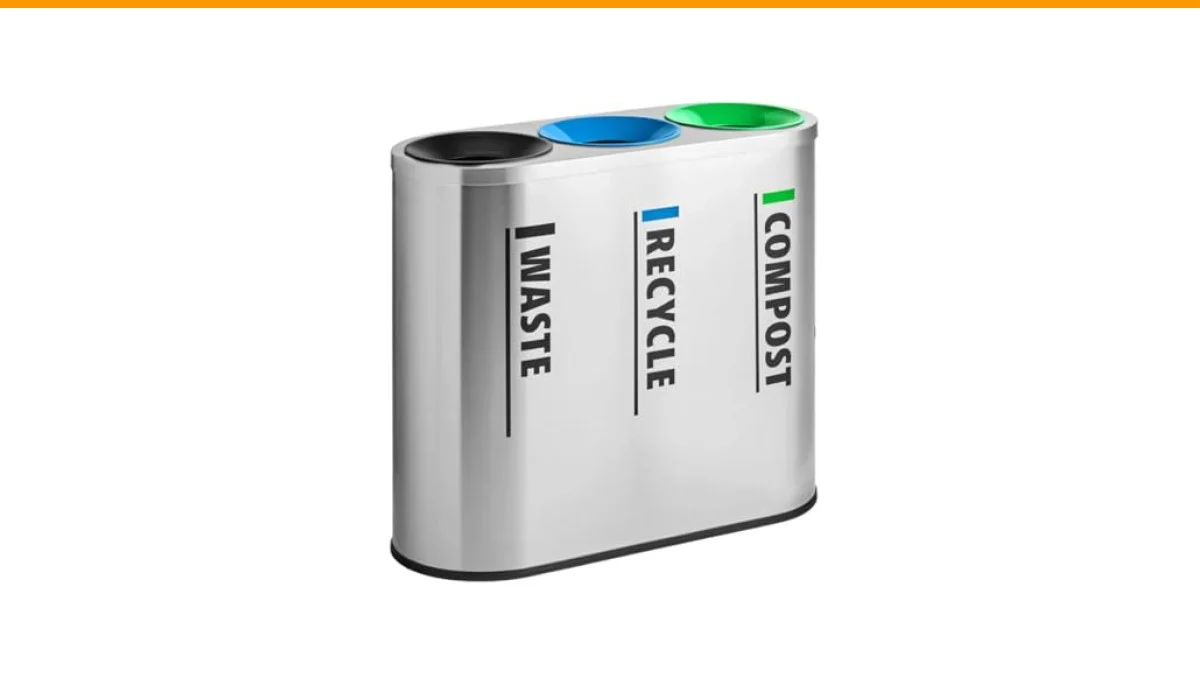
This is the workhorse for schools serious about cafeteria-wide composting. The Zedfire 33 Gallon is a three-stream waste station, giving you separate 11-gallon compartments for trash, recyclables, and compost. It’s built for high-traffic areas like school cafeterias, hallways, or near the gym. If your school has a green team that monitors lunch shifts, this bin makes sorting obvious and efficient.
What stands out is the color-coded system. Blue lids for recycling, green for compost, black for trash. Large front-facing labels leave no room for guesswork, which cuts down on contamination. The heavy-duty stainless steel exterior handles being bumped by backpacks and lunch trays. Galvanized steel inner liners are removable, making bag changes quick even during a busy lunch period. This bin doesn’t just collect waste; it teaches students to sort correctly every single day.
Here’s the trade-off: it’s large and heavy. You’ll need a permanent spot for it, not something you move between classrooms. The 33-gallon capacity means you need a steady supply of scraps to fill it, otherwise compost sits too long. It’s also the most expensive option on this list, so consider it an investment for a central location, not a classroom.
- Three 11-gallon compartments in one unit
- Color-coded lids (blue, green, black) with bold labels
- Removable galvanized steel inner liners
- Heavy-duty stainless steel exterior for daily use
- Designed for commercial settings like schools
Best for: A central cafeteria or lunchroom sorting station where durability and clear labeling matter most.
Epica Kitchen Compost Bin

Epica
Epica Kitchen Compost Bin for Kitchen Countertops, 1.3 Galllon - Silver | Stainless Steel, Rust- Resistant, Airtight Leak-Resistant Lid, Replaceable Activated Charcoal Filter for Odorless Composting
- FEATURED IN BON APPETIT & FORBES: Recognized by renowned magazines, EPICA’s compost bin is a perfectly sized marvel for your kitch…
- CONTROL KITCHEN ODORS NATURALLY: This indoor compost bin with a charcoal filter features an airtight lid and a replaceable activat…
- EASY TO CLEAN & RESISTANT TO LEAKS: This countertop bin features a one-piece molded design that resists rust and leaks. The contai…
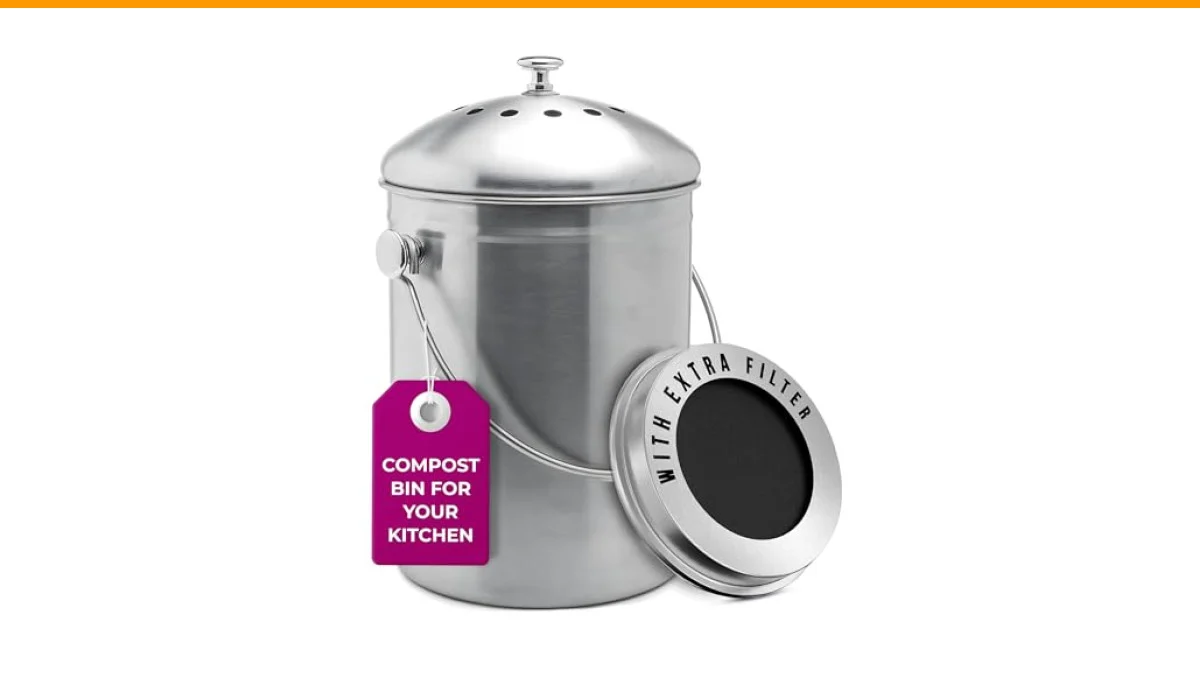
The Epica 1.3-gallon bin is a familiar sight in classrooms and teachers’ lounges. It’s compact enough to sit on a countertop without getting in the way, yet holds a few days’ worth of apple cores and banana peels. This is the bin you want if you’re starting a small composting program in one classroom or need a collection point for a single grade level.
Its claim to fame is odor control. The airtight lid and replaceable activated-charcoal filter genuinely keep smells contained, which is a lifesaver in a warm classroom. The one-piece stainless steel body resists rust and leaks, so you don’t have to worry about drips ruining your desk. It’s also been featured in Bon Appetit and Forbes, which speaks to its quality. For teachers who want a reliable, low-maintenance bin, this one delivers.
But it’s not perfect. Hand-washing is the only way to clean it, and you must be gentle with the charcoal filter. Saturation kills its effectiveness, so you can’t just run it under the tap. The 1.3-gallon size fills up fast if you have more than a handful of students contributing scraps. You’ll need to empty it every day or two.
- 1.3-gallon capacity, 7.16 inches wide and 11 inches high
- Airtight lid with replaceable charcoal filter
- One-piece stainless steel resists rust and leaks
- Filter lasts 3-6 months with proper care
- Compact footprint fits on crowded counters
Best for: A single classroom or teacher’s desk where odor control and a compact footprint are top priorities.
OXO Good Grips Easy-Clean
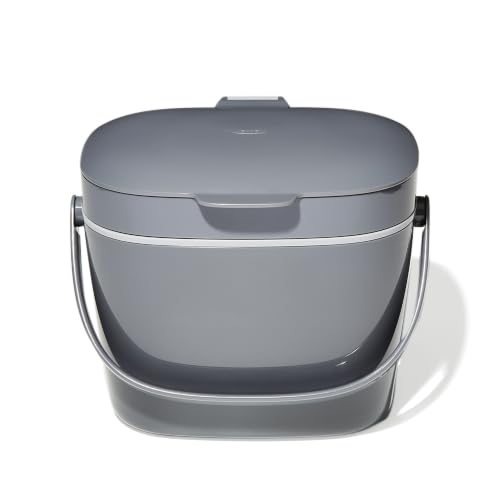
The OXO Good Grips bin takes a different approach. It’s slightly larger at 1.75 gallons, making it a good middle ground for a busy classroom or a shared staff kitchen. The design keeps a plastic bag tucked inside, so you don’t see the liner, which looks neat. But the real standout is the stay-open lid. You can toss scraps in with one hand while holding a book or a stack of papers.
The smooth interior is genuinely easy to clean. No corners or crevices for gunk to hide. The soft-close lid limits airflow, which helps reduce odors and keeps fruit flies out. For teachers who are always juggling tasks, this bin feels thoughtfully designed. The charcoal color hides stains better than silver models.
The catch is that it’s plastic, not metal. It won’t dent, but it can stain over time if you don’t clean it regularly. The lid mechanism, while convenient, has more moving parts that could wear out. Also, the bag-liner system means you need to buy compatible bags, adding an ongoing cost. If you prefer a simple, no-fuss bin, this one’s added features might feel like overkill.
- 1.75-gallon capacity holds a full day’s scraps
- Stay-open lid for one-handed use
- Smooth interior wipes clean in seconds
- Soft-close lid reduces odor and pests
- Bag tucked inside for a neat appearance
Best for: A busy classroom or staff room where ease of use and quick cleaning matter more than a premium look.
Utopia Kitchen Countertop Bin

Utopia Kitchen
Utopia Kitchen Countertop Compost Bin 1.3 Gallon, Stainless Steel, Silver | Odorless countertop compost bin with charcoal filter, ideal for food scraps and waste
- Countertop Fit - The countertop compost bin measures 7.2 inches wide and 11.2 inches high, offering a slightly larger capacity whi…
- Durable Build - Made with stainless steel, the composter resists scratching, cracking, and chipping, so it can handle onion skins,…
- Stylish Design - With a sturdy, sleek design that complements most kitchen decor, the compost bucket with lid looks like it belong…
The Utopia Kitchen bin is a reliable, budget-friendly workhorse. At 1.3 gallons, it matches the Epica in size but often comes at a lower price point. It’s a straightforward stainless steel cylinder with a lid and charcoal filter. If you need several bins for different classrooms without breaking the school budget, this is a smart pick.
Its strength is simplicity. The stainless steel build resists scratches and dents, and the classic design doesn’t look out of place anywhere. The charcoal filter does its job of trapping odors for about a week. You can line the bottom with newspaper or cardboard to absorb excess liquid, which the manufacturer recommends. That little tip makes cleanup a breeze.
Where it falls short is the lid. It’s not airtight, so odors can sneak out if you pack it full. The filter is less effective than the Epica’s, so you’ll want to empty it more frequently. Also, the steel exterior shows fingerprints and smudges easily. It’s not a dealbreaker, but you’ll be wiping it down often if you care about appearances.
- 1.3-gallon capacity, 7.2 inches wide and 11.2 inches high
- Stainless steel resists scratches and cracks
- Charcoal filters trap odors naturally
- Line bottom with newspaper to absorb liquids
- Hand wash with mild soap or vinegar
Best for: Schools on a budget that need multiple bins for different classrooms without sacrificing durability.
IVWOXO Sealed Compost Bin
IVWOXO
Compost Bin Kitchen, 0.7Gal Sealed Countertop Compost Bin | Indoor Compost Bin, No Filter Required, Compost Bucket with Lid and Handle
- Compact and Convenient: Measuring L6.5“ x W6.5” x H7" with a 0.7-gallon capacity, this kitchen compost bin is perfectly sized to f…
- Modern Convenience Design: Features a one-handed lid, sturdy handle, drainable and removable inner bucket, and a smooth, dishwashe…
- Odor-proof and wet/dry separation: The nearly airtight lid perfectly seals in odors, eliminating the need for expensive activated…
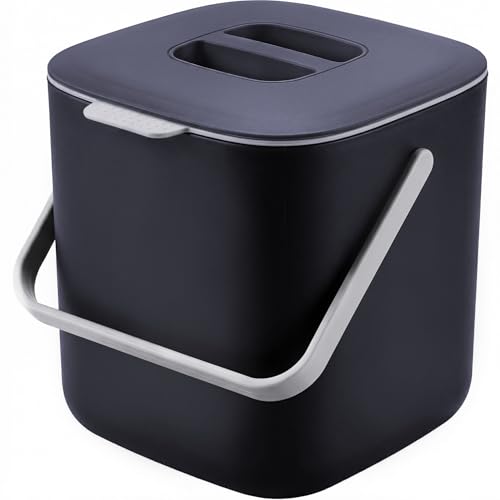
The IVWOXO is the smallest bin here at 0.7 gallons, but it punches above its weight for specific situations. This is perfect for a single teacher’s desk or a small office where you’re only composting coffee grounds and a few fruit peels. The one-handed lid opens easily, and the sturdy handle makes it simple to carry to a central collection point.
Its clever design includes a drainable inner bucket. This separates liquids from solids, slowing down decomposition and cutting odor at the source. You don’t need expensive charcoal filters because the nearly airtight lid seals smells in. The plastic body is smooth and dishwasher-safe, so cleaning is as easy as throwing it in the machine at the end of the week. For a low-maintenance option, this is hard to beat.
The downside is capacity. 0.7 gallons fills up fast with a dozen students’ snacks. You’ll be emptying it daily, which could be a hassle. The plastic build, while durable, doesn’t have the premium feel of stainless steel. But if you’re looking for a starter bin to test interest in a composting program, this is a low-risk, low-cost choice.
- 0.7-gallon capacity for individual use
- One-handed lid and sturdy handle
- Drainable inner bucket separates liquids
- Dishwasher-safe plastic body
- No charcoal filters needed
Best for: A teacher’s desk or small office where convenience and easy cleaning are more important than capacity.
How We Chose These Products
We started by looking at the specific needs of schools, not just general home use. That meant considering durability for high traffic, clear labeling for young students, and capacity that matches cafeteria waste. We also prioritized odor control because that’s the number one complaint from teachers. Each product was evaluated against these criteria, not just its Amazon rating.
We also considered the range of school settings. A kindergarten classroom has different needs than a high school cafeteria. We selected products that cover that spectrum, from the large Zedfire station to the tiny IVWOXO. We looked at real-world use cases, maintenance requirements, and whether the product could withstand daily abuse. Our goal was to give you options that are genuinely practical, not just popular.
Buying Guide: What Really Matters
Before you buy, think about where the bin will live. Indoor bins need odor control and a tight lid. Outdoor bins need to withstand weather and pests. The Zedfire is great indoors near a lunch line, but it’s not designed for rain. A tumbling composter works outside but is overkill for a classroom. Match the bin to your location first.
Next, consider your students’ ages. For K-2, you want a see-through bin or one with large, colorful labels. The Zedfire’s color-coded lids are perfect for teaching sorting. For older students, a bin with a filter or a drainable bucket teaches more advanced concepts like moisture balance. Think about how you’ll empty it. A bucket you can lift and carry is easier for a teacher than a heavy stationary bin.
Finally, plan for cleaning. School health codes require regular sanitation. Bins with removable liners or dishwasher-safe parts are easier to keep clean. The Utopia recommends a weekly rinse with vinegar. The OXO has a smooth interior. Avoid bins with lots of crevices. A simple design is a safe design.
Our Top Recommendation
For most schools, the Zedfire 33 Gallon Stainless Steel 3-Stream Station is the clear winner. It solves the biggest challenge: getting students to sort correctly. The color-coded lids and large labels make it foolproof. The heavy-duty build survives years of lunch periods. It turns waste management into a daily lesson in sustainability.
If you need something smaller or more affordable, the Epica Kitchen Compost Bin is an excellent runner-up for classroom use. Its charcoal filter keeps odors at bay, and the stainless steel is built to last. For a budget option, the Utopia Kitchen Bin gives you solid performance without the premium price. And if you’re just starting out, the IVWOXO is a low-cost way to pilot a program.
Remember, the bin is just a tool. Your success depends on the system around it. Check out our guide on compost bins for nutrient-rich soil for tips on getting the best results. And for a deeper look at managing waste, see our dual-chamber bin guide for continuous composting methods.
Integrating Composting Into Your Science Curriculum
Composting is a perfect fit for Next Generation Science Standards (NGSS). For grades K-2, you can teach about interdependent relationships in ecosystems. Use the compost bin to show how decomposers break down food waste. For grades 3-5, focus on matter cycling. Students can observe how apple cores turn into soil, tracking the change over weeks. For middle school, connect composting to human impact on Earth systems. Discuss how reducing food waste in the cafeteria cuts methane emissions from landfills.
You don’t need a formal curriculum. Start with a simple observation journal. Let students draw or write what they see each week. Measure the temperature of an outdoor pile to discuss microbial activity. Use the finished compost to plant a school garden. This hands-on experience teaches more than any textbook. If you’re using a worm bin, check out our vermicomposting bin guide for tips on maintaining a healthy worm population.
Funding Your Compost Program
Most schools don’t have a line item for compost bins. But funding is out there. Start with your PTA or PTO. Many are eager to support environmental education. Write a one-page proposal explaining the educational benefits and how it aligns with school wellness policies. Offer to have students help maintain the bin, which shows a long-term commitment.
Look for local grants. Many cities offer small grants for school sustainability projects. Check with your county’s solid waste district; they often provide free compost bins or rebates. Also, consider crowdfunding through platforms like DonorsChoose. Teachers have successfully funded compost programs this way. If you’re in a state with environmental education grants, apply early. The key is to frame composting as an educational tool, not just a waste management project.
Managing the Yuck Factor
Odor is the biggest fear, but it’s manageable. The right bin helps, but your collection routine matters more. Empty indoor bins daily or every other day. Don’t let scraps sit over the weekend. Use a carbon source like shredded paper or leaves to balance the nitrogen-rich food waste. This simple step cuts smell dramatically.
Pests are another concern. A tight-fitting lid is non-negotiable. For outdoor bins, make sure they have a latch or lock. If you’re using a worm bin, keep it indoors or in a sheltered spot. Clean up spills immediately. Use a vinegar solution to disinfect without harsh chemicals. And always wash hands after handling compost. These protocols keep your program safe and hygienic.
Common Mistakes Schools Make
One big mistake is starting too big. A massive outdoor tumbler can overwhelm a small group of students. Start with one classroom and a small bin like the Epica or Utopia. Learn the rhythm of collection and decomposition before scaling up.
Another error is ignoring the carbon-to-nitrogen ratio. If you only toss in fruit scraps, it gets slimy and smells. Add dry leaves, shredded paper, or cardboard. This is a great math lesson for older students. Also, don’t forget to turn the pile. Oxygen is essential for aerobic decomposition. A tumbler makes this easy, but a static bin needs manual turning.
Finally, don’t expect instant results. Composting takes time. If students lose interest, remind them that they’re feeding a living system. Check on the bin weekly, add new scraps, and harvest the finished compost after a few months. Success comes from consistency, not patience alone.
Frequently Asked Questions
How do I keep compost bin odors from bothering other classrooms?
Use a bin with a charcoal filter or airtight lid, like the Epica. Empty it daily. Avoid adding dairy, meat, or oily foods. Add a handful of shredded paper after each addition to absorb moisture.
Can I compost in winter when the ground freezes?
Yes, but activity slows. Keep your outdoor bin insulated or move it to a garage. A tumbling composter works year-round if you turn it regularly. Indoor worm bins are a great winter alternative.
What should we do with compostable cafeteria waste like milk cartons?
Only compost food scraps and paper products that are certified compostable. Milk cartons often have a plastic lining. Check with your local facility. If they’re not accepted, recycle them instead. Teach students the difference between compostable and recyclable.
How long before we get usable compost?
It depends on the method. A well-managed hot pile can be ready in 6-8 weeks. A simple bin takes 3-6 months. A worm bin produces castings in 2-3 months. Use a thermometer to monitor heat, which indicates active decomposition.