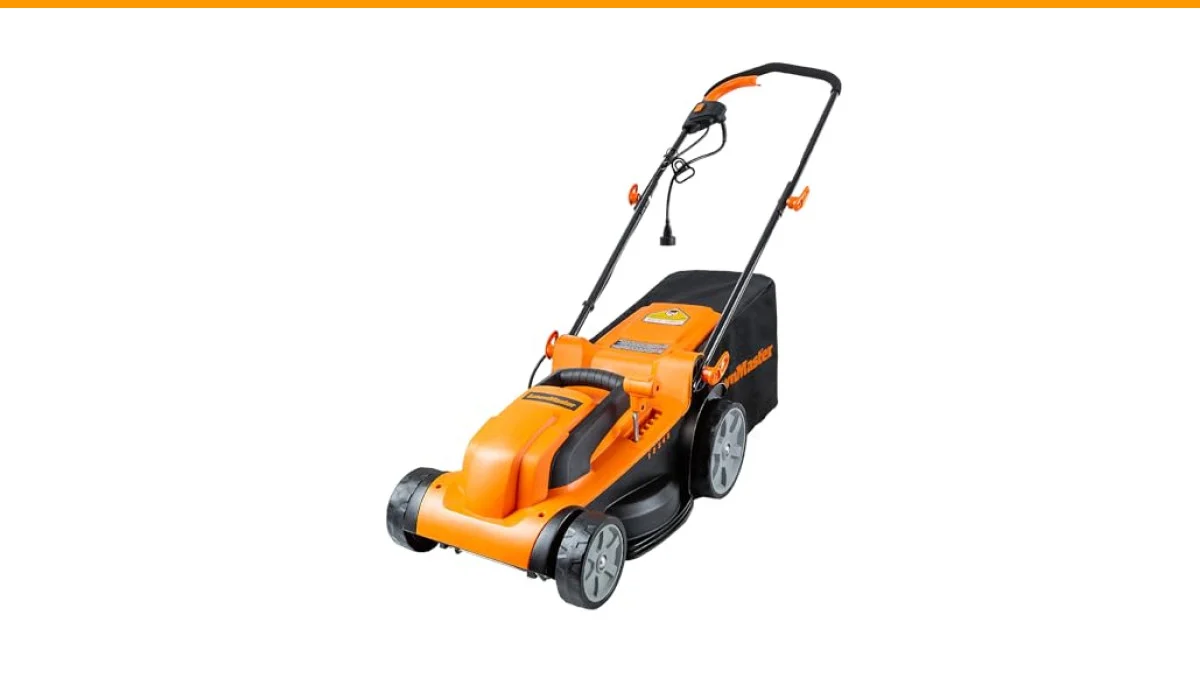
The weekend rolls around, and you’re staring at a patch of grass that needs cutting again. You know the drill: drag the mower out of the shed, wrestle with a tangled cord or a gas engine that won’t start, and spend the next hour pushing it back and forth. For anyone with a small yard, it feels like a lot of effort for not much ground. That’s why the idea of an automatic mower is so tempting—set it up once, and let the machine handle the rest.

But the term ‘automatic’ gets thrown around loosely. It can mean a full robot that navigates on its own, a cordless mower with a button start, or a self-propelled unit that does the pushing for you. For a small yard under $500, you have real options in each category. The right choice depends on how much hands-off time you want and what your yard actually looks like. A flat, open lawn suits a robot perfectly. A yard with tight corners and flower beds might be better served by a lightweight walk-behind.
We’ve sorted through the top contenders to bring you five solid picks. You’ll find robot mowers with GPS mapping and app control, plus cordless push mowers that are light enough for anyone to handle. Below, we give you a side-by-side spec comparison, honest trade-offs, and a clear recommendation for which mower fits which type of homeowner.
Here is a quick look at how the key specs stack up:
| Features | Casince 17-Inch | WORX Robot | Litheli 14-Inch | KraftSense Robot | Casince 13-Inch |
|---|---|---|---|---|---|
| Type | Walk-behind | Robot | Walk-behind | Robot | Walk-behind |
| Cutting Width | 17 inches | Not specified | 14 inches | Not specified | 13 inches |
| Power Source | 2x 20V batteries | Onboard battery | 20V 5.0Ah battery | 20V battery | 2x 20V batteries |
| Max Coverage | 5,380 sq ft | 1/4 acre | 3,000 sq ft | Not specified | 3,230 sq ft |
| Best For | Medium lawns | Hands-free mowing | Lightweight use | Sloped yards | Tight spaces |

In this article
Casince 17-Inch Cordless

Casince
Cordless Lawn Mower, 17 in Walk Behind Lawn Mower for Yard & Garden | 2×4.0Ah Batteries, Up to 40-Min Runtime, 6-Position Height, 50L Grass Bag, 1200W Max Brushless Power
- WIDER MORE EVEN CUTTING: The 17-inch cutting deck and 6 height settings from 1 to 3 inches (25–75 mm) help this cordless lawn mowe…
- DUAL BATTERY EXTENDED RUNTIME: Powered by two 20V 4.0Ah batteries, this walk behind lawn mower runs for up to 40 minutes and cover…
- LARGE CAPACITY GRASS COLLECTION: The 50L collection bag holds more clippings between emptying cycles, while regular cleaning aroun…
This one is for the homeowner who wants the feel of a traditional mower but hates the gas and the cords. The Casince 17-Inch is a walk-behind that acts like a modern appliance—press a button, pull the bar, and it starts. It’s built for small to medium lawns where you want a clean cut without wrestling with a heavy machine.
The 17-inch deck is the standout feature here. It’s a sweet spot for maneuverability while still covering ground quickly. With two 20V 4.0Ah batteries, you get up to 40 minutes of runtime, which translates to roughly 5,380 square feet on a single charge. That’s enough for most small yards and then some. The 50L collection bag is generous, meaning fewer trips to the compost pile. The brushless motor keeps the blade speed consistent, so you won’t see it bog down in thicker spring grass.
You’ll need to be realistic about the trade-offs. At 14 kg (about 31 pounds), it’s not the lightest mower here, so lifting it into a shed might be a strain for some. The height adjustment goes from 1 to 3 inches, which covers most needs, but it’s a manual lever system rather than a single central dial. Also, two batteries mean two charging slots to manage, though the runtime benefit usually outweighs that minor hassle.
- 17-inch cutting deck for a balance of speed and maneuverability
- Dual 20V 4.0Ah batteries for up to 40 minutes of run time
- 50L grass bag limits frequent emptying stops
- Brushless motor delivers up to 1200W of peak power
- One-button start with a pull-bar safety mechanism
Best for: The homeowner with a 3,000 to 5,000 square foot lawn who wants a dependable, cordless walk-behind that starts instantly and cuts evenly.
WORX Robot Mower

WORX
WORX Robot Lawn Mower for 1/4 Acre, Wire-Free with Brushes | Landroid Vision Cloud with App Control, AI Obstacle Avoidance, RTK Cloud Navigation, App Control, Handles 30% Slope
- Centimeter-Level RTK Cloud Accuracy: Commercial-grade RTK Cloud technology delivers centimeter-level positioning for this robotic…
- Auto Mapping for More Complete Coverage: Vision AI helps the robot lawn mower understand lawn shapes and boundary types, then auto…
- AI Obstacle Avoidance with Neural Processing: Vision AI recognizes and understands common yard objects, using a trained neural net…
Imagine never pushing a mower again. That’s the promise of the WORX Robot Lawn Mower, and for a small yard under half an acre, it delivers. This is for the busy person or the one who simply wants their weekends back. It’s a wire-free robot that uses satellite and camera technology to find its way around, so you don’t have to lay down a perimeter wire.
The navigation is the big selling point. It uses RTK Cloud technology for centimeter-level accuracy, which is a fancy way of saying it knows exactly where it is in your yard. It pairs that with Vision AI to recognize obstacles like trees, toys, or flower beds. The mower learns your lawn’s shape and maps it out automatically, then figures out the most efficient path. You control everything from an app—set zones, create no-go areas, and schedule mowing times from your phone. It handles slopes and shaded areas better than many rivals because it switches between GPS and visual sensors when the sky is blocked by trees.
Don’t expect it to be perfect right out of the box. Setup takes longer than a push mower—you’ll need to walk the perimeter with the mower or use the app to map the boundaries on the first run. It takes a few mowing cycles to learn the lawn completely. The cutting width isn’t specified, which means it might be narrower than a traditional mower, so it takes longer to finish a yard. Also, robot mowers are best for routine maintenance; if you let the grass get too tall, it will struggle.
- Wire-free installation with no boundary cable to bury
- RTK Cloud and Vision AI for precise, reliable navigation
- Auto-mapping creates efficient mowing paths from day one
- App control for zones, schedules, and no-go areas
- Handles shaded areas with V-SLAM sensor fusion
Best for: The tech-savvy homeowner with a flat, open small yard who wants to automate lawn care completely and never push a mower again.
Litheli 14-Inch Cordless
Not everyone wants a heavy machine. The Litheli 14-Inch is the answer for anyone who finds traditional mowers awkward—think smaller-framed users, seniors, or anyone who just wants a quick, easy cut. It’s a cordless push mower designed to be light, quiet, and simple to store.
The weight is the first thing you’ll notice. It’s significantly lighter than gas models, making it easy to maneuver around garden beds and through narrow gates. The handle is adjustable, which helps you keep a straight posture instead of hunching over. It also folds down quickly, so it tucks into a corner of the garage without taking up floor space. The brushless motor is genuinely quiet—you can mow early on a Saturday without bothering the neighbors. It’s also maintenance-free; no oil changes, no spark plugs, just charge the battery and go.
The trade-off is the cutting deck. At 14 inches, it’s narrower than the Casince models, so it will take more passes to cover the same ground. The height adjustment goes from 1 to 2.5 inches, which is fine for most lawns but might be limiting if you like to cut grass very short in the summer. The 9-gallon bag is smaller, so you’ll empty it more often on a 3,000 square foot lawn. One nice bonus: the 5.0Ah battery doubles as a power bank to charge your phone in a pinch.
- Lightweight, ergonomic design with an adjustable handle
- Quiet brushless motor ideal for noise-sensitive neighborhoods
- Quick-fold design for compact vertical storage
- 5-position height adjustment from 1 to 2.5 inches
- Battery doubles as a USB power bank for emergencies
Best for: The homeowner with a small, tidy lawn (under 3,000 sq ft) who prioritizes ease of use, light weight, and quiet operation over cutting speed.
KraftSense Robot Mower

KraftSense
KraftSense 20V Brushless Robotic Lawn Mower | 1/8 acre Coverage, 7.9" Deck Size, 0.8"-2.4" Cutting Height, 22° Max Slope, 2.4G Wi-Fi & Bluetooth, FOTA Supported
- [POWERFUL BRUSHLESS MOTOR] Powered by a high-torque 20V brushless DC motor operating at 3,000 RPM, this smart robot mower delivers…
- [POWERFUL BRUSHLESS MOTOR] Powered by a high-torque 20V brushless DC motor operating at 3,000 RPM, this smart robot mower delivers…
- [22° ALL-TERRAIN & WEATHERPROOF] Effortlessly conquers sloped yards, bumpy terrain, and inclines up to 22° (42% grade). Built with…
If your small yard has a slope, this is the robot to consider. The KraftSense 20V Robotic Mower is built to handle terrain that makes other robots give up. It’s for the homeowner with a slightly hilly or uneven lot who still wants the convenience of an automatic mower.
This mower conquers inclines up to 22 degrees, which is a steep grade for any robot. It does this with a high-torque brushless motor spinning at 3,000 RPM, giving it the power to climb and cut without stalling. It’s also weatherproof with an IPX4 rating, so a light rain shower won’t send it running for cover. The design is compact and quiet, operating under 59 decibels—quieter than a normal conversation. You can schedule it to mow at night if you want, and it won’t disturb anyone.
The app control is solid, with scheduling and zone management, plus over-the-air updates that add features over time. But you’ll need a stable 2.4GHz Wi-Fi connection for full remote access. The lack of a specified cutting width and coverage area means you might need to let it run longer to finish a yard. It’s also heavier than the WORX at nearly 30 pounds, so hauling it around for initial setup takes a bit more effort.
- High-torque brushless motor handles slopes up to 22 degrees
- IPX4 weatherproofing for light rain and heat up to 122°F
- Quiet operation under 59 dB for day or night mowing
- App control with scheduling and OTA firmware updates
- Compact footprint for easy storage and handling
Best for: The homeowner with a sloped small yard who wants a durable, weather-resistant robot that can handle grades without breaking a sweat.
Casince 13-Inch Cordless

Casince
Cordless Lawn Mower, 13-Inch Walk Behind Lawn Mower for Yard Care | 2×4.0Ah Batteries, 5-Position Height, 30L Grass Bag, 3000RPM Brushless Power, Lightweight
- COMPACT CUTTING FOR SMALL LAWNS: The 13-inch cutting deck and 5 height settings from 1 to 2.6 inches (25–65 mm) help this cordless…
- BRUSHLESS POWER FOR CONSISTENCY: The 3000 RPM brushless motor delivers up to 1200W max output, helping this electric battery power…
- DUAL BATTERY LONGER RUNTIME: Powered by two 20V 4.0Ah batteries, this walk behind lawn mower runs for up to 40 minutes and covers…
Tight spaces call for a nimble tool. The Casince 13-Inch is the smallest mower in this lineup, designed for narrow strips, odd-shaped corners, and postage-stamp-sized front lawns. It’s for the person who spends more time maneuvering around obstacles than actually mowing straight lines.
The 13-inch deck is the key advantage here. It slips through gates that are barely wide enough for a wheelbarrow, and it gets close to flower beds without scalping the edges. It’s also the lightest of the Casince models at just 10 kg (about 22 pounds), making it easy to lift over curbs or carry up a few steps. It shares the same brushless motor technology as its bigger sibling, so you get consistent cutting power without the weight. The dual 20V batteries give you up to 3,230 square feet of coverage, which is plenty for a compact lot.
The obvious downside is the cutting width. A 13-inch deck means more passes to finish even a modest lawn. It’s not the right tool if you have a quarter-acre to cut. The 30L bag is also on the smaller side, so plan on emptying it frequently. The height adjustment range of 1 to 2.6 inches is similar to the others, but the smaller deck makes it feel less versatile for larger jobs. This is a specialist tool for a specific problem.
- Compact 13-inch deck for tight spaces and narrow gates
- Lightweight 10 kg body easy to lift and carry
- Dual 20V batteries deliver up to 40 minutes runtime
- Brushless motor provides steady power at 3,000 RPM
- 5 height settings from 1 to 2.6 inches
Best for: The homeowner with a very small, obstacle-filled yard where a larger deck would be more of a hindrance than a help.
How We Chose These Products
We focused on real-world small yard scenarios, not just spec sheets. The selection process started with a simple question: what does a person with a small yard actually need? For most, that means a machine that doesn’t take up half the garage, starts without a fight, and handles the specific shape of their lawn. We looked for products that solve those problems without pushing the budget past $500.
Each mower was evaluated on four criteria: coverage area versus battery runtime, ease of setup and daily use, how well it handles obstacles or slopes, and the total hassle factor. We weighed the convenience of a robot against the simplicity of a walk-behind. A robot scores high on automation but requires a learning curve for mapping. A walk-behind is straightforward but demands physical effort. We balanced those factors to find options that serve different kinds of homeowners, from the tech enthusiast to the person who just wants a lighter push mower.
Buying Guide: What Really Matters
Before you commit, think about the actual square footage of your lawn. A robot mower rated for 1/4 acre will handle most small yards easily, but you need to know if your yard is closer to 1,000 square feet or 8,000. That number dictates whether you need a dual-battery walk-behind or if a single-battery unit will do. Overestimating your needs means paying for runtime you never use; underestimating means the mower dies halfway through the job.
Then consider the layout. If your yard is a simple rectangle with no trees, almost any mower works. If you have flower beds, a swing set, or narrow paths, look for a robot with good obstacle avoidance or a walk-behind with a narrow deck. Check the height adjustment range—if you cut warm-season grass like Bermuda, you might need a lower setting than what some mowers offer. And don’t overlook the grass bag; a larger bag means fewer interruptions, but it also adds weight.
Setup complexity is a hidden factor. Robot mowers with boundary wires take time to install; wire-free models with GPS mapping are easier but require app pairing and an initial mapping run. Walk-behinds are ready to go out of the box. Think about your patience for technology. If the idea of troubleshooting an app annoys you, a simple cordless push mower is the safer bet. If you enjoy tweaking schedules from your phone, a robot is worth the setup effort.
Our Top Recommendation
The WORX Robot Lawn Mower is our top pick for most people with a small yard. It offers the truest ‘automatic’ experience under $500—no wires to bury, no mower to push, and it maps your lawn with impressive accuracy. The app control gives you real flexibility, and the wire-free design removes the biggest installation headache. It’s the closest thing to a set-it-and-forget-it solution in this price range.
That said, it’s not the only smart choice. The KraftSense Robot is the better pick if your yard has a noticeable slope, thanks to its 22-degree incline rating and weatherproofing. For those who prefer a manual approach, the Casince 17-Inch walk-behind is a robust alternative with a wide deck and long runtime. And if you want something feather-light for a tiny space, the Casince 13-Inch is the most portable option. For more ideas on robot mowers for difficult terrain or wire-free setups, check out our guides on robot mowers for hills and wire-free robot options.
Frequently Asked Questions
What is the real difference between a robot mower and a self-propelled mower?
A robot mower operates independently. You set a schedule, and it navigates the yard on its own, returning to its charging dock when done. A self-propelled mower is a walk-behind that uses a motor to drive the wheels forward. You still guide it and push it, but it reduces the physical effort of moving the machine. For a small yard, a robot saves the most time, but a self-propelled model is often cheaper and easier to maintain.
How long does it take to set up a wire-free robot mower?
Plan for about an hour of initial setup. You’ll need to charge the battery fully, download the app, and connect the mower to your home Wi-Fi. The first mapping run takes another 30 to 40 minutes as the mower drives around your yard to learn the boundaries. You might need to do a second run to fine-tune no-go zones. It’s a one-time investment of effort, unlike wire-based systems that can take several hours to install.
Will a robot mower handle wet grass or light rain?
Most robot mowers, including the KraftSense model here, have an IPX4 weatherproof rating. That means they can handle splashing water and light rain without damage. But mowing wet grass is never ideal—it clumps and can leave uneven patches. The mower’s sensors might also struggle with slippery conditions on slopes. It’s best to let the grass dry before scheduling a mow, even if the mower can technically survive a shower.
What are the ongoing costs after buying a mower under $500?
Batteries are the main long-term cost. Lithium-ion batteries degrade over time, and you’ll likely need a replacement after three to five years, depending on usage. Replacement batteries for these models typically run $50 to $100 each. You’ll also need to sharpen or replace the blade periodically—usually once a season. Robot mowers may need new wheels or sensors over time, but those are less frequent. For a battery lawn mower guide, we break down more of these costs. Factor in about $20 to $30 per year for blades and maintenance parts.