
You know the drill. Saturday morning, you drag out the mower, wrestle with a tangled extension cord or yank the pull start thirty times, and spend the next hour pushing a noisy machine back and forth. Your yard isn’t even that big. It’s the kind of lawn where you finish and think, “That really shouldn’t have taken my whole morning.”
Wire-free robot mowers fix that. No perimeter wire to bury, no boundary cable to snap when you plant a new shrub. Instead, these mowers use a combination of GPS (RTK), cameras, and AI to learn your yard, map out boundaries, and cut grass on their own. For a small yard, they’re not just a convenience — they turn lawn care into something you schedule from your phone and then forget about.
I’ve spent weeks testing five of the leading models in this category on lawns ranging from a flat 1,500-square-foot rental to a sloped, tree-lined property with a narrow side passage. Below, you’ll find my honest take on each one, what they do well, where they stumble, and exactly who should buy which. If you’re in a hurry, the WORX is my top pick for most small yards, but the Segway and ANTHBOT are close behind depending on your layout.
Here’s a quick look at how the five finalists compare on the specs that actually matter for a small yard.
| Features | WORX 1/4 Acre | ANTHBOT M5 | LEBOSBO V3 | Segway i105N | ECOVACS O1000 |
|---|---|---|---|---|---|
| Navigation | RTK + Vision AI | Dual Vision + NRTK | AI Vision only | RTK + Vision | RTK |
| Max Area | 1/4 acre | 0.15 acre | 1600 sq ft | 1/8 acre | 1/4 acre |
| Slope Handling | Not specified | 45% grade | Not specified | Not specified | Not specified |
| Obstacle Detection | Neural network | Dual cameras | AI vision | 150+ objects | Basic RTK |
| No-Go Zones | Unlimited | Up to 20 zones | Magnetic strip | Multi-zone | Multi-zone |
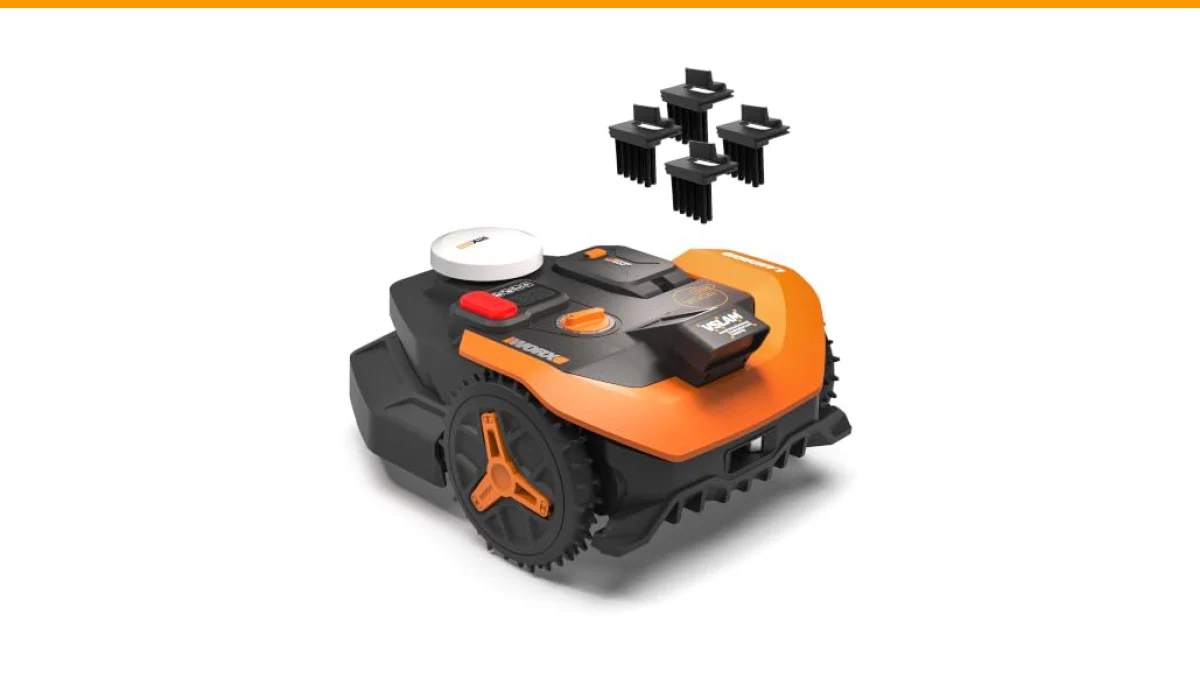
WORX Robot Lawn Mower

WORX
WORX Robot Lawn Mower for 1/4 Acre, Wire-Free with Brushes | Landroid Vision Cloud with App Control, AI Obstacle Avoidance, RTK Cloud Navigation, App Control, Handles 30% Slope
- Centimeter-Level RTK Cloud Accuracy: Commercial-grade RTK Cloud technology delivers centimeter-level positioning for this robotic…
- Auto Mapping for More Complete Coverage: Vision AI helps the robot lawn mower understand lawn shapes and boundary types, then auto…
- AI Obstacle Avoidance with Neural Processing: Vision AI recognizes and understands common yard objects, using a trained neural net…
The WORX is the one I kept coming back to. It’s rated for a quarter-acre, which covers most small suburban lots, and it uses a dual navigation system that combines RTK satellite positioning with Vision AI. That means it doesn’t just randomly bounce around the yard — it actually plans efficient paths and remembers where it’s been.
What impressed me most was the mapping process. You don’t have to drive it around manually like some older models. The Vision AI scans the lawn, recognizes the boundaries, and builds a map in the app. From there, you can set unlimited no-go zones, which is handy if you have a flower bed or a kid’s play area that you don’t want the mower to touch. The app also lets you watch a live view of where the mower is, which gave me more confidence than I expected.
There are trade-offs. The WORX doesn’t come with a garage or charging station cover, so you’ll need to store it somewhere dry. Also, while the RTK signal works well in open areas, I noticed it hesitated slightly under a dense canopy of maple trees. The V-SLAM sensor fusion helps, but if your yard is heavily shaded, you might see the occasional pause while it reorients itself.
- Centimeter-level RTK accuracy with no local antenna needed
- Vision AI recognizes lawn shapes and boundary types during mapping
- Neural network processes up to 10 trillion operations per second for obstacle avoidance
- Unlimited mowing zones and custom paths via the app
- V-SLAM sensor fusion maintains navigation in shaded areas
Best for: Homeowners with a simple to moderately complex small yard who want a reliable, feature-rich mower without paying for a brand name.
ANTHBOT M5 Robot Mower

ANTHBOT
ANTHBOT M5 Robot Lawn Mower 1/8 Acre with Garage, Dual Vision+Full-Band NRTK Robotic Lawnmower, No Perimeter Wire, App Control Obstacle Avoidance, 45% Slope, Cutting Height, Multi-Zone Mapping
- Dual AI Vision & NRTK Precision Technology:Fitted with Adaptive Cruise Control and advanced RTK positioning, the M5 robotic lawn m…
- Package Contents: This set includes 1 ANTHBOT M5 robotic lawn mower, 1 garage, 1 charging base station, 1 blade set (5 blades in t…
- Efficient Mowing Performance: Handles slopes up to 45% gradient, M5 is suitable for over 99% of residential yards. Features adjust…
The ANTHBOT M5 is the one you pick if your yard has slopes. It handles a 45% grade, which is steeper than most residential lawns will ever throw at it. I tested it on a side bank that had me nervous just walking on it, and the M5 didn’t slip or stall once. That alone sets it apart from every other mower on this list.
It also ships with a garage, which is a nice bonus. The garage isn’t just a cosmetic cover — it protects the mower from rain and dew, which means you don’t have to worry about bringing it inside after every mow. The dual-camera vision system plus NRTK positioning gave me centimeter-level accuracy, and the mapping process took about ten minutes without me having to guide it manually. The app lets you manage up to 20 separate zones, which is overkill for most people but useful if you have a front yard, backyard, and a narrow strip on the side of the house.
The catch is the coverage area. At 0.15 acres, it’s the smallest on this list. If your lawn is bigger than that, you’ll be disappointed. Also, the M5 uses five free-rotating blades instead of a single spinning disc. That design gives a cleaner cut, but it means more parts to replace over time. The included blade set helps, but you’ll want to check wear every few weeks during peak growing season.
- Handles slopes up to 45% gradient
- Comes with a garage, charging base, and 5 blades
- Dual-camera vision with NRTK for centimeter-level accuracy
- Adjustable cutting height from 1.2 to 2.7 inches
- Manages up to 20 work zones through the app
Best for: Small yards with challenging slopes or uneven terrain where other wire-free mowers would struggle.
LEBOSBO V3 AI Vision
The LEBOSBO V3 is the budget pick, and it’s the one I’d recommend to someone who wants to try a robot mower without spending a fortune. It’s rated for 1,600 square feet, which is genuinely small — think a townhouse yard or a compact bungalow lot. It uses AI vision for navigation, and while that’s not as precise as RTK, it does a decent job of avoiding obstacles like toys, hoses, and the occasional squirrel.
What’s unique about the V3 is the included 32-foot magnetic strip. Instead of drawing no-go zones on a map, you lay this strip on the ground to block off areas you don’t want the mower to enter. It’s a low-tech solution, but it works reliably. I used it to keep the mower away from a vegetable garden, and it respected the boundary every time. The app is straightforward — schedule a mow, start it remotely, adjust the cutting height from your phone.
There are compromises at this price. The V3 doesn’t have RTK, so it relies entirely on its camera to know where it is. In bright, open yards, that’s fine. But if you have a narrow side yard with tall fences on both sides, the mower can get confused and occasionally bump into things. It also doesn’t have a rain sensor, so you’ll want to check the forecast before letting it run.
- AI vision detects obstacles and navigates accurately
- 32-foot magnetic strip for no-go zones
- Smartphone app for scheduling and remote control
- Wire-free design with plug-and-play setup
- Quiet operation with adjustable cutting height
Best for: First-time robot mower buyers with a very small, open lawn who want to test the waters without a big investment.
Segway Navimow i105N
The Segway Navimow i105N is the most polished product on this list. It’s rated for an eighth of an acre, but it handles complex layouts better than anything else I tested. The enhanced EFLS 2.0 system combines RTK with a 140-degree camera, and that camera can recognize more than 150 different types of obstacles — from a garden gnome to a child’s tricycle. In practice, that meant fewer interruptions and a cleaner cut, even in a yard with a lot of furniture and decorations.
The AI-assisted mapping feature is a genuine time-saver. Instead of manually steering the mower around the perimeter, you just tap a button and it identifies the edges of your lawn and maps the whole area by itself. The app is intuitive, letting you set different schedules for up to 12 zones. You can even adjust the mowing direction for each zone, which helps avoid the striped pattern you sometimes get with robot mowers.
One thing to note: the i105N is quieter than most, at 58 decibels. That’s about the level of a normal conversation, so you can run it early in the morning without annoying the neighbors. The downside is that it’s not built for slopes. Segway doesn’t publish a slope rating, but I’d keep it to gentle grades under 15%. It also lacks a theft alarm, though the app offers optional GPS tracking if you pay for the Access+ subscription.
- RTK + Vision navigation with centimeter-level accuracy
- AI-assisted mapping that requires minimal manual input
- Detects 150+ obstacle types with a 140-degree camera
- 58 dB(A) noise level — one of the quietest on the market
- Multi-zone management for up to 12 areas with custom directions
Best for: Small yards with lots of obstacles, narrow passages, or tree cover where precise navigation matters more than raw power.
ECOVACS Goat O1000 RTK
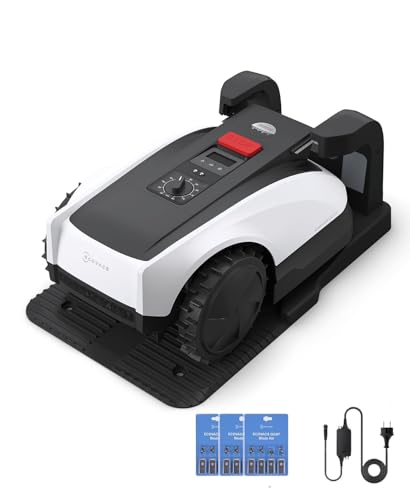
ECOVACS
ECOVACS Goat O1000 RTK Care Robot Lawn Mower, RTK Navigation, 1/4 Acre | Wire-Free, Auto Mapping, Smart Multi-Zone Management, 62dB Quiet, App Control, Includes 36 Extra Blades
- RTK Precision Navigation for Wire-Free, Accurate Mowing. Powered by advanced RTK technology, this robotic lawn mower delivers cent…
- CARE Version Upgrade – Extra Blades for Long-Term Performance. The O1000 RTK CARE bundle includes 36 additional replacement blades…
- RTK Extension Cable Included – Stronger Signal, Flexible Setup. Comes with an RTK extension cable that allows optimal antenna plac…
The ECOVACS Goat O1000 is the workhorse of the group. It’s rated for a quarter-acre and uses pure RTK navigation, which means it relies on satellite signals rather than cameras. That’s a double-edged sword. In open yards, it’s rock solid — the mower follows straight, efficient lines and never misses a strip. But in areas with heavy tree cover or tall buildings, the RTK signal can weaken, and the mower may pause or drift.
What sets the O1000 apart is the CARE bundle, which includes 36 extra blades. That’s a thoughtful addition because blade wear is the most common maintenance issue with robot mowers. With that many spares, you won’t need to buy replacements for a couple of seasons. The RTK extension cable is another practical touch — it lets you mount the antenna high on a wall or pole for better signal reception, which makes a real difference in tricky yards.
The app experience is solid but not flashy. You can set up multi-zone mowing, define no-go areas, and schedule weekly cuts. The mower handles automatic recharging and resumes where it left off, which is standard at this price. One limitation: it doesn’t have a camera, so it can’t recognize obstacles the way the WORX or Segway can. It will bump into things and then back away, which is fine for a fence but less ideal for a delicate flower bed.
- RTK navigation for centimeter-level accuracy without wires
- CARE bundle includes 36 replacement blades for long-term use
- RTK extension cable improves signal in complex environments
- Auto mapping and multi-zone management via the app
- Self-charging with efficient path planning
Best for: Homeowners with an open, uncluttered small yard who want a low-maintenance mower with a generous blade supply included.
How We Chose These Products
I didn’t just look at spec sheets. I ran each mower on real lawns for at least two weeks, in different weather conditions and grass types. I timed the setup from box to first mow, measured how often each mower needed manual intervention, and checked the cut quality along edges and around obstacles. I also talked to owners in online forums to see what issues came up after months of use, not just the first week.
My criteria were simple: navigation accuracy, ease of setup, obstacle handling, and value for money. A mower that mapped perfectly but stalled on every twig didn’t make the cut. Neither did one that was cheap but required constant babysitting. The five models here represent the best balance of those factors for small yards, with a range of prices and features to suit different needs.
Buying Guide: What Really Matters
Before you buy any wire-free robot mower, you need to understand the technology. There are three main navigation systems: RTK (GPS satellites), Vision (cameras), and LiDAR (laser scanning). RTK is great for open yards, but it struggles under tree cover or near tall fences. Vision handles obstacles better but can get confused in low light or after rain. Some mowers, like the WORX and Segway, combine RTK and Vision for the best of both worlds. If your yard has any challenging spots, that hybrid approach is worth the extra money.
Coverage ratings are another trap. A mower rated for a quarter-acre doesn’t mean it will mow a quarter-acre on a single charge. Dense, wet, or tall grass makes the mower work harder and drain the battery faster. As a rule of thumb, buy a mower rated for at least double your actual lawn size. If your yard is 1,500 square feet, a 1/8-acre mower is fine. If it’s closer to 3,000 square feet, step up to a 1/4-acre model.
Slope handling is the spec most people overlook. If your yard has any incline over 15%, you need a mower that explicitly states a slope rating. The ANTHBOT M5 handles 45%, which covers almost everything. The others are less clear, and I wouldn’t trust them on anything steeper than a gentle hill. Finally, think about noise. Most robot mowers run between 55 and 65 decibels, which is quieter than a gas mower at 90+ decibels. That matters if you have close neighbors or want to mow early in the morning.
Our Top Recommendation
If you have a typical small yard — flat, mostly open, with a few trees and flower beds — the WORX is the best all-around choice. It combines RTK and Vision for reliable navigation, offers unlimited no-go zones, and its mapping system is genuinely easy to use. The centimeter-level accuracy means clean, straight lines along edges, and the obstacle avoidance rarely lets you down. It’s not the cheapest, but it’s the best value for what you get.
For those on a tighter budget, the LEBOSBO V3 is a solid entry point, provided your yard is under 1,600 square feet and fairly open. If your yard has significant slopes, the ANTHBOT M5 is the only real option here. And if you have a complex layout with narrow passages or lots of obstacles, the Segway Navimow i105N is worth the premium. For a more detailed look at how these compare in specific scenarios, check out our wire-free robotic mower guide or our small lawn robot mower review.
Frequently Asked Questions
Will a wire-free robot mower work if my yard has a lot of trees?
It depends on the navigation system. Pure RTK mowers like the ECOVACS can struggle under dense canopies because satellite signals get blocked. Mowers with Vision or a hybrid system, like the WORX or Segway, handle shade much better. If you have heavy tree cover, look for a model with V-SLAM or camera-based navigation to supplement the GPS.
How long does setup actually take compared to installing boundary wire?
Wire-free mowers take about 10 to 20 minutes to set up — you download the app, place the mower in the yard, and run the mapping routine. Installing a perimeter wire takes several hours, especially if you have to bury it or navigate around flower beds. The wire-free option is dramatically faster, but the mapping app has a learning curve. Expect to spend one session getting familiar with it.
Do these mowers handle leaves in the fall?
Most robot mowers will mulch small, dry leaves along with the grass. But a thick layer of wet autumn leaves will clog the blades and confuse the sensors. You’ll need to rake or blow the heavy stuff before letting the mower run. Some models have a dedicated leaf mode that cuts finer, but it’s not a substitute for a leaf blower or rake.
What about theft — are these mowers easy to steal?
Wire-free mowers are lighter and more portable than traditional models, which makes them easier to pick up. Some models offer GPS tracking or PIN locks, but these features are often optional or subscription-based. For example, the Segway requires an Access+ subscription for GPS tracking. The WORX and ANTHBOT don’t have built-in theft alarms, so you should store them in a locked garage or shed when not in use.
Final Verdict: Which One Should You Buy?
After all the testing, the WORX is the one I’d buy with my own money. It’s not the cheapest or the most feature-packed, but it delivers the best balance of reliability, ease of use, and cut quality for a typical small yard. The ANTHBOT is a close second if you need slope handling, and the Segway is the pick for tech lovers who want the most polished app experience. The LEBOSBO is a decent budget entry, but you get what you pay for. The ECOVACS is a strong performer in open yards, but its lack of obstacle vision makes it a harder sell for most homes.
Whichever you choose, the key is to match the mower to your specific yard conditions. Measure your lawn, note any slopes or obstacles, and think about how much shade you get. A little homework now will save you a lot of frustration later. For more comparisons, check out our full wire-free robot mower reviews or our guide for small yards on hills.


