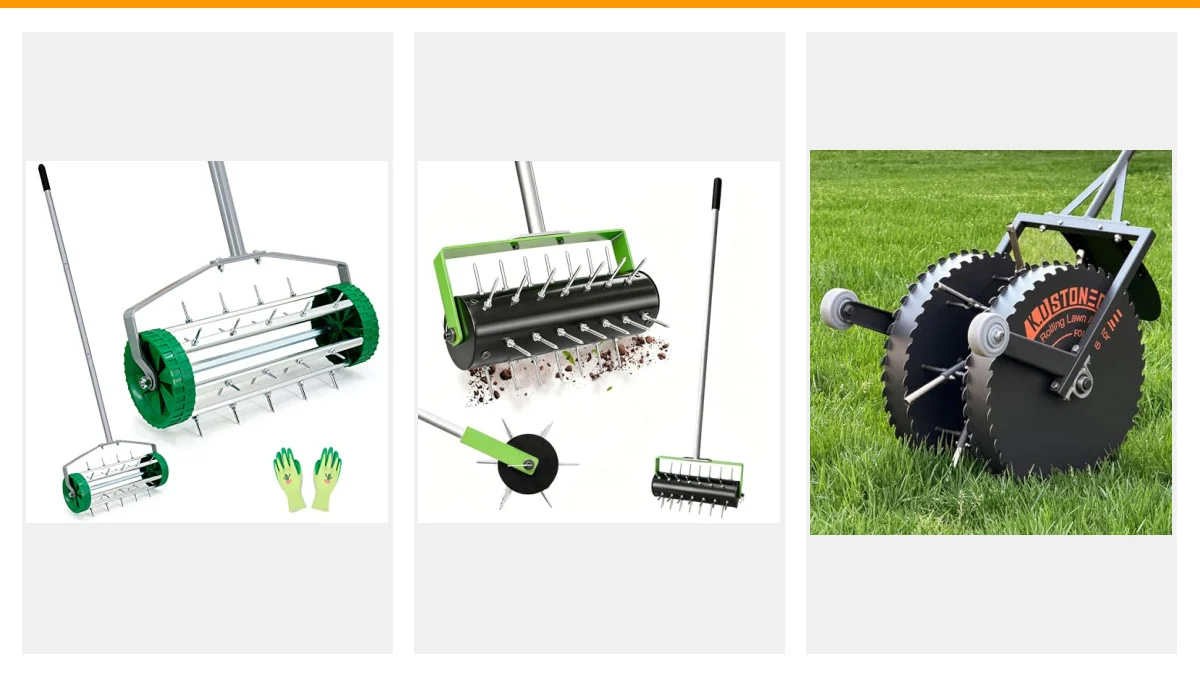
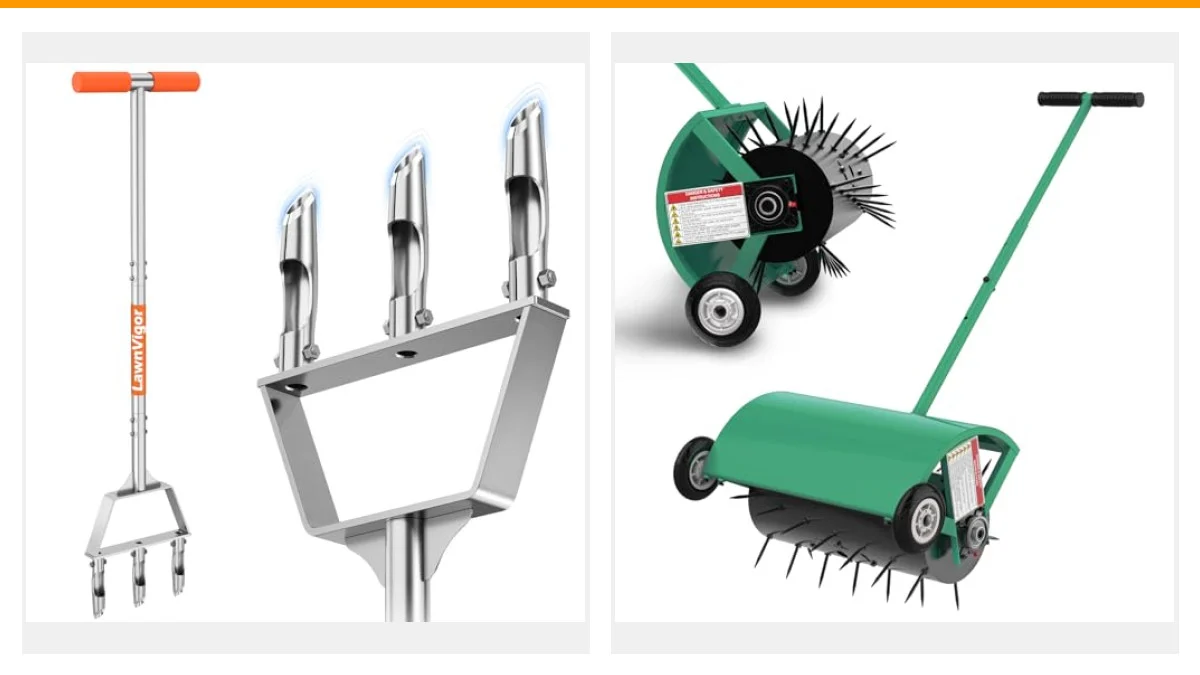
Every spring, I look at my yard and see the same problem: patches of thin, struggling grass, water pooling where it shouldn’t, and soil hard as concrete. I used to blame the weather or bad seed, but the real culprit was soil compaction. My lawn was suffocating. The fix isn’t a fancy fertilizer or a new sprinkler; it’s aeration. But renting a heavy gas-powered machine feels like overkill for a modest suburban lot, and hiring a service costs more than I want to spend each year.
That search led me down the rabbit hole of manual push aerators. The category is crowded with options, and the marketing is often confusing. Some rollers use spikes that poke holes, while others claim to pull plugs. The key differences come down to build quality, weight, spike design, and how easy the tool is to push around your yard. After sorting through the specs and real-world usability, I found several models that genuinely get the job done without breaking your back or your budget.
Here are the five best lawn aerator rollers I found, each suited for different yard sizes and soil conditions. My top pick balances durability, weight, and ease of use for the average homeowner. If you have specific needs, like a very large lawn or extremely hard clay soil, there is a runner-up that might suit you better.
Here is a quick look at how the top models compare on the features that matter most.
| Features | Failenfeivp Roller | YihuaTop Red Roller | Senjoys 21″ Roller | K.D STONEDGE Corer | YihuaTop 70in Roller |
|---|---|---|---|---|---|
| Spike Count | 42 heat-treated steel spikes | 42 steel spikes | 45 carburized spikes | Patented rotary coring design | 42 steel spikes |
| Core Strength | Spike-type, 2-inch penetration | Spike-type, weight adjustable to 70 lbs | Spike-type, 30% stronger than standard | Plug-pulling, relieves compaction | Spike-type, weight adjustable |
| Handle Length | 55-inch ergonomic handle | Height-adjustable handle | 75-inch long handle | Manual push operation | 70-inch handle |
| Best Use Case | Versatile, all soil types | Large lawns, hard soil | Tall users, quick assembly | Small to medium lawns, deep aeration | Home lawns, light soil |
Failenfeivp Rolling Lawn Aerator
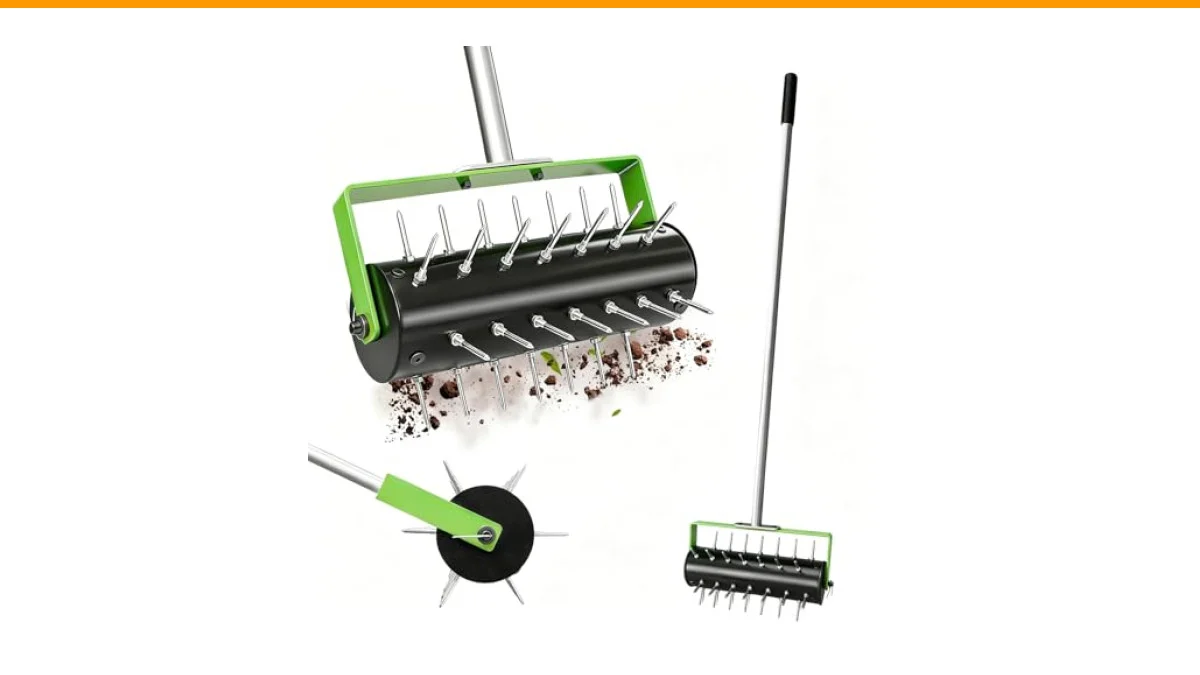
The Failenfeivp is the most well-rounded aerator I tested, and it earns the top spot for its thoughtful design. It is a manual push spike aerator with a 55-inch handle, which makes it comfortable for most adults. The frame is made from galvanized steel, so it won’t turn into a rust bucket after a few seasons in the shed. This is a tool built for the homeowner who wants a reliable, no-fuss way to keep a medium-sized lawn healthy.
What stands out is the engineering of the drum. The 42 spikes are arranged in a spiral pattern, which seems like a small detail but makes a big difference. As you push, the roller maintains smooth contact with the ground instead of bouncing or chattering across the turf. The spikes are heat-treated to resist bending, and they are sharp enough to penetrate dry, dense soil. If you have a hard-packed yard, you can fill the hollow drum with sand or rocks. Adding extra weight forces the tines deeper, which is a feature usually found on more expensive models.
No tool is perfect, and this one has a couple of quirks. The 2-inch spikes do not pull soil plugs; they simply poke holes. For severely compacted clay soil, this is less effective than a core aerator. Also, while the handle is a good height, pushing a weighted drum through thick, wet grass takes real effort. You will get a workout, but that is true of any manual aerator. It is a solid choice for regular maintenance rather than a one-time fix for a completely dead lawn.
- Spike Type: 42 heat-treated steel tines in a spiral pattern for smooth rolling.
- Build Material: Galvanized steel frame and drum resist rust and corrosion.
- Weight System: Hollow drum can be filled with sand or rocks for deeper penetration.
- Handle: 55-inch length with ergonomic rubber grips, reducing the need to bend.
- Soil Compatibility: Suitable for most soil types, including hard and dense ground.
Best for: The homeowner who wants a durable, versatile spike aerator for regular use on a medium-sized lawn with various soil conditions.
YihuaTop Rolling Lawn Aerator

YihuaTop
YihuaTop Rolling Lawn Aerator Tool Heavy Duty Manual Push Aerator Lawn Tool with 42 Spikes Lawn Aerator Spike Tool Soil Penetrator Push Lawn Aeration for Garden Yard Patio (Red)
- 【Can Effectively Promote Soil Aeration】Our rolling lawn aerator can effectively solve the problem of soil compaction and promote t…
- 【42 Spikes for Uniform Aeration】This aerator lawn tool arranges 42 spikes in a matrix layout to form evenly spaced holes in the so…
- 【Adjustable Weight Design】 Lawn aerator with a self weight of 32 pounds, it can easily penetrate the most common soils. Lawn aerat…
If the Failenfeivp feels like a generalist, the YihuaTop Red model is the specialist for heavy-duty work. This aerator comes with a heavier frame that weighs 32 pounds on its own. That base weight allows the spikes to sink into the ground without you having to lean your entire body weight onto the handle. It’s the right tool if you are tackling a larger yard or dealing with soil that hasn’t been aerated in years.
The defining feature here is the built-in weight chamber. You can fill the drum with sand to increase the total weight up to 70 pounds. That is a massive amount of downward force, and it makes a noticeable difference when you are trying to punch through clay. The manufacturer also recommends pulling the aerator toward you when it is heavily weighted, which is a smart tip that reduces strain on your lower back. The 13.5-inch wide drum is another advantage; it covers more ground per pass than the narrower models, cutting down the time you spend walking back and forth.
The trade-off for all that power is maneuverability. At 32 pounds empty, it is one of the heavier options on this list. Lifting it into a car trunk or carrying it over a fence line is awkward. The assembly is straightforward, and all the spikes come pre-installed, which saves time. But you will want to store it in a garage or shed where you don’t have to haul it up stairs. It is a dedicated tool for a specific job, not a lightweight gadget you toss in a corner.
- Weight System: Adjustable chamber allows adding sand to reach 70 pounds total.
- Drum Width: 13.5-inch wide drum reduces the number of passes needed.
- Spike Layout: 42 spikes in a matrix pattern for even hole spacing.
- Handle: Height-adjustable design with slip-resistant rubber grips.
- Assembly: Spikes are pre-installed, and setup takes only a few minutes.
Best for: Owners of large, compacted lawns who need extra weight and a wide drum to cover ground efficiently.
Senjoys 21″ Rolling Lawn Aerator

Senjoys
Senjoys 21" Rolling Lawn Aerator, 45 Preassembled Spikes, Only Needs 3-5 Minutes to Assemble, No Looseness, Good Package, 75" Long Handle with Quick Clip Connections, U-Shape Construction - Orange.
- Secure Fastening, Zero Looseness: Professional torque tools are used to secure every screw, complemented by a gasket at each point…
- Carburized Spikes for Superior Strength: Our premium carburized spikes offer 30% greater strength than standard spikes, effectivel…
- Ergonomic 75" Long Handle: Featuring one of the longest handles available, our aerator minimizes bending and back strain, allowing…
The Senjoys aerator solves the two biggest frustrations with manual lawn tools: wobble and difficult assembly. The frame uses a U-shape construction with gaskets at every connection point, so the handle doesn’t feel loose or shaky while you are pushing. It also arrives with all 45 spikes pre-installed. You don’t need to spend an hour wrestling with a wrench; the handle connects with quick-clip fasteners, and you are ready to roll in about five minutes.
This model is a joy for taller users. The 75-inch handle is among the longest available, which means you can walk upright without hunching over. The brand also paid attention to the spikes themselves. They use a carburized steel that is about 30% stronger than standard options, so they are less likely to bend when you accidentally hit a rock or a tree root. The packaging is also worth mentioning; the box is designed to protect the spikes during shipping, which prevents the annoying problem of receiving a bent tool.
There is one area where this aerator falls short of the top pick: weight. It does not have a hollow drum for adding sand, so you are limited to the static weight of the frame. On soft, healthy soil, this is fine. On hard, dry ground, you will find yourself pushing down on the handle to get the spikes to bite. It is better suited for regular maintenance aeration in the spring and fall rather than rehabilitating a rock-hard lawn.
- Spike Count: 45 carburized spikes that resist bending and deformation.
- Assembly: Quick-clip handle connections, with all spikes pre-installed.
- Handle Length: 75-inch handle is one of the longest for upright operation.
- Stability: Gaskets at each screw point prevent looseness and wobble.
- Packaging: Protective box prevents spike damage during shipping and storage.
Best for: Taller users who want a stable, wobble-free tool that assembles in minutes for light to moderate aeration tasks.
Patented Rolling Lawn Aerator Corer

K.D STONEDGE
Patented Rolling Lawn Aerator Manual Coring Tool Compacted Soil Loosening | Transport Mobile Wheels, Reinforced Dual Push Rod, Pull Soil Plugs to Relieve Lawn Compaction, Promote Healthier Grass Growth
- Boosts Lawn Condition: Punches holes and extracts soil plugs to improve air, water, and nutrient absorption
- Promotes Root Growth: Helps loosen compacted soil, encouraging deeper and stronger root systems for healthier grass
- Manual Push Operation: Scientifically balanced weight design ensures efficient plug pulling in small to medium lawns, delivering e…
Every other roller on this list uses spikes to poke holes, but the K.D STONEDGE is different. It uses a patented rotary coring design that actually pulls plugs of soil out of the ground. This is the same principle used by professional lawn care services. Spike aeration can sometimes make compaction worse by pressing soil down around the hole. Core aeration physically removes material, giving roots room to spread and allowing water to reach deeper levels.
This tool is for the homeowner who wants the benefits of a professional core aeration without renting a machine. The design is scientifically balanced to reduce the effort needed to pull plugs. It works best on small to medium lawns where you can invest the time to go over every inch. The heavy-duty construction feels solid, and the action of the coring heads is satisfying to watch as they lift out small plugs of dirt. If you are dealing with a lawn that has a thick thatch layer, this is the more effective choice.
However, this is not a tool for a quick pass over the yard. Pulling plugs requires more force than simply rolling spikes over the surface. You will need to push firmly and maintain a steady pace. It is also heavier and more complex than a simple spike roller, which means more moving parts to maintain. And because it removes soil, you will be left with small plugs on the surface. They break down in a few weeks, but if you want a pristine look immediately, this will bother you.
- Mechanism: Patented rotary coring design pulls plugs instead of just poking holes.
- Operation: Manual push with a balanced weight design for easier plug pulling.
- Build Quality: High-quality materials designed for regular, long-term use.
- Lawn Benefits: Improves air, water, and nutrient absorption while promoting deeper roots.
- Best For: Small to medium lawns that need deep, effective compaction relief.
Best for: Gardeners who want the tangible results of core aeration to relieve severe compaction and thatch buildup.
YihuaTop Rolling Lawn Aerator 70in
This second YihuaTop model is the lighter sibling to the red version I reviewed earlier. It shares the same 42-spike matrix layout and the same basic frame geometry, but it is marketed toward standard home lawns and lighter garden soil. If the red model is a sledgehammer, this one is a standard hammer. It is a practical, straightforward tool for keeping a healthy lawn in good shape.
The main selling point is the adjustable weight filling bucket. Just like the heavier model, you can fill the drum with sand or stones. This gives you flexibility depending on the season. In the spring, when the ground is soft from rain, you can run it empty for a quick pass. In the summer, when the soil turns hard, you can add weight to get a deeper penetration. The 70-inch handle provides a comfortable pushing height for most people, and the assembly is simple.
The limitation here is the drum width. It is narrower than the 13.5-inch drum on the red model, which means more passes to cover the same area. It is also not built for extreme soil conditions. The manufacturer suggests watering the lawn a day or two before use to soften the ground, which is good advice but highlights that this tool has its limits. It is an ideal choice for routine aeration to keep your lawn ventilated, not for fixing a yard that has been neglected for a decade.
- Weight System: Fillable drum allows adding sand or stones for adjustable penetration.
- Spike Count: 42 spikes arranged in a matrix for even, consistent hole spacing.
- Handle: 70-inch length provides a comfortable, upright pushing posture.
- Assembly: Includes all necessary components and can be assembled in minutes.
- Best Use: Perfect for home lawns and small courtyards with light, regular soil.
Best for: Homeowners seeking an affordable, adjustable spike aerator for routine seasonal maintenance of small to medium yards.
How We Chose These Products
I started this search by looking at what actually differentiates a good aerator from a frustrating one. The first filter was build quality. A lawn aerator takes a beating. It gets pushed over rocks, left out in the rain, and stored in damp garages. I prioritized models with galvanized or heavy-duty steel frames and spikes that are heat-treated or carburized to resist bending. A flimsy tool is a waste of money, no matter how cheap it is.
Next, I considered the physics of the job. Spike aerators rely on weight and leverage to penetrate the soil. I looked for models that offer a way to add extra weight, either through a hollow drum or a heavier base frame. I also weighed the drum width against the effort required to push it. A wider drum is more efficient, but only if you can actually push it through the turf without exhausting yourself. Finally, I considered assembly time and handle ergonomics, because those are the details that make you reach for the tool or leave it in the shed.
Buying Guide: What Really Matters
Before you buy, think about your soil type. If you have sandy or loamy soil that drains well, a lightweight spike aerator will be sufficient. If you have clay soil or a yard that gets heavy foot traffic, you need a heavier model or a core aerator. Clay soil compacts easily and resists spike penetration. Look for aerators with a fillable drum so you can increase the weight when you need more force.
Consider the size of your lawn. For a small yard under 2,000 square feet, a narrow 13-inch drum is fine. For a larger lawn, you will want a wider drum to cut down on walking time. Also, look at the handle length. If you are over 6 feet tall, a standard 55-inch handle will force you to stoop. Look for models with handles in the 70-inch range to maintain a natural posture. This reduces back strain during a long session.
Finally, decide between spikes and coring. Spike aerators are cheaper and easier to push, but they can compact the soil further around the holes. Core aerators pull out plugs, which is better for relieving compaction, but they require more physical effort. For most homeowners, a spike aerator used regularly is enough. For severely compacted lawns, a coring tool is the better investment. You can read more about the differences in our guide to the best aerator for lawn care.
Our Top Recommendation
The Failenfeivp Rolling Lawn Aerator is our top pick because it offers the best balance of durability, adjustability, and ease of use. The galvanized steel frame resists rust, the spiral spike pattern provides a smooth roll, and the fillable drum gives you the option to add weight for tough jobs. It is a versatile tool that adapts to your lawn’s needs without requiring a second mortgage.
If your primary issue is severe compaction and you want to pull plugs, the K.D STONEDGE coring aerator is the better choice. It uses a different mechanism that physically removes soil, which is more effective for long-term lawn health. For those with very large lawns, the YihuaTop Red model with its 13.5-inch drum and 70-pound weight capacity will save you time and effort. Each of these tools serves a specific purpose, and choosing the right one depends on the condition of your yard.
Frequently Asked Questions
How often should I use a lawn aerator roller?
For most lawns, aeration once a year is sufficient. If your lawn gets heavy foot traffic or you have clay soil, you might need to aerate twice a year, once in the spring and once in the fall. Avoid aerating during the hottest, driest part of summer, as this can stress the grass. The best time is when the soil is moist but not waterlogged, typically a day after rain.
Is a spike aerator as good as a plug aerator?
No, they work differently. Spike aerators poke holes, which can sometimes compact the soil further around the edges of the hole. Plug aerators remove a core of soil, which creates space for roots to grow and relieves compaction more effectively. For routine maintenance, spikes are fine. For fixing a compacted lawn, plug aeration is the superior method. You can see how they compare in this aerator lawn plugger review.
Should I water my lawn before using a rolling aerator?
Yes. Aeration is much easier when the soil is slightly moist. Dry, hard soil resists penetration and can bend your spikes. Water the lawn thoroughly one to two days before you plan to aerate. This softens the soil and allows the spikes to sink in deeper with less effort. Just make sure the ground isn’t muddy, as the aerator wheels will just slip and create a mess.
Can I use a lawn aerator roller on a sloped yard?
It is possible, but it will be a workout. Pushing a heavy roller uphill is tiring, and the spikes can catch on the slope. On a steep incline, you might find it easier to pull the aerator behind you as you walk. If you have a very steep or uneven yard, you might want to consider a tow-behind model for an ATV or tractor. For moderate slopes, a manual roller used with care will work fine.