
How Robotic Lawn Mowers Work: A Comprehensive Guide
Contents
Imagine a sunny Saturday morning. You’re sipping coffee, enjoying the day, while your lawn mows itself. Robotic lawn mowers are making this dream a reality for many homeowners. These machines are designed to handle the tedious task of mowing grass autonomously, allowing you to save time and effort.
In this article, you’ll learn how robotic lawn mowers work, the technology behind them, their benefits, and what features to consider. By the end, you’ll have a clear understanding of whether a robotic mower fits your lawn care needs.

WORX
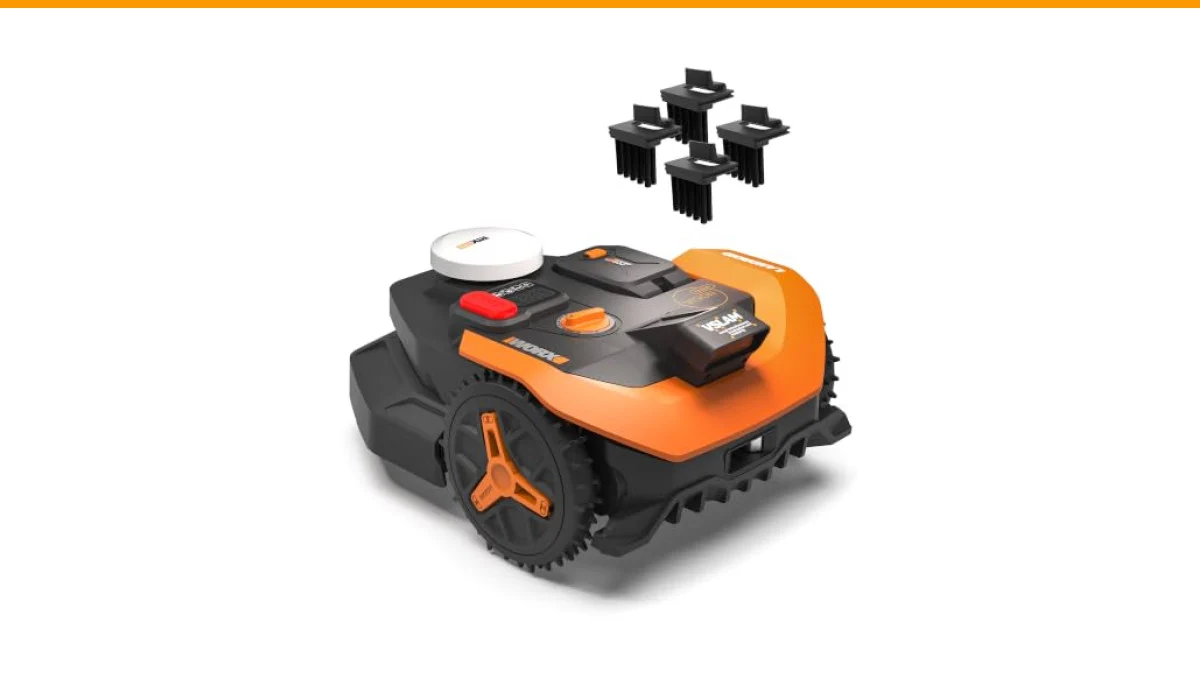
WORX Robot Lawn Mower for 1/4 Acre, Wire-Free with Brushes
- Centimeter-Level RTK Cloud Accuracy: Commercial-grade RTK Cloud technology delivers centimeter-level positioning for this robotic…
- Auto Mapping for More Complete Coverage: Vision AI helps the robot lawn mower understand lawn shapes and boundary types, then auto…
- AI Obstacle Avoidance with Neural Processing: Vision AI recognizes and understands common yard objects, using a trained neural net…
A noteworthy option is the WORX Robot Lawn Mower for 1/4 Acre. With advanced features like centimeter-level RTK Cloud accuracy and AI obstacle avoidance, it can provide a reliable mowing experience without wires or complex installations.
How Do Robotic Lawn Mowers Work?
Robotic lawn mowers use various technologies to navigate your yard and cut grass. Here’s a breakdown of the main components:
- Boundary Wires: Many robotic mowers use boundary wires to define the mowing area. These wires are installed around the perimeter of your lawn. The mower detects these wires and knows to stay within the designated area.
- Sensors: Robotic mowers are equipped with various sensors, including ultrasonic, bump, and lift sensors. These help the mower avoid obstacles, navigate around trees, and detect when it’s lifted off the ground.
- GPS and Mapping: More advanced models use GPS and mapping technology to create a layout of your lawn. For instance, the WORX model utilizes Vision AI for auto-mapping, which helps in optimizing mowing paths.
- Cutting Mechanism: Mowers typically use rotary blades for cutting grass. These blades can be adjusted for height to suit different grass types.
- Rechargeable Battery: Most robotic mowers run on lithium-ion batteries. They return to their charging stations automatically when the battery runs low.
Understanding these components clarifies how robotic lawn mowers operate and how they navigate your yard efficiently. But what about their practical benefits?
Benefits of Robotic Lawn Mowers
Robotic lawn mowers come with several advantages that traditional mowers can’t compete with:
- Time-Saving: Once programmed, these mowers require minimal intervention. You can focus on other activities while your lawn is maintained.
- Consistent Results: Robotic mowers often maintain a consistent cutting height and pattern, resulting in a well-manicured lawn.
- Eco-Friendly: Many models are electric, producing no emissions. They also use less power than traditional gas mowers.
- Quiet Operation: Robotic mowers operate much more quietly than gas-powered mowers, allowing for early morning or late evening mowing without disturbing your neighbors.
- Smart Features: Many models come with smartphone apps, enabling you to control your mower remotely, set schedules, and get notifications.
While the benefits are clear, potential buyers often wonder about the cost and installation. Let’s break that down.
Cost and Installation Considerations
Robotic lawn mowers can be a significant investment, with prices ranging from a few hundred to several thousand dollars, depending on features and capabilities. Installation of boundary wires can take a few hours, but many newer models, like the WORX mower, offer wire-free operation, simplifying the initial setup.
When considering costs, it’s crucial to factor in maintenance. Regular blade replacements and occasional battery checks are necessary to keep the mower functioning optimally. However, the time saved on mowing and the consistent lawn appearance may outweigh these costs over time.
Comparison of Robotic Lawn Mowers
| Feature | WORX Robot Mower | Competitor A | Competitor B |
|---|---|---|---|
| Cutting Area | 1/4 Acre | 1/2 Acre | 1/3 Acre |
| Navigation Technology | RTK Cloud | GPS | Boundary Wire |
| Obstacle Avoidance | AI with Neural Processing | Bump Sensors | Basic Sensors |
| App Control | Yes | No | Yes |
| Price Range | Check current price on Amazon | Check current price | Check current price |
This table highlights some key differences between the WORX mower and its competitors, demonstrating its advanced features and overall value.
Common Questions About Robotic Lawn Mowers
1. How long does it take to mow a lawn with a robotic mower?
The time varies depending on the size of your lawn and the mower’s speed. Typically, a robotic mower can take 1.5 to 2 hours to mow a 1/4 acre lawn.
2. Can robotic mowers handle uneven terrain?
Many models can navigate slight inclines and uneven ground, but it’s essential to check the specifications. The WORX mower is designed to handle various terrains effectively.
3. Are robotic mowers safe for pets and children?
Yes, most robotic mowers have safety features like lift sensors that stop the blades if the mower is lifted. However, supervision is still important around pets and children during operation.
4. What happens if it rains?
Most robotic mowers have rain sensors that prompt them to return to their charging stations during bad weather. Some models are waterproof and can operate in light rain.
5. What maintenance do robotic mowers require?
Regular maintenance includes cleaning the mower’s undercarriage, checking and replacing blades, and ensuring the battery is functioning well. Keeping the sensors clean is also vital for optimal performance.
Final Thoughts for Potential Buyers
- Robotic lawn mowers save time and effort, making them a great investment for busy homeowners.
- Consider the size of your lawn and its terrain when choosing a model.
- Look for features like obstacle avoidance and app connectivity to enhance usability.
- Expect an upfront cost but weigh that against the time saved on lawn maintenance.
- Research different models to find the best fit for your needs and budget.
- Keep in mind the maintenance requirements to ensure your mower operates effectively over time.
For more insights, check out our guides on best GPS robotic lawn mowers and best robotic lawn mowers for small lawns. With the right robotic mower, you can enjoy a well-maintained lawn without the hassle of traditional mowing.