New Jersey lawns sit on a strange fault line. You’ve got sandy Pine Barrens soil down near the Shore that drains so fast nitrogen vanishes before roots grab it. Head northwest toward Sussex and Passaic and you’re on heavier clay-loam that holds water and nutrients, but also holds every mistake you make with phosphorus.
A good fertilizer for this state has to match three things: your grass type (tall fescue, Kentucky bluegrass, or a perennial ryegrass blend), your soil’s actual pH and drainage, and the timing rules set by New Jersey’s fertilizer law. Get those three right and almost any decent product works. Miss them and you’re burning money.
Below are five products that fit real New Jersey lawns, from a starter food for fall overseeding to a slow-release option for established turf. The Scotts Turf Builder Starter Food line takes the top spots for new grass, but The Andersons earns a spot for anyone who wants iron greening and sustained feeding.
Here’s how the five picks compare on the specs that actually matter for a Jersey lawn:
| Features | Scotts Starter 15 lb | Scotts Starter 3 lb | Scotts Lawn Food 12.5 lb | Andersons New Lawn 18 lb | Scotts Starter 42 lb |
|---|---|---|---|---|---|
| NPK Ratio | 24-25-4 | 24-25-4 | Not specified | 20-27-5 | 24-25-4 |
| Coverage | 5,000 sq ft | Small patch use | Small to mid lawn | 5,000 sq ft | 14,000 sq ft |
| Best Use | New seed, sod | Spot reseeding | Established turf | New turf, iron greening | Large new lawns |
| Nitrogen Type | Fast-acting starter | Fast-acting starter | General feed | Quick plus slow release | Fast-acting starter |
| Iron Content | Not listed | Not listed | Not listed | 1% iron | Not listed |
Scotts Turf Builder Start…

Scotts
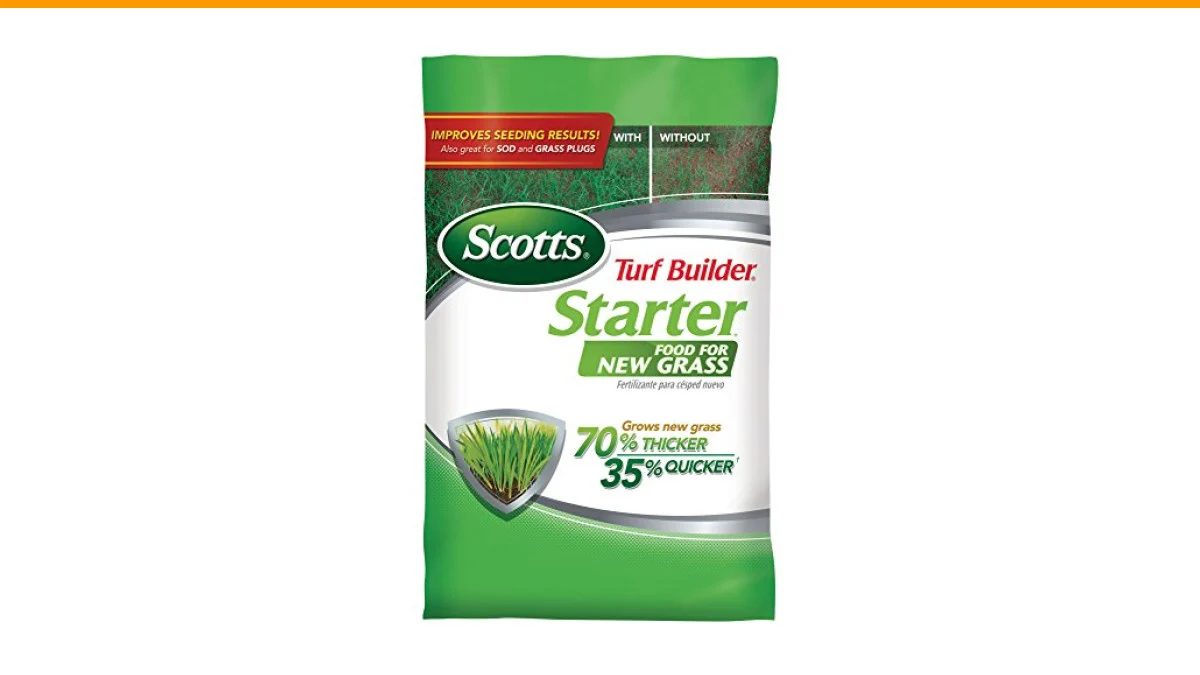
Scotts Turf Builder Starter Fertilizer for New Grass, 15 lbs. | Use When Planting Seed, Covers 5,000 sq. ft.
- FERTILIZER FOR NEW LAWNS: Scotts Turf Builder Starter Food for New Grass is a specially formulated starter fertilizer for grass se…
- SAFE FOR ALL GRASS TYPES: This 24-25-4 NPK lawn care product is safe to use on any grass type
- WHEN TO USE: Apply this lawn food anytime you're planting new grass, whether it's starting a new lawn, reseeding an existing one,…
The 15-pound bag is the middle child of the Scotts starter lineup, and honestly it’s the one most Jersey homeowners should buy first. It covers 5,000 square feet, which is roughly a typical suburban front yard or a decent-sized overseeding job on tall fescue. If you’re patching bare spots after a rough winter or laying down sod in October, this is the size that won’t leave you with half a bag rotting in the garage.
What makes it work is the 24-25-4 ratio. That phosphorus number matters more than most people realize, because young grass roots need phosphorus to establish before they can pull nitrogen efficiently. Rutgers turf research consistently shows fall is the best time to overseed cool-season grass in New Jersey, and this formula is built for exactly that window. Scotts claims 70% thicker and 35% quicker growth versus unfed lawns, which lines up with what a proper starter feed does.
The trade-off: 24% nitrogen is hot. Spread it too heavy on a warm September day and you’ll scorch seedlings. It’s also not the product for an established lawn that just needs a mid-season pick-me-up. And if you’re in a phosphorus-restricted zone near a waterway, check your local rules before applying.
- 24-25-4 NPK, safe for all cool-season and warm-season grass types
- Designed for new seed, sod, sprigs, and plugs
- One 15 lb bag covers 5,000 sq ft
- Works in both spring and fall seeding windows
Best for: The homeowner overseeding a typical suburban Jersey lawn who wants one bag that finishes the job.
Scotts Turf Builder Start…
The 3-pound bag is the same 24-25-4 formula as the 15-pound version, just scaled down for small jobs. Picture a bare spot where a dog wore a path, a patch where a tree came down, or a new bed edge you seeded with perennial ryegrass. Buying a 15-pound bag for a 200-square-foot repair is wasteful, and this size exists for exactly that reason.
Performance is identical to the bigger bag. Same 70% thicker, 35% quicker claim versus unfed grass, same safety across all grass types. If you reseed a few spots each fall, this is the bag that lives in your garage without going stale. It’s also a smart pick for renters or anyone in a townhome with a postage-stamp yard.
Two things to know. It’s not sold in Florida, which is irrelevant to New Jersey but worth flagging if you’re ordering for a snowbird relative. And the coverage is genuinely small, so don’t buy it expecting to handle a full reseed. You’ll run out fast.
- Same 24-25-4 ratio as the larger starter bags
- Ideal for spot repairs and small reseeding jobs
- Safe on all grass types including KBG and tall fescue blends
- Not available for sale in Florida
Best for: Small-yard owners and anyone patching bare spots instead of overseeding a whole lawn.
Scotts Turf Builder Lawn…
This is the odd one out in the lineup, and that’s the point. The 12.5-pound Lawn Food isn’t a starter fertilizer. It’s a maintenance feed for established grass, which is what most New Jersey lawns actually need once they’re past the establishment phase. If your lawn has been in the ground for years and just looks tired by July, this is the category you want.
The formula builds strong, deep roots and improves water and nutrient absorption compared to unfed grass. That root depth matters in New Jersey specifically, because our summers swing between humid stretches and short droughts. Deeper roots mean the lawn rides out a dry August better. It’s pesticide-free, which is nice if you’ve got kids or dogs on the turf, and you can apply it to wet or dry grass in spring, summer, or fall.
Here’s the honest catch: no NPK ratio is listed on the product data, and it’s not a starter. Don’t buy this expecting to overseed with it. It also won’t fix a soil pH problem, which is a real issue on Jersey’s acidic soils. Get a soil test before you lean on any maintenance feed.
- Maintenance fertilizer for established lawns, not new seed
- Builds deeper roots versus unfed grass
- Pesticide-free and safe for all grass types
- Apply on wet or dry lawn in spring, summer, or fall
Best for: Homeowners with an established Jersey lawn who want a simple seasonal feed without starter-level phosphorus.
The Andersons Premium New…
The Andersons New Lawn Starter is the pick for anyone who wants a little more sophistication than a straight Scotts starter. The 20-27-5 ratio leans heavier on phosphorus than Scotts’ 24-25-4, which makes sense for root establishment on new turf. The 18-pound bag covers 5,000 square feet, matching the Scotts 15-pound bag on coverage despite weighing more.
Two features separate it. First, it contains both quick-release and slow-release nitrogen, so seedlings get an immediate hit plus a sustained feed over several weeks. That’s a meaningful difference on sandy Jersey Shore soil where fast nitrogen leaches away quickly. Second, it has 1% iron, which drives deeper greening than nitrogen alone can produce. If your new lawn looks pale yellow-green despite feeding, iron is often the missing piece.
The downside is availability. This product is listed as scarce, so stock comes and goes. It’s also pricier per bag than the Scotts equivalent, and the extra phosphorus is wasted if your soil already tests high for it. Check your soil test first.
- 20-27-5 NPK with quick-release and slow-release nitrogen
- 1% iron for deeper color on new turf
- Covers up to 5,000 sq ft from an 18 lb bag
- Safe on all turf types, ideal for spring and fall
Best for: New Jersey homeowners on sandy or nutrient-poor soil who want sustained feeding plus iron greening.
Scotts Turf Builder Start…
The 42-pound bag is the same starter formula as the smaller Scotts options, sized for people with real acreage. It covers 14,000 square feet, which handles a large lot in Hunterdon or Somerset County without a second trip to the store. If you’re renovating an entire lawn from scratch or overseeding a big property, buying in bulk saves both money and hassle.
Everything about the formula is identical to the smaller bags: 24-25-4, safe on all grass types, promotes faster root and blade development, works on sod and plugs. The advantage is purely economic and logistical. Fewer bags, fewer stops, less leftover product. For a serious fall overseeding project on a half-acre lot, that matters.
The obvious limitation is storage. A 42-pound bag takes up real space and needs to stay dry. If you only have a small lawn, you’ll be storing fertilizer for years. Also, the same phosphorus restriction caveat applies here as everywhere else in New Jersey.
- 24-25-4 starter formula, same as smaller Scotts bags
- Covers 14,000 sq ft from a single 42 lb bag
- Works for new lawns, overseeding, sod, and plugs
- Best value per square foot for large properties
Best for: Owners of large New Jersey lots doing a full-lawn overseed or new installation in one pass.
How We Chose These Products
We prioritized products that match New Jersey’s dominant grass types. Tall fescue, Kentucky bluegrass, and perennial ryegrass blends make up most of the state’s lawns, and all five picks here are labeled safe for those grasses. We also weighed NPK ratios against real use cases, because a 24-25-4 starter and a general maintenance feed solve completely different problems.
Coverage per bag mattered too. New Jersey lots vary wildly in size, from tiny Shore cottages to multi-acre Highlands properties, so we included options from 3 pounds up to 42 pounds. Availability played a role as well, and we flagged The Andersons as scarce so you know to check stock before planning around it. For a deeper look at organic alternatives, see our guide to the best organic fertilizer options.
Buying Guide: What Really Matters
Start with your soil test. Rutgers NJAES offers affordable soil testing, and the results tell you your pH and phosphorus levels. Most Jersey soils run acidic, which means lime application often matters more than any fertilizer choice. If your pH is off, no NPK ratio will perform the way the label promises.
Match the product to the job. Starter fertilizers with high phosphorus are for new seed, sod, and plugs. Established lawns need nitrogen-forward maintenance feeds, ideally with slow-release nitrogen so you’re not pushing top growth at the expense of roots. Fall is the single most important feeding window for cool-season Jersey grass, with a lighter spring application for green-up.
Pay attention to New Jersey’s fertilizer law, which restricts nitrogen and phosphorus content and sets blackout dates for application. Many towns near the Shore and in the Pinelands have stricter rules than the state baseline. Check your municipality before you buy, especially if you’re near a waterway. If you’re overseeding, our new sod fertilizer guide covers the establishment phase in more detail.
Our Top Recommendation
For most New Jersey homeowners, the Scotts Turf Builder Starter Food 15 lb bag is the best single pick. It covers a typical suburban lawn, uses a proven 24-25-4 ratio, and works for both fall overseeding and spring seeding. Pair it with a soil test and you’re set.
If you’re on sandy Shore soil and want sustained feeding plus iron greening, The Andersons Premium New Lawn Starter is the runner-up worth the extra cost. For large properties, the 42-pound Scotts bag delivers the best value per square foot. And if your lawn is already established, skip the starters entirely and go with the Scotts Turf Builder Lawn Food.
Frequently Asked Questions
Can I fertilize my New Jersey lawn in summer?
Yes, but carefully. Cool-season grasses slow down in July and August heat. Use a light slow-release nitrogen feed, water it in, and avoid high-nitrogen products that push tender growth into a humid stretch. Summer is also when fungus and dog damage show up, so don’t overfeed.
Does New Jersey restrict phosphorus in fertilizer?
Yes. State law limits phosphorus in most lawn fertilizers and bans it in some situations. Shore towns and Pinelands municipalities often have tighter rules. Check your town’s ordinance before buying a high-phosphorus starter, especially if your soil already tests adequate for phosphorus.
When should I overseed and fertilize in New Jersey?
Late August through mid-October is the sweet spot for cool-season overseeding. Soil is still warm, air is cooling, and weed competition drops. Apply starter fertilizer at seeding time, then follow with a maintenance feed about six to eight weeks later if the lawn needs it.
Why does my Jersey lawn look worse after fertilizing?
Most likely fertilizer burn from over-application or spreading on dry grass without watering in. It can also be a pH problem, fungus in humid weather, or dog urine damage that gets blamed on the fertilizer. Water thoroughly after applying and calibrate your spreader. For more on diagnosing color issues, see our guide to fertilizer for green grass.