

Best Robot Lawn Mower for Small Yards: What Actually Works in 2026
Contents
You bought the house with the tidy postage-stamp lawn. Then Saturday arrives, and you’re untangling an extension cord or pushing a mower around a space that takes fifteen minutes to cut. The effort isn’t the problem. The repetition is. For anyone with a yard under a quarter acre, a robot mower isn’t a luxury gadget anymore; it’s the difference between reclaiming your weekend and losing an hour of it every few days.
This guide walks you through what actually matters when picking the best robot lawn mower for small yards. We’ll cover the real-world specs to compare, the installation quirks that nobody mentions, and the specific models that handle tight spaces without losing their minds. You’ll leave knowing exactly which features justify the cost and which are just marketing noise.

WORX
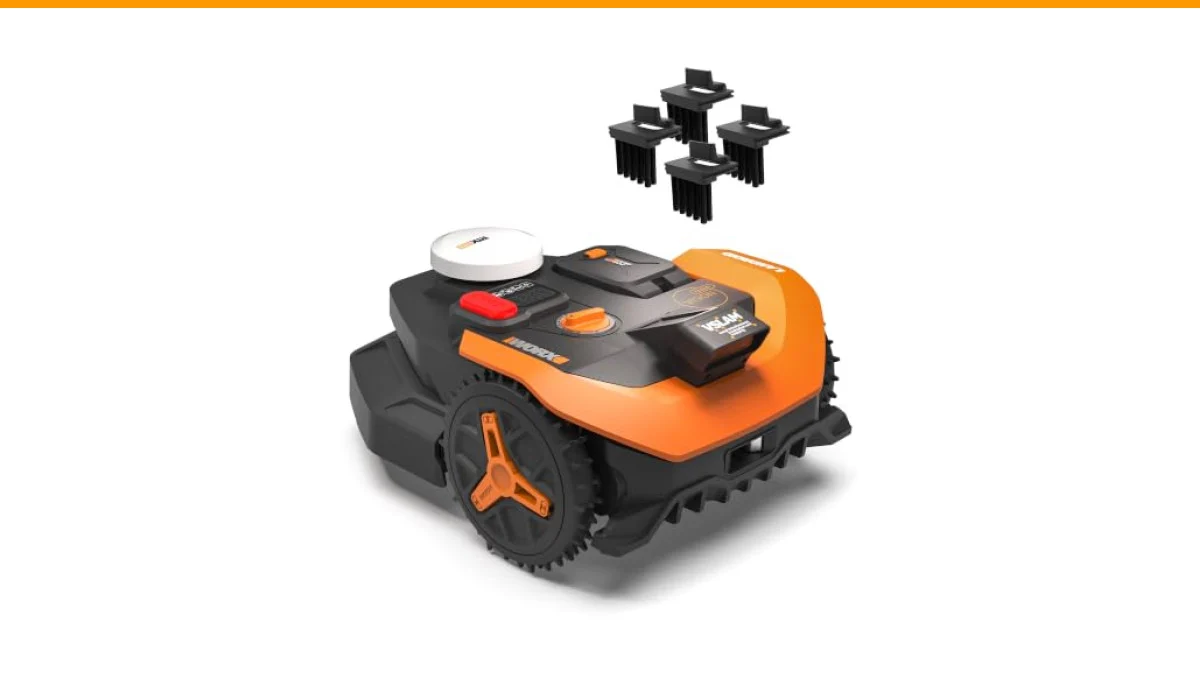
WORX Robot Lawn Mower for 1/4 Acre, Wire-Free with Brushes
- Centimeter-Level RTK Cloud Accuracy: Commercial-grade RTK Cloud technology delivers centimeter-level positioning for this robotic…
- Auto Mapping for More Complete Coverage: Vision AI helps the robot lawn mower understand lawn shapes and boundary types, then auto…
- AI Obstacle Avoidance with Neural Processing: Vision AI recognizes and understands common yard objects, using a trained neural net…
One option that cuts through the complexity is the WORX Robot Lawn Mower for 1/4 Acre. It skips the perimeter wire entirely, which solves the biggest headache most small-yard owners face. We’ll get into why that matters below.
Why Small Yards Have Different Robot Mower Rules
Most robot mower reviews focus on acreage limits and battery life. For a small yard, those specs are nearly irrelevant. A 1,500-square-foot lawn doesn’t strain any modern battery. The real challenges are navigation density and boundary handling.
Small yards have more obstacles per square foot. You’ve got flower beds, a patio, a tree, maybe a playset. A robot designed for open two-acre fields will bump around aimlessly in your cramped space. It’ll miss strips of grass near the edges and take twice as long as it should.
Here’s what you should actually scrutinize:
- Obstacle detection: Does the unit use a bump bar only, or does it have vision or laser sensors to slow down before hitting things?
- Edge cutting: How close does it get to the border? Some models leave a ragged 3-inch strip you’ll still trim by hand.
- Navigation logic: Random bounce patterns work in open areas. Small yards need systematic row mowing or you’ll get patchy results.
- Setup complexity: Laying hundreds of feet of boundary wire around a tiny, intricate yard is a pain. Wire-free models solve this.
Your yard’s shape matters more than its total square footage. A narrow side strip that’s 3 feet wide will trap a mower with a wide turning radius. A yard with multiple separate grass patches requires a unit that can map zones and travel between them.
Pro tip: measure the narrowest path your mower must traverse. Most standard models need at least 2 feet of clearance. If your side yard is narrower than that, you’re looking at a different class of machine.
Wire-Free Navigation vs. Boundary Wire: The Real Tradeoffs
The biggest decision you’ll make isn’t the brand. It’s whether you want a mower that requires a buried perimeter wire or one that navigates using GPS and cameras.
Boundary wire systems have been the standard for a decade. You staple thin wire around the lawn’s edge, and the mower uses it as a virtual fence. The wire approach is cheap and reliable, but it’s a miserable install. You’ll spend a full afternoon laying it, and if you ever renovate a flower bed or add a path, you’re redoing the whole loop.
Wire-free models, like the WORX unit mentioned earlier, use RTK GPS and visual sensors. They map the yard on their own. You define boundaries in an app instead of in the dirt. This is a massive quality-of-life upgrade for a small property.
There’s a catch. Wire-free systems historically cost more, and they require a clear view of the sky for the GPS correction signal. If your yard is surrounded by tall fences or dense tree cover, you might get dropouts. The better units handle this with sensor fusion—switching to camera-based positioning when the GPS signal degrades.
That’s exactly what the WORX model does. It uses RTK cloud correction for open areas and V-SLAM vision when you’re under a canopy. For a small yard with a big shade tree, that hybrid approach is the difference between a mower that works and one that gets stuck in a corner.
What to Look For in a Small-Yard Robot Mower
You don’t need a 10-amp battery or a mower deck wide enough for a golf course. You need precision and autonomy. Here’s the checklist I use when evaluating units for clients with tight spaces.
1. Cutting Width vs. Yard Complexity
A wider cutting deck means fewer passes. But on a small, intricate lawn, a wide deck can’t reach into tight spots. Look for a width between 7 and 9 inches. That’s the sweet spot for maneuverability without taking forever to finish the job.
2. App Control and Zone Management
You’ll want the ability to set no-go zones. Maybe you don’t want the mower under the kids’ trampoline or near the dog’s water bowl. The app should let you draw these areas on a map. The WORX unit allows unlimited zones and custom paths, which is more flexibility than most small yards will ever need.
3. Slope Handling
Even small yards have grades. Check the maximum slope rating. Most robots handle up to 25-30% incline. If your yard has a steep bank, you need a unit with rear-wheel drive or dedicated climbing wheels. A mower that slips on a damp slope will leave a telltale bald patch.
4. Rain and Weather Sensors
Some mowers dock themselves when it starts raining. Others keep cutting wet grass, which clumps and leaves tracks. A rain sensor is a small feature that saves you from having to hose down the underside every week.
5. Anti-Theft Protection
Small yards are often close to the street. A mower that beeps and locks if someone lifts it is worth having. PIN codes and GPS tracking are common now, but not universal.
Comparing the Top Approaches for Small Yards
Here’s a practical comparison of the three main ways to handle a small lawn with a robot. Your situation determines which one is right.
| Method | Best For | Install Time | Key Limitation | My Take |
|---|---|---|---|---|
| Boundary Wire System | Budget buyers, simple rectangular lawns | 2-4 hours plus layout planning | Wire breaks need repair; reconfiguring is a chore | Fine if you never change your landscaping. A headache otherwise. |
| RTK GPS + Vision (Wire-Free) | Complex yards, multiple zones, shaded areas | 15-30 minutes (mostly app setup) | Higher upfront cost; needs decent sky visibility | The best choice for most small yards in 2026. |
| Hybrid (RTK + V-SLAM) | Yards with heavy tree cover or narrow fenced areas | 15-30 minutes | Still new tech; software updates matter | Worth the premium if you have a big shade tree blocking your yard. |
The table shows why wire-free is taking over. The installation time alone is a dealbreaker for wire systems. For a 1/4-acre lot, you’re talking about 300-500 feet of wire to lay. That’s a Saturday project. The wire-free units are up and running in under an hour.
I’ve seen people abandon robot mowers entirely because they hated the wire install. That’s a shame, because the mowing itself is fantastic. Don’t let a tedious setup talk you out of a good machine.
Step-by-Step: Setting Up a Wire-Free Robot Mower in a Small Yard
You bought a wire-free model. Now what? Here’s the process that works, based on my own installation experience.
- Charge the unit fully. Most robots ship with a partial charge. Plug it in overnight before your first run. A mower that dies mid-map is frustrating.
- Place the dock in a central location. The dock needs a clear path to the lawn. Put it on a flat surface with at least 3 feet of clearance on either side. Avoid placing it under a low overhang that might block the GPS antenna.
- Run the first mapping cycle. Don’t skip this. The mower will trace the perimeter and learn the boundaries. The WORX unit uses Vision AI to map your lawn shape automatically. Let it do a full loop without interrupting it.
- Review the map in the app. Zoom in. Check that the mower recognized your flower beds and patio correctly. If it mapped a garden as grass, you’ll need to add a no-go zone.
- Set no-go zones and paths. Using the app, draw lines around areas you want the mower to avoid. This is where you protect young trees, garden hoses, and the dog’s tie-out cable.
- Adjust the cutting height. Start with the blade set higher than you think you need. You can always lower it later. A blade set too low on the first run will scalp your lawn and leave brown patches.
- Schedule a test mow. Run one complete cycle while you’re home. Watch it navigate your tight spots. If it struggles with a narrow passage, adjust the map or trim back an overhanging branch.
That’s it. The whole process takes less than an hour, and most of that is waiting for the initial mapping run.
One thing I learned the hard way: those first few mows will kick up debris. Acorns, small twigs, and even dog toys can jam the blades. Clear the lawn before the first scheduled run, and check the underside after the first three cuts.
Common Mistakes That Ruin Robot Mower Performance
These are the errors I see homeowners make repeatedly. Avoid them and your mower will run for years without complaint.
Mistake #1: Ignoring the Shade Problem
Pure GPS mowers rely on satellite signals. A yard with a dense canopy of oak or maple trees will drop those signals constantly. The mower stops, waits for a fix, then wanders off course. If your yard has heavy shade, you need a model with V-SLAM or vision-based navigation to fill in the gaps.
Mistake #2: Not Defining No-Go Zones
People assume the mower will figure out where it shouldn’t go. It won’t. If you don’t mark your vegetable garden or the area under the swing set, the mower will happily mow right through it. Spend ten minutes setting up zones in the app on day one.
Mistake #3: Forgetting Seasonal Maintenance
Robot mowers need blade changes. The blades are small and dull quickly, especially if you cut sandy soil or have weeds. A dull blade tears the grass instead of cutting it, leaving a brown, ragged look. Replace the blades every 4-6 weeks during the growing season. They cost a few dollars each, and it’s a two-minute job.
Frequently Asked Questions
How long does a robot mower take to mow a small yard?
For a typical 2,000-square-foot lawn, expect 45 minutes to an hour. The mower moves slowly—usually around 1.5 feet per second—so it can navigate safely. It’s not about speed; it’s about consistency. The mower runs every day or every other day, so the grass never gets long enough to need a heavy cut.
Will a robot mower work on a lawn with steep slopes?
Most models handle up to a 25-30% incline. Check the specific spec before buying. If you have a steeper hill, look for a unit with larger rear wheels or all-wheel drive. Also, wet grass is slippery. The mower might struggle on a slope after rain, even if it’s fine when dry.
Do I need to mow the lawn manually before the first robot run?
Yes. A robot mower is a maintenance tool, not a rescue tool. If your grass is over 4 inches tall, the robot will clog and stall. Cut it down to a normal height with your old mower first, then let the robot take over from there.
Can a robot mower handle leaves and twigs?
Small, dry leaves are fine. The blades will chop them up and leave them as mulch. Twigs, acorns, and pine cones are a different story. They can jam the blade mechanism or throw the mower off balance. Clear large debris before a scheduled mow, especially in the fall.
What happens to a robot mower in the winter or during heavy rain?
Most units have rain sensors that send them back to the dock when precipitation starts. For winter, you should store the mower indoors. Freezing temperatures can crack the battery and damage the electronics. Clean it, remove the battery, and store it in a garage or shed until spring.
What to Do Next Before You Buy
You’ve read enough to make a smart choice. The best robot lawn mower for small yards isn’t the most expensive one on the shelf. It’s the one that fits your specific layout, handles your shade levels, and doesn’t require a weekend of wire-laying to install.
- Measure your narrowest pathways and your steepest slopes before you compare specs.
- Count your trees. If you have more than one large shade tree, prioritize a model with vision-based navigation over pure GPS.
- Skip boundary wire systems unless you’re on a very tight budget and have a simple rectangular lawn.
- Look for wire-free models with app-based zone mapping. You’ll thank yourself the first time you change a flower bed.
- Check the current price on the WORX model we discussed—it’s a strong benchmark for what wire-free should cost.
- Read our guide on wire-free mower options to see more alternatives.
- If your yard has hills, don’t skip the slope-specific advice before you commit.
Your Saturday mornings are worth more than pushing a mower. Pick a robot that matches your yard’s personality, set it up right the first time, and let it do the boring work while you enjoy the weekend.


